Second Birthday Toy Ideas for Newborns: Timeless Developmental Gifts That Last Through Toddlerhood
Introduction
When a baby turns two, the world suddenly seems bigger, brighter, and more interactive. But here’s a delightful twist: many parents also welcome a newborn into the family around the same time, or they are planning ahead for a future sibling. Alternatively, the phrase “second birthday toy ideas for newborns” might sound contradictory at first glance, but it actually points to a smart and loving approach: selecting toys that are safe and stimulating for a newborn yet grow with the child into their second birthday and beyond. These are not just any ordinary toys; they are multi‑stage developmental tools that support sensory exploration, fine motor skills, and cognitive growth from day one through toddlerhood.
In this article, we will explore carefully curated toy ideas that are perfectly safe for newborns (0‑3 months) while remaining engaging and challenging for a two‑year‑old. Whether you are preparing for a baby shower, a newborn’s first months, or a second birthday celebration where the honoree is still a tiny infant, these recommendations will help you invest in playthings that last.
—
1. Why Choose Toys That Transition from Newborn to Toddler?
The first years of life are marked by rapid neurological development. A newborn’s brain forms over one million neural connections every second. Toys that offer layered complexity allow a single purchase to serve multiple stages of development. For example, a soft, high‑contrast black‑and‑white rattle can fascinate a newborn’s developing vision, and then, as the child approaches two, the same rattle can be used for cause‑and‑effect play (shaking, dropping) and even early counting games.
Choosing transitional toys also saves money and reduces clutter. Instead of buying a separate set of “newborn” toys followed by “toddler” toys, parents can select a few high‑quality items that adapt. Moreover, these toys often incorporate natural materials, safe finishes, and open‑ended play potential—hallmarks of Montessori‑inspired design. When we talk about “second birthday toy ideas for newborns,” we are essentially endorsing a philosophy of sustainable, developmentally appropriate gifting.
—
2. High‑Contrast Visual Stimulation: The Newborn’s First Love
Newborns have blurry vision and are most attracted to bold patterns in black, white, and red. By their second birthday, they can recognize colors, shapes, and even simple images. A great example is a set of washable, fabric contrast cards or a soft high‑contrast mobile. These items are safe for the crib (with proper mounting) and can later be used for object identification, storytelling, or as flashcards for vocabulary building.
Recommended Idea: A set of organic cotton “Oball”‑style rattle rings with black‑and‑white concentric circles. A newborn can grasp them (even if reflexively), and a two‑year‑old can stack them, toss them, or use them in a pretend‑play game. The same toy provides auditory feedback (gentle jingle) and tactile variety.
Similarly, a high‑contrast cloth book with crinkle pages is a newborn’s sensory delight. By age two, that same book can be a tool for learning animal names, colors, and simple sentences. Look for books with attached teething rings or mirrors—mirrors are especially captivating for both ages.
—
3. Soft Grasping Toys That Evolve into Manipulatives
Newborns have an innate palmar grasp reflex; they clutch anything placed in their tiny hands. Soft, lightweight rattles or wooden rings (untreated, smooth) are ideal. By the second birthday, these same toys can become part of a “treasure basket” for sorting, stacking, or even water play.
Idea: A set of silicone teething rings in different textures (bumpy, smooth, ridged) that can be linked together. A newborn chews and explores orally; a two‑year‑old can link them into chains, practice fine motor skills, and even begin to count the rings. Some silicone sets come with a connecting clip that allows them to attach to a stroller or car seat—perfect for on‑the‑go engagement.
Another classic: the “Manhattan Toy Winkel” – a colorful, multi‑looped teether that is lightweight and easy for a newborn to hold. Its maze‑like design challenges a toddler’s dexterity as they try to slide the loops apart or thread a string through them. It is also dishwasher‑safe and BPA‑free.
—
4. Musical Instruments for Sensory and Rhythm Development
Music is a universal language that babies love from birth. A simple, soft‑sounding rattle drum or a set of egg maracas can be introduced early. Newborns respond to gentle shaking and the unexpected sound; toddlers can shake in rhythm, dance, and learn cause‑and‑effect (e.g., “if I shake hard, it’s loud”).
Idea: A wooden rainstick (sealed to prevent bead ingestion) or a soft, fabric “shaky egg” with a gentle bell inside. For newborns, the motion and sound soothe and stimulate. For two‑year‑olds, these become instruments for pretend concerts, mimicking parents, or learning about dynamics (loud/soft).
Consider a small, safe xylophone with removable keys. Newborns will not play it obviously, but they will enjoy the bright colors and the sound when an adult taps it. As they grow, they learn to hold the mallet, strike the keys, and eventually try to replicate simple songs. This toy encourages hand‑eye coordination and auditory discrimination.
Safety Note: Always ensure that any musical toy has securely attached parts and no small pieces that could break off. For newborns, choose instruments that are over‑engineered to survive chewing and dropping.
—
5. Soft Blocks and Stacking Cups: From Visual Tracking to Engineering
Stacking cups are a quintessential open‑ended toy. A newborn can watch them being stacked by a parent, tracking the movement with their eyes. By three months, they may bat at a cup placed within reach. By their second birthday, they can stack, nest, knock down, sort by color or size, and even use them in pretend play (e.g., as “bowls” for a teddy bear).
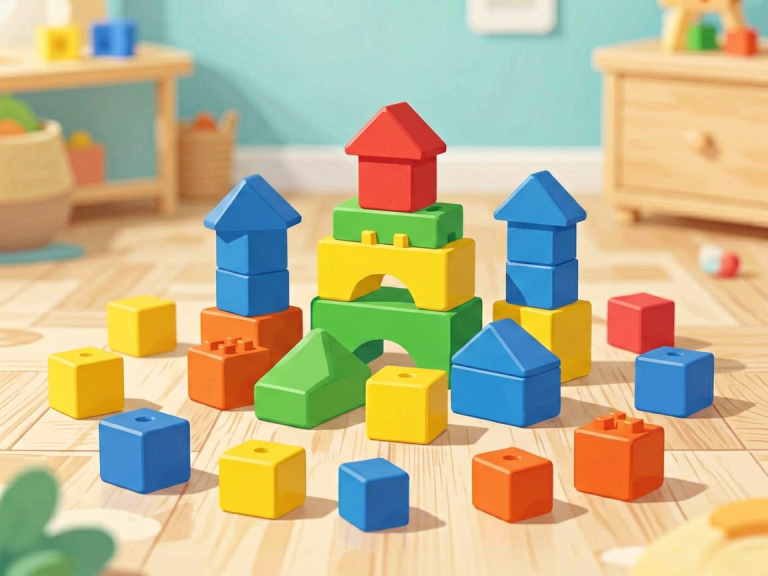
Look for a set of soft, squeezable foam blocks or BPA‑free silicone cups that are free of sharp edges. Some sets come with numbers or pictures on the bottom, which adds a numeracy element for the toddler. The soft material is safe for a newborn’s face and gums, while the toddler can engage in more complex building challenges.
Similarly, a fabric “stacking tower” with different textures (corduroy, velvet, satin) can be a multi‑sensory delight. The newborn explores by touching and mouthing; the toddler tries to balance the rings in order. This type of toy supports spatial reasoning and vocabulary (big, bigger, biggest).
—
6. Mirror Play and Self‑Awareness
Babies are fascinated by faces, and a baby‑safe mirror (unbreakable, secured to the floor or wall) is a fantastic investment. Newborns enjoy looking at their own reflection, though they do not yet recognize themselves. By 18–24 months, a toddler will likely understand that the reflection is “me,” leading to peek‑a‑boo games and early self‑awareness.
Idea: A tummy time mirror that lies flat or stands securely. Some models have a high‑contrast pattern on one side and a clear mirror on the other. For a newborn, use the pattern side during tummy time; for a two‑year‑old, the mirror side encourages facial expressions, imaginary conversations, and even dressing‑up play.
Pair this with a soft, hand‑held mirror (with rounded edges) that a toddler can carry around. A newborn can simply lie beside it; a two‑year‑old can use it to examine objects, practice holding, and develop a sense of body image. These mirrors are also excellent for dental hygiene routines—toddlers often enjoy watching themselves brush teeth.
—
7. Sensory Balls and Texture Exploration
Sensory balls come in many forms: spiky massage balls, smooth wooden balls, light‑weight plastic balls with bumps. A newborn can feel the different textures while lying on a play mat; later, these balls become rolling toys that encourage crawling and chasing. For a two‑year‑old, they are perfect for throwing, catching, sorting by size, or even rolling down a homemade ramp.
Idea: A set of three or four small, soft, texture‑rich balls (e.g., one with ridges, one with soft spikes, one with a bumpy surface, and one smooth). Ensure they are large enough (at least 4.5 cm diameter) to prevent choking. Newborns will benefit from gentle hand‑over‑hand exploration with a parent; toddlers will enjoy a game of “roll the ball back and forth,” which builds social reciprocity and motor planning.
An alternative is a “sensory cube” made of fabric with different tags, ribbons, and crinkle materials. The cube is soft enough for a newborn to hold and safe for mouthing; a two‑year‑old can find the hidden surprises (a squeaker, a bell) and use the cube in building blocks.
—
8. Safety Considerations: The Overlap Between Newborn and Toddler Play
When selecting “second birthday toy ideas for newborns,” safety is paramount. A toy designed for a two‑year‑old may contain small parts that are hazardous for a newborn. Conversely, a newborn toy might be too simple to hold a toddler’s attention for more than a minute. Here are key guidelines:
- No small parts: Avoid any toy with pieces smaller than a standard toilet paper roll (about 4.5 cm). Buttons, beads, or detachable eyes can be choking hazards.
- Material safety: Choose BPA‑free, phthalate‑free, and lead‑free plastics. For wooden toys, look for non‑toxic, water‑based paints or unfinished, smooth surfaces.
- Durability: Newborns drool and chew constantly; toys must withstand washing (dishwasher or machine‑washable) without degrading.
- No strings or cords longer than 30 cm: Loose strings can pose a strangulation risk.
- Edge and weight: Avoid toys with sharp edges or heavy parts that could fall on a baby. Lightweight materials (silicone, fabric, soft wood) are ideal.
Always supervise play, especially when a newborn is using a toy that a toddler has also handled. The same rattle can transfer bacteria between children, so regular cleaning is essential. Rotating toys also keeps both ages interested.
—
9. Practical Gifting Tips for Second Birthday Celebrations
If you are buying a gift for a baby who is turning two, but you know the family has a newborn sibling, consider a toy that both can enjoy (with supervision). Alternatively, the second birthday child might appreciate a toy that reminds them of their own babyhood—a high‑contrast book or a soft rattle—because toddlers love to imitate “baby” behaviors.
Another idea: buy a “memory‑making” toy such as a personalized growth chart with fabric markers. A newborn’s handprint can be taken now, and the toddler’s footprint later. This is not a toy in the traditional sense, but it is a keepsake that sparks conversation and sensory exploration.
For the newborn specifically, a soft, safe play gym or activity mat with dangling toys can be used from birth through age two. Many mats convert into a ball pit or tent later. The high‑contrast toys on the mat can be detached and used separately, making them versatile.
—
Conclusion: Investing in Toys That Bridge the Gap
The concept of “second birthday toy ideas for newborns” may initially seem paradoxical, but it reflects a growing awareness among parents and gift‑givers that the best toys are not age‑restricted but rather age‑flexible. By choosing items that stimulate a newborn’s senses and also challenge a two‑year‑old’s burgeoning skills, we simplify our shopping, reduce waste, and support continuous learning.
From high‑contrast cloth books and soft stacking cups to musical shakers and safe mirrors, each toy category we’ve discussed offers a developmental bridge. A newborn’s first encounter with a black‑and‑white rattle is a moment of wonder; two years later, that same rattle might be part of a counting game or a pretend tea party. This longevity is not only economically smart but also emotionally meaningful—it becomes a part of the child’s early narrative.
So whether you are a parent preparing for your newborn’s first weeks or a relative looking for a meaningful second birthday present, remember: the best gift is one that grows, adapts, and delights across the entire first chapter of life. With these carefully chosen toys, you’ll be nurturing curiosity, motor skills, and joy from day one all the way to that exciting second birthday celebration.