A Parent’s Guide to Choosing Science Kits for Newborns: Nurturing Curiosity from Day One
Introduction
The first few months of a baby’s life are a whirlwind of rapid neural growth. Every sight, sound, texture, and movement wires the brain for future learning. While the term “science kit” often conjures images of beakers and microscopes for older children, for newborns it takes a fundamentally different—yet equally important—form. A well-designed science kit for a newborn is not about conducting experiments; it is about creating a rich, safe environment that stimulates the senses, encourages cause-and-effect thinking, and lays the foundation for scientific observation. Choosing the right kit, however, can be overwhelming given the endless options on the market. This guide will help you navigate the essential factors, types, and pitfalls so that you can select a science kit that truly supports your newborn’s earliest exploration of the world.
Understanding the Unique Needs of Newborns
Newborns are not miniature scientists who can manipulate variables or follow instructions. Their primary mode of learning is through sensory input and reflexive interaction. During the first three months, babies focus on high-contrast patterns (especially black-and-white), respond to gentle sounds, and begin to track moving objects. Their vision is blurry at close range but sharpens gradually; their hearing is acute but selective; their sense of touch is highly developed and provides comfort or alertness. A science kit for this age must therefore prioritize safety, simplicity, and multi-sensory engagement over complexity. It should be free of small parts that could be swallowed, made of non-toxic materials, and designed to be used under close adult supervision. Moreover, the kit should align with the baby’s developmental timeline—offering challenges that are just slightly beyond their current abilities to encourage growth without causing frustration.
Key Factors to Consider When Selecting Science Kits
*1. Material Safety and Durability*
The most critical factor is safety. Newborns explore by mouthing, sucking, and grasping. Choose kits made from BPA-free, phthalate-free plastics, organic cotton, or untreated wood. Avoid anything with sharp edges, loose magnets, or strings longer than 12 inches (which pose strangulation risks). Look for certifications such as ASTM (American Society for Testing and Materials) or CE (Conformité Européenne). Even “science” elements like mirrors or light-up components should be securely enclosed and shatterproof.
*2. Age Appropriateness and Developmental Alignment*
A science kit labeled for “0–3 months” should focus on high-contrast black-and-white cards, unbreakable mirrors, gentle rattles, or crinkle fabrics. Avoid kits that assume fine motor skills (e.g., stacking rings) or object permanence understanding (e.g., peek-a-boo toys) that typically emerge later. Check the manufacturer’s recommended age range, but also trust your baby’s cues: if a toy seems too stimulating (causing crying or turning away) or too boring (leading to disinterest), it is not the right fit.
*3. Multi-Sensory Stimulation*
The best science kits engage at least two senses simultaneously. For example, a soft textured ball that also makes a gentle jingle sound invites both tactile and auditory exploration. High-contrast cards with simple geometric patterns stimulate vision, while a smooth, cool surface encourages touch. Avoid kits that rely only on one sense, such as a single flashing light without any other feedback. The goal is to help the baby integrate sensory information—a foundational skill for later scientific reasoning.
*4. Predictable Cause-and-Effect Feedback*
Even at two months, babies begin to notice that their actions produce results. A kit that includes a simple rattle or a toy that lights up when pressed (with very gentle pressure) teaches the concept of cause and effect. This is the earliest form of the scientific method: “If I do this, that happens.” Look for kits that offer immediate, consistent, and gentle feedback—nothing too startling. For instance, a soft crinkle toy that makes sound when squeezed is ideal, whereas a loud electronic buzzer is not.
*5. Open-Ended and Reusable Design*
Newborns change rapidly. A good science kit can be used in multiple ways as the baby grows. For example, a set of high-contrast cards can be used for visual tracking at one month, for tummy-time engagement at two months, and for simple naming games at four months. Wooden rings attached to a bar can be batted at initially and later grasped. Avoid kits that have a single, fixed function—these become obsolete quickly. Instead, invest in modular components that encourage exploration from different angles.
Types of Science Kits for Newborns
*Visual Stimulation Kits*
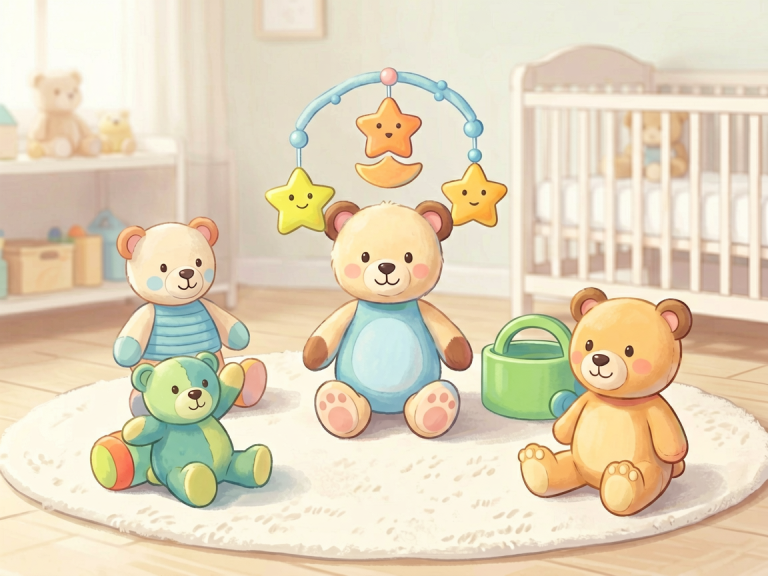
These often include black-and-white pattern cards, unbreakable mirrors, and mobiles with simple geometric shapes. The Science of high contrast: a newborn’s retina and neural pathways respond strongly to sharp edges and stark color differences. Look for kits with patterns like concentric circles, checkerboards, and faces (especially simple smiley faces). A mirror allows the baby to slowly discover their own reflection—an early step in self-awareness. Some advanced kits include red-and-black or primary-color cards as the baby approaches three months.
*Auditory Exploration Kits*
Sound-based kits introduce newborns to different pitches, volumes, and rhythms. Examples include soft rattles made from different materials (wood, fabric, plastic), bells sewn into plush animals, and crinkle paper or fabric squares. Avoid anything that produces harsh, loud, or constant sound. The best auditory kits allow the adult to vary the sound source—shaking a rattle softly near one ear, then the other—to promote auditory localization. Some kits even include a small wooden rainstick or a gentle wind chime that the adult can activate.
*Tactile and Texture Kits*
These focus on touch, which is one of the first senses to develop. Look for kits that offer a variety of surfaces: smooth, bumpy, fuzzy, ridged, cool, warm (using safe materials like gel packs, though always test temperature first). A tactile science kit might include a set of fabric squares with different weaves (corduroy, silk, fleece, burlap), a teething ring with textured bumps, and a soft ball with nubs. The baby learns to discriminate between textures, building sensory memory.
*Cause-and-Effect Discovery Kits*
These are simple “action-reaction” sets. For example, a soft, lightweight ball that makes a musical sound when rolled, or a plush block that squeaks when squeezed. Another classic is the “grasp and shake” rattle with a clear chamber containing small, colorful beads—the baby sees and hears the movement. Some kits include a small, safe light-up toy that activates with a gentle pat. The key is that the feedback is predictable and rewarding, encouraging the baby to repeat the action.
*Movement and Tracking Kits*
Newborns gradually learn to track moving objects with their eyes. Science kits for this purpose might include a simple mobile that rotates slowly, a set of black-and-white cards that can be moved side to side, or a pull-along toy (for supervised use). A particularly effective tool is a “magic water mat” that reveals colorful patterns when pressed with a finger—this combines visual tracking, tactile feedback, and cause and effect.
Top Recommendations and How to Use Them
*High-Contrast Card Sets* (e.g., “Baby Einstein” or “Weplay” black-and-white cards)
Use these during tummy time by placing them just in front of the baby’s face, about 8–12 inches away. Slowly move the card from left to right to encourage visual tracking. As the baby grows, prop the cards against a pillow for independent gazing.
*Soft Crinkle Fabric Book* (e.g., “Taf Toys” crinkle books)
Let the baby lie on a play mat and place the book within reach. The crinkling sound from even accidental movement introduces cause and effect. You can also tap the pages gently to demonstrate that different actions produce the same sound.
*Wooden Grasping Ring Set* (e.g., “PlanToys” sensory rings)
Hang a set of wooden rings from a play gym or simply hold them above the baby’s chest. At 1–2 months, the baby will bat at them; later, they will intentionally grasp them. The different colors (if natural wood with safe stains) and textures help stimulate vision and touch.
*Montessori-Inspired Black-and-White Mobile* (e.g., “Grapat” wooden mobiles)
Hang the mobile over the crib or changing table. The slow, gentle movement encourages visual tracking and concentration. Do not hang it directly over the baby’s face for extended periods; instead, position it slightly to the side to encourage head turning.
*Soft Light-Up Soother* (e.g., “VTech” gentle lighting toy — choose one with very dim, soft light)
Use only in a dim room for a few minutes. The light glow encourages visual fixation, and if the toy has a gentle melody, it builds auditory association. Always set the volume to the lowest setting.
Common Mistakes to Avoid
- Overstimulating the baby. Bright flashing lights, loud sounds, or too many patterns at once can overwhelm a newborn’s nervous system, leading to crying, arching back, or shutting down. Watch for signs of overstimulation: turning the head away, fussiness, or irregular breathing. Simple is always better.
- Choosing kits that are too advanced. A science kit labeled for “0–6 months” may contain elements that are only suitable for older infants. For example, a set that includes small balls that roll away might be frustrating for a 1-month-old who cannot track them yet. Stick to kits specifically designed for the 0–3 month window.
- Ignoring the adult’s role. A science kit is not a passive entertainment device. The best results come when a parent or caregiver actively engages with the baby, naming colors, describing textures, and responding to the baby’s coos or movements. A kit that requires zero adult involvement is likely less effective.
- Prioritizing “educational” claims over genuine safety. Some products market themselves as “STEM for newborns” but use cheap plastic parts or small components. Always verify safety certifications and read user reviews from other parents.
- Buying too many kits at once. Newborns thrive on repetition. A single, well-chosen kit can be used in dozens of ways over several weeks. Overwhelming the baby (and yourself) with too many options dilutes the learning experience.
Conclusion
Choosing a science kit for a newborn is a delicate balance between curiosity and caution. The right kit does not teach formulas or facts; it cultivates wonder. It invites the baby to observe, listen, touch, and cause small changes in their environment—actions that are the bedrock of all scientific inquiry. By focusing on safety, age-appropriateness, multi-sensory input, and open-ended use, you can select a kit that grows with your child and sparks a lifelong love of discovery. Remember that you, the parent, are the most important part of any science kit. Your voice, your smile while describing a shiny red ball, and your gentle encouragement when the baby finally grasps a ring—those are the true catalysts of early learning. Trust your instincts, observe your baby’s reactions, and let curiosity lead the way from the very first days.