The Ultimate Guide to Choosing Safe and Stimulating Art Supplies for Newborns
Introduction
Welcoming a newborn into the world is a journey filled with wonder, and from the very first days, their brains are rapidly absorbing information. While we often think of art supplies as tools for older children, the concept of “art for newborns” is rooted in sensory stimulation and safe exploration. For parents and caregivers, selecting appropriate art supplies for a newborn—typically defined as infants from birth to three months—requires a careful balance between developmental benefits, absolute safety, and age-appropriate design. Unlike toddlers who can hold crayons or smear paint, newborns rely entirely on their senses of sight, touch, sound, and even taste (as everything goes into their mouths). Therefore, the art supplies we choose for them are not for creating masterpieces, but for awakening their curiosity in a gentle, secure manner. This guide will walk you through the essential factors to consider, from safety regulations to developmental science, ensuring that your newborn’s first encounters with “art” are both enriching and risk-free.
Understanding Newborn Sensory Development
To make wise choices, it helps to understand how a newborn experiences the world. At birth, a baby’s vision is blurry—they can only see objects 8 to 12 inches away, and they prefer high-contrast patterns (black, white, and red) over pastel colors. Their hearing is already well-developed, and they are soothed by soft sounds. Their sense of touch is acute, especially around the mouth and hands, and they explore primarily through mouthing. What does this mean for art supplies? The supplies should engage these emerging senses without overwhelming them. For example, a soft black-and-white patterned cloth book is far more stimulating than a pastel-colored watercolor set. Recognizing that your newborn cannot intentionally “use” traditional art tools is the first step: think of art supplies as sensory objects that you present to the baby, or that you use in your interactions with them. This perspective shifts the focus from productivity to connection and development.
Safety First: Non-Toxic and Choke-Free Materials
When choosing any item for a newborn, safety is not just a priority—it is the only priority. Art supplies for newborns must meet rigorous standards. First and foremost, look for labels that explicitly state “non-toxic,” “BPA-free,” “phthalate-free,” and “safe for babies 0+ months.” Avoid any product that contains small parts, detachable buttons, or loose fibers that could cause choking or strangulation. Since newborns explore with their mouths, the supplies must be made of materials that are safe to chew, suck, and drool on. For instance, if you consider any kind of paint or ink, it must be edible-grade or specifically formulated for infants (like certain vegetable-based finger paints). However, most pediatricians advise against using paints with newborns under three months because even “edible” pigments can cause mild digestive upset if ingested in quantity. Instead, opt for safe alternatives such as high-contrast cards made from tear-resistant, non-toxic cardboard with rounded corners; soft baby-safe mirrors (unbreakable and shatter-proof); and fabric books with securely stitched edges. Always check for certifications like ASTM (American Society for Testing and Materials) or CE (Conformité Européenne) marks. Remember: if a product has a warning “not for children under 3 years” or contains a small parts choke hazard, it is absolutely unsuitable for a newborn.
High-Contrast Visual Stimuli: The Best “Art” for Newborn Eyes
The most developmentally appropriate art supplies for a newborn are visual ones. Because their vision is still maturing, high-contrast black-and-white images, as well as bold red and white patterns, help stimulate the optic nerves and encourage early focus and tracking. These are essentially the newborn’s first art gallery. When choosing visual art supplies, look for:
- Black-and-white flash cards or mobile items: Large, simple shapes (circles, stripes, checkerboards) mounted on a safe string or held in front of the baby during tummy time. Ensure the cards are sturdy, laminated with non-toxic materials, and have no sharp edges.
- High-contrast cloth books: Soft, washable fabric books featuring bold patterns are ideal. They can be placed in the crib (within sight but out of reach for safety) or held by the parent.
- Unbreakable mirror: Newborns are fascinated by their own reflection. A baby-safe mirror with a high-contrast frame (like a black-and-white border) combines visual stimulation with social-emotional development. Avoid mirrors that can shatter or have sharp frames.
- Red and white toys: Red is one of the first colors newborns can distinguish after black and white. Red rings, soft red blocks with black patterns, or red-and-white patterned balls are excellent choices. But always ensure the object is large enough (at least 1.75 inches in diameter) to prevent choking.
Do not overwhelm the baby with too many patterns at once. A single high-contrast card placed about 10 inches from the baby’s face, gently moved side to side, can engage their tracking ability for a few minutes. This is their first art lesson—simple, slow, and safe.
Tactile Art Supplies: Soft Textures and Safe Touch
The sense of touch is a powerful tool for newborn brain development. Tactile art supplies, however, must be carefully selected to avoid harsh materials that could scratch or irritate sensitive skin. Ideal tactile items include:
- Sensory fabric squares: Collections of small fabric pieces (velvet, corduroy, silk, ribbed cotton) attached to a ring or a soft book. These allow the baby to feel different textures when you gently rub them on their cheeks, arms, or tummy. Make sure all edges are hemmed to prevent fraying, and the fabrics are machine-washable.
- Soft rattles and teethers with varied surfaces: While these are not traditionally “art,” they are the newborn’s tools for tactile exploration. Look for rattles made from food-grade silicone or natural wood with a non-toxic finish, featuring ridges, bumps, and smooth areas. Their simple shapes and textures can be considered art objects in their own right.
- Texture balls: Soft, lightweight fabric balls with different surface patterns (bumpy, fuzzy, smooth) encourage grasping (even if involuntary) and provide tactile feedback. Only use balls that are too large to fit through a toilet paper roll (choking hazard test).
- Mess-free art mats: Some companies produce soft, silicone mats with raised patterns that babies can lie on during tummy time. These mats may feature high-contrast graphics and tactile elements like raised dots or wavy lines. Ensure the mat is free of holes and small pieces.
Always supervise tummy time to ensure the baby can turn their head freely and that the tactile item does not cover their face.
Auditory Art: Simple Sound-Making Tools
Newborns are already listening to the world around them, and gentle sounds can be part of an artful experience. Auditory art supplies for newborns are not musical instruments (which may be too loud or complex), but rather soft sound-makers that complement visual and tactile stimulation. Consider:
- Soft jingle rings: Fabric-covered rings with a subtle bell inside. When you shake them gently, the sound is not jarring. Babies may bat at them during supervised play.
- Crinkle paper or fabric: Many baby-friendly art books include a crinkle page—a layer of crinkly material inside a safe fabric pouch. The sound is intriguing and encourages the baby to pat or kick. But ensure the crinkle material is securely sewn in a pocket and cannot be pulled out.
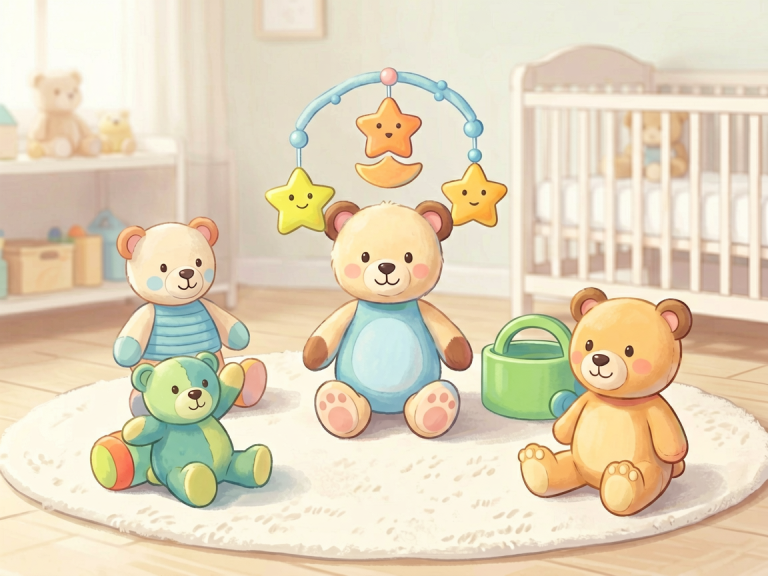
- Musical mobiles with soft tones: Mobiles that play a lullaby while displaying high-contrast shapes are a combination of audio and visual art. Choose mobiles with volume control and a timer; louder sounds should be avoided as they can overstimulate.
- Your voice: The most powerful art supply is your own sound. Singing, humming, or speaking in a rhythmic pattern while showing the baby a visual card creates a multi-sensory art experience. No product can replace that.
The Role of Parents: Interactive Art Experiences
Perhaps the most important insight in choosing art supplies for newborns is that the supplies themselves are only half the equation. An art supply is merely a tool; the true art comes from how you use it. Newborns cannot engage independently—they need you to hold the card, shake the rattle, or describe the textures. Therefore, when selecting products, think about their usability for you as the parent. Are they easy to clean? Are they portable for outings? Can you use them while breastfeeding or during diaper changes? For example, a small set of high-contrast cards that fit in your pocket allows you to have an impromptu art session anywhere. A soft cloth book that can be tossed in a diaper bag encourages shared reading time. Art for newborns is not about the baby “doing” something, but about you creating a calm, attentive interaction. The best art supplies are those that bring you closer to your baby—like a simple black-and-white photo of a face that you hold up and talk about. Remember that overstimulation is real: if your newborn turns away, cries, or seems fussy, they are telling you they have had enough. Respect that signal. Art time should be measured in minutes, not hours, and always followed by cuddles.
Recommended Products and DIY Ideas
To make this guide actionable, here are some specific recommendations that meet the safety and developmental criteria for newborns:
- The “My First Contrast Cards” deck by Wee Gallery – Large, sturdy cards with simple black-and-white animal faces, non-toxic, rounded corners.
- Taf Toys Black & White Activity Book – Soft fabric book with crinkle pages, a mirror, and various textures; machine-washable.
- Sassy Developmental Bumpy Ball – A soft, textured ball with high-contrast patterns; large enough to be safe.
- Edushape Soft Teether Toy – BPA-free, brightly colored teether with varied surfaces; perfect for mouthing.
- DIY option: Print simple black-and-white geometric shapes on cardstock, cut into large circles, and laminate with self-laminating pouches (non-toxic). You can hold them up or tape them to the side of the crib (out of reach). Alternatively, sew a small “sensory square” from different safe fabrics—just ensure all seams are double-stitched.
Conclusion
Choosing art supplies for newborns is a decision rooted in love and science. It is not about purchasing the most expensive painting set or the trendiest toy, but about selecting items that nurture your baby’s developing senses without compromising their safety. High-contrast visuals, soft textures, gentle sounds, and—above all—your engaged presence create the richest artistic environment for a newborn. As your baby grows, their art supplies will evolve with them; a three-month-old may eventually begin to bat at hanging objects, and by six months they might even grasp a safe crayon. But for now, let the art be simple, safe, and full of connection. When you hold up a black-and-white picture and watch your baby’s eyes widen and lock onto it, you are witnessing the first spark of creativity. That is the true masterpiece.