Screen-Free Third Birthday Gifts: Celebrating Three Years of Wonder Without Screens
When a child turns three, the world expands in ways that delight and exhaust parents in equal measure. Three-year-olds are bursting with curiosity, language, and a growing sense of independence. Yet in our hyper-connected age, the temptation to hand over a tablet or switch on a cartoon is ever-present. The third birthday, however, offers a unique opportunity to resist the digital tide and invest in gifts that nurture imagination, physical development, and genuine human connection. This article explores why screen-free presents matter, what science tells us about early childhood development, and provides a carefully curated list of ideas that will not only thrill a three-year-old but also support their growth in meaningful ways. Whether you are a parent, grandparent, or family friend, choosing a screen-free gift for this milestone is one of the most powerful statements you can make—a declaration that play, not pixels, shapes a child’s future.
Why Screen-Free Matters for a Third Birthday
The Science of Early Childhood Development
The third year of life is a period of explosive neurological growth. Between ages two and three, a child’s brain forms more than one million new neural connections every second. These connections are shaped by real-world experiences: touching, tasting, running, climbing, pretending, and interacting with caregivers and peers. Screens, by contrast, provide passive stimulation that often overrides the child’s need for active exploration. Research published in *JAMA Pediatrics* has linked excessive screen time in toddlers to delayed language development, reduced executive function, and poorer social skills. A study from the University of Calgary found that each additional 30 minutes of screen time per day at age two was associated with a 49% increased risk of expressive language delay by age three. These findings are sobering, but they also point to a clear solution: prioritize gifts that demand interaction, problem-solving, and physical engagement.
Moreover, the critical brain development of a three-year-old relies heavily on sensory integration. The tactile feedback of a wooden block, the proprioceptive input of climbing, the auditory delight of a real drum—these experiences wire the brain for balance, coordination, and emotional regulation. Screens, with their flaT, two-dimensional images, cannot replicate this richness. By choosing screen-free gifts, you are literally helping to build a more resilient, creative, and capable brain.
Breaking the Digital Habit Early
Many parents of three-year-olds report that their children already know how to swipe a tablet or ask for “videos.” The digital habit can start frighteningly young, and once established, it is notoriously difficult to break. A third birthday is often the first time a child receives “big kid” presents from extended family and friends, making it a pivotal moment to set expectations. If the child receives a screen-based toy—a tablet, a TV show-related gadget, or an interactive app device—it can quickly become the center of attention. Conversely, if the gifts are all physical, open-ended, and inviting, the child learns that joy comes from doing, not from watching.
Screen-free gifts also foster deeper relationships. When a child receives a set of play dough or a train track, an adult can sit down and play alongside them. That shared attention—what psychologists call “serve and return” interaction—is the bedrock of secure attachment and language development. A screen, by contrast, often isolates the child, reducing opportunities for conversation, eye contact, and collaborative problem-solving. For a child turning three, who is just beginning to navigate social cues and narrative thinking, these real-world interactions are irreplaceable.
Top Screen-Free Gift Ideas for a Three-Year-Old
Building with Blocks and Construction Sets
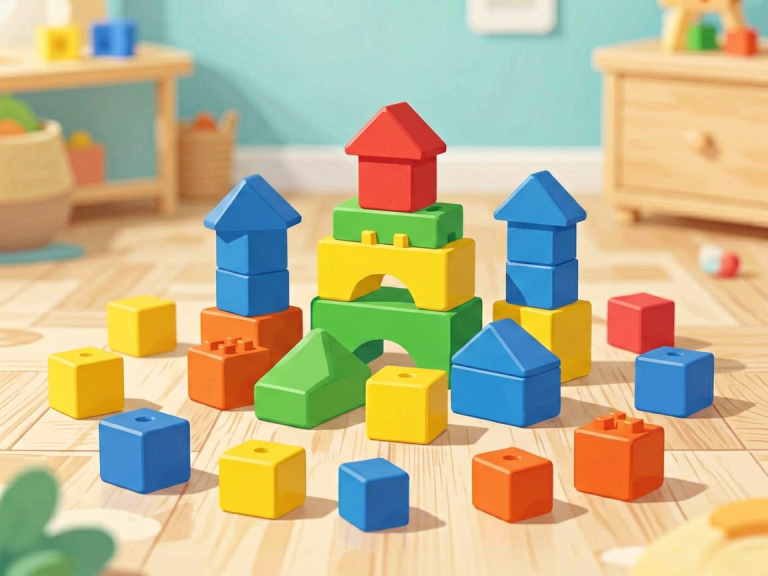
Few gifts are as timeless or as developmentally rich as a set of high-quality building blocks. For a three-year-old, the right blocks are not just simple cubes but a gateway to physics, geometry, and creative storytelling. Look for sets that include a variety of shapes, sizes, and perhaps a few specialty pieces like arches, cylinders, and ramps. Wooden unit blocks (the kind used in Montessori and Reggio Emilia classrooms) are ideal because they are heavy enough to provide satisfying feedback, durable, and free of flashing lights or sounds. A three-year-old can spend an hour stacking, toppling, rebuilding, and narrating an imaginary world. The benefits are vast: fine motor control, hand-eye coordination, spatial reasoning, and the early foundations of mathematical thinking (balance, symmetry, and measurement). Some excellent choices include the Melissa & Doug Standard Unit Blocks set or the Tegu magnetic wooden blocks, which add an extra layer of magnetic discovery without any digital components.
For children who love more structured building, Duplo or Mega Bloks (the larger-sized Lego) are also screen-free and encourage following simple instructions, though pure free play with blocks is often more beneficial at this age. The key is to avoid any construction sets that require a smartphone app or battery-powered features. Pure, unadulterated building is enough.
Creative Art Supplies and Open-Ended Materials
Three-year-olds are natural artists. Their fine motor skills have developed enough to hold a crayon, dip a brush, or squeeze a glue bottle, but they are not yet burdened by the need to “make it look like something.” This is the golden age of process art—the joy of mixing colors, smearing paint, and creating texture. A screen-free art gift should focus on open-ended materials rather than kits that produce a predetermined outcome. A large pad of sturdy paper, a set of washable tempera paints in basic colors, chunky paintbrushes, and a smock make a magnificent present. Add a set of non-toxic, washable markers, watercolor pencils, or pastels for variety. Modeling clay or play dough (especially homemade or eco-friendly brands like Eco-Kids) offers a completely different sensory experience. Children can roll, pinch, flatten, and sculpt, strengthening the small muscles of their hands that will later be needed for writing.
Do not overlook the power of simple collage materials: safe scissors, glue sticks, recycled paper scraps, fabric pieces, and natural items like leaves or feathers. These encourage creativity, planning, and experimentation without any screen. A small tabletop easel or a portable art case makes the gift feel special and reminds the child that art is a daily activity, not just a birthday event. For safety, ensure that all materials are non-toxic and labeled for age 3+.
Pretend Play and Dress-Up Kits
Imaginative play peaks around age three. Children begin to take on roles—firefighter, doctor, chef, parent—and act out scenarios they have observed in real life or in books. This pretend play is essential for developing empathy, language skills, and social understanding. A screen-free gift that fuels imagination is one of the best investments you can make. Consider a simple dress-up trunk filled with costumes: a firefighter hat and jacket, a doctor’s coat and stethoscope (the real kind, not a plastic electronic one), a chef’s apron and wooden utensils, or a cape and crown for royalty. The key is that the props are realistic enough to spark ideas but simple enough that the child must use their own creativity to fill in the gaps.
Another excellent option is a play kitchen or a tool bench. These role-play environments invite children to mimic adult activities and engage in cooperative play with siblings or friends. Look for wooden versions with minimal plastic and no batteries. The sound of a wooden pot being stirred with a wooden spoon is far more meaningful than a pre-recorded sizzle sound. For a smaller-scale gift, a set of wooden food items, tea cups, or a tool belt with safe, realistic tools can provide hours of screen-free entertainment. Remember, the child’s own imagination is the most powerful “app” available—it needs no app store.
Books and Storytelling Kits
Nothing beats a book for a third birthday. At age three, children are developing a keen awareness of narrative and love hearing the same stories over and over. This repetition builds vocabulary, comprehension, and a sense of security. When choosing books, look for ones with rich illustrations, rhythmic language, and themes that resonate with a three-year-old’s world: friendship, emotions, animals, and daily routines. Classics like *The Very Hungry Caterpillar*, *Goodnight Moon*, *We’re Going on a Bear Hunt*, and *Chicka Chicka Boom Boom* are perennial favorites. But also consider newer diverse titles that reflect different family structures and cultures. A personalized storybook where the child’s name appears in the text adds an extra layer of engagement.
To elevate the book experience, pair it with a storytelling kit. This could be a set of finger puppets that match the characters in a favorite story, a felt board with cutouts for interactive storytelling, or a simple audio player loaded with audiobooks (like the Yoto Player, which is screen-free and uses physical cards that the child can insert). Note: The Yoto Player uses a small screen for displaying the time and track number, but it does not have videos, games, or internet browsing, so many parents consider it a screen-free alternative. If you want to avoid any screen at all, opt for a traditional audio CD player with headphones (though fewer families have CD collections now). Alternatively, a beautifully illustrated pop-up book or a lift-the-flap book provides tactile engagement that no screen can match.
Outdoor and Active Play Gifts
Three-year-olds have boundless energy and a growing need for gross motor challenges. Screen-free outdoor gifts encourage them to run, jump, balance, and explore the natural world. A balance bike (also called a run bike) is one of the most transformative gifts at this age. It teaches balance and coordination without the complication of pedals, making the eventual transition to a pedal bike smooth and joyful. Studies show that children who learn on balance bikes have fewer falls and more confidence. Other excellent options include a sturdy tricycle (pedal), a scooter with three wheels for stability, or a simple set of sidewalk chalk for outdoor art.
For backyard play, consider an age-appropriate climbing structure, a small trampoline with safety netting, or a sand and water table. Sand and water play provides endless sensory exploration and teaches basic concepts of volume, gravity, and cause and effect. A set of buckets, shovels, sieves, and molds can be used in the sandbox or at the beach. For active indoor play on rainy days, a child-sized yoga mat with animal pose cards, a set of soft play foam blocks, or a mini trampoline for indoor use can keep the body moving and the brain focused. The goal is to channel that three-year-old energy into physical activity rather than a sedentary screen.
Musical Instruments and Sound Exploration
Music is a universal language, and three-year-olds are primed to discover it. A screen-free musical instrument set can awaken a lifelong love of sound and rhythm. Avoid cheap plastic instruments that break easily or produce electronic tunes. Instead, choose real, simple instruments: a small xylophone with a mallet, a pair of wooden maracas, a tambourine, a hand drum, a triangle, and maybe a rainstick. Wooden or metal instruments have richer, more satisfying tones. Let the child explore freely without instruction—they will naturally experiment with tempo, volume, and melody.
For a larger gift, consider a child-sized ukulele (nylon strings are gentle on fingers) or a harmonica. These require coordination and breath control, offering a delightful challenge. Another idea is a set of musical bells or a glockenspiel. Parents can also create a “music basket” with a variety of everyday items that make interesting sounds: a wooden spoon on a pot lid, a shaker made from rice in a sealed container, or a whisk with a metal bowl. The point is to foster an ear for acoustic sound rather than digital beats. Group music-making with siblings or parents builds connection and teaches turn-taking.
How to Choose the Perfect Gift: A Parent’s Guide
Selecting a screen-free gift for a three-year-old goes beyond simply avoiding batteries and apps. Think about the child’s temperament, interests, and current developmental stage. Does she love to build or to destroy (equally valuable)? Does he prefer solitary play or does he thrive with others? Consider the home environment: a large playset may be overwhelming in a small apartment, while a set of nesting blocks is universally space-friendly. Also think about durability. Three-year-olds are not gentle; they drop, throw, and step on their toys. Look for solid wood, heavy-duty plastic, or well-stitched fabric. Avoid toys with small parts that could become choking hazards (though for age 3, the risk is lower than for infants, still check labels).
Another factor is longevity. The best screen-free gifts grow with the child. A set of unit blocks will still be used at age six. A balance bike can be passed down to a younger sibling. A set of art supplies can be refreshed with new materials. In contrast, many electronic toys have a short “gee-whiz” lifespan, after which they are ignored or broken. Finally, consider the gift’s potential for social play. Gifts that require an adult or sibling to participate—like a board game for 2+ players (e.g., *First Orchard* or *Hoot Owl Hoot!* from Peaceable Kingdom)—build language and cooperation. A simple parachute or a large ball for group games also works.
Conclusion
In a world that constantly pushes digital distractions onto our youngest children, choosing a screen-free third birthday gift is an act of resistance and love. It says: I value your imagination more than a video. I believe your body deserves to run and climb. I trust your mind to create its own stories. Whether you choose a set of smooth wooden blocks, a vibrant collection of paints, a cozy dress-up trunk, a beloved book, a balance bike, or a set of real musical instruments, you are giving something far more valuable than a toy. You are giving the gift of authentic childhood—messy, loud, creative, and utterly screen-free. And on that third birthday, when the child unwraps a present and immediately begins to build, paint, dress up, or sing, you will see the purest form of joy: the joy of being fully alive, with no screen in sight.