Building the Foundation: The Best Building Toys for Reading Readiness
—
Introduction
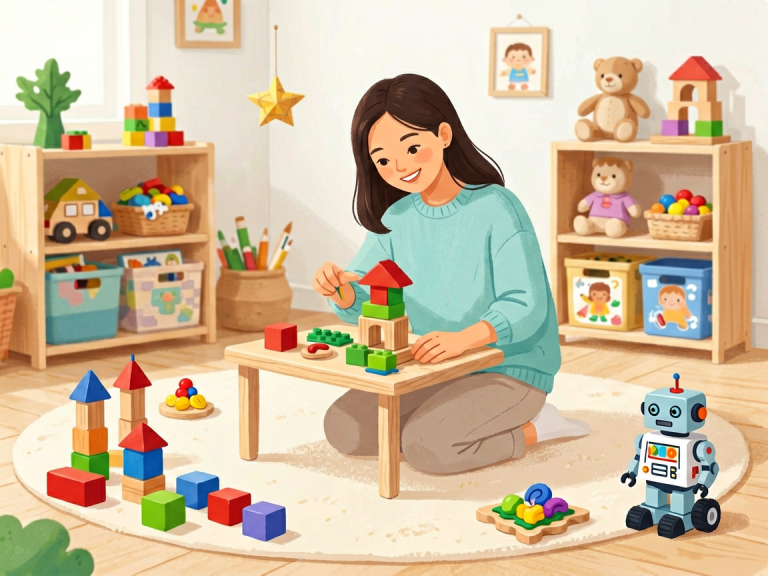
Reading readiness is a crucial developmental milestone that extends far beyond simply knowing the alphabet. It encompasses a constellation of pre-literacy skills—phonological awareness, vocabulary acquisition, letter recognition, narrative comprehension, and the ability to focus and follow sequential instructions. While many parents instinctively reach for flashcards or phonics apps, research in early childhood education consistently highlights the power of hands-on, constructive play in laying the groundwork for literacy. Among the most effective tools for fostering reading readiness are building toys. These seemingly simple blocks, tiles, and connectors encourage children to think spatially, solve problems, and, most importantly, create and communicate stories. This article explores the best building toys specifically designed or naturally suited to boost reading readiness, explaining how each category supports the cognitive and linguistic prerequisites for learning to read.
—
The Connection Between Building Toys and Reading Readiness
Before diving into specific products, it is essential to understand the underlying mechanism that links construction play with literacy. Reading is not a passive activity; it demands active decoding, pattern recognition, and the ability to construct meaning from symbols. Building toys mimic this process in a tangible, three-dimensional way. When a child stacks blocks to form a tower, they are practicing sequencing and cause-and-effect reasoning. When they arrange magnetic tiles into a shape that resembles a house, they engage in symbolic thinking—the same skill required to understand that the squiggle “H” stands for the sound /h/. Furthermore, building play often involves language: children narrate their actions, describe their creations, and negotiate with playmates. This oral language development is the bedrock of later reading comprehension. Thus, the right building toys can simultaneously refine fine motor skills, spatial awareness, and pre-literacy abilities.
—
Top Building Toys That Promote Reading Readiness
1. Wooden Alphabet Blocks
The quintessential building toy for literacy development remains the classic set of wooden alphabet blocks. Unlike modern plastic alternatives, these blocks often feature upper- and lowercase letters, numbers, and simple pictures or words on each side. Their appeal lies in their versatility. A toddler may first use them purely for stacking—learning balance and hand-eye coordination. A preschooler, however, can begin to sort blocks by the letter printed on them, match uppercase to lowercase, or even spell simple three-letter words like “cat” or “dog.” The tactile experience of handling a physical letter, tracing its shape with a finger, and seeing it integrated into a structure helps reinforce letter recognition motor memory. Brands such as Uncle Goose and Melissa & Doug offer beautifully crafted sets that include both letters and corresponding illustrations, encouraging children to associate the printed symbol with a concrete visual—a foundational step in reading.
2. LEGO DUPLO Sets with Storytelling Themes
LEGO DUPLO, designed for small hands, is an outstanding vehicle for narrative development. Sets that revolve around community themes—such as a fire station, a farm, or a castle—invite children to build scenes and then populate them with characters. The act of constructing a setting naturally fosters story creation: “The firefighter climbs the ladder to rescue the cat from the tree.” This oral storytelling builds vocabulary, sentence structure, and understanding of plot and sequence. Moreover, many DUPLO sets now include printed bricks with letters or numbers, allowing children to label their creations—for example, placing a “B” brick on a building to indicate “Barn.” Parents and educators can extend the literacy activity by asking open-ended questions like, “What happens next in your story?” or “Can you tell me what your character is thinking?” Such dialogue promotes comprehension skills that are directly transferable to reading books. For reading readiness, sets that encourage role-playing and dialogue—such as the LEGO DUPLO Town sets—are particularly valuable.
3. Magnetic Tiles (e.g., Magna-Tiles or PicassoTiles)
Magnetic tiles have surged in popularity for good reason. These translucent, colorful shapes can be connected to form flat surfaces or three-dimensional structures. Their unique value for reading readiness lies in their capacity to support both geometry and literacy through open-ended play. Children can build letters by aligning square and triangle tiles on a magnetic surface—a powerful kinesthetic activity that reinforces letter formation. Teachers often use magnetic tiles in small-group instruction for phonemic awareness: children can build a “C” with tiles, then add a rectangle to the base to turn it into a “G,” discussing the sound change. Additionally, magnetic tiles are excellent for building story scenes: a flat blue tile becomes a river, a yellow triangle becomes a mountain, and small animal figurines placed on top become characters. This kind of symbolic substitution (a blue tile = water) is a direct precursor to understanding that printed words represent real objects and actions. Because magnetic tiles are easy to manipulate and highly appealing to young children, they encourage prolonged engagement—a key factor in developing sustained attention, which is essential for reading.
4. Building Sets with Letters, Numbers, and Words (e.g., Learning Resources Letter Blocks)
Some building toys are explicitly designed for literacy instruction. For instance, the Learning Resources Letter Construction set includes snap-together pieces that form individual letters. Children can build a capital “A” by snapping a large triangle to a horizontal line and adding a crossbar. This deconstructive and reconstructive approach demystifies letter shapes; a child learns that an “A” is not an arbitrary squiggle but a combination of straight and slanted lines. Similarly, sets like the “Bananagrams” tile game or “Alphabet Puzzle” blocks allow children to physically manipulate letters to form words. The tactile and kinesthetic feedback—clicking pieces together, feeling the weight of a tile—enhances memory retention. These toys are particularly effective for children who are resistant to traditional worksheet-based learning. By turning letter and word formation into a construction project, they transform a potentially tedious task into an engaging game.
5. Interlocking Plastic Bricks (Standard LEGO) for Older Preschoolers
As children approach kindergarten age (around 4–6 years), standard LEGO bricks become appropriate. While they require more precise fine motor control, they offer unparalleled opportunities for following complex instructions—a skill closely related to reading comprehension. Sets with instruction booklets require children to interpret diagrams, sequence steps, and decode symbols (e.g., arrows indicating direction, numbers indicating order). This is a form of “reading” graphic texts. Moreover, many LEGO sets come in story-based themes, such as “LEGO City” or “Disney” series, which encourage children to invent dialogues and narratives around the completed model. Parents can leverage this by asking the child to “write” or dictate a short story about their LEGO creation, thereby bridging the gap between building and written expression. Even without instruction manuals, free-building with LEGO promotes planning and mental visualization—both cognitive prerequisites for reading fluency.
6. Magnetic Stations and Whiteboard Building Sets
Another innovative category is magnetic building sets that incorporate a whiteboard or easel. For example, the “Magnetic Build-a-Letter” set includes magnetic pieces that children arrange on a whiteboard surface to form letters, then erase and try again. This low-pressure, iterative approach encourages experimentation. The whiteboard also allows for tracing the formed letter with a dry-erase marker, combining construction with pre-writing practice. Similarly, some sets include magnetic “word strips” where children can snap letters into place to build simple sight words like “the,” “and,” or “cat.” These activities directly target the automatic word recognition that fluent reading requires. The beauty of these toys is that they are reusable, self-correcting, and allow for independent exploration—empowering children to practice without constant adult guidance.
—
How to Maximize the Literacy Benefits of Building Toys
Simply handing a child a building toy is not enough to guarantee reading readiness. The adult’s role is critical in scaffolding the play toward literacy goals. Here are specific strategies for parents and educators:
- Model Language During Play: While building, narrate your own actions: “I am placing the red block on top of the blue block. Now I need a small triangle for the roof.” This exposes children to rich vocabulary and sentence patterns.
- Ask Open-Ended Questions: Instead of “What did you make?” try “Tell me about your creation. What does it do? Who lives there?” This encourages extended oral narratives.
- Incorporate Letters and Words Intentionally: If a child builds a tower, suggest adding a letter block to the top and naming a word that starts with that sound. For example, “That tower is tall. T-t-tall. Let’s put a ‘T’ on top!”
- Create a Print-Rich Play Environment: Label the toy bins with words and pictures, and keep alphabet posters nearby. When playing with building toys, point out the printed letters on the bricks or boxes.
- Use the Toy as a Story Prompt: After a structure is built, invite the child to tell a story about it. Write down their story on a piece of paper and read it back to them, reinforcing the connection between spoken words and written text.
—
Conclusion
Building toys are far more than mere entertainment; they are powerful instruments for developing the cognitive, linguistic, and motor skills that underpin reading readiness. From the timeless simplicity of wooden alphabet blocks to the creative complexity of magnetic tiles and LEGO sets, each category offers unique opportunities to practice letter recognition, phonological awareness, narrative thinking, and sustained attention. The key lies not in the toy itself but in how it is used—with intentional adult guidance, open-ended exploration, and a focus on language-rich interaction. By integrating these best building toys into a child’s daily play, parents and educators can build a solid foundation for a lifelong love of reading. After all, every great reader first learned that symbols can create meaning—and what better way to learn that than by building it, block by block?