Top Building Toys That Sharpen Hand-Eye Coordination: A Comprehensive Guide
—
Introduction
Hand-eye coordination is a fundamental skill that influences everything from everyday tasks like writing and eating to athletic performance and fine motor abilities in children and adults alike. It involves the synchronized control of eye movement with hand movement, allowing the brain to process visual information and translate it into precise physical actions. One of the most engaging and effective ways to develop and refine this skill is through play—specifically, with building toys. Unlike passive entertainment, building toys require active planning, manipulation, and adjustment, making them ideal for strengthening the neural pathways that govern coordination. But not all building toys are created equal. Some are better suited for younger children just beginning to master basic grasping and stacking, while others challenge experienced builders with complex assemblies and tiny components. This article explores the best building toys for hand-eye coordination, categorized by type and difficulty level, explaining why each one works and how to get the most benefit from them.
—
The Science Behind Hand-Eye Coordination and Building Toys
Before diving into specific products, it is helpful to understand why building toys are so effective. Hand-eye coordination relies on three components: visual perception (seeing the object and its position), motor planning (deciding how to move the hand to interact with it), and fine motor execution (making the precise movement). Building toys force the brain to constantly perform this loop. For example, when a child reaches for a block and places it on top of another, the eyes must judge distance, angle, and alignment; the brain must calculate the force needed; and the fingers must grip and release at the right moment. Repetition of this process strengthens synaptic connections. Moreover, many building toys introduce spatial reasoning, which is closely linked to coordination. As structures grow taller or more intricate, the builder must adjust hand movements in real time based on visual feedback—such as noticing a wobble and correcting it. This dynamic interaction makes building toys superior to many other types of toys for coordination training.
—
1. Classic Wooden Building Blocks
Why They Work
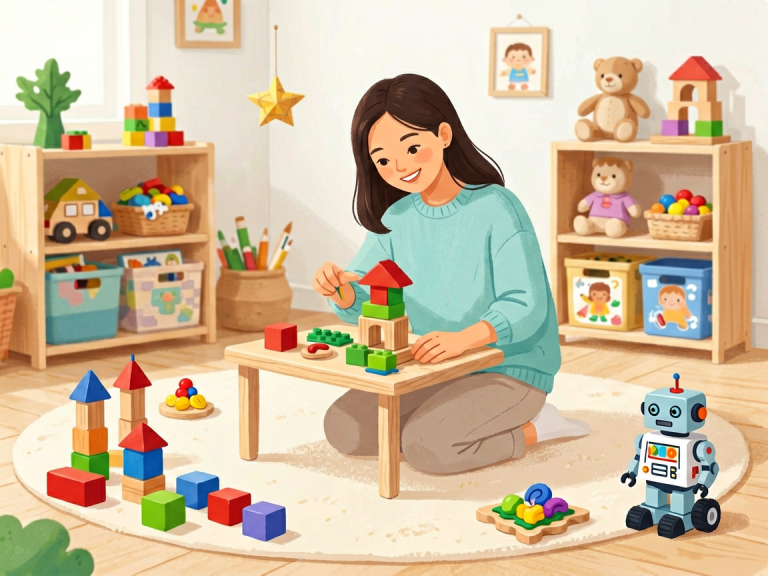
The simplest building toys are often the most powerful. Classic wooden blocks are typically uniform in shape (cubes, rectangles, cylinders) and made of natural, non-slip material. Because they require no snapping or connecting, the focus is entirely on balance, stacking, and placement. A toddler learning to stack a tower must train their eyes to align the block edge with the one below, while simultaneously controlling the hand to lower it gently without knocking the tower over. This develops both gross motor control (arm movement) and fine motor precision (finger adjustment).
Best for Ages
Wooden blocks are ideal for children aged 1 to 5. For younger children, larger blocks prevent choking hazards and are easier to grasp. Older children can use smaller blocks or those with uneven shapes to increase difficulty.
Specific Recommendations
Look for sets that include a variety of sizes and shapes—cylinders, arches, triangles—as these challenge coordination in different ways. Brands like Melissa & Doug, Hape, and Grimm’s offer high-quality, smooth-finished blocks that are safe and durable. The key is to avoid blocks with magnets or connectors at this stage, as pure stacking demands the most from hand-eye coordination.
—
2. Interlocking Construction Sets (e.g., LEGO, Mega Bloks)
Why They Work
Interlocking bricks take coordination to the next level by introducing the need for precise alignment and pressure. Instead of simply placing one block on another, the builder must line up the studs and push down with the correct amount of force to snap them together. This small action requires the eyes to guide the hands to the exact spot, and the hands to apply a steady, vertical pressure without slipping. Disassembling pieces also helps—prying bricks apart with fingers or a brick separator trains grip strength and controlled pulling.
Best for Ages
Standard LEGO bricks are recommended for children 4 and up (with larger Duplo blocks for ages 1.5–5). For older kids and adults, LEGO Technic or Creator sets with hundreds of small pieces provide a significant challenge.
Specific Recommendations
LEGO Classic boxes offer a mix of pieces for free-building, which encourages problem-solving and coordination. For a more structured approach, sets with step‑by‑step instructions (like LEGO City or Speed Champions) force the builder to follow a visual sequence while manipulating parts—a dual cognitive and motor task. Mega Bloks’ larger pieces are excellent for toddlers transitioning from wooden blocks to interlocking systems.
—
3. Magnetic Building Tiles (e.g., Magna-Tiles, PicassoTiles)
Why They Work
Magnetic tiles rely on the strong attraction of magnets embedded in the edges of plastic or acrylic shapes. Unlike interlocking bricks, they do not require pushing force; instead, they snap together automatically when brought close enough. This might seem easier, but it actually challenges hand-eye coordination in a different way: the builder must hold the tile at the correct angle and distance for the magnets to engage. Too far, and nothing happens; too close and at the wrong angle, the tile may flip or attach incorrectly. The tiles are transparent, allowing builders to see through them, which adds a visual dimension—children can see how shapes align from multiple perspectives.
Best for Ages
Magnetic tiles are safe for children aged 3 and up, as long as the magnets are securely enclosed. They are particularly popular with preschoolers and early elementary students because they allow quick creation of 3D structures like castles, towers, and geometric shapes.
Specific Recommendations
Magna-Tiles are a premium brand known for strong, durable magnets and clear colors. PicassoTiles offer similar quality at a lower price. To maximize coordination practice, choose sets that include both flat squares/triangles and three‑dimensional pieces like cubes or pyramids. The act of connecting a square to a triangle at a precise 45‑degree angle, for example, demands careful visual judgment and steady hands.
—
4. Advanced Model Kits (e.g., Metal Earth, Papercraft, Wooden 3D Puzzles)
Why They Work
For older children, teens, and adults, model kits that involve tiny parts, pliers, tweezers, and glue can be extremely effective for fine‑tuning hand‑eye coordination. These kits often require reading complex diagrams, bending metal tabs, or gluing small wooden pieces into place. Every action—bending a tab into a slot, aligning a tiny panel, cutting a paper fold—requires the eyes to guide the hands with millimeter precision. The mental load of interpreting instructions while coordinating movements further enhances cognitive‑motor integration.
Best for Ages
These toys are generally recommended for ages 12 and up due to small parts and sharp edges. Some simpler wooden 3D puzzles (like UGEARS or Robotime) are suitable for ages 8+ with adult supervision.
Specific Recommendations
Metal Earth kits (sold as flat metal sheets that you pop out and bend) are famous for their intricacy—common models include the Eiffel Tower, Star Wars ships, and dinosaurs. They come with a pair of fine‑tipped pliers; the builder must use them to fold tabs as small as 2‑3mm. For a less expensive option, wooden 3D puzzle sets (often laser‑cut plywood) require snapping out pieces and assembling them without glue, relying on friction and precise alignment. The key is to start with a simpler model and gradually increase piece count.
—
5. Robotics and Engineering Kits (e.g., LEGO Mindstorms, Arduino Beginner Kits)
Why They Work
Robotics kits combine building with electronics, programming, and mechanics. Assembling a robot involves connecting sensors, motors, gears, and structural elements—often using screws, nuts, and bolts. This demands a high level of manual dexterity and hand‑eye coordination, as small parts must be aligned and fastened with tools like screwdrivers. Additionally, when testing the robot, any misalignment will cause failure, providing immediate feedback that forces the builder to adjust. Programming adds a different cognitive layer, but the physical assembly remains the core coordination challenge.
Best for Ages
Robotics kits are suitable for children 8 and up, with simpler sets like LEGO Spike Essential (ages 6+) and more advanced ones like VEX V5 or Arduino for teenagers.
Specific Recommendations
LEGO Mindstorms Robot Inventor (ages 10+) includes a programmable hub, motors, and sensors. The building process alone—connecting gears and axles—is excellent for coordination. For a lower cost, Makeblock mBot or littleBits kits use magnetic connections and snap‑together electronics, reducing the need for screws but still requiring careful alignment. For adults, Arduino starter kits with breadboards, wires, and LEDs challenge fine motor skills through delicate wire insertion and component placement.
—
How to Choose the Right Toy for Different Ages and Skill Levels
To truly benefit hand‑eye coordination, the toy must match the user’s developmental stage. For infants and toddlers (0‑3 years): focus on large, soft or wooden blocks that require gross motor stacking. Avoid small parts. For preschoolers (3‑5 years): magnetic tiles and larger interlocking bricks (Duplo) are ideal. The magnetic snap feedback is rewarding and forgiving. For early elementary (6‑8 years): standard LEGO bricks, simpler model kits (like 3D wooden puzzles with 20‑30 pieces), and basic engineering sets. For preteens and teens (9‑15 years): advanced LEGO Technic, Metal Earth kits, and introductory robotics. For adults: complex model kits (ships, architecture), Arduino/raspberry pi projects, or mechanical puzzles. The progression should always be from large to small parts, from low to high precision, and from simple to multi‑step instructions.
—
Tips for Maximizing Coordination Benefits
- Create a distraction‑free workspace. Good lighting and a flat surface allow the eyes to focus without strain. Cluttered areas increase errors and frustration.
- Encourage both free play and guided builds. Free building fosters creativity and spontaneous coordination; following instructions improves sequential motor planning.
- Use tools when appropriate. Tweezers, pliers, or block separators are not cheating—they train different grip patterns and finger control.
- Practice disassembly as much as assembly. Taking apart a LEGO model or wooden puzzle requires controlled force and careful positioning, which further refines coordination.
- Time challenges for older users. Set a timer to complete a small section of a model; this adds a cognitive pressure that mimics real‑world coordination tasks.
- Include bilateral activities. Some building toys, like gear sets or marble runs, require using both hands simultaneously (e.g., holding a gear with one hand while tightening a screw with the other), promoting cross‑body coordination.
—
Conclusion
Building toys are far more than entertainment—they are powerful tools for developing one of the most essential human skills: hand‑eye coordination. From the simple act of stacking a wooden cube to the intricate assembly of a metal model spaceship, each interaction trains the brain to better connect what the eyes see with what the hands do. By choosing the right toy for the right age and using intentional practice strategies, both children and adults can see measurable improvements in dexterity, reaction time, and spatial awareness. Whether you prefer the tactile satisfaction of magnetic tiles or the technical challenge of a robotics kit, the key is to keep building—because every snap, twist, and placement brings you one step closer to better coordination.