Building Blocks of the Heart: The Best Building Toys for Emotional Learning
In a world increasingly focused on academic achievement and digital fluency, a quieter revolution is taking place in living rooms and classrooms. Parents and educators are rediscovering that the most profound learning often happens not through screens or worksheets, but through the simple, tactile act of building. While we traditionally associate construction toys with STEM skills—spatial reasoning, problem-solving, and fine motor development—their impact on emotional intelligence is equally transformative. Emotional learning, which encompasses self-awareness, empathy, emotional regulation, and social skills, can be nurtured powerfully through the hands-on, open-ended play that building toys provide. This article explores the best building toys for emotional learning, examining how each type supports the development of a child’s inner world.
The Science Behind Play and Emotional Growth
Before diving into specific toys, it is essential to understand why building toys are uniquely suited for emotional learning. Unlike many passive forms of entertainment, construction play requires active decision-making, patience, and resilience. When a child builds a tower and it collapses, they experience a microcosm of frustration, disappointment, and the choice to try again. This process teaches emotional regulation in a safe, low-stakes environment. Moreover, building toys often involve collaboration, especially when multiple children play together, fostering communication, negotiation, and empathy. Research from developmental psychology shows that unstructured play, particularly with manipulable objects, helps children process complex emotions by externalizing them through physical creations. A child who feels angry might build a fortress and then dramatically knock it down, releasing pent-up energy in a controlled way. A child who feels lonely might construct a house and populate it with figures, creating a comforting narrative. Thus, the best building toys are those that encourage this kind of self-expression, flexibility, and social interaction.
Classic Wooden Blocks: The Foundation of Self-Regulation
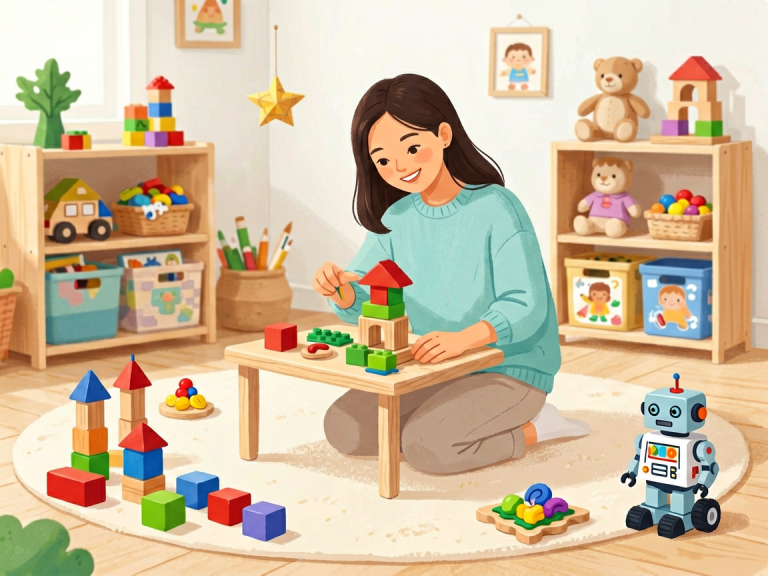
The humble wooden block deserves the first spot on any list of best building toys for emotional learning. These simple, unpainted or minimally painted cubes, cylinders, and arches offer no instructions, no preset story, and no digital distractions. This blank slate is precisely what makes them powerful for emotional development. With wooden blocks, a child must confront their own impulses and desires. They learn to plan, to accept that their idea may not work, and to adapt. The physical weight and texture of wood provide sensory feedback that grounds a child in the present moment, helping to calm an anxious mind. Many therapists use wooden blocks in play therapy because they allow children to symbolize feelings: a tall, shaky tower might represent a secret fear, while a stable, wide base might represent security. Brands like Melissa & Doug, Hape, and Grimm’s offer high-quality wooden blocks that are durable and safe. For emotional learning, the key is to resist giving instructions. Instead, parents and teachers should ask open-ended questions: “How did you decide to build that?” or “What happens when you put this block on top?” These prompts help children label and articulate their emotional processes. Additionally, building together with blocks teaches turn-taking and negotiation. A child who wants the last triangular block must either wait or ask politely, practicing patience and verbal communication.
Magnetic Tiles: Encouraging Flexibility and Resilience
Magnetic building tiles, such as those from Magna-Tiles, PicassoTiles, or Magformers, have become a staple in modern playrooms, and for good reason. Their translucent, colorful panels connect with a satisfying click, making them highly engaging. From an emotional learning perspective, magnetic tiles excel at teaching flexibility. Because they easily detach and reconfigure, children are less afraid of “mistakes.” A wall that collapses can be quickly rebuilt without the frustration of heavy blocks tumbling everywhere. This low-stakes environment encourages risk-taking; a child might try an unstable design knowing that failure is quick to recover from. This builds resilient emotional responses to setbacks. Moreover, magnetic tiles often come in sets that include wheels, windows, and geometric shapes, allowing for endless creative storytelling. A child might build a castle for a lonely knight, a spaceship for a frightened astronaut, or a hospital for a sick animal—each story a way to process emotions. When playing with others, magnetic tiles naturally foster cooperation. Children must negotiate space, share pieces, and combine their ideas. For example, one child might build a tower while another builds a bridge connecting to it, requiring verbal communication about height and placement. This social dance—deciding whose idea takes priority, how to compromise, and how to celebrate a joint creation—is a rich emotional learning experience. Parents can enhance this by noting positive interactions: “You listened to your friend’s idea and changed your design. That was very kind.”
Lego and Interlocking Brick Systems: Narrative Construction for Empathy
Lego is perhaps the most iconic building toy, and its potential for emotional learning is immense. While Lego sets often come with instructions, the true emotional value lies in free play and custom builds. Lego bricks allow children to construct not only structures but entire worlds populated by minifigures, each with a potential backstory and feelings. This narrative construction directly supports empathy because children must imagine what a minifigure thinks, feels, and wants. A child who creates a scene where a firefighter rescues a cat is rehearsing compassion; a child who builds a house with a sad figure inside is exploring loneliness. Lego also offers specialized sets, such as the “Lego Friends” or “Lego City” lines, which include diverse characters and everyday scenarios—a school, a hospital, a family home. These settings provide a safe framework for exploring real-world emotions like jealousy, excitement, or fear of separation. Furthermore, the act of following instructions for a complex set teaches patience and delayed gratification, key components of emotional regulation. When a child makes a mistake and must disassemble and rebuild, they practice frustration tolerance. For emotional learning, encourage children to modify sets or create hybrids. Ask questions like, “What is your character feeling right now?” or “Why did that building need a big window?” Lego’s “Build to Give” campaign, where children build hearts and share them, also demonstrates how the brand links construction with kindness. The repetitive, fine-motor work of snapping bricks together can be meditative, helping anxious children calm down. In group play, Lego fosters collaboration and conflict resolution; disagreements over pieces or design require negotiation and compromise.
Construction Sets with Character Kits: Social-Emotional Role Play
Some building toys explicitly combine construction with social-emotional learning through character-driven kits. Examples include the “Tegu” magnetic wooden blocks, which include expressive animal faces, or “Stickle Bricks” which allow for character creation. More advanced options like “Minecraft” building toys (both physical and digital) or “K’NEX” allow children to build figures and scenarios inspired by their favorite stories. The key feature here is the integration of human-like or animal-like characters that can be posed and assigned emotions. When a child builds a robot with a sad face or a dinosaur that is scared of a bigger dinosaur, they are practicing emotional labeling and perspective-taking. These toys are particularly effective for children who struggle to verbalize feelings. The physical act of placing a happy face on a block can externalize an inner state. For example, a child who is angry might deliberately build a monster with a furious expression, then safely destroy it—a form of catharsis. Meanwhile, collaborative building with character kits encourages storytelling that mirrors real-life social dynamics. Children might create a scenario where two characters argue over a toy (a common real-life conflict) and then rebuild peace. This rehearsal of social scripts is invaluable for emotional intelligence. Parents and educators can facilitate by asking role-play questions: “How do you think that character feels now? What could they say to make up?” The best brands for this purpose are those that allow customization, such as “Playmobil,” which offers extensive character sets with diverse emotional expressions, or “Brio” wooden train sets with characters that can be integrated into narratives. These toys blur the line between building and dramatic play, making them doubly effective for emotional learning.
Open-Ended Nature-Based Building Toys: Grounding and Mindfulness
Finally, a category of building toys that directly connects children with nature offers unique emotional benefits. Toys like “tree blocks” (organic wood slices and branches from companies like “Monti Kids” or “Uncle Goose”), “clay and dough” construction sets, or even “beechwood stacking stones” encourage a slower, more mindful form of play. The natural textures, smells, and organic shapes provide sensory grounding that can soothe an overstimulated child. When children build with natural materials, they are less concerned with perfect symmetry and more with harmony and balance—a metaphor for emotional equilibrium. These toys often lack bright colors and commercial characters, forcing children to rely on their own imagination. This promotes self-reliance and inner calm. For example, stacking wooden “pebbles” requires careful concentration and steady hands; when a stack tumbles, the gentle clatter is less jarring than plastic blocks. This gentleness helps children learn to manage disappointment without overwhelming frustration. Additionally, nature-based building toys often come in natural hues (browns, greens, grays) that do not overstimulate the nervous system, making them ideal for children with sensory processing challenges or anxiety. Playing with these toys can be a form of mindfulness practice—focusing on the present moment, the feel of wood, the act of balanced stacking. Parents can guide emotional learning by inviting children to “build something that feels calm,” or “build a safe place for a tiny creature.” These prompts encourage introspection and emotional regulation.
Choosing the Right Building Toy for Emotional Growth
No single building toy is universally best; the right choice depends on the child’s age, temperament, and emotional needs. For a child prone to frustration, magnetic tiles or magnetic wooden blocks offer quick recovery. For a child who loves stories, Lego or Playmobil provides rich narrative opportunities. For a child who is easily overwhelmed, natural wood blocks offer a calming sensory experience. For siblings or classmates who need to practice social skills, large sets of interlocking bricks or magnetic tiles encourage collaboration. The most critical factor is adult involvement. While children learn a great deal through independent play, emotional learning is deepened when parents or teachers engage with curiosity and empathy. Instead of directing the play, ask non-judgmental questions: “I see you’re building a very tall tower. How did you decide to make it that tall?” or “You seem frustrated that it fell. What do you think you’ll try next?” This affirms the child’s emotional experience and models constructive coping. Additionally, rotating toys and introducing new building challenges can prevent boredom while maintaining emotional engagement.
In conclusion, building toys are far more than tools for engineering or creativity; they are instruments for emotional literacy. Through the simple acts of stacking, connecting, dismantling, and rebuilding, children learn to tolerate frustration, celebrate persistence, understand others’ perspectives, and express complex feelings. Whether it is the classic feel of wooden blocks, the satisfying snap of magnetic tiles, or the narrative world of Lego bricks, the best building toys for emotional learning are those that invite open-ended play, encourage social interaction, and honor the child’s inner life. As we seek to raise emotionally intelligent children, we would do well to remember that sometimes the most profound lessons come not from a screen or a textbook, but from a tower we build together—and allow to fall.