How to Choose Plush Toys for Newborns: A Comprehensive Guide for Safe and Soothing Choices
Introduction: The Importance of Thoughtful Selection
The arrival of a newborn transforms a household into a world of wonder, where every object must be examined through the lens of safety, comfort, and developmental appropriateness. Among the many items parents prepare, plush toys hold a special place—they are soft, cuddly, and often become cherished companions. However, choosing the right plush toy for a newborn is far from a simple decision. Unlike toys designed for older children, those intended for infants younger than 12 months demand rigorous consideration of materials, construction, size, and potential hazards.
Newborns explore the world primarily through their mouths, and their skin is exceptionally sensitive. A poorly chosen stuffed animal could pose risks such as choking, suffocation, allergic reactions, or even bacterial contamination. Moreover, plush toys can serve as tools for sensory development, emotional soothing, and even early bonding. Therefore, parents and caregivers must equip themselves with knowledge to make informed choices. This article provides a detailed roadmap for selecting plush toys that are not only adorable but also safe, functional, and beneficial for a newborn’s growth.
Safety First: Non‑Negotiable Criteria for Newborns
Choosing the Right Materials and Fabrics
The most critical factor when selecting a plush toy for a newborn is the material. Newborns have delicate, permeable skin that absorbs chemicals more readily than adult skin. Consequently, fabrics should be hypoallergenic, free from toxic dyes, and ideally certified by recognized safety standards such as OEKO‑TEX or the Global Organic Textile Standard (GOTS). Organic cotton, bamboo fiber, and natural wool (provided the baby does not have wool allergies) are excellent choices because they are breathable, soft, and less likely to cause irritation.
Synthetic materials like polyester are common in plush toys due to their low cost and durability, but parents must ensure that the polyester is of high quality and free from phthalates, lead, or formaldehyde. Many low‑cost stuffed animals use flame retardants that can be harmful if ingested or inhaled. Look for labels that explicitly state “non‑toxic” or “baby‑safe.” Additionally, avoid toys with long, loose fur or shedding fibers, which can be inhaled or swallowed. Instead, choose short‑pile fabrics that are tightly woven and unlikely to lose threads.
Another hidden danger is the stuffing material. Traditional polyester fiberfill is generally safe if enclosed in a well‑sealed fabric, but some cheaper toys use recycled foam or beads that can leak through seams. For newborns, the safest stuffing is continuous filament polyester fiber, which is less likely to clump or escape. Some natural alternatives, such as kapok or organic wool, offer breathability and moisture‑wicking properties, but always check for potential allergens.
Construction Quality and Durability
Beyond materials, the physical construction of the plush toy determines its safety. Every seam must be double‑stitched or reinforced, ensuring that no stuffing can escape through gaps. Loose threads, buttons, ribbons, bows, or plastic eyes and noses are major choking hazards. The safest plush toys for newborns feature embroidered facial features and decorations that are sewn directly into the fabric. Avoid any toy with glued‑on parts, as adhesives can weaken over time.
A helpful test is to gently pull on all attached components: if anything moves, bends, or shows signs of detachment, the toy is not suitable. Also, inspect the toy for any rigid internal structures—wires, hard plastic frames, or metal squeakers—that could break and cause injury. Newborns lack the strength and coordination to avoid such hazards, so uncomplicated, soft bodies are best.
Finally, consider the toy’s size. For newborns, plush toys should be small enough to fit in a crib without posing a suffocation risk, but not so tiny that they could be swallowed. A general guideline: the toy should be larger than a newborn’s mouth (at least 3–4 inches in diameter) but not big enough to cover the baby’s face. The American Academy of Pediatrics recommends that cribs remain free of soft objects, including large plush toys, until at least 12 months old to reduce the risk of Sudden Infant Death Syndrome (SIDS). Therefore, a small, lightweight plush toy that can be used during supervised tummy time or as a comfort item while holding the baby is preferable.
Developmental and Sensory Considerations
Stimulating the Senses Without Overwhelming
Newborns are in a critical period of sensory development. Plush toys can be valuable tools for introducing gentle stimuli. When choosing a toy, consider its texture, weight, and sound. Different fabrics—corduroy, velvet, cotton, ribbed knits—offer varied tactile experiences that help an infant’s brain map different sensations. A toy with multiple textures, such as a soft body and a satin‑like ear, encourages exploratory touching.
Color also matters. Newborns have limited color vision at birth, favoring high‑contrast patterns like black‑and‑white or red‑and‑white. However, as they grow, they begin to differentiate pastels and bright hues. Plush toys in soft, muted tones with one or two contrasting accents are visually stimulating without being overwhelming. Avoid toys with blinking lights or loud electronic sounds, which can overstimulate a newborn’s developing nervous system and disrupt sleep cycles.
Sound elements, if present, should be gentle. A soft rattle or crinkle paper sewn inside the toy can provide auditory feedback that teaches cause and effect. However, ensure that any sound‑producing component is securely encased and cannot be detached. Also, the volume should be low—newborns have sensitive hearing, and sudden loud noises can startle them.
Encouraging Bonding and Emotional Comfort
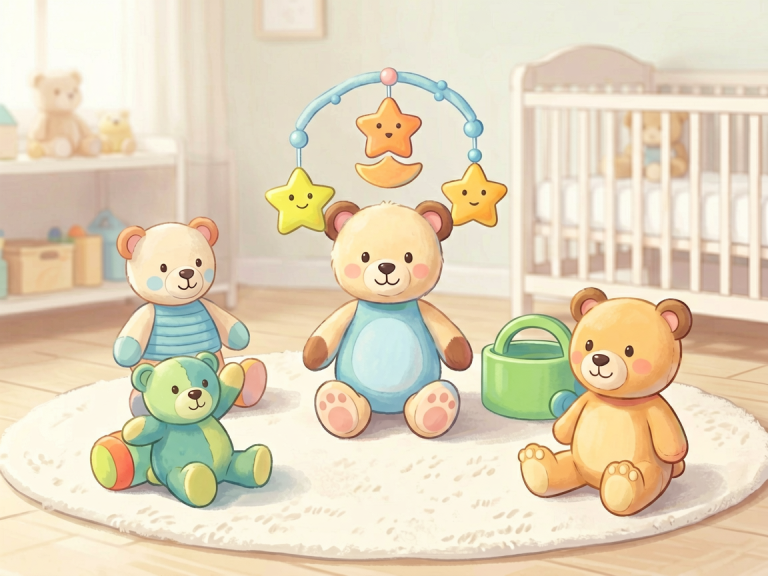
Plush toys often serve as transitional objects, helping infants self‑soothe and feel secure. For this purpose, choose a toy that is lightweight, easy to grasp, and has a shape that fits a baby’s hand. Classic animal shapes like bunnies, bears, or elephants with large, rounded limbs are easier for tiny fingers to hold than complex shapes. The toy should not have any sharp edges or protruding parts.
Some parents prefer “lovey” toys—small, square blankets with an attached animal head. These can be comforting because they combine a familiar texture (blanket) with a soft, cuddly face. When selecting a lovey, ensure the blanket portion is made from breathable fabric and is not too large to pose a suffocation risk. Always supervise the baby when they are using a lovey, and never place it in the crib for sleep until the infant is older.
Another emotional consideration is washability. Plush toys inevitably become dirty with drool, milk, and hand grime. Choose toys that are machine‑washable and dryer‑safe. This not only maintains hygiene but also ensures the toy can be cleaned quickly if a baby gets sick. Hypoallergenic toys that can withstand frequent washing without losing their shape or color are ideal.
Practical Guidance for Parents and Caregivers
Reading Labels and Certifications
Navigating the market requires careful label reading. Look for age recommendations: many plush toys are labeled “for ages 3+” due to small parts, but some manufacturers specifically design toys for “0+”. The latter typically use safer materials and construction. Additionally, certifications such as ASTM F963 (American Standard) or EN71 (European Standard) indicate that the toy has undergone testing for mechanical and chemical hazards.
For organic or eco‑conscious choices, look for GOTS certification, which ensures that the entire supply chain—from farming to manufacturing—meets strict environmental and social criteria. While not mandatory, this certification provides peace of mind for parents concerned about chemical residues.
Cleaning and Maintenance Tips
To prolong the life of a plush toy and keep it safe, establish a cleaning routine. Most manufacturers include washing instructions on the tag; follow them precisely. Even if a toy is machine‑washable, place it inside a mesh laundry bag to protect it from snagging. Use a gentle, fragrance‑free detergent to avoid irritating the baby’s skin. After washing, dry the toy thoroughly—moisture trapped inside can lead to mold growth. Air drying is often safest, but if using a dryer, set it on low heat.
Inspect the toy regularly for wear and tear. Over time, stitching may loosen, or fabric may thin. Discard any toy that begins to show signs of damage, such as holes, loose threads, or faded colors that might indicate dye leaching. Never attempt to repair a plush toy with staples or glue, as these can be toxic.
When to Introduce a Plush Toy
Developmental experts suggest that plush toys are most beneficial after the first month, when a newborn begins to show interest in objects. Even then, the toy should be used only during supervised play, not in the crib. Around 4–6 months, as babies start reaching and grasping, a small plush toy can encourage motor skills. By 9–12 months, some infants develop attachment to a particular toy, which can be a positive emotional anchor. However, always prioritize safe sleep practices: the American Academy of Pediatrics recommends that the crib remain free of any soft objects, including plush toys, until after the first birthday.
Conclusion: A Thoughtful Investment in Safety and Comfort
Choosing a plush toy for a newborn is a decision that blends aesthetics, practicality, and science. The soft, smiling face of a stuffed bunny may seem innocent, but behind it lies a network of material choices, construction techniques, and safety standards. By prioritizing organic, hypoallergenic fabrics; secure, embroidered details; appropriate size; and ease of cleaning, parents can select a toy that not only brings joy but also supports healthy development.
Remember that a plush toy is not just a gift—it is a companion that will share countless moments of exploration, comfort, and even first laughter. Investing time in research ensures that this companion is a safe and nurturing presence. In a world where every item in a newborn’s environment matters, the right plush toy can become a beloved part of the baby’s world, fostering both security and curiosity from the very beginning.