The Ultimate Guide to Choosing STEM Toys: Nurturing Young Minds Through Play
In an era where technology and innovation drive our world, parents and educators are increasingly turning to STEM toys as a gateway to critical thinking, problem-solving, and creativity. The acronym STEM—Science, Technology, Engineering, and Mathematics—represents a set of disciplines that form the backbone of modern education and career opportunities. However, with the market flooded with countless options labeled “educational” or “STEM,” choosing the right toy for your child can feel overwhelming. A poorly chosen toy might gather dust, while a well-chosen one can spark a lifelong passion. This comprehensive guide will walk you through the essential factors to consider when selecting STEM toys, ensuring that your investment nurtures curiosity, builds skills, and brings genuine joy to the learning process.
Why STEM Toys Matter
Before diving into the selection criteria, it’s important to understand why STEM toys hold such value. Unlike traditional toys that focus solely on entertainment, STEM toys are designed to engage children in active learning. They encourage hands-on exploration, asking children to hypothesize, experiment, and iterate. For example, a simple building set teaches spatial reasoning and engineering principles, while a coding robot introduces logic and sequencing. Research shows that early exposure to STEM concepts can improve academic performance, boost confidence in technical subjects, and even close gender gaps in science and math fields. Moreover, STEM toys often develop soft skills like patience, resilience, and collaboration—qualities that are essential in any career. By choosing the right toy, you are not just buying a plaything; you are investing in your child’s cognitive development and future success.
Understanding STEM Toys: More Than Just Educational Labels
Not every toy stamped with “STEM” delivers genuine educational value. Some manufacturers attach the label as a marketing gimmick, while others design products that are truly pedagogically sound. To make an informed choice, you need to look beyond the packaging. A genuine STEM toy should incorporate at least one of the core disciplines in a meaningful way. For instance, a chemistry set that allows children to mix safe substances and observe reactions is a clear science toy. Similarly, a programmable drone combines technology and engineering. However, a puzzle that simply requires matching shapes, while beneficial, may not qualify as STEM unless it explicitly teaches a concept like geometry or logic. The key is to evaluate what the toy asks the child to do: Is it passive play—pressing a button to see a pre-programmed result—or active, creative engagement where the child must design, build, or solve a problem? The latter is where true STEM learning happens.
Key Factors in Choosing STEM Toys
Age Appropriateness: Matching Developmental Stages
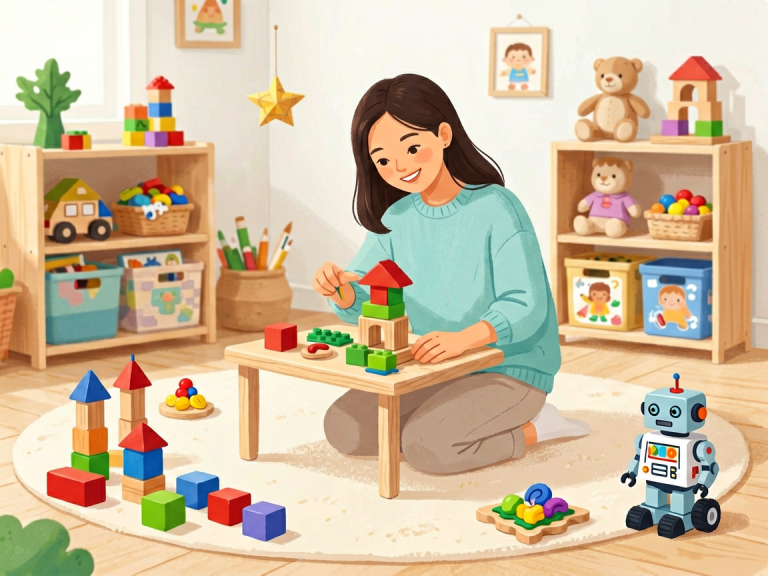
One of the most critical factors is selecting a toy that aligns with your child’s age and developmental level. Toys that are too advanced can frustrate and discourage, while those that are too simple fail to challenge. For toddlers (ages 2–4), focus on basic cause-and-effect toys, such as stacking blocks, magnetic tiles, or simple shape sorters that introduce the concepts of gravity, balance, and geometry. At this stage, sensory exploration and fine motor skills are paramount. For preschool and early elementary children (ages 5–7), introduce more complex building sets (e.g., LEGO Duplo or basic K’NEX), simple coding games like robot mice that follow directional commands, or beginner science kits for growing crystals or observing life cycles. These toys should encourage trial and error without requiring reading fluency. For older elementary children (ages 8–12), consider robotics kits, more advanced circuitry sets (like Snap Circuits), or coding platforms such as Scratch-compatible robots. These toys should involve multi-step planning and troubleshooting. For teenagers (13+), look for kits that mimic real-world engineering, such as Arduino or Raspberry Pi projects, 3D printing pens, or advanced chemistry sets with detailed protocols. Always check the recommended age range on the packaging, but also observe your child’s individual abilities—some may be ready for a higher level earlier, while others benefit from revisiting simpler concepts.
Open-Endedness: Encouraging Creativity and Exploration
Open-ended toys are those that can be used in multiple ways, without a single “correct” outcome. They are the opposite of toys that only do one thing, like a toy that sings a fixed song when a button is pressed. In the realm of STEM, open-ended toys are gold. For example, a set of interlocking wooden planks (like Kapla or KEVA planks) can be used to build towers, bridges, or geometric patterns, teaching balance and structural integrity in countless configurations. Magnetic tiles, building blocks, and certain coding toys that allow children to create their own sequences rather than following pre-set paths are all excellent. Open-ended toys foster divergent thinking—the ability to generate multiple solutions to a problem. They also grow with the child; a simple building set can be used differently at age 4 than at age 10. When evaluating a toy, ask yourself: Can my child use this in more than one way? Does it encourage experimentation without a fixed goal? If the answer is yes, it is likely a strong choice for long-term engagement and learning.
Educational Value: Aligning with Learning Goals
While all STEM toys have educational potential, some are more tightly aligned with specific learning objectives than others. Consider what skills you want your child to develop. If you aim to strengthen logical thinking, look for toys that involve sequencing, pattern recognition, or algorithms—such as coding board games (e.g., Robot Turtles) or programmable robots. For engineering, choose construction sets that require following plans or designing original structures, like LEGO Technic or Meccano. For science, opt for kits that incorporate the scientific method: hypothesize, test, observe, and conclude. Kits for making slime, launching rockets, or dissecting owl pellets provide concrete experiences. Also, note the depth of the learning. Some toys offer shallow engagement—for instance, a toy that simply demonstrates a chemical reaction without explaining why it happens. Better toys include guides or online resources that explain the underlying concepts. Additionally, look for toys that integrate multiple STEM fields. A robotics kit, for example, combines engineering (building), technology (programming), mathematics (angles and timing), and often science (physics of motion). Such interdisciplinary toys provide richer learning experiences.
Quality and Safety: Durability and Non-Toxic Materials
STEM toys often involve small parts, moving components, or even electronic circuits, making quality and safety paramount. First, ensure the toy meets safety standards for your child’s age group. Check for certifications like ASTM (American Society for Testing and Materials) or CE (Conformité Européenne) marks. Avoid toys with sharp edges, tiny parts that could become choking hazards for children under three, or easily breakable pieces that could cause injury. Durability is also important, especially for toys that will be handled roughly or used repeatedly. Building sets should have pieces that snap together firmly but can be easily disassembled. Electronic components should be enclosed in sturdy casings. Many high-quality STEM toys come from established brands like LEGO, Thames & Kosmos, Snap Circuits, and Sphero, which invest in rigorous testing. However, don’t dismiss lesser-known brands if they have good reviews and transparent material information. Also, consider the toy’s potential for longevity—will it withstand repeated play, or will it break after a few uses? A well-made toy can be passed down to younger siblings, adding to its value.
Budget and Longevity: Investing Wisely
STEM toys can vary wildly in price, from a few dollars for a simple puzzle to several hundred for advanced robotics kits. Your budget should guide, but not limit, your choices. However, it’s important to consider the toy’s “cost per play” or its lifespan. A cheap toy that breaks in a week or bores the child quickly is a poor investment. Conversely, a more expensive set that offers hundreds of building combinations, programmable features, and expansion packs can provide years of engagement. Look for toys that are expandable—for example, a magnetic tile set that can be added to, or a coding robot that works with additional sensors. Many brands offer starter kits that can be upgraded later. Also, consider whether the toy requires consumables (batteries, special paper, chemicals) that will add ongoing costs. Sometimes the best value comes from simple, open-ended materials like wooden blocks or marbles, which are inexpensive yet deeply educational. Finally, resist the urge to buy the most advanced toy for a young child; it may be underutilized. Instead, choose a toy that matches the current skill level but has room for growth.
Child’s Interest: Following Their Passion
No matter how educational a toy is, it will fail if it does not capture your child’s interest. A child who loves dinosaurs might be more engaged by a fossil excavation kit than a chemistry set. A child fascinated by space might thrive with a model rocket or a planet-building puzzle. Pay attention to your child’s natural curiosities and hobbies. Talk to them about what they enjoy in school or during free time. You can also introduce them to a variety of STEM toys through libraries, toy libraries, or friends’ homes to see what sparks their enthusiasm. It’s okay if their interest shifts over time; that is part of exploration. The goal is not to force a specific discipline but to let the child lead. Additionally, consider the play style: some children prefer solitary, focused activities, while others thrive in collaborative play. A single-player circuit board kit may suit a quiet child, while a multi-player marble run may be better for siblings or playdates. By aligning the toy with the child’s personality and passions, you increase the likelihood of sustained engagement and deep learning.
Reviews and Recommendations: Learning from Others
In the age of online shopping, reviews can be invaluable—but they must be interpreted wisely. Look for reviews from parents, educators, or STEM professionals who describe actual experiences. Pay attention to comments about durability, ease of use, and whether the toy held a child’s attention over time. Beware of overly positive or negative reviews; look for balanced opinions. Also, check if the toy has won awards from reputable organizations, such as the Toy Association’s STEM Toy of the Year or the National Parenting Product Awards. Educational blogs, YouTube channels (like “Make It Work” or “Science Mom”), and forums like Reddit’s /r/ScienceParents can offer deep dives. Additionally, consider reaching out to your child’s teacher or a local science center educator for personalized suggestions. If possible, visit a toy store in person to see the toy physically—inspect the pieces, read the instructions, and gauge the complexity. Some libraries even lend STEM toys, allowing you to test before buying.
Common Mistakes to Avoid
Even with careful consideration, it’s easy to fall into traps. One common mistake is overwhelming your child with too many toys at once. Having a few high-quality, varied options is better than a closet full of mediocre ones. Another mistake is focusing only on “hard” skills (math, coding) and forgetting the importance of creativity and aesthetics. STEM toys that incorporate art (STEAM) can be more engaging and allow for self-expression. Also, avoid toys that oversimplify concepts to the point of being misleading. For example, a toy that merely flashes lights when you press a button might be labeled “circuit toy” but teaches nothing about circuits. Finally, don’t neglect the role of adult involvement. The best STEM toys are often those that require parent or mentor guidance, especially for younger children. Be prepared to sit down and explore together, asking open-ended questions like “What do you think will happen if…?” Your engagement multiplies the toy’s educational value.
Conclusion
Choosing the perfect STEM toy is an art that balances educational rigor, developmental appropriateness, quality, and, most importantly, your child’s unique spark. Remember that the ultimate goal is not to produce a future engineer or scientist overnight, but to cultivate a mindset of curiosity, perseverance, and joy in discovery. A well-chosen STEM toy becomes a tool for adventure—a way for children to ask “why” and “how” and then find their own answers. As you navigate the aisles of toy stores or scroll through online catalogues, keep these guidelines in mind: prioritize open-endedness, match the challenge to the child, prioritize safety and durability, and follow your child’s passions. The right toy will not only entertain but also empower your child to build, code, experiment, and dream. And in that process, you are giving them the greatest gift of all: the confidence that they can shape the world around them.