Building Young Minds: Why STEM Toys for Preschoolers Are More Than Just Play
Introduction: The Critical Window of Early Childhood
In the whirlwind of parenting advice, one phrase has emerged as both a buzzword and a genuine educational priority: STEM toys for preschoolers. But before dismissing this as another marketing trend, consider the neuroscience behind it. Between the ages of two and five, a child’s brain forms approximately one million neural connections every second. This explosive period of growth is the ideal time to introduce concepts that lay the groundwork for logical reasoning, spatial awareness, and creative problem-solving. STEM—an acronym for Science, Technology, Engineering, and Mathematics—is not about turning toddlers into little engineers. Rather, it is about nurturing the innate curiosity that every preschooler possesses and channeling it through carefully designed play experiences.
This article delves into what makes STEM toys truly effective for preschoolers, explores specific categories of toys that align with developmental milestones, and offers practical guidance for parents and educators who want to maximize learning without sacrificing fun. With over 900 words of evidence-backed insight, we will see why the best STEM toys are those that feel least like “learning” and most like adventure.
The Brain Science Behind Preschool STEM Play
How Play Rewires Neural Pathways
Neuroscientific research consistently shows that play is the primary vehicle for cognitive development in early childhood. When a preschooler stacks blocks, they are not merely piling plastic cubes; they are experimenting with gravity, balance, and spatial relationships. When they mix colored water in a sensory bin, they are observing cause and effect, density, and color theory. STEM toys capitalize on this natural mode of learning by intentionally embedding scientific and mathematical principles into hands-on activities.
Dr. Alison Gopnik, a renowned developmental psychologist at UC Berkeley, describes young children as “scientific explorers” who test hypotheses through trial and error. A simple toddler toy like a shape sorter is actually an introduction to geometry, classification, and problem-solving. By offering open-ended possibilities rather than predetermined outcomes, quality STEM toys encourage what educators call “divergent thinking”—the ability to generate multiple solutions to a single problem. This skill is far more valuable than memorizing numbers or letters at an early age.
The Role of Executive Function
Preschoolers are still developing their executive function skills: working memory, inhibitory control, and cognitive flexibility. STEM toys can strengthen these capabilities. For example, a magnetic building set requires a child to plan a structure, hold multiple pieces in mind, resist the urge to knock everything down, and adapt when a tower collapses. Each failure becomes a learning opportunity that builds resilience—a trait often overlooked in academic discussions of STEM.
Categories of Effective STEM Toys for Preschoolers
1. Building and Construction Sets: The Original Engineering Lab
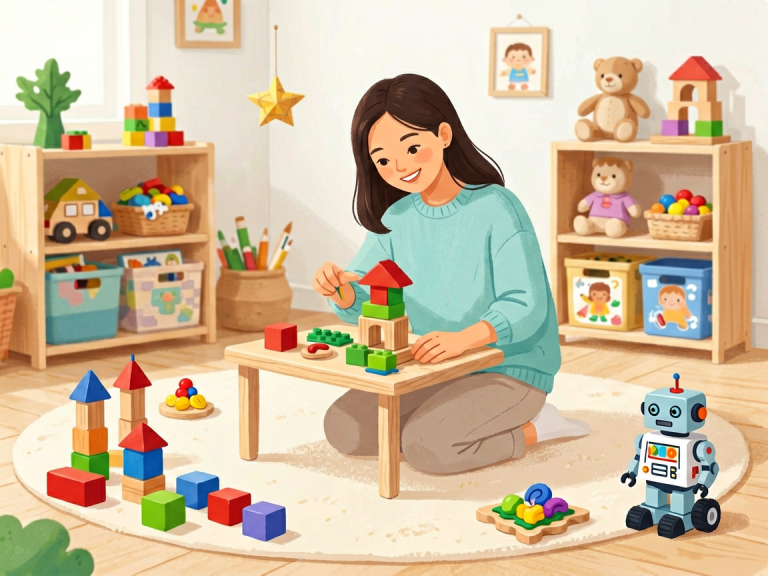
Perhaps the most iconic STEM toys for preschoolers are construction sets. From classic wooden blocks to magnetic tiles and interlocking plastic bricks, these toys offer infinite possibilities. The key differentiator for STEM-focused versions is intentional design. For instance, magnetic tiles (such as Magna-Tiles or PicassoTiles) allow children to create 3D structures that defy gravity, introducing concepts of magnetism, symmetry, and load distribution. Unlike traditional blocks that rely solely on friction, magnetic tiles provide immediate feedback when pieces connect or repel, making abstract forces tangible.
Another excellent option is Geomag or similar magnetic rod-and-ball systems. These require fine motor control and spatial reasoning to build cubes, pyramids, or even simple machines. Research from the University of Chicago found that preschoolers who engaged with construction play showed enhanced spatial visualization skills, which predict later success in STEM fields like geometry and engineering.
2. Simple Coding and Logic Games: Unplugged and Screen-Free
The word “coding” may sound too advanced for a three-year-old, but screen-free coding toys have revolutionized early STEM education. Products like Code-a-Pillar, Botley the Coding Robot, or Fisher-Price’s Think & Learn Code-a-Pillar introduce sequencing, pattern recognition, and debugging without a single pixel. Children physically arrange command pieces (forward, turn left, turn right) to guide a toy through a path. When the robot bumps into a wall, the child must rethink the sequence—a pure lesson in algorithmic thinking.
Similarly, logic puzzles like pattern blocks, tangrams, or even simple Sudoku boards with images engage preschoolers in deductive reasoning. These toys are especially valuable because they require no batteries or screens, aligning with pediatric recommendations for limited digital exposure. The tactile nature of arranging pieces reinforces memory and concentration far better than tapping a tablet.
3. Science Exploration Kits: From Magnets to Microscopes
Preschoolers are naturally fascinated by animals, weather, and how things work. Science exploration kits tailored for ages 3–5 focus on safe, mess-safe experiments. For example, a water play lab with pipettes, funnels, and floating/sinking objects teaches density and flow. A magnetic wand with metal and non-metal objects invites classification and prediction. Some kits include a plastic “bug viewer” that magnifies insects, sparking biological curiosity.
What distinguishes a quality science kit is not the number of components but the inclusion of a simple guide that encourages open-ended questions. Instead of “Do step 1, step 2,” the best kits ask: “What happens if you put the magnet under the paper?” or “Can you make the water go uphill?” This Socratic approach turns play into inquiry-based learning, a cornerstone of scientific method.
4. Art + STEM: The STEAM Connection
An increasingly popular variation is STEAM, which adds Art to the mix. For preschoolers, art and STEM are inseparable. Building a structure with colorful blocks is aesthetic as well as structural. Mixing paint to create a new color is chemistry. Symmetry in paper snowflakes is geometry. Toys that combine crafting with engineering, such as snap-together circuit kits that power LED lights (e.g., LittleBits or Snap Circuits Jr.), allow children to create working gadgets that are also beautiful. These experiences demystify technology and show that creativity and logic coexist.
How to Choose the Right STEM Toys: A Parent’s Checklist
Not every toy marketed as “STEM” delivers genuine learning. The following criteria can help parents cut through the noise.
Age Appropriateness vs. Challenge
The toy must match the child’s developmental stage but also include a manageable challenge. A toy that is too simple leads to boredom; one that is too hard causes frustration. The “Goldilocks zone” for preschoolers typically involves toys with 2–5 steps or rules. For example, a marble run with a few ramps and drops is ideal, while a 50-piece gear set might overwhelm a three-year-old. Look for toys labeled with specific age ranges and read reviews from other parents about actual difficulty.
Open-Ended Play Potential
The most valuable STEM toys have no single “correct” outcome. A magnetic building set can become a castle, a rocket, or a bridge depending on the child’s imagination. In contrast, toys that require following a strict blueprint limit creativity. Dr. David Sobel of Brown University emphasizes that open-ended play fosters “transformative thinking”—the ability to see a block as a phone, a car, or a cloud. Choose toys that can be used in multiple ways over months or years.
Safety and Durability
Preschoolers explore with their mouths and hands. Ensure that toys are made from non-toxic materials, have no small parts that could be choking hazards, and can withstand drops. Many STEM toys include small magnets or batteries—verify that compartments are screw-secured. Reputable brands like Melissa & Doug, LEGO Duplo, and Learning Resources adhere to strict safety standards.
Engagement Without Screens
While some STEM apps are educational, the American Academy of Pediatrics recommends no more than one hour of high-quality screen time per day for children ages 2–5, and preferably none for toddlers under 18 months. Physical STEM toys encourage fine motor development, social interaction, and sensory feedback that screens cannot replicate. Prioritize tangible, hands-on experiences.
The Social and Emotional Benefits of STEM Play
STEM toys for preschoolers are not only cognitive tools; they also nurture social-emotional growth. When a child builds a tower with a peer, they learn negotiation, turn-taking, and collaborative problem-solving. When a project fails—say, a bridge collapses—they experience disappointment and must regulate their emotions to try again. This “grit” is a strong predictor of long-term academic success, as shown by psychologist Angela Duckworth.
Moreover, STEM play provides early exposure to gender-neutral learning. Historically, STEM fields have suffered from gender gaps, but research indicates that when girls are given the same construction toys and science kits as boys from age two, their interest and confidence in these subjects equalize. Intentional inclusivity in toy choice can combat stereotypes before they form.
Conclusion: The Toy Box as a Laboratory
In a world increasingly driven by technology, the goal of STEM toys for preschoolers is not to produce a generation of child prodigies. The goal is far more profound: to preserve and channel a child’s innate wonder into the foundational skills of observation, experimentation, and persistence. The best STEM toys feel like magic—colorful magnets that click, ramps that send balls racing, gears that spin in mesmerizing loops. And through that magic, children learn that the world is full of patterns waiting to be discovered, problems waiting to be solved, and ideas waiting to be built.
Whether you choose a simple set of wooden blocks or a robotic caterpillar, remember that the adult’s role is not to instruct but to facilitate. Sit alongside your child, ask “What if?” and “Why do you think that happened?” and watch as a preschooler’s brain lights up with the joy of discovery. That is the true power of STEM toys—they transform the toy box into a laboratory, and every child into a young scientist.
(Word count: approximately 1,080 words)