STEM toys for elementary kids
Building Tomorrow’s Innovators: The Transformative Role of STEM Toys for Elementary Kids
Introduction
In an era where technology reshapes every facet of daily life, preparing children for a future that is both unknown and exciting has become a top priority for parents and educators. The acronym STEM—Science, Technology, Engineering, and Mathematics—has moved beyond the classroom and into toy boxes around the world. STEM toys, specifically designed for elementary‑aged children (typically ages 5–11), are not mere playthings; they are powerful tools that cultivate curiosity, critical thinking, and problem‑solving skills. Unlike traditional toys that offer passive entertainment, STEM toys engage young minds in hands‑on exploration, turning abstract concepts into tangible experiences. This article delves into why STEM toys matter, how to choose them wisely, the diverse categories available, and the essential role caregivers play in maximizing their benefits. By the end, you will understand why investing in quality STEM toys is one of the most impactful decisions you can make for a child’s cognitive and emotional development.
—
The Educational Value of STEM Toys
STEM toys do more than teach facts; they nurture a mindset of inquiry and resilience. When a child builds a simple circuit or assembles a gear‑driven robot, they are not just following instructions—they are hypothesizing, testing, failing, and iterating. This process mirrors the scientific method and engineering design cycle, laying a foundation for lifelong learning. Research in developmental psychology consistently shows that early exposure to hands‑on STEM activities boosts executive function skills, such as working memory, flexible thinking, and self‑control. Moreover, these toys bridge the gap between abstract concepts learned in school and real‑world applications. For instance, a marble run teaches gravity and momentum; a coding game introduces algorithmic logic; a chemistry set demonstrates states of matter. By embedding learning in play, children absorb complex ideas without the pressure of formal instruction. The result is not only academic readiness but also a positive attitude toward subjects that are often perceived as difficult or boring.
Another critical aspect is the development of “grit” and perseverance. STEM toys inherently involve trial and error. A bridge made of popsicle sticks may collapse; a program may not run correctly; a model rocket might not launch. These “failures” become learning opportunities. Children learn that mistakes are steps toward success, a mindset that is invaluable in any future career. Furthermore, many STEM toys encourage collaboration. Building a complex structure or solving a coding challenge often requires teamwork, teaching communication, compromise, and shared responsibility. In an increasingly interconnected world, these social‑emotional skills are just as vital as technical knowledge.
—
Categories of STEM Toys for Elementary Kids
Understanding the landscape of STEM toys helps parents make informed choices. While many toys integrate multiple disciplines, they can be broadly grouped into four overlapping categories, each targeting different facets of STEM learning.
Science‑Focused Toys
Science toys awaken a child’s sense of wonder about the natural world. For elementary kids, age‑appropriate options include microscope kits (featuring prepared slides and simple experiments), bug‑catching and observation sets, volcano‑making kits, and weather station models. These toys encourage systematic observation and documentation. For example, a butterfly garden allows children to witness metamorphosis firsthand, fostering an understanding of life cycles. Crystal‑growing kits introduce chemistry and patience. The best science toys are open‑ended—they prompt questions like “What happens if I add more water?” or “Why did this reaction happen?” Such inquiry drives deeper learning and often leads to spontaneous exploration beyond the toy’s manual.
Technology and Coding Toys
Technology toys for elementary kids have evolved far beyond simple remote‑controlled cars. Today, screen‑free coding tools like Osmo’s coding game or the Botley robot teach sequencing and logic without requiring a computer. For slightly older children, programmable robots such as Dash, Sphero, or LEGO Boost offer block‑based coding that can be extended to more complex languages. Tablets and apps, when used in moderation, also play a role: apps like ScratchJr or Code.org introduce visual programming. The key is balance—technology toys should be interactive, not passive. The child should be the creator, not just the consumer. Additionally, building‑and‑coding kits that integrate physical blocks with digital commands (like LEGO Spike Essential) provide a seamless transition from concrete to abstract thinking.
Engineering Toys
Engineering toys are perhaps the most intuitive category for young builders. Classic construction sets like LEGO Technic, K’Nex, and magnetic tiles (Magna‑Tiles) encourage spatial reasoning and structural design. More specialized kits, such as marble runs, hydraulic arms, and bridge‑building sets, introduce principles of mechanics, tension, and load distribution. Engineering challenges often have multiple solutions, which fosters creativity and divergent thinking. For example, a kit that asks kids to build a working catapult can be solved in dozens of ways—each requiring different strategies. Moreover, engineering toys often require fine motor skills and hand‑eye coordination, supporting physical development as well.
Mathematics Toys
Mathematics toys make abstract numbers and patterns tangible. Games like Sum Swamp, Math Dice, and Fraction Towers turn arithmetic into playful competition. Tangrams, pattern blocks, and geoboards develop geometric intuition. Board games like Prime Climb or Qwirkle involve strategy and probability. Coding toys also fall under math, as they involve logic, pattern recognition, and sequences. The beauty of math‑oriented STEM toys is that they remove the anxiety often associated with worksheets and tests. When children discover that math can be fun—a puzzle to be solved, a game to be won—they are more likely to embrace it as a lifelong subject. Furthermore, measurement tools (rulers, scales, thermometers) used in science experiments embed math naturally into context.
—
How to Choose the Right STEM Toy
With thousands of products on the market, selecting the right STEM toy for an elementary child can be overwhelming. The most important criterion is *developmental appropriateness*. A toy that is too simple will bore the child; one that is too complex will frustrate them. Age labels provide a starting point, but individual interests matter more. A child passionate about animals might thrive with a biology kit, while a builder might prefer a mechanical construction set. Pay attention to the toy’s “open‑endedness.” Toys that have one right answer—like a puzzle with a single solution—are less valuable than those that allow multiple outcomes, creativity, and modifications.
Quality matters too. Durable materials, clear instructions, and safety certifications are non‑negotiable. Avoid toys with small parts for children under three, and always check for non‑toxic materials. Price is not always an indicator of quality: some of the best STEM toys are simple household items like cardboard boxes, straws, and tape, used in creative challenges. However, for structured learning, well‑designed kits often include educational content that guides both child and parent.
Another crucial factor is the potential for progression and replayability. The best STEM toys grow with the child. For example, LEGO sets can be rebuilt in infinite ways; coding robots have increasing levels of difficulty; science kits offer expansion packs. Finally, think about screen time. While some tech‑based STEM toys are excellent, the American Academy of Pediatrics recommends limiting screen use for young children. Prioritize hands‑on, tactile toys that involve real‑world manipulation. Combining physical play with digital elements (like an app‑controlled robot) is a good compromise, as long as the physical interaction remains central.
—
The Role of Parents and Educators
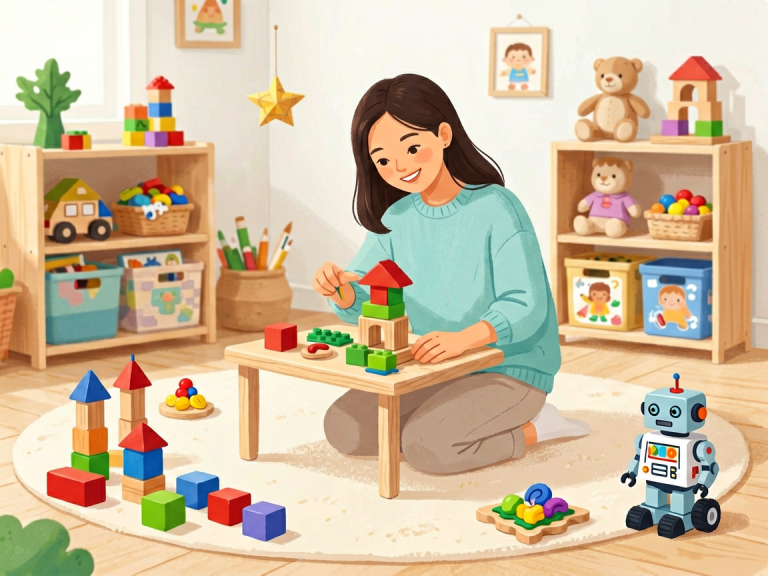
Even the best STEM toy cannot work its magic in isolation. The adult’s role is to be a facilitator, not a dictator. Children learn most when they are allowed to explore freely, but they also benefit from guided questioning. Instead of saying “that’s wrong,” a parent can ask “What do you think would happen if you tried that part differently?” or “How could you make it stronger?” This technique, known as *scaffolding*, gently steers the child toward deeper understanding without taking over the play. Joint play is especially beneficial: when a parent builds alongside the child, they model curiosity, patience, and collaboration. For example, building a LEGO bridge together invites conversation about balance and symmetry, and the shared experience strengthens the child’s confidence.
Educators can incorporate STEM toys into classroom centers, makerspaces, or even as homework alternatives. Elementary teachers often use manipulatives to teach math concepts, but they can go further by setting up weekly engineering challenges (e.g., “Design a boat that holds the most pennies” using foil and straws). Such activities align with project‑based learning and promote 21st‑century skills. Additionally, school‑parent partnerships can extend learning at home. Libraries and community centers increasingly offer STEM toy lending libraries, making these resources accessible to all families regardless of income.
Finally, it is essential to maintain a balanced perspective. STEM toys are supplements, not replacements, for unstructured outdoor play, reading, and social interaction. Over‑STEMming a child’s environment can lead to burnout. The goal is to integrate these toys naturally into a rich, varied childhood. When a child builds a tower and it falls, they learn physics; when they laugh at the crash and try again, they learn resilience. That is the true power of STEM toys—they are not about producing mini‑engineers but about nurturing adaptable, curious, and confident human beings.
—
Conclusion
STEM toys for elementary kids represent a dynamic intersection of play and learning. They empower children to ask questions, test ideas, and develop a growth mindset that will serve them in school and beyond. By carefully selecting toys that match a child’s developmental stage and interests, and by actively engaging as co‑learners, parents and educators can unlock a world of exploration. From building a simple pulley system to writing a first line of code, each playful moment plants a seed for future innovation. In a time when the need for STEM literacy is more urgent than ever, these toys are not just fun—they are foundational. So next time you watch a child struggle to snap a gear into place or cheer when their marble run finally works, remember: you are witnessing the birth of a problem‑solver, a creator, and perhaps even a tomorrow‑shaper.
—
*(Word count: approximately 1,580 words)*