The Ultimate Guide to the Best STEM Gifts for 3-Year-Olds: Building Brilliant Minds Through Play
—
Introduction: Why STEM Matters at Age Three
The toddler years are a whirlwind of discovery. At three, children are natural scientists: they test gravity by dropping spoons, explore cause and effect by flipping light switches, and engineer block towers that inevitably topple. This is the golden age for introducing STEM (Science, Technology, Engineering, and Mathematics) concepts through play. But what does “STEM gift” mean for a three-year-old? It does not mean a chemistry set with beakers or a coding course on a tablet. Instead, it means toys that encourage hands-on exploration, problem-solving, spatial reasoning, and early numeracy—all wrapped in the colorful, safe, and engaging packages that little hands love.
Choosing the right STEM gift for a three-year-old requires a delicate balance: it must be challenging enough to stimulate curiosity but simple enough to avoid frustration. It should be open-ended, allowing for multiple ways to play, and it should be safe—free of small parts, sharp edges, and toxic materials. In this guide, I have curated twelve outstanding STEM gifts that meet these criteria. Each item has been selected for its ability to foster critical thinking, creativity, and a love for learning. Whether you are a parent, a grandparent, or a friend shopping for the next birthday, this list will help you give a gift that truly gives back—a foundation for lifelong curiosity.
—
Building and Construction Toys: The Engineering Foundation
Magnetic Tiles (e.g., Magna-Tiles or PicassoTiles)
Few toys capture the essence of engineering like magnetic tiles. These translucent, colorful squares and triangles snap together with hidden magnets, allowing a three-year-old to build 2D shapes and 3D structures. The magic lies in the “click” when two pieces connect. A child learns about balance, symmetry, and stability through trial and error. Why does a tower fall? Because it is too tall and wobbly. How can I make a house with a roof? By inverting two triangles. These tiles also introduce basic geometry: a square is made of two triangles, a rectangle of four squares. The set is infinitely expandable, and many include wheels, doors, and window pieces for added complexity. For a three-year-old, the tactile feedback and satisfying magnetic connection make this a go-to gift that grows with the child into elementary school.
Large Wooden Unit Blocks
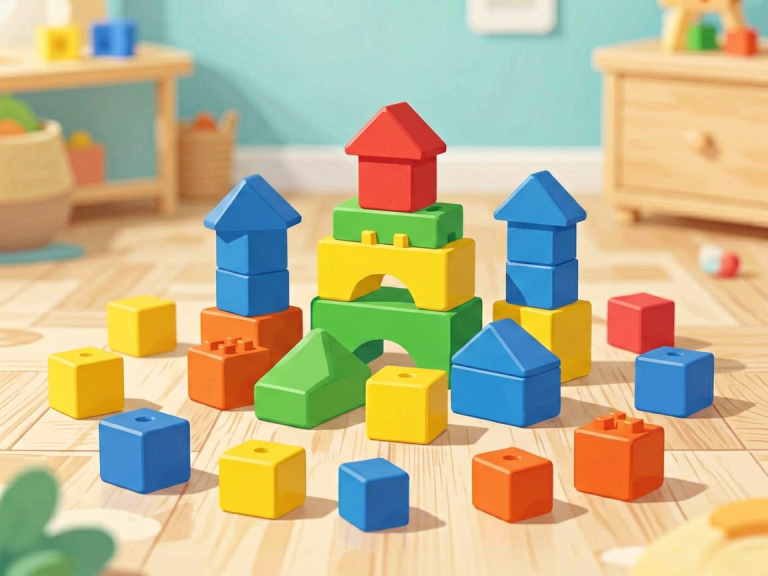
There is a reason wooden blocks have been a classroom staple for over a century. Unlike plastic bricks that snap together in fixed ways, unit blocks are pure geometry. A three-year-old can stack, balance, knock down, and rebuild. The irregular sizes (half units, double units, ramps, cylinders) teach proportion and gravity. When a child tries to balance a long block on top of a small cube, they learn about center of mass. Building a bridge with two pillars and a plank introduces the concept of support and span. The best part? Wooden blocks encourage social play. Two toddlers can collaborate on a castle or argue over a ramp for toy cars. Look for sets made from sustainable hardwood, with rounded edges and non-toxic finishes. Brands like Melissa & Doug or Guidecraft offer excellent starter sets.
Gears! Gears! Gears! Building Set by Learning Resources
This is a classic early engineering toy. Bright, chunky plastic gears of different sizes fit onto a pegboard base. When one gear turns, it turns the next, and the next—a simple but profound lesson in mechanical cause and effect. A three-year-old can place gears in a row and watch the motion chain across the board. With the included handle and figurines, they can spin the gears faster or slower, learning about speed and rotation. The set also encourages problem-solving: “Why won’t this gear turn? Because it’s touching the wrong size.” The pieces are large enough to be safe, and the action is instantly gratifying. This toy quietly builds spatial reasoning and an intuitive understanding of simple machines.
—
Science and Discovery Toys: Encouraging the Naturalist
Primary Science Lab Set by Learning Resources
Transform your kitchen table into a mini laboratory. This set includes beakers, test tubes, a magnifying glass, droppers, funnels, and safety glasses—all sized for small hands and made of durable, shatterproof plastic. At age three, “science” is about pouring, mixing, and observing. Fill a beaker with water, add a drop of food coloring, and watch it swirl. Use a dropper to transfer colored water into a test tube: this is fine motor skill practice disguised as chemistry. The set comes with activity cards that guide simple experiments like making a “volcano” with baking soda and vinegar. But the real learning happens when a child decides to mix mud and water, or drop a leaf into the funnel. They are exploring properties of matter: liquid vs. solid, wet vs. dry, sink vs. float. The goggles make them feel like a real scientist, boosting confidence and engagement.
Bug Catcher and Viewer (e.g., Bug Magnifier by Educational Insights)
Three-year-olds are naturally fascinated by creepy-crawlies. A bug catcher with a magnifying viewer lets them observe insects up close without touching them. The viewer typically has a clear dome with a magnifying lid, a small handle, and ventilation holes. Collect a ladybug, a grasshopper, or a pill bug, place it inside, and watch the child’s eyes widen. This tool teaches observation skills: “How many legs does it have? Is it fuzzy? What color are its wings?” After a few minutes, release the bug back outside—a gentle lesson in respect for living creatures. The viewer can also be used with leaves, flowers, or pebbles. It encourages outdoor exploration and connects the child with nature, a vital but often overlooked part of early STEM education.
Water and Sand Play Table
Water and sand are the original STEM materials. A sturdy play table with a lid, a drain plug, and a few accessories (cups, scoops, sieves, ramps) provides hours of open-ended exploration. Pouring water into a funnel teaches volume and flow. Sifting sand separates larger from smaller grains, introducing the concept of sorting. Adding a toy boat tests buoyancy: why does it float? Why does a rock sink? A three-year-old can experiment with pouring, measuring, and mixing. The sensory input is rich—wet sand sticks, dry sand pours, water is cold and splashes. This is physics in its purest form, and it requires a parent or caregiver nearby (mandatory for water safety, of course). Look for tables with an umbrella to provide shade and prevent overheating in the sun.
—
Puzzles and Logic Games: Sharpening the Mind
Wooden Shape Sorting Cube with Colorful Solids
This is a deceptively simple toy that packs a cognitive punch. A classic cube with holes on each side—a circle, a square, a triangle, a star, a cross, and a hexagon—and a set of corresponding blocks. At first, a three-year-old will try to force a square block into the circle hole. Through trial and error, they learn that shapes must match. This is early geometry and logic: the block’s shape corresponds to the hole’s shape. The act of turning the block in the hand and aligning it with the opening develops spatial visualization. Many cubes also include color matching: the red block goes through the red hole (or not, depending on the design). Some advanced versions have blocks that represent numbers or letters. The toy is self-correcting—the block only fits one way—which builds persistence and problem-solving.
Floor Puzzles (24–48 Pieces)
Jigsaw puzzles are a classic STEM activity for good reason. A floor puzzle with large, chunky pieces is perfect for a three-year-old. The pieces are easy to grasp and impossible to swallow. Completing a puzzle requires pattern recognition, spatial awareness, and attention to detail: “This piece has a red edge and part of a truck. Where does it go?” Puzzles also teach goal-setting and patience. When a child fits the last piece, they experience a burst of pride and accomplishment. Choose puzzles with bright, high-contrast images—animals, vehicles, dinosaurs, or scenes from nature. Brands like Melissa & Doug, Mudpuppy, and Ravensburger offer excellent toddler puzzles. To extend the learning, talk about what you see: “Can you find the elephant? What color is it?” This combines language development with visual-spatial skills.
Lacing and Threading Beads
Lacing beads might seem like a fine-motor activity, but it is also a mathematical one. A set includes a shoelace or string and a collection of large, colorful beads. A child must thread the string through the bead hole—a task that requires hand-eye coordination and careful planning. But the real math happens when you introduce patterns: “Let’s make a pattern: red, blue, red, blue.” The child must remember the sequence and select the correct bead. This is an early introduction to algebra and logic—sequencing, predicting, and repeating. You can also sort beads by color, shape, or size. Counting beads as they are strung builds number sense. The activity is quiet and focused, perfect for settling down after active play.
—
Technology and Coding Toys (Screen-Free): Early Digital Literacy
Cubetto by Primo Toys
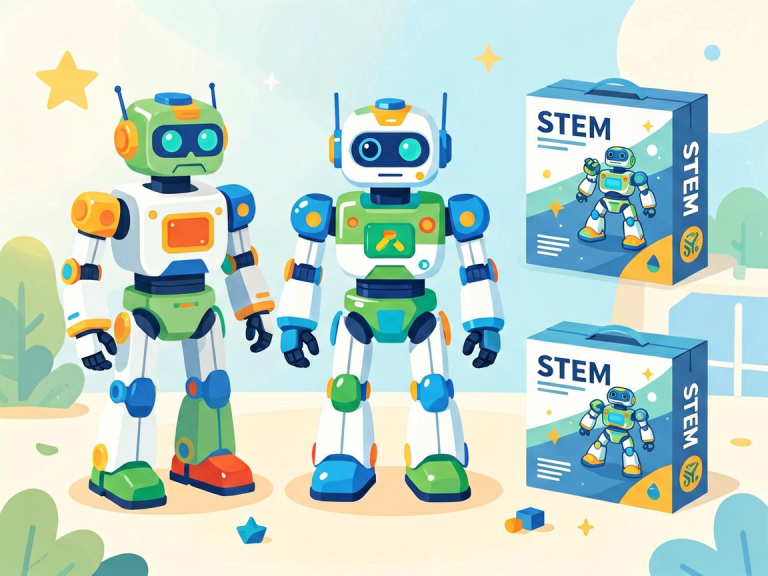
Cubetto is a wooden robot that teaches coding without screens. The set includes a wooden robot, a control board with slots, and a set of colored blocks (green = forward, red = left, yellow = right, blue = function). A child places the blocks in sequence on the board, then presses the “go” button. The robot moves accordingly. This is tangible programming: the child sees the cause-and-effect relationship between the block sequence and the robot’s path. For a three-year-old, the concept is simple: “If I put down a green block, Cubetto goes forward. If I put a red block, it turns left.” But the possibilities grow. With the included maps (e.g., an island, a savanna), the child must plan a route to reach a destination—a foundational problem-solving skill. Cubetto is durable, screen-free, and encourages collaborative play. It introduces logic, sequencing, and debugging (fixing a wrong block) in a way that feels like play, not work.
Code-a-Pillar by Fisher-Price
This adorable caterpillar is a perfect entry-level coding toy. The body is made of segments that snap together; each segment has a button that programs a movement—forward, left, right, or a sound. The head lights up and makes noises when the program runs. A three-year-old can rearrange the segments to change the caterpillar’s path. This is an excellent introduction to sequencing: “I want it to go forward, then turn left, then stop.” The segments are large, colorful, and easy to connect. The toy encourages experimentation: “What happens if I put two left turns in a row?” It also teaches that mistakes are part of learning—if the caterpillar hits a wall, the child adjusts the sequence. Code-a-Pillar is battery-powered, lightweight, and requires no Wi-Fi or apps. It’s a screen-free way to build computational thinking.
Talking and Singing Toy Computer (e.g., LeapFrog LeapStart 3D)
While screens are often discouraged for toddlers, certain educational tablets are designed for active, hands-on learning. The LeapStart 3D system uses a stylus to “read” interactive books. A three-year-old can touch the stylus to pictures on the page, and the device responds with sounds, words, and simple animations. The books cover topics like counting, colors, shapes, and even basic phonics. The key is that the child is physically interacting with a book and a tool, not passively watching a screen. The skills introduced—letter recognition, number sense, cause and effect—are foundational for later STEM learning. Parental involvement is still important: you can ask questions and extend the learning. Limit screen time to short sessions (15–20 minutes) and choose books that emphasize exploration over passive entertainment.
—
Math and Counting Toys: Building Number Sense
Counting Bears with Sorting Cups
These small, colorful plastic bears are a math teacher’s secret weapon. The set includes 60 or more bears in six colors, plus matching sorting cups and tongs. A three-year-old can sort bears by color into the cups—a first step in classification and set theory. Then they can practice counting: “How many red bears are there? Let’s count: one, two, three, four.” The bears can be lined up, stacked, or used for simple addition and subtraction stories: “If you have two bears and I give you one more, how many do you have?” The tongs add a fine-motor challenge. The bears are large enough to be safe (but always supervise; small pieces can be a choking hazard for children under three). This toy grows with the child—by age four, they can use the bears for patterning, weighing on a balance scale, and even early multiplication.
Wooden Abacus with Colorful Beads
An abacus is a timeless tool for teaching counting, grouping, and place value. A toddler-friendly abacus has ten rows of ten brightly colored beads. At age three, the child is not doing arithmetic; they are sliding beads back and forth, experiencing numbers as quantities. “Can you slide five beads to this side? Let’s count them together.” The act of moving beads engages both hands and eyes, building number sense kinesthetically. The abacus also teaches patterns: red, blue, red, blue. Some designs have shaped beads (stars, circles) or even animal shapes. The wooden frame is sturdy, and the beads are large enough to grasp. This is a toy that will be used for years—kindergarteners use abacuses for addition and subtraction, making it a long-term investment.
Number Puzzle Board (1–10)
A simple wooden puzzle where each number piece has a corresponding set of dots. The child must match the number to the correct place in the board. For example, the number “3” has three dots; the child counts the dots and finds the spot. This reinforces the connection between the symbol (3) and the quantity (three objects). The puzzle also includes pictures (three apples, three fish) that provide additional clues. The tactile experience of lifting and placing the pieces strengthens the memory. As a bonus, the puzzle pieces can be used for other games: line them up in order, or hide them around the room for a number hunt. This is a low-tech, high-impact tool for early number literacy.
—
Conclusion: Choosing the Right Gift and the Right Approach
Selecting a STEM gift for a three-year-old is not about buying the most expensive or most technologically advanced toy. It is about finding an object that invites exploration, encourages failure and reattempt, and sparks conversation. The best gifts on this list share several qualities: they are open-ended (multiple ways to play), they are durable and safe, and they require active participation rather than passive consumption. A note on screen time: while some technology toys like Cubetto or LeapStart are excellent, they should be used with parental guidance and balanced with tactile, real-world play.
Remember that a three-year-old’s brain is like a sponge, but it soaks up best through hands-on experiences, not lectures. When you give a gift, also give your time. Sit with the child and ask questions: “What happens if you put the red block here? How many blocks did you use? Can you make a tower that is taller than your hand?” These simple interactions turn a toy into a learning moment. STEM is not about memorizing facts; it is about asking “why” and “what if.” With the right gift, you are not just giving a present—you are giving the permission to be curious. And that is the best gift of all.
(Word count: 1,418)