The Best Screen-Free Gifts for 3-Year-Olds: Nurturing Imagination, Creativity, and Development
In an era where screens dominate our daily lives, the decision to choose screen-free gifts for young children is not merely a nostalgic preference—it is a powerful investment in their holistic development. At three years old, a child’s brain is undergoing a remarkable period of growth, forming neural connections at a rate that will never be replicated. Every experience, every touch, every sound, and every interaction shapes the architecture of their developing mind. Screen-free gifts offer something that digital devices simply cannot: the opportunity for hands-on, sensory-rich, and socially engaging play that builds the foundation for lifelong learning, creativity, and emotional resilience.
This article explores the best screen-free gifts for 3-year-olds, carefully curated to support their cognitive, motor, language, and social-emotional development. Whether you are a parent, grandparent, or a friend looking for a meaningful present, these recommendations will help you choose gifts that captivate young minds without the glow of a screen.
Why Screen-Free Matters at Age Three
Before diving into specific gift ideas, it is worth understanding why screen-free play is so critical at this age. Three-year-olds are naturally curious explorers. They learn best through direct, multisensory experiences—touching, tasting, smelling, hearing, and moving. Screens, by contrast, offer a two-dimensional, passive experience that limits interaction and often overstimulates children while under-engaging their problem-solving skills. Research from the American Academy of Pediatrics and child development experts consistently shows that excessive screen time in early childhood can delay language development, reduce attention span, and interfere with sleep and social skills. Screen-free gifts, on the other hand, encourage active participation, imaginative thinking, and real-world social interaction—all of which are essential for a three-year-old’s growth.
Now, let us explore the best categories of screen-free gifts that will delight a three-year-old while supporting their development.
Building Blocks and Construction Sets: The Foundation of Creative Engineering
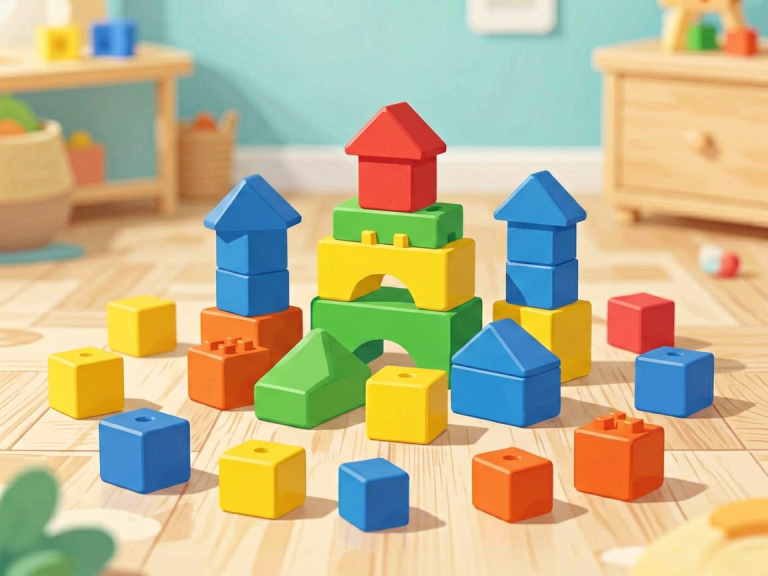
One of the most timeless and valuable screen-free gifts for a three-year-old is a set of high-quality building blocks or construction toys. Unlike digital games that simulate building, physical blocks allow children to experience real cause and effect. When a tower falls, they hear the clatter, see the pieces scatter, and learn about gravity, balance, and spatial relationships. Brands like wooden unit blocks, Mega Bloks (the larger size, not the tiny ones), or Duplo LEGO sets designed for toddlers are perfect for this age.
At three, children are moving from simply stacking blocks to creating simple structures like houses, bridges, and towers. This type of play strengthens fine motor skills as they grasp, lift, and precisely place blocks. It also enhances hand-eye coordination and bilateral coordination (using both hands together). More importantly, block play fosters problem-solving: “Why did my tower fall? How can I make it taller without it tipping?” These are early engineering questions that no app can replicate. Additionally, building together with a parent or sibling promotes language development as children narrate their creations—“This is a castle for the dinosaur!”—and learn new vocabulary like “balance,” “foundation,” and “arch.”
Look for sets that include a variety of shapes, sizes, and textures. Some sets even come with play figures, animals, or vehicles that expand the narrative possibilities. A good block set can grow with the child, offering new challenges and creative opportunities for years.
Art and Craft Supplies: Unleashing the Inner Picasso
Three-year-olds are natural artists. They love to scribble, paint, glue, and cut—and these activities are far more beneficial than any drawing app on a tablet. Screen-free art supplies encourage sensory exploration, emotional expression, and fine motor development. The best gifts in this category go beyond a simple box of crayons. Consider a complete art kit that includes washable finger paints, large paper rolls, child-safe scissors, non-toxic glue sticks, stampers, play dough, and chunky chalk for outdoor use.
One especially powerful gift is a modeling clay or play dough set with simple tools like rolling pins, cookie cutters, and plastic knives. At three, children love to squish, roll, and shape dough. This activity strengthens the small muscles in their hands—the same muscles they will later use for writing. It also provides a calming, tactile experience that can help regulate emotions. Art projects allow children to make choices (“Should I use red or blue?”) and develop a sense of agency and pride in their creations.
Another excellent option is a reusable water painting mat or a large easel with a chalkboard on one side and a whiteboard on the other. These allow for endless drawing without waste, and the vertical surface encourages a different arm movement that supports later handwriting. Remember to include a big smock or apron (art can be messy!) and to emphasize process over product—the goal is not a perfect picture but the joy of creation.
Musical Instruments: The Rhythm of Development
Music is a powerful tool for brain development, and three-year-olds are naturally drawn to sound. A screen-free musical instrument gift can ignite a lifelong love of music while building auditory discrimination, rhythm, and coordination. The key is to choose instruments that are age-appropriate, durable, and safe.
A simple set of hand percussion instruments is ideal: a small xylophone, maracas, a tambourine, a triangle, and a set of rhythm sticks. These instruments allow children to experiment with cause and effect (shaking, striking, tapping) and to explore concepts like loud/soft, fast/slow, and high/low sounds. Some children also love a simple drum or a pair of bongo drums, which provide a satisfying tactile and auditory experience.
For a more structured option, consider a toddler-friendly keyboard with large keys or a child-sized ukulele (with nylon strings that are gentle on little fingers). These instruments encourage ear training and can be used for simple call-and-response games. Singing along with the instrument is an added bonus—it builds vocabulary, memory, and social bonding. Best of all, musical play does not require a screen; it requires only ears, hands, and imagination.
Puzzles and Matching Games: Sharpening Cognitive Skills
Puzzles are another classic screen-free gift that offers immense developmental value for a three-year-old. At this age, children can typically handle puzzles with 4 to 12 large pieces. The act of matching shapes, colors, and patterns builds visual-spatial reasoning, problem-solving, and persistence. When a piece does not fit, the child must try a different orientation—a lesson in trial and error that digital puzzles often simplify with automatic snapping.
Beyond traditional jigsaw puzzles, consider wooden peg puzzles with themes like animals, vehicles, or letters. Chunky puzzles with knobs are easier for small hands. Additionally, matching games like simple memory cards (with 12 to 24 pieces) are fantastic for developing concentration and working memory. You can also find lotto-style bingo games with pictures, where children match objects to boards—a great group activity that teaches turn-taking and social skills.
A particularly engaging option is a set of “sequence” puzzles where the child puts picture cards in order to tell a story, such as a seed growing into a flower. This builds narrative understanding and logical thinking. Look for puzzles made from thick, durable cardboard or wood, with bright, clear images. Avoid puzzles with too many tiny pieces that could be a choking hazard.
Pretend Play Sets: Building Social and Emotional Intelligence
Three-year-olds are entering the magical world of pretend play, where a cardboard box becomes a spaceship and a wooden spoon is a magic wand. Screen-free gifts that encourage role-playing are invaluable for developing social skills, empathy, language, and creativity. The best pretend play items are open-ended—they do not have a single “correct” use, so children can invent their own scenarios.
A child-sized kitchen set with pots, pans, plastic food, and utensils is a perennial favorite. It allows children to mimic adult activities, practice sequencing (first wash the vegetables, then chop them, then cook them), and engage in cooperative play with siblings or friends. The language that emerges during kitchen play is rich: “I’m making you a soup. Do you want carrots or tomatoes?” This kind of dialogue builds vocabulary and conversational skills.
Other excellent pretend play gifts include a doctor’s kit (with stethoscope, bandages, and thermometer), a tool bench with plastic hammer and screwdriver, a dollhouse with furniture and family figures, or a set of dress-up costumes (simple capes, hats, animal masks). A play tent or a teepee can become a castle, a cave, or a secret hideout—another gift that sparks endless imagination without any power cord.
Outdoor and Gross Motor Toys: Moving, Jumping, and Exploring
Physical activity is crucial for three-year-olds, who have seemingly boundless energy. Screen-free gifts that get them moving outdoors are wonderful for developing large muscle groups, balance, coordination, and overall health. While a tricycle is a classic choice (look for one with a low center of gravity and wide wheels for stability), there are many other options that are equally engaging.
A small climbing dome or a toddler-sized slide can be used in the backyard or even indoors with supervision. A set of big, colorful plastic tunnels or a simple balance beam (low to the ground) encourages crawling, balancing, and imaginative play. A wagon or a push cart allows children to transport toys, leaves, or “treasures” they find on walks, turning a simple stroll into an adventure.
For water play, a sand and water table is an extraordinary gift. Children can scoop, pour, build, and splash for hours. This type of play is rich in sensory input and teaches early concepts of volume, weight, and cause and effect. Just add a bucket, shovel, and some plastic cups, and you have an open-ended activity that rivals any app in terms of engagement.
Books: The Gift That Keeps on Giving
No list of screen-free gifts would be complete without books. Three-year-olds love stories, and reading together is one of the most powerful activities for language development, bonding, and emotional understanding. The best books for this age are interactive, repetitive, and full of rhythm and rhyme. Look for board books with flaps to lift, textures to touch, or buttons that make sounds (but note: these are screen-free if they are simple mechanical buttons, not digital screens).
Some excellent choices include “The Very Hungry Caterpillar” by Eric Carle, “Brown Bear, Brown Bear, What Do You See?” by Bill Martin Jr., “Goodnight Moon” by Margaret Wise Brown, and “We’re Going on a Bear Hunt” by Michael Rosen. For more interactive options, try “Press Here” by Hervé Tullet, which engages children in a series of simple actions that seem to make the book come alive—no screen needed.
Consider giving a small collection of books, or a gift certificate to a local bookstore so the family can choose their favorites. Add a cozy reading corner accessory like a small bookshelf, a soft floor cushion, or a “book torch” (a small flashlight that can be used for reading in a tent) to make reading even more special.
Conclusion: The Power of Presence
Choosing screen-free gifts for a three-year-old is not about deprivation—it is about abundance. It is about giving them the freedom to touch, build, pretend, move, and connect with the real world. The best gift you can give a child of this age is not a tablet or a video game, but the opportunity to engage fully with their environment and with the people who love them. Every block they stack, every song they sing, every puzzle piece they fit, and every story they hear is a building block for their future.
When you select a screen-free gift, you are also giving the gift of time—time spent together, time for unstructured play, time for imagination to flourish. In a world that constantly pushes children toward screens, you are making a deliberate choice to protect their childhood and nourish their development. So the next time you are shopping for a three-year-old, remember: the most magical gifts are the ones that require nothing but a child’s hands, a curious mind, and a loving adult to share the journey.