Building Toys for Elementary Kids: More Than Just Fun and Games
Introduction: The Enduring Appeal of Building Toys
From the classic wooden blocks that have lined nursery floors for centuries to the sophisticated magnetic tiles and programmable robotics kits of today, building toys hold a unique and powerful place in childhood development. For elementary-aged children—roughly ages six to twelve—these toys are not merely a way to pass a rainy afternoon; they are a dynamic platform for cognitive, social, and emotional growth. In an era increasingly dominated by passive screen time and pre-packaged entertainment, building toys offer an active, hands-on experience that challenges children to think, create, and persevere. This article explores the multifaceted benefits of building toys for elementary kids, provides a guide for selecting the right sets, and offers practical tips for parents and educators who want to nurture a love of construction and design in young learners.
The Cognitive Benefits: Building Brains One Brick at a Time
Problem-Solving and Critical Thinking
At its core, any building toy presents a child with a series of problems to solve. How can I make this tower stand without falling? How do I connect these two pieces to create a stable bridge? When a child encounters a structural failure—the tower that collapses just as the last block is placed—they are engaging in a real-world exercise in iterative design. They must analyze what went wrong, hypothesize a solution, and test it again. This process mirrors the scientific method in a tangible, age-appropriate way. Research in developmental psychology consistently shows that such hands-on problem-solving activities enhance executive function skills, including flexible thinking and self-regulation. For instance, a child building a complex LEGO castle must follow instructions (or design their own), mentally visualize the final structure, and adjust their approach when pieces don't fit as expected. These small moments of trial and error build resilience and a growth mindset that serves children well into adulthood.
Spatial Reasoning and Mathematical Foundations
Building toys are one of the most effective tools for developing spatial reasoning—the ability to visualize and manipulate objects in two and three dimensions. This skill is closely linked to later success in STEM fields (science, technology, engineering, and mathematics). When a child uses magnetic tiles to create a three-dimensional cube, or connects gears in a mechanical set to make them turn, they are internalizing principles of geometry, symmetry, and physics. Studies have demonstrated that children who engage regularly with construction play score higher on tests of spatial visualization and mental rotation. Moreover, building toys naturally introduce mathematical concepts such as fractions (half a brick, quarter of a circle), measurement (how many blocks to span a gap), and even pre-algebraic thinking (if I use two small blocks here, I need one large block there to keep it even). These are not abstract lessons learned from a textbook; they are lived, physical experiences that solidify understanding.
Creativity and Divergent Thinking
While many building sets come with instruction booklets, the true magic often happens when children set those instructions aside and build something entirely from their imagination. Open-ended building toys—like plain wooden blocks, LEGO Classic sets, or magnetic tiles—encourage divergent thinking, the ability to generate multiple solutions to a single problem. A child might build a house, but then decide it needs a garage, then a rocket launcher on the roof, and suddenly the house becomes a space station. This free-form play allows kids to explore ideas without fear of "doing it wrong." It also fosters narrative thinking, as children often create stories and scenarios around their creations. Compared to structured toys with fixed outcomes, building toys that offer limitless possibilities keep the creative flame burning bright throughout elementary school and beyond.
Social and Emotional Development: Building More Than Structures
Collaboration and Communication
When elementary children build together—whether in a classroom, a playdate, or a sibling context—they must negotiate, share, and communicate. A pair of seven-year-olds working on a large block structure must decide who places which block, how to distribute limited pieces, and what to do when their visions clash. These interactions are rich opportunities for developing social skills. They learn to listen to others' ideas, express their own, and compromise when necessary. In a school setting, teachers often use building challenges as cooperative learning activities, assigning small groups to construct a bridge that can hold a certain weight, for example. The ensuing discussions about design, roles, and troubleshooting are as valuable as the final product. Furthermore, building toys provide a common language for children who may have different verbal abilities or cultural backgrounds, making them ideal for inclusive play.
Patience, Perseverance, and Frustration Tolerance
Building is rarely a smooth, linear process. Pieces fall off, instructions are misunderstood, or the whole structure tips over at the worst possible moment. For an elementary-age child who is still developing emotional regulation, these moments can be deeply frustrating. Yet precisely because they are challenging, building toys teach patience and perseverance. A child who learns to take a deep breath, re-read the instructions, and try again is building emotional intelligence. Parents and educators can support this growth by modeling calm problem-solving and celebrating effort rather than just success. "I see you're trying a different way to attach that wheel—that takes a lot of persistence!" is far more valuable than "Good job, it's perfect." Over time, children internalize the lesson that setbacks are temporary and that persistence leads to mastery.
Sense of Accomplishment and Self-Esteem
There is a profound satisfaction in holding up a finished creation—a towering skyscraper, a working crane, a detailed castle—and saying, "I made that." This tangible evidence of one's own ability is a powerful boost to self-esteem, especially for children who may struggle in academic areas like reading or writing. Building toys offer a level playing field: a child with strong spatial skills can shine, and even those who initially struggle can experience pride after completing a challenging model. This sense of accomplishment fuels intrinsic motivation, making children more likely to tackle future difficult tasks. The pride is not just in the final object but in the journey of creation itself.
Choosing the Right Building Toys: A Practical Guide for Parents and Educators
Age Appropriateness and Complexity
Not all building toys are created equal, and the right choice depends heavily on a child's age, developmental stage, and prior experience. For younger elementary kids (ages 6-8), large, chunky pieces like DUPLO blocks, wooden unit blocks, or magnetic tiles (such as Magna-Tiles or Picasso Tiles) are ideal. They are easy to manipulate, safe, and forgiving of small hands. Children at this age benefit from simple geometry and basic structural concepts. For older elementary kids (ages 8-12), more complex systems like LEGO Technic, K'NEX, or robotics kits (such as LEGO Boost or Sphero) introduce gears, motors, and even programming logic. These sets often come with detailed instructions that require sustained attention, but they also open the door to engineering and technology. Parents should start with simpler sets and gradually increase complexity, always considering the child's frustration tolerance. A kit that is too difficult can lead to discouragement; one that is too easy may bore a capable builder.
Open-Ended vs. Structured Sets
A key decision is whether to buy open-ended building toys (raw materials with no prescribed outcome) or structured sets that aim for a specific model. Both have value, and a well-rounded collection includes both. Open-ended toys—like unit blocks, loose parts, or a large bin of basic LEGO bricks—foster creativity and divergent thinking. Structured sets—like a LEGO Harry Potter castle or a K'NEX roller coaster—teach following instructions, sequencing, and patience. Many children enjoy alternating between the two: building a prescribed model, then taking it apart to invent their own design. Parents should avoid the trap of only buying licensed, character-based sets that are expensive and often single-use (once built, they may be displayed but rarely rebuilt). Instead, invest in versatile systems that can be reused for years.
Safety and Material Quality
For elementary kids, safety considerations include choking hazards (small pieces are a concern for children under three, but even older kids may put small parts in their mouths if younger siblings are around), sharp edges, and toxic materials. Reputable brands like LEGO, Melissa & Doug, and Magna-Tiles use non-toxic plastics and rigorous safety testing. Wooden blocks should be smooth, splinter-free, and painted with child-safe finishes. Parents should also consider durability: a building set that breaks easily is frustrating and wasteful. Look for sets with a solid warranty or a track record of lasting through many builds. Additionally, storage matters; a good system (bins, trays, or compartmentalized boxes) helps keep pieces organized and prevents loss.
Integrating Building Toys into Daily Life and Education
At Home: From Playtime to Family Bonding
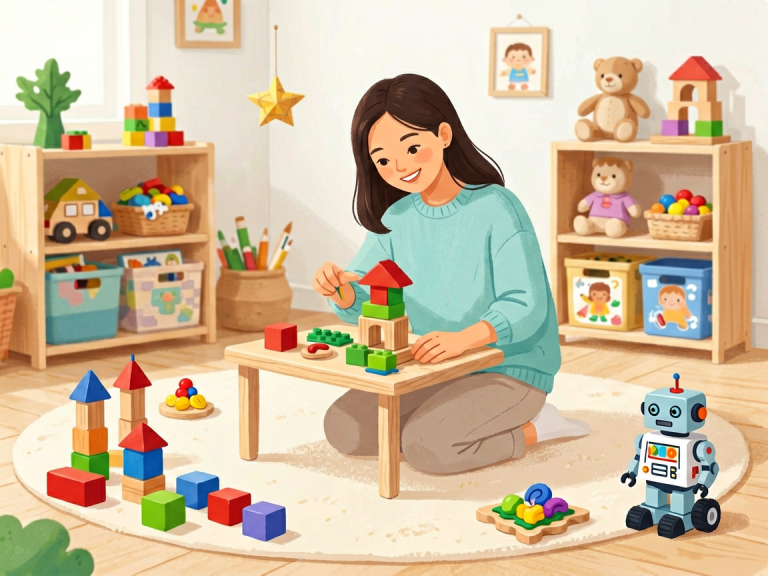
Building toys are a wonderful tool for family interaction. Parents and children can build together, taking turns placing pieces or working on different parts of a large model. This shared activity promotes conversation, cooperation, and quality time away from screens. A weekly "family build challenge" (e.g., "build a vehicle that can move across the floor" or "create a structure that is at least 30 centimeters tall") can become a cherished ritual. It also gives parents a window into their child's thinking process—how they plan, how they solve problems, and how they express joy or frustration. For solo play, building toys provide a calm, focused activity that helps children wind down after a busy school day. Unlike video games, which can be overstimulating, building engages the hands and mind in a rhythmic, satisfying way.
In the Classroom: Hands-On STEM and Social Learning
Educators increasingly recognize the value of building toys in elementary classrooms. They are used in math lessons to explore geometry and measurement, in science to teach forces and structures, and in language arts to inspire storytelling (e.g., "build a setting for your story"). Many schools now have dedicated maker spaces or STEM labs equipped with a variety of building systems. Teachers can design challenges that tie into curriculum standards: for instance, building a bridge that spans a river (physics), constructing a model of a historical landmark (social studies), or creating a marble run that demonstrates potential and kinetic energy (science). The collaborative nature of these activities also supports social-emotional learning goals, such as teamwork and respectful disagreement.
Encouraging Girls and Diverse Representation
Historically, building toys have been marketed predominantly to boys, but that is changing—and for good reason. Spatial reasoning and engineering skills are equally important for girls, and early exposure can help close the gender gap in STEM fields. Parents and educators should actively ensure that building toys are accessible and appealing to all children, regardless of gender. This means avoiding pink-washed "for girls" sets that often oversimplify the building experience, and instead offering the same high-quality, complex systems to everyone. Role models matter too: pointing out female engineers, architects, and designers can inspire girls to see themselves as builders. Additionally, featuring building toys that represent diverse cultures, such as sets depicting different architectural styles (e.g., a Japanese pagoda or an African market), can broaden children's horizons and make play more inclusive.
Conclusion: Building a Foundation for Lifelong Learning
Building toys for elementary kids are far more than a nostalgic childhood memory. They are a proven, versatile, and deeply engaging tool for developing cognitive skills, social competencies, and emotional resilience. Whether a child is stacking wooden blocks in kindergarten, assembling a intricate LEGO robot in fourth grade, or designing a virtual model on a tablet with a companion coding app, the act of building teaches them how to think, how to collaborate, and how to persist in the face of challenge. In a rapidly changing world, where the jobs of tomorrow may not even exist today, these foundational skills are invaluable. So the next time you see a child absorbed in constructing a castle, a spaceship, or a simple tower, remember: they are not just playing. They are building their future, one brick at a time.