Unlocking Curiosity: The Best Educational Gifts for 4-Year-Olds That Foster Growth and Joy
Introduction
At the age of four, children are like little sponges, absorbing information, language, and social cues at an astonishing rate. Their world is expanding beyond the immediate family, and they are beginning to ask “why” with relentless enthusiasm. This developmental stage—often called the “preschool years”—is a golden window for learning through play. The right gifts can do more than just entertain; they can nurture cognitive skills, emotional intelligence, creativity, and physical coordination. But with an overwhelming array of toys on the market, what truly makes an educational gift “best” for a four-year-old? It is not about flashy screens or expensive gadgets, but about tools that invite open-ended exploration, encourage problem-solving, and respect a child’s natural pace of discovery. In this guide, we will explore several categories of gifts that research and experience have shown to be both engaging and developmentally appropriate. From building sets that teach spatial reasoning to simple board games that build patience and turn-taking, each recommendation is chosen with the goal of planting seeds for a lifelong love of learning. Let’s dive into the best educational gifts for 4-year-olds—gifts that will be played with, treasured, and remembered.
Building Foundations: Puzzles and Construction Sets
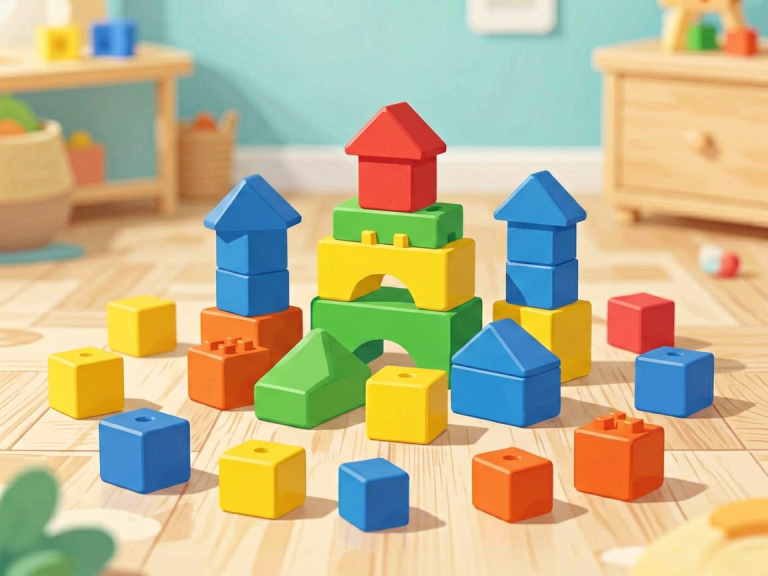
Four-year-olds are mastering fine motor control and beginning to understand cause and effect. Puzzles with 12 to 24 large pieces are ideal: they require a child to recognize shapes, colors, and patterns while developing persistence. A wooden floor puzzle of a world map, for instance, introduces geography in a tactile way, and the act of fitting pieces together strengthens hand-eye coordination. Similarly, building blocks—whether classic wooden unit blocks, magnetic tiles, or interlocking plastic bricks—offer endless possibilities. Unlike single-purpose toys, a set of blocks can become a castle, a spaceship, or a zoo. This type of open-ended play fosters creativity and basic engineering concepts: children learn about balance, symmetry, and the properties of weight without a single worksheet. For an extra layer of learning, consider a set that includes numbers or letters on the blocks, so that stacking becomes a playful introduction to literacy and numeracy. The key is to choose sets that are sturdy and safe, with pieces large enough to avoid choking hazards. When a four-year-old spends an hour constructing a tower that finally topples, they are not just playing—they are conducting a physics experiment and learning to cope with disappointment, both invaluable lessons.
Creative Expression: Art and Music Kits
The four-year-old brain is wired for imagination. Unstructured art supplies—such as washable tempera paints, chunky crayons, safety scissors, modeling clay, and a roll of butcher paper—can provide hours of creative flow. While it may sound messy, the benefits are immense: painting mixes colors and teaches prediction; cutting with scissors strengthens the small muscles needed for writing; molding clay allows a child to shape three-dimensional ideas. A high-quality art easel that is adjustable in height can be a wonderful gift, as it encourages standing and moving, which integrates gross motor skills with fine art. Music is equally transformative. Simple percussion instruments like a xylophone, a set of hand bells, or a child-friendly ukulele let a child experiment with rhythm and pitch without pressure. Listening to different genres of music and moving to beats also supports auditory processing and coordination. Some families appreciate subscription boxes that deliver curated art projects each month, but even a box of recycled materials (cardboard tubes, fabric scraps, bottle caps) can ignite invention. Remember: the goal is not to produce a perfect painting, but to give the child the confidence to express ideas visually and aurally. When you see a four-year-old covered in paint, joyfully mixing blue and yellow to make green, you know you’ve given a gift that sparks true discovery.
Early Literacy and Numeracy: Books and Learning Games
By age four, many children are starting to recognize letters, count to ten or twenty, and even write their own names. The best gifts in this category are not digital apps but tangible, interactive materials that make abstract concepts concrete. A set of magnetic letters and numbers for the refrigerator can lead to spontaneous “word hunts” during breakfast. Alphabet puzzles that pair a letter with a picture (e.g., “A” with an apple) reinforce phonemic awareness. For numeracy, simple counting bears or linking cubes allow children to group, sort, and compare quantities. Board games that involve counting spaces or recognizing colors—such as “Hi Ho! Cherry-O” or “The Sneaky, Snacky Squirrel Game”—are excellent because they combine math with social skills like taking turns and managing emotions when losing. Picture books remain the cornerstone of early literacy. Look for books with repetitive text (like “Brown Bear, Brown Bear”), interactive elements (lift-the-flap or touch-and-feel), and diverse characters. A gift subscription to a children’s book club can build a personal library that grows with the child. Storytelling props—like felt boards with story pieces or simple puppets—encourage a child to retell their favorite tales or invent new ones, building narrative skills and vocabulary. Above all, any gift that makes letters and numbers feel like play rather than work will succeed. A four-year-old who laughs while matching a “5” with a picture of five frogs is absorbing math in the most natural way.
Physical and Motor Skills: Active Play and Outdoor Gear
Four-year-olds need to move. Their large muscles are developing rapidly, and coordination improves dramatically through active play. Educational gifts for the body are just as important as those for the mind. A balance bike—without pedals—teaches momentum, steering, and balance long before a child attempts a traditional bicycle. It builds confidence and gross motor strength. For indoor energy, consider a set of floor mats or foam blocks that can be arranged into obstacle courses. Jump ropes, mini trampolines with safety handles, and soft balls for throwing and catching all improve hand-eye coordination and spatial awareness. Outdoor toys like a sand and water table offer sensory science: pouring, measuring, and scooping are early lessons in volume and physics. Gardening tools sized for small hands allow a child to dig, plant seeds, and watch them grow—a living lesson in biology and responsibility. Even a sturdy wagon for pulling around treasures (or siblings) helps develop core strength and coordination. The key is to choose equipment that encourages active, unstructured play rather than passive entertainment. A simple soccer ball or a kite to fly on a windy day can become a gateway to sportsmanship and perseverance. When a child falls off a balance bike and gets back on, they are not just improving balance—they are building resilience.
Social-Emotional Learning: Cooperative Games and Role-Play
Perhaps the most overlooked category of educational gifts for four-year-olds is those that nurture emotional intelligence and social skills. At this age, children are learning to share, negotiate, and express feelings. Cooperative board games—where players work together against a common challenge, such as “The Peaceable Kingdom” series—teach teamwork rather than competition. In these games, everyone wins or loses together, which reduces anxiety and fosters empathy. Similarly, role-play sets like a play kitchen, a doctor’s kit, or a grocery store checkout stand allow children to act out real-life scenarios. Through pretend play, they practice language, work through emotions (like fear of a doctor’s visit), and explore different perspectives. Puppets and dolls can become tools for storytelling about feelings: a child might have a puppet “say” what they cannot yet articulate. Gifts that encourage emotional literacy also include simple books about feelings (like “The Way I Feel” by Janan Cain) or a feelings chart with faces. But beyond toys, consider gifts that involve the family: a set of “conversation starter” cards for dinner time, or a journal where a parent and child can draw and write together. These gifts build connection and teach that learning is a shared, warm experience. A four-year-old who learns to name their frustration and ask for a hug has received one of the best educational gifts of all.
Conclusion
Choosing the best educational gift for a four-year-old is less about the price tag and more about the potential for growth. The most effective gifts ignite curiosity, invite participation, and respect the child’s developmental stage. Whether it’s a set of building blocks that teaches physics through failure, a paintbrush that allows a child to create their own universe, or a balance bike that gives the thrill of independence, each gift is an invitation to learn. Remember that children learn best when they are engaged, supported, and having fun. So when you wrap that puzzle or that set of magnetic letters, know that you are not just giving a toy—you are giving a key that unlocks a world of discovery. The laughter, the concentration, the triumphant “I did it!”—these are the true measures of a gift’s success. Happy gifting, and may your four-year-old’s next adventure be filled with wonder and growth.