The Best Educational Gifts for 5-Year-Olds: Unlocking Curiosity, Creativity, and Cognitive Growth
Choosing the perfect gift for a five-year-old can feel like solving a puzzle. At this age, children are no longer toddlers but not yet full-fledged school-age kids. They have entered a magical phase where imagination runs wild, language explodes, and their understanding of the world deepens daily. A gift that merely entertains for an afternoon is fine, but a truly educational gift can spark a lifelong love of learning. The best educational gifts for 5-year-olds are those that engage multiple senses, encourage independent exploration, and build foundational skills in literacy, numeracy, science, and social-emotional development. Below, I have curated a comprehensive guide to the most effective and delightful educational gifts for this dynamic age group, organized by learning domain.
Building Blocks of Logic and Engineering: STEM Toys That Inspire Problem-Solving
Five-year-olds are natural engineers. They love to stack, knock down, and rebuild. This is the perfect time to introduce toys that teach basic principles of physics, geometry, and cause-and-effect. The best STEM gifts are open-ended, meaning they have no single "right" answer, which allows a child's creativity to flourish alongside their analytical thinking.
Magnetic Tiles and Building Sets
Products like Magna-Tiles or Picasso Tiles are top-tier choices. These translucent, magnetic geometric shapes click together easily, allowing a child to construct 2D patterns and 3D structures. The educational value is immense: children learn about symmetry, stability, and spatial relationships. They may experiment with building a tower that doesn't fall, discovering that a wider base provides better balance. Many sets also include wheels, windows, and other accessories that prompt storytelling. A five-year-old might build a castle for a plastic dinosaur or a rocket ship for a stuffed animal, blending engineering with pretend play. This type of play strengthens fine motor skills, hand-eye coordination, and early math concepts like counting sides and angles.
Simple Coding and Robotics Kits
Coding might sound too advanced for a five-year-old, but there are excellent screen-free options. Botley 2.0 or Code-a-Pillar are robots that children program by pressing buttons to create a sequence of moves. For example, a child can tell Botley to go forward, turn left, and then light up. This introduces the fundamental logic of algorithms without any screen time. The child learns to break down a problem (e.g., "How do I get the robot to reach the snack bowl?") into a series of steps. If the robot crashes into a wall, the child must debug the sequence—a powerful lesson in perseverance and critical thinking. Many of these kits come with obstacle courses and challenge cards, making the learning experience progressively more complex.
Wooden Unit Blocks
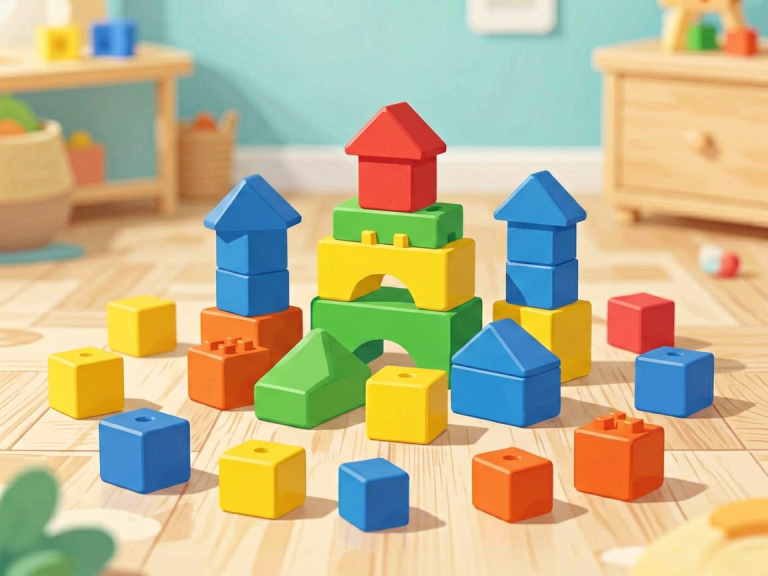
Do not underestimate the power of simple wooden blocks. Classic sets like Melissa & Doug Unit Blocks come in various shapes: rectangles, triangles, arches, and cylinders. Unlike interlocking plastic bricks, wooden blocks require careful balance and an understanding of gravity. A five-year-old learns that a half-cylinder can form a bridge, or that a triangle placed atop two squares creates a roof. Block play is strongly linked to mathematical development; studies show that children who engage in complex block building perform better on geometry and spatial reasoning tests later in school. Moreover, block play is highly social. When two children build together, they negotiate, share ideas, and solve conflicts—an invaluable social-emotional education.
Unlocking the World of Words and Stories: Literacy Gifts That Cultivate a Love of Reading
By age five, many children are beginning to recognize letters, understand that print carries meaning, and may even read a few simple words. The best literacy gifts do not push formal reading but rather make language playful and meaningful. They honor the child's natural curiosity about stories and communication.
Personalized Storybooks
A book that features the child's own name and image as the main character is both magical and educational. Companies like Wonderbly or Lost My Name create beautifully illustrated books where the child goes on an adventure. Seeing their name in print reinforces letter recognition in a highly motivating context. The child might sound out "E-M-M-A" because it's *their* name on the page. These books often introduce new vocabulary in a natural, engaging way. Moreover, personalized books build a positive association with reading: the child feels that books are about *them* and for *them*. This emotional connection is the strongest predictor of later reading success.
Phonics-Based Games and Puzzles
Learning letter sounds can be tedious, but games turn it into fun. Alphabet Bingo or Zingo! Word Builder are excellent choices. Zingo! Word Builder, for example, uses a tile dispenser to reveal letters. Children race to fill their cards with words such as "cat" or "dog." This game teaches blending—the skill of combining sounds to make words. There are also wooden alphabet puzzles where each letter fits into a recess that shows a picture (A for apple). These puzzles develop letter recognition and fine motor control. For a more active experience, Letter Scavenger Hunt kits encourage children to find objects around the house that start with a certain sound. This kinesthetic learning helps cement the abstract connection between sounds and symbols.
Storytelling Kits and Finger Puppets
Oral language development is just as crucial as reading. Sets like Story Cubes consist of nine dice with pictures on each face (a key, a star, a smile, etc.). The child rolls the dice and must weave a story that incorporates all the pictures shown. This activity builds narrative structure, sequencing, and vocabulary. Likewise, a set of animal or character finger puppets (e.g., a forest animal set) invites a five-year-old to create dialogues and plotlines. Through pretend storytelling, children practice using past tense, connecting sentences, and expressing emotions. They learn that a story has a beginning, a middle, and an end. Parents can join in by asking "What happens next?" or "Why is the rabbit sad?"—gently scaffolding more complex language.
Cultivating the Artist and Scientist: Creative and Sensory Gifts for Hands-On Discovery
Five-year-olds learn best through direct manipulation of materials. They are not passive recipients of information; they are active experimenters. Gifts that allow mess, mixing, and making are educational gifts in the truest sense—they teach the scientific method: hypothesize, test, observe, and revise.
High-Quality Art Supplies and Process Art Kits
Avoid coloring books that prescribe a single outcome. Instead, give unlimited art supplies: washable watercolor sets, finger paints, chalk, Play-Doh, glue sticks, safety scissors, and a stack of big white paper. The gift is not the product but the process. For structured exploration, consider a Spirograph set, where gears create hypnotic geometric patterns. This teaches the relationship between circular motion and pattern repetition. Also, nature art kits provide materials like leaves, twigs, and pebbles to create collages. Such activities develop fine motor strength (critical for later handwriting), color theory awareness, and creative confidence. As the child mixes blue and yellow to make green, they are conducting a real chemical—and artistic—experiment.
Sensory Science Kits
Chemistry and physics become magical at this age. Kits like Thames & Kosmos Gooey Science or the Learning Resources Primary Science Lab Set include test tubes, beakers, and non-toxic powders to create slime, volcanic eruptions, and colorful fizzing reactions. The educational gift here is the introduction of hypothesis-driven play. Before adding vinegar to baking soda, ask "What do you think will happen?" After the eruption, ask "Why do you think it fizzed?" A five-year-old may not grasp the chemical equation, but they are absorbing the concept that actions have predictable reactions. They learn vocabulary like "liquid," "solid," "fizz," "bubble," and "experiment." These kits also teach patience and careful measurement—skills that transfer to mathematics and reading instructions.
Musical Instruments and Rhythm Sets
Music education is strongly linked to mathematical ability and language processing. A simple xylophone, a set of rain sticks, tambourines, or a kid-friendly keyboard gives a five-year-old the chance to experiment with pitch, rhythm, and volume. Open-ended musical play (not formal lessons) allows children to discover patterns: hitting the same two notes repeatedly creates a melody; speeding up the beat makes the music feel exciting. There are also musical notation games with color-coded keys that match colored cards, teaching early note reading. For gross motor development, a dance scarf or a rhythm ribbon encourages movement to music, integrating body awareness with auditory learning.
Navigating the Physical World: Outdoor and Gross Motor Gifts That Teach Science and Persistence
Five-year-olds have boundless energy. Educational gifts that get them moving outdoors are not just for physical health—they teach physics, biology, and resilience. The best outdoor toys are those that encourage observation and experimentation in nature.
Magnifying Glasses, Bug Catchers, and Field Guides
A bug viewer with a magnifying top transforms a simple walk in the backyard into a scientific expedition. The child catches an ant, observes its legs and antennae, and then releases it. This teaches respect for living things and trains the eye to notice details. Pairing the bug viewer with a kid-friendly field guide (e.g., *Peterson Field Guides for Young Naturalists*) allows the child to identify insects, leaves, and birds. This gift fosters classification skills—a foundational science concept. The child learns that a ladybug has spots and a caterpillar has segments. These observations can lead to deeper questions: "Why is that caterpillar fuzzy?" "Where do ants sleep?" Encouraging such questions is the ultimate educational outcome.
Balance Bikes and Pedal-Without-Pedals
By age five, many children are ready for a balance bike (if they haven't had one yet) or a lightweight two-wheeled pedal bike. Balance bikes teach the physics of counterbalancing—how leaning left when the bike tilts right keeps you upright. This is an intuitive lesson in center of gravity and momentum. Learning to ride a bike also builds perseverance and self-confidence. The process of falling and getting back up is a powerful emotional lesson. There are also scooters (both two-wheeled and three-wheeled) that teach similar principles of balance and coordination. For added educational value, use a piece of sidewalk chalk to draw a "road map" with turns, traffic signs, and stop lines—integrating pre-literacy (recognizing signs) and basic map reading.
Gardening Kits and Plant Growing Experiments
What better way to learn biology than by growing a bean plant? Kid-sized gardening tools (a trowel, gloves, and a watering can) plus a packet of fast-growing seeds (beans, sunflowers, or radishes) give a five-year-old the experience of being a caretaker. They learn that plants need sun, water, and soil. They observe the timeline from seed to sprout to flower. Record-keeping is a natural extension: draw a picture of the plant each week, noting the height with a ruler. This introduces data collection and the concept of growth. There are also root view garden kits with clear plastic containers so children can see the roots spreading underground—a hidden world made visible. This gift teaches responsibility, patience, and the connection between effort and reward.
Building Emotional Intelligence and Social Skills: Cooperative Games and Empathy Tools
Education is not just about academics; it is about becoming a kind, self-aware human being. Five-year-olds are beginning to understand that others have feelings different from their own. The best educational gifts in this domain are those that require cooperation rather than competition, and that give language for emotions.
Cooperative Board Games
Games like Peaceable Kingdom’s Hoot Owl Hoot! or The Sneaky, Snacky Squirrel Game are designed so that players win or lose together against the game itself. In Hoot Owl Hoot!, children work together to get all the owls back to the nest before the sun rises. They must discuss their moves, share strategies, and cheer each other on. This teaches teamwork, turn-taking, and delayed gratification. It also provides a safe space to feel frustration when the game "wins," allowing parents to model coping strategies: "It's okay, we'll try a different plan next time." These games often incorporate color recognition, counting, and simple strategy—blending social-emotional learning with early math.
Emotion Flashcards and Feeling Journals
A set of emotion flashcards (e.g., the *Feelings Flashcards* by Todd Parr) shows cartoon faces depicting happy, sad, angry, surprised, worried, and more. Use them to play "Emotion Charades" or to discuss stories: "How do you think the bear felt when he lost his hat?" This builds emotional vocabulary, which is linked to better self-regulation. A feelings journal with prompts like "Draw a time you felt brave" or "What makes you laugh?" encourages self-reflection. For a five-year-old, drawing is a form of writing. These tools validate the child's inner life and teach that all feelings are okay. This is perhaps the most profound educational gift of all: the gift of understanding oneself.
Dress-Up Costumes for Role-Playing Social Scenarios
A doctor's kit with a stethoscope, thermometer, and syringe, or a chef's apron and play food is more than just fun. When a child "examines" a patient (a stuffed animal) or "cooks" a meal for a friend, they are practicing social scripts. They learn to ask "How are you feeling?" or "Would you like some soup?" This builds empathy and perspective-taking. The child steps into another role and imagines that person's needs. During such play, they also encounter real-world vocabulary—"stethoscope," "thermometer," "recipe"—which expands their general knowledge. The best costumes are open-ended: a simple cape, a hat, and a scarf can spark limitless narratives.
Conclusion: The Gift That Keeps Giving
The best educational gift for a five-year-old is not a single item but an approach: one that respects the child's developmental stage, honors their innate curiosity, and provides opportunities for repeated, open-ended exploration. Whether it is a set of magnetic tiles that teaches geometry through play, a bug catcher that turns the backyard into a laboratory, or a cooperative board game that builds emotional literacy, each gift serves as a tool for the child to construct their own understanding of the world. As you choose a gift, ask yourself: Will this spark questions? Will it invite collaboration? Will it allow the child to make mistakes and try again? If the answer is yes, you are giving more than a toy—you are giving the foundation for a lifelong passion for learning.