Building Bright Futures: The Best STEM Gifts for 5-Year-Olds
Introduction: Why STEM Matters at Age Five
At five years old, a child’s brain is a sponge. Curiosity peaks, questions pour out like a waterfall, and every “why?” is an invitation to learn. This is the golden age for introducing Science, Technology, Engineering, and Math (STEM) concepts in a playful, hands-on way. The right STEM gift does more than entertain—it nurtures problem-solving skills, spatial reasoning, creativity, and resilience. Yet, not all toys labeled “STEM” are created equal. For a 5-year-old, the best gifts are those that blend open-ended exploration with age-appropriate challenges, allowing the child to experiment, fail, and try again without frustration. In this guide, I have curated a list of top-tier STEM gifts that spark genuine wonder and lay the foundation for a lifelong love of learning. Each recommendation has been carefully evaluated for safety, durability, educational value, and—most importantly—fun.
—
Building Blocks and Construction Sets: The Foundation of Engineering Thinking
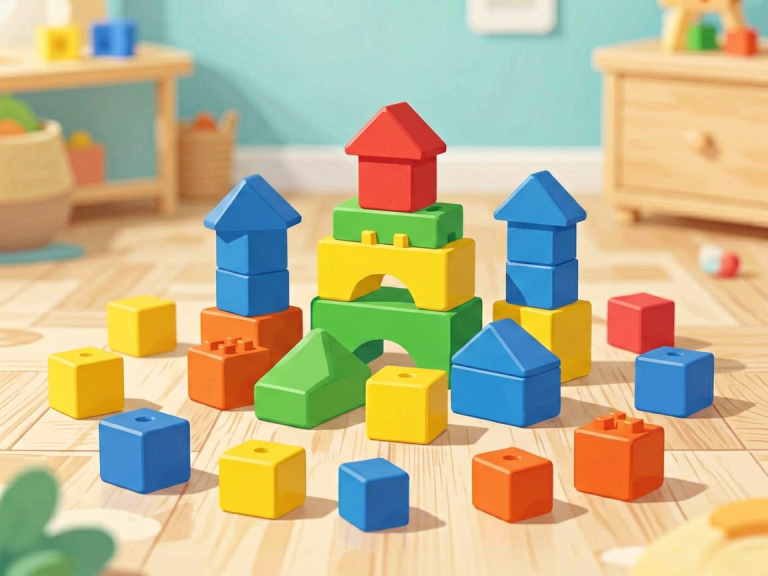
Nothing says “STEM” quite like a pile of blocks. For a 5-year-old, construction toys are the ultimate gateway to engineering. They teach balance, symmetry, structural integrity, and cause-and-effect in the most natural way possible.
Magna-Tiles or Picasso Tiles (Magnetic Building Sets)
These translucent, magnetic tiles are a classroom favorite for good reason. Unlike traditional wooden blocks, magnetic tiles snap together with satisfying clicks, allowing young children to create 3D structures like towers, bridges, and even simple robots. The magnetic connection means fewer collapses, which reduces frustration and encourages persistence. A 5-year-old can spend an hour experimenting with different shapes, discovering that a square base is sturdier than a triangle, or that adding a diagonal brace prevents wobbling. The translucent colors also invite light play, layering an art element onto the engineering. Studies in early childhood education show that magnetic building sets improve fine motor skills, hand-eye coordination, and early geometry concepts. Many sets include wheels and special pieces that let kids build cars or spinning tops, adding dynamic movement. The best part? No batteries, no screens—just pure, imaginative construction.
LEGO Classic Creative Bricks (Medium Box)
While LEGO offers countless themed kits, the Classic Creative Bricks box is the perfect starter set for a 5-year-old. With over 400 pieces in a rainbow of colors, it contains basic bricks, wheels, windows, and eyes. There are no instructions for a specific model—instead, the child is free to build whatever their mind imagines. This open-ended approach is critical for developing divergent thinking. A 5-year-old might build a house, then a spaceship, then a dinosaur, learning that the same bricks can serve multiple purposes. LEGO bricks also teach early math concepts: sorting by color, counting pieces, and understanding patterns. The act of pushing two bricks together strengthens finger muscles needed for writing. For a gentle challenge, parents can suggest tasks like “build the tallest tower you can that holds a small toy,” turning play into an engineering experiment.
—
Coding and Logic Toys: Introducing Computational Thinking Without Screens
Computational thinking—breaking down problems, recognizing patterns, and creating step-by-step sequences—is a core 21st-century skill. For 5-year-olds, the best coding toys are screen-free, tactile, and feel like games rather than lessons.
Learning Resources Code & Go Robot Mouse Activity Set
This award-winning kit centers on a small, cheerful robot mouse named Colby. Children use coding cards to plan a sequence of moves—forward, backward, turn left, turn right—and then press corresponding buttons on the mouse’s back. The goal? Guide Colby through a maze to reach a piece of cheese. The activity set includes maze walls, tunnels, and a variety of challenge cards that range from very simple to moderately complex. At age five, children are just beginning to understand sequencing and cause-and-effect. The robot mouse provides immediate feedback: if the code is wrong, the mouse bumps into a wall, and the child must debug their program. This process teaches error analysis and perseverance in a low-stakes, joyful way. Teachers report that even reluctant learners engage with this toy because the mouse is cute and the physical movement is satisfying. The set also encourages spatial planning—children must visualize the maze from the mouse’s perspective, a foundational skill for geometry and later programming.
ThinkFun Robot Turtles (Board Game)
Robot Turtles is a board game that teaches the principles of coding using a deck of cards and a game board. Each player chooses a turtle token and uses cards to move it toward a jewel on the board. The cards represent commands: “move forward,” “turn left,” “turn right,” and “laser” (for zapping obstacles). There are no electronics, no screens—just a game that feels like a treasure hunt. Designed by a Google engineer, Robot Turtles cleverly introduces concepts like functions and loops through advanced rule variants that parents can unlock as the child grows. For a 5-year-old, the base game is perfect: it teaches sequential thinking and following directions. The social aspect—playing with a parent or sibling—adds language development and turn-taking. Moreover, because the game is non-competitive (everyone works to help their turtle reach the jewel), it builds collaboration. Many families report that after playing Robot Turtles for a few weeks, children start naturally creating “programs” for everyday tasks, like “first put on socks, then shoes, then go outside.”
—
Science Experiment Kits: Hands-On Discovery for Little Scientists
Nothing satisfies a 5-year-old’s “why” questions like a real science experiment. The key is to choose kits that are safe, non-messy (or acceptably messy), and focused on observable phenomena.
Learning Resources Primary Science Lab Set
This is not a chemistry set with chemicals; it’s a starter lab with real, child-safe tools: beakers, test tubes, a magnifying glass, tweezers, a funnel, and a pair of child-sized safety goggles. The set comes with 10 activity cards that guide simple experiments like “make a volcano” (using baking soda and vinegar), “float or sink,” and “grow a rainbow” (using paper towels and water). At age five, children are developing the scientific method organically—they ask a question, make a guess, try it, and observe. The lab set turns this natural curiosity into structured play. The physical tools also refine fine motor skills: pouring water from a beaker into a test tube without spilling requires concentration. The safety goggles make the child feel like a “real” scientist, boosting confidence and engagement. Parents can easily extend the play by adding household items like oil, food coloring, or salt. The set is durable enough to survive countless experiments, and the washable pieces make cleanup manageable.
Thames & Kosmos Kids First Stepping into Science Kit
Designed for ages 5–7, this kit introduces 25 simple experiments covering air, water, sound, plants, and the human body. Each experiment is contained in a separate bag, so there is no overwhelming pile of parts. The instruction manual uses colorful illustrations and very simple text, allowing a child to follow along with minimal adult help. Experiments include building a paper boat that actually floats, making a simple compass, growing beans in a mini greenhouse, and using a tuning fork to see sound waves. The kit emphasizes the “stepping” part of the name: children learn that science is a process of stepping from observation to understanding. For example, the sound experiments let children feel vibrations on a balloon, connecting an abstract concept to a physical sensation. Parents appreciate that the materials are reusable and that the kit aligns with early elementary science standards. The biggest win, however, is the sense of wonder: a 5-year-old who watches a bean sprout from a seed is experiencing the miracle of biology in real time.
—
Math and Number Games: Building Numeracy Through Play
Many 5-year-olds can count to 20, but true number sense—understanding quantity, comparison, and simple operations—requires hands-on manipulation. The best math gifts make numbers tactile and visual.
MathLink Cubes by Learning Resources
These interlocking cubes come in ten bright colors and can be snapped together to form towers, patterns, and even simple 3D shapes. The set includes 100 cubes and an activity guide with cards for counting, sorting, patterning, and beginning addition/subtraction. A child can physically combine two towers of cubes to see that 3+2 equals 5—there is no abstract symbol, just real objects. MathLink Cubes are excellent for visualizing place value: ten cubes snapped together make a “ten rod,” which later translates to understanding base-10 systems. For a 5-year-old, the cubes also become building toys; children often create animals, robots, and buildings, seamlessly integrating math into imaginative play. The cubes are small (about 2 cm) but not a choking hazard for children past the mouthing stage. They are dishwasher-safe, which is a practical plus for parents. Many kindergarten classrooms use MathLink Cubes because they are proven to improve number sense more effectively than worksheets.
Sum Swamp (Board Game)
This classic math board game from Learning Resources turns addition and subtraction into a swamp adventure. Players roll two dice (one with numbers 1–6, the other with operators “+1,” “–1,” “+2,” etc.) and move their creature token along a path through the swamp. The first player to cross the finish line wins. The game reinforces counting, simple addition and subtraction, and number recognition—all while engaging in a fun, competitive narrative. For a 5-year-old, the numbers are small enough (the highest sum is typically 8) that they can count on their fingers or with the help of the die. The game also includes special spaces like “even/odd” and “shortcut,” which introduce parity and strategy. The simple rules mean children can play independently after one or two rounds. Parents report that Sum Swamp is often requested at bedtime, proving that learning math can be a source of joy, not drudgery.
—
Outdoor and Nature Exploration Kits: STEM in the Great Outdoors
Not all STEM learning happens indoors. Nature is the original laboratory, offering lessons in biology, physics, and environmental science. For a 5-year-old, a simple exploration kit can transform a backyard walk into a scientific expedition.
National Geographic Kids Bug Catcher and Habitat Set
This kit includes a plastic bug catcher with a magnifying lens, a mesh habitat with a built-in magnifier, tweezers, and an activity guide. The design is sturdy and easy for small hands to open and close. Children can catch a ladybug, a caterpillar, or a grasshopper, place it in the habitat for observation, and then release it after a few hours. The act of observing a bug’s legs, wings, and antennae through a magnifying lens teaches careful observation—a core scientific skill. The habitat also has a ventilation screen and a small dish for water, encouraging responsibility and care for living creatures. A 5-year-old learns to ask questions like “What does it eat?” and “How does it move?” Parents can supplement with a simple insect identification book. The kit also includes a few plastic insects for initial play, which is useful on rainy days. Beyond biology, children learn about respecting living things and the concept of habitats. This kind of hands-on exploration is linked to increased environmental awareness and vocabulary development.
GeoSafari Jr. My First Microscope by Educational Insights
Real microscopes are often too fragile and complex for a 5-year-old. This version is designed specifically for preschoolers: it is a sturdy, dual-lens microscope that does not require slides. Instead, children place a specimen (like a leaf, a coin, or their own finger) on the large viewing stage and look through the eyepiece with a built-in LED light. The magnification is 8x, which is enough to reveal details like the veins of a leaf or the ridges on a penny, without being so powerful that it becomes disorienting. The microscope has two large, comfortable eyepieces so children can use both eyes (like binoculars), reducing strain. It is also completely kid-safe—no sharp parts or glass lenses. At age five, children are fascinated by seeing familiar objects up close; it feels like magic. This tool builds the habit of looking closely, which is essential for all STEM fields. The microscope comes with a set of 10 prepared slides containing bugs, flowers, and fibers, but the real fun is discovering everyday items. A parent can prompt: “What does a strawberry seed look like up close? What about the tip of a pencil?” The answers create lasting memories of wonder.
—
Conclusion: Choose Gifts That Spark Questions, Not Answers
The best STEM gifts for a 5-year-old are not about memorizing facts or achieving a specific outcome. They are about opening doors to exploration. Whether it’s a magnetic tile tower that collapses and is rebuilt, a robot mouse that takes a wrong turn, or a magnifying glass that reveals a hidden world in a blade of grass, each gift invites the child to ask one more question. As you shop, remember that the adult’s role is to be a co-explorer, not a teacher. Sit on the floor, make predictions, laugh at mistakes, and celebrate discoveries together. The toys listed above have been tested by educators, parents, and—most importantly—5-year-olds themselves. They survive excitement, tantrums, and occasional spills. They are durable enough for the long haul and open-ended enough to grow with the child. When you give a five-year-old a STEM gift that honors their curiosity, you are giving something far greater than a toy: you are giving them permission to wonder, to tinker, and to believe that they can figure things out. And that is the most valuable gift of all.