The Wonder of Discovery: How Science Toys for Toddlers Shape Young Minds
Introduction
From the moment they grasp a rattle, toddlers are natural scientists. They shake, drop, and mouth objects to understand cause, effect, and texture. Science toys for toddlers harness this innate curiosity, turning everyday play into a foundation for critical thinking, problem-solving, and a lifelong love of learning. Unlike traditional toys that merely entertain, well-designed science toys introduce basic concepts like gravity, magnetism, light, and biology in a hands-on, age-appropriate way. This article explores why these toys matter, the types that work best, and how parents can choose and use them effectively—all while ensuring safety and fun.
—
The Importance of Early Science Exposure
The first three years of life are a period of explosive brain development. Synapses form at a rate of over one million per second, and every sensory experience shapes neural pathways. Science toys for toddlers capitalize on this plasticity by presenting phenomena that stimulate observation, prediction, and experimentation. For example, a simple set of stacking cups isn’t just about building towers—it teaches size comparison, balance, and the physics of collapsing structures. When a toddler drops a ball and sees it bounce, they are absorbing rudimentary laws of motion.
Research in early childhood education consistently shows that exposure to science concepts before age five boosts later performance in STEM subjects (Science, Technology, Engineering, and Math). More importantly, it fosters a “growth mindset”—the belief that intelligence can be developed through effort. When a toddler’s water wheel stops spinning because they placed it incorrectly, and they try a different angle, they are learning resilience. Science toys provide safe, low-stakes environments for making mistakes and trying again, which is the essence of scientific inquiry.
—
Cognitive and Motor Skill Development
Science toys for toddlers do not operate in a vacuum; they simultaneously enhance cognitive, fine motor, and language skills. Consider a magnetic fishing rod set with colorful fish. As the child aims the magnet at the fish’s eyelet, they refine hand-eye coordination and pincer grip. When the magnet attracts the fish, the child experiences a concrete example of magnetic force. If the fish doesn’t stick because the angle is off, they must adjust their approach—a lesson in trial and error.
On the cognitive side, toys that involve sorting, patterning, or sequencing (like nesting blocks or color-matching puzzles) build the prefrontal cortex, which governs executive functions such as attention, working memory, and self-control. Many science toys also incorporate cause-and-effect mechanisms: pressing a button makes a light flash, turning a crank makes gears rotate, or tilting a maze board makes a ball roll. These repeated interactions help toddlers form mental models of how the world works.
Language development is another hidden benefit. As parents narrate actions—“Look, the water flows down the ramp!” or “The magnet sticks to the metal ring”—they introduce new vocabulary and sentence structures. Toddlers absorb words like “float,” “sink,” “heavy,” “light,” “spin,” and “melt,” building a rich scientific lexicon long before they can define these terms.
—
Types of Science Toys for Toddlers
Not all science toys are created equal. The best ones for toddlers share three characteristics: open-ended play, sensory engagement, and safety. Below are categories that consistently deliver both fun and learning.
1. Water and Sand Play Sets
Water tables, pipettes, funnels, and sand molds are classic science toys. Pouring water from a cup into a funnel teaches volume and flow. Adding floating and sinking objects (corks, stones, plastic boats) introduces density. Sand play reveals texture changes when wet or dry. These toys are messy but invaluable for developing spatial reasoning and fine motor skills.
2. Light and Color Explorers
Flashlights with colored filters, light-up wands, and translucent shape sorters allow toddlers to experiment with shadows, transparency, and color mixing. A simple prism hanging in a sunny window creates rainbows. These toys stimulate visual perception and curiosity about light sources.
3. Simple Machines and Construction
Large, interlocking gears, ramps, and building blocks with wheels let toddlers explore mechanical advantage. They can roll a car down a steeper versus a gentler slope, noticing speed differences. Magnetic building tiles (with safe, enclosed magnets) enable 3D construction, teaching structural stability and polarity.
4. Nature and Living Things
Bug viewers with magnifying lids, terrariums for sprouting seeds, and “explorer kits” with a child-safe compass and binoculars encourage outdoor observation. Watching a caterpillar turn into a butterfly or a bean sprout grow roots provides direct biological insight. Even a simple ant farm can fascinate a two-year-old for hours.
5. Sensory Science Kits
Non-toxic, taste-safe slime, play dough with hidden glitter or beads, and “snow” powder that expands in water introduce chemistry basics. Toddlers love squeezing, stretching, and mixing—activities that teach properties of matter (solid, liquid, squishy). Always check labels for age recommendations to avoid choking hazards.
—
How to Choose the Right Science Toys
With countless options on the market, selecting appropriate science toys can be overwhelming. Here are practical guidelines for parents and caregivers.
Prioritize Open-Endedness
Toys that have a single correct use (like a battery-operated robot that only moves forward) limit creativity. Instead, choose toys that can be used in multiple ways. A set of wooden ramps and balls can be arranged differently each time; a tub of colored water and cups can inspire endless pouring experiments.
Match Developmental Stage
For 12- to 18-month-olds, focus on sensory exploration: textured balls, water mats, and soft stacking rings. By 18 to 24 months, toddlers can handle cause-and-effect toys (a hammering peg bench, a simple lever). From 2 to 3 years old, introduce more complex science toys like gear sets, beginner magnifying glasses, and simple matching games involving magnets or colors.
Look for Quality and Safety
Science toys for toddlers must be made of non-toxic materials, with no small parts that could be swallowed. Avoid toys with sharp edges or long cords. Check for ASTM (American Society for Testing and Materials) safety certification. For toys involving liquids or sand, ensure they are easy to clean and sealed where possible.
Encourage Adult Participation
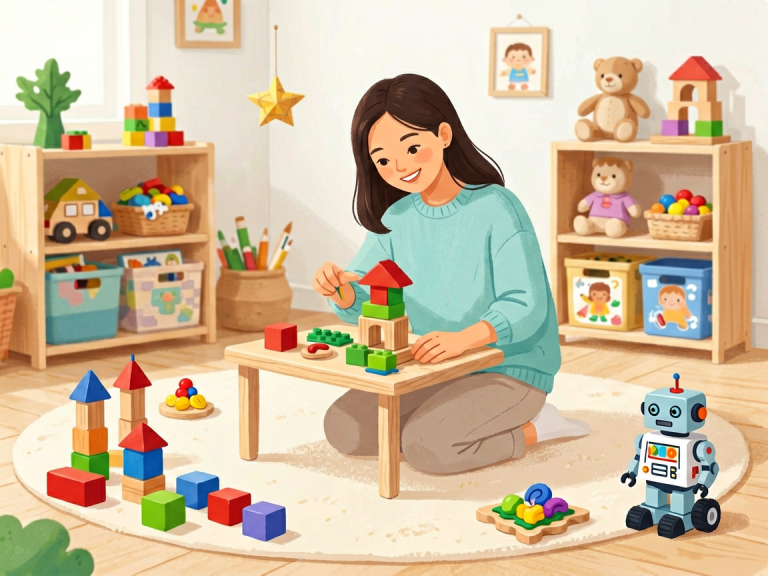
The greatest science toy is a parent who plays alongside the child. Narrate observations, ask open-ended questions (“What do you think will happen if we add more water?”), and model curiosity. Your enthusiasm is contagious. Even the simplest homemade toy—a plastic bottle filled with oil, water, and food coloring—becomes a mesmerizing science lesson when you shake it and discuss why the bubbles rise slowly.
—
Safety Considerations for Toddler Science Play
No article on toddler toys would be complete without addressing safety. Science play often involves loose parts, liquids, or small objects, so vigilance is essential.
Choking Hazards
Any object that can fit through a toilet paper tube is a choking risk for children under three. Avoid marbles, small magnets, beads, or toy parts that break easily. Always supervise play with sets that include multiple pieces.
Chemical and Allergen Awareness
Homemade slime, play dough, and sensory materials should be made from edible ingredients if there’s any risk of mouthing. Commercial products should be labeled “non-toxic.” Watch for latex allergies if using balloons or rubber toys.
Electrical and Battery Safety
Battery compartments on light-up toys must be secured with a screw—not just a sliding door—to prevent access. Never leave a toddler alone with a toy that uses button batteries, which can cause severe internal burns if swallowed.
Mess Management
Science play is messy by design. Designate a washable area (a kitchen floor, a plastic mat) and keep a towel nearby. For water play, use a shallow basin and never leave a toddler unattended near any amount of water.
—
Conclusion: Planting the Seeds of Tomorrow’s Innovators
Science toys for toddlers are far more than entertainment—they are the building blocks of curiosity, logic, and creativity. By choosing toys that invite exploration, supporting play with thoughtful adult interaction, and staying mindful of safety, parents can turn everyday moments into profound learning experiences. A toddler who discovers that a ball always rolls downhill, that mixing red and yellow makes orange, or that a magnet can “grab” a metal car through a sheet of paper is laying the neurological groundwork for future scientific reasoning.
In a world that increasingly demands innovation, the best gift we can give our youngest learners is the confidence to ask “what if?” and the tools to find out. So next time you see a toddler joyfully dumping a cup of water onto the floor, don’t rush to clean up—recognize it for what it is: a brilliant experiment in physics, gravity, and cause and effect. And maybe hand them a bigger cup.