Building Minds: The Best Educational Toys for Kids Who Love to Construct
Introduction: Why Building Toys Matter More Than Ever
Children are natural builders. From stacking blocks as toddlers to designing complex architectural models as pre-teens, the urge to assemble, create, and problem-solve is deeply ingrained in human development. In an age dominated by screens and passive entertainment, educational toys that encourage hands-on construction offer a powerful counterbalance. They do not merely occupy a child’s time; they actively shape cognitive abilities, foster perseverance, and ignite a passion for engineering, design, and logic. For kids who already gravitate toward building, the right educational toys can transform a hobby into a lifelong love of learning. This article explores the multifaceted world of building-oriented educational toys, categorizes their unique benefits, and offers guidance for parents and educators seeking to nurture the next generation of innovators.
The Cognitive Superpowers of Construction Play
Building toys are deceptively simple. A set of wooden blocks or a bag of interlocking plastic pieces may look like mere entertainment, but behind the scenes, a child’s brain is working overtime. Research in developmental psychology consistently shows that construction play enhances spatial reasoning—the ability to visualize and manipulate objects in three dimensions. This skill is a strong predictor of later success in STEM fields (science, technology, engineering, and mathematics). When a child decides whether a block fits into a gap or how to balance a tower, they are practicing geometry and physics without even realizing it.
Moreover, building toys sharpen executive functions. Planning a structure requires working memory (holding the goal in mind), cognitive flexibility (adjusting when a piece doesn’t fit), and inhibitory control (resisting the urge to give up when the tower collapses). These are the same mental muscles that help children succeed in school and life. Creative problem-solving also blossoms: a child who lacks the exact piece for a bridge must improvise, perhaps using a different shape or redistributing weight. This trial-and-error process builds resilience and teaches that failure is not an endpoint but a stepping stone to a better design.
Finally, building toys offer a unique opportunity for open-ended play. Unlike many digital games that prescribe a fixed narrative, construction sets allow infinite variations. A single set of magnetic tiles can become a castle, a spaceship, a dinosaur enclosure, or a geometric sculpture. This freedom encourages divergent thinking—the ability to generate multiple solutions to a problem—which is a cornerstone of creativity.
Types of Building Toys and Their Unique Advantages
*Classic Building Blocks: The Timeless Foundation*
Wooden unit blocks are the gold standard for early childhood development. Their simple, unpainted surfaces eliminate distractions and force children to focus on structure and balance. They naturally teach concepts like symmetry, proportion, and gravity. Brands like Melissa & Doug and Hape offer sets with varied shapes—rectangles, triangles, arches, cylinders—that allow for both stacking and bridging. These toys are especially beneficial for children aged 2 to 6, as they support fine motor skill development and cause-and-effect reasoning.
*Interlocking Plastic Systems: From LEGO to Plus-Plus*
LEGO bricks are arguably the most famous building toy in the world, and for good reason. Their clutch power—the ability to hold together securely yet detach easily—makes them ideal for precision work. For kids who love building, LEGO offers separate lines: LEGO Classic for free creativity, LEGO City for thematic role-play, and LEGO Technic for more advanced mechanical principles like gears, pulleys, and axles. Technic sets, in particular, introduce elementary engineering concepts. Meanwhile, alternatives like Plus-Plus (small, interlocking plastic pieces shaped like plus signs) encourage pattern-making and mosaic-like construction, building patience and attention to detail.
*Magnetic Construction Sets: A New Dimension of Play*
Magnetic tiles—such as Magna-Tiles, PicassoTiles, and Magformers—have exploded in popularity over the past decade. Their transparent, colorful panels connect via strong magnets embedded along the edges. This design removes the frustration of pieces that slide apart, allowing even young children to build tall, stable structures quickly. Magnetic sets are particularly effective for teaching 3D geometry; children naturally learn about vertices, faces, and angles as they connect squares and triangles to form cubes, pyramids, or even spheres. Because the magnets provide instant feedback, these toys boost confidence and encourage experimentation. They are excellent for collaborative play, as multiple children can contribute to a single creation.
*Engineering and Robotics Kits: Building for the Future*
For older children (ages 8 and up), educational toys that combine building with motion, electronics, or coding take the experience to an advanced level. Kits like the LEGO Mindstorms, Makeblock mBot, or Thames & Kosmos’s Robotics Workshop allow kids to construct vehicles, robots, or machines that actually move. They must follow instructions to assemble gear systems, install motors, and program actions via simple block-based coding interfaces. This integrated approach teaches the iterative design process: build, test, debug, and rebuild. It demystifies technology and gives children a sense of agency over the machines that surround them. Other notable examples include K’NEX (which emphasizes real-world mechanical systems like roller coasters and bridges) and Fischertechnik (a German brand known for industrial-grade modeling of factories and conveyor belts).
*Natural and Eco-Friendly Building Toys*
An emerging category focuses on sustainability and sensory engagement. Bamboo blocks, cork building sets, and even recycled cardboard construction kits (like Makedo) appeal to environmentally conscious families. These materials are lighter, quieter, and warmer to the touch than plastic, which can be soothing for sensitive children. While they may not offer the precision of LEGO, they encourage organic, free-form building that mimics natural structures—nests, dens, treehouses. They also teach environmental stewardship by demonstrating that creativity doesn’t require nonrenewable resources.
Age-Appropriate Recommendations for Building Lovers
*Toddlers and Preschoolers (Ages 1–4)*
The primary goal at this stage is sensory exploration and motor development. Large, lightweight blocks (such as cardboard bricks or foam blocks) are safe and easy to grasp. Simple interlocking pegboards or Duplo (the larger LEGO bricks) allow stacking without choking hazards. Magnetic tiles with extra-strong magnets and rounded corners are also suitable, provided adult supervision. Focus on toys with no small parts.
*Early Elementary (Ages 5–7)*
Children begin to follow simple plans and enjoy themed builds. LEGO Classic sets (with a box of mixed bricks) are ideal for open-ended creativity. Marble run sets (like Hape Quadrilla or Ravensburger GraviTrax) introduce cause and effect and basic physics. Magnetic tiles remain a hit, especially when combined with translucent colored panels that create light-play effects.
*Tween and Teens (Ages 8–14)*
This age group craves complexity and realism. LEGO Technic sets with hundreds or thousands of pieces present serious mechanical challenges. Robotics kits that require programming (e.g., LEGO Spike Prime) are perfect for tech-inclined kids. Architectural model kits (like those from Arckit or Papercraft) let older children design and build scale models of real buildings, learning about floor plans, load-bearing walls, and aesthetics. 3D printing pens are also a fascinating hybrid: children “draw” in mid-air to create three-dimensional objects, merging art with engineering.
How Parents Can Maximize the Learning Value
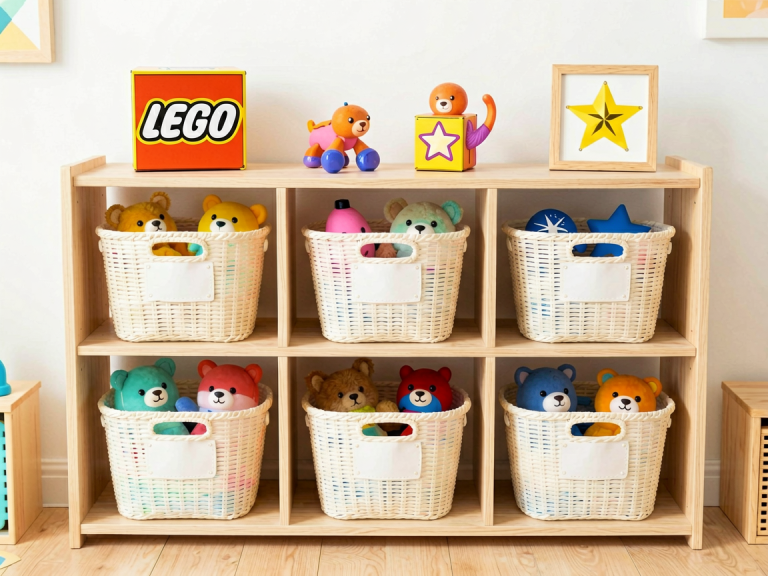
Simply buying a building toy is not enough; the adult’s role in facilitating meaningful engagement is crucial. First, resist the urge to solve problems for the child. When a structure wobbles or a gear doesn’t turn, ask open-ended questions: “What do you think would make that stronger?” or “What happens if you try a different angle?” This encourages self-directed discovery. Second, rotate toys regularly to maintain novelty. A shelf of unused bricks can be overwhelming; offering a curated subset every few weeks keeps interest alive. Third, create a “maker space” at home—a dedicated area with a low table, storage bins, and perhaps a parent-child project journal where kids can sketch their ideas before building. Finally, connect building play to real-world experiences. Visit a construction site (from a safe distance), watch documentaries about bridges or skyscrapers, or read books about famous architects and engineers. This contextual learning deepens appreciation and shows children that their play is a preview of real careers.
Conclusion: Building a Foundation for Lifelong Learning
Educational toys for kids who love building are far more than diversions. They are tools for developing spatial intelligence, creative confidence, and a systematic problem-solving mindset. From the humble wooden block to the sophisticated robotics kit, each construction set offers a unique pathway to growth. Children who build become adults who design, invent, and improve the world around them. By selecting age-appropriate, high-quality building toys and engaging thoughtfully in the play process, parents and educators can give children the greatest gift of all: the understanding that they have the power to create something new, something sturdy, and something entirely their own. Whether a child dreams of building a backyard fort, a moon colony, or a revolutionary machine, the journey begins with the first click, snap, or stack. Let them build—and watch their minds soar.