The Ultimate Guide to Engineering Toys: Inspiring Gift Ideas for Future Innovators
Introduction: Why Engineering Toys Matter
In an era dominated by screens and passive entertainment, engineering toys stand as a beacon of active, creative, and problem-solving play. These are not just playthings; they are tools that shape young minds into critical thinkers, designers, and builders. Engineering toys teach children how to deconstruct complex problems, experiment with solutions, and persist through failures. They cultivate spatial reasoning, mathematical intuition, and hands-on dexterity. More importantly, they spark a genuine curiosity about how the world works—from the gears in a clock to the suspension of a bridge to the circuits inside a smartphone. Whether you are shopping for a birthday, a holiday, or simply to encourage a child’s natural inclination to tinker, choosing the right engineering toy can be a transformative gift. This guide explores a wide range of engineering toy gift ideas, categorized by age group, skill level, and interest area, ensuring that every young builder, designer, or inventor finds something that ignites their passion.
Section 1: Engineering Toys for Early Explorers (Ages 3–6)
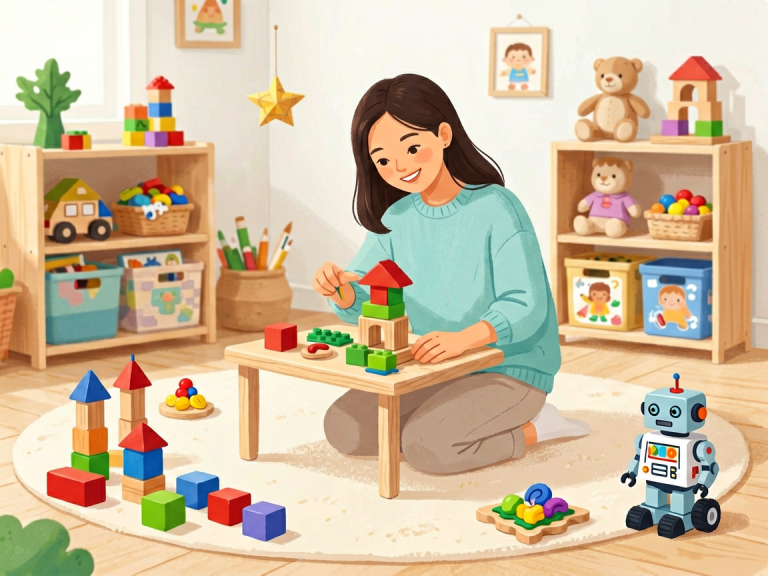
The foundation of engineering thinking is built in early childhood. At this stage, children are naturally curious about cause and effect, balance, and simple mechanics. Engineering toys for toddlers and preschoolers should emphasize safety, large parts, and open-ended exploration.
1.1 Magnetic Building Tiles
Magnetic tiles, such as Magna-Tiles or PicassoTiles, are a quintessential engineering toy for young children. These colorful, translucent geometric shapes snap together with built-in magnets, allowing kids to create 2D patterns, 3D structures, towers, bridges, and even simple machines. The beauty of magnetic tiles lies in their simplicity: no instructions are required. Children learn about symmetry, stability, and the structural integrity of shapes through trial and error. For example, a child quickly discovers that a square base is more stable than a triangle base when building a tower. These toys also introduce basic concepts of magnetism and polarity. Parents can extend the learning by challenging children to build a house that can withstand a “wind” (a gentle fan) or a bridge that can hold a small toy car. Magnetic tiles are incredibly durable and easy to clean, making them a long-lasting investment.
1.2 Simple Gear Sets
Gears are the heart of many mechanical systems, and introducing them early demystifies how things move. Products like Learning Resources’ Gears! Gears! Gears! sets or the popular “Building Gears” kits feature large, colorful plastic gears that interlock on a pegboard base. Children can turn a crank and watch the entire mechanism spin, learning about rotation, direction, and the relationship between gear sizes. A larger gear turning a smaller gear speeds up motion, while a smaller gear turning a larger gear provides more torque—these are concepts that children grasp intuitively through play. Simple gear sets also encourage fine motor skills as children fit gears onto pegs and connect them with chains or axles. For a more advanced twist, some sets include wheels, axles, and pulleys, allowing children to build vehicles or simple machines.
1.3 Wooden Block and Plank Sets
Before there were plastic bricks, there were wooden blocks. They remain one of the most versatile and educational engineering toys. Sets like Kapla planks or Unit Blocks allow children to stack, balance, and arrange pieces without any interlocking mechanism. This forces them to think about weight distribution, friction, and counterbalance. A child building a tall tower learns that shifting the top block slightly off-center can cause the whole structure to collapse. Wooden blocks also teach patience and precision. Unlike magnetic tiles, wooden blocks cannot hold themselves together—every piece must be carefully placed. This fosters a deeper understanding of physics and structural engineering. Additionally, wooden blocks are eco-friendly and timeless; they can be passed down through generations.
Section 2: Engineering Toys for Elementary-Age Builders (Ages 7–11)
As children grow, their cognitive abilities and fine motor skills improve dramatically. Engineering toys for this age group introduce more complex mechanisms, basic coding, and project-based challenges.
2.1 LEGO Technic and Robotics Kits
LEGO is the undisputed king of construction toys, but the Technic line takes engineering to a higher level. Instead of simple bricks, Technic sets use beams, gears, axles, pins, connectors, and pneumatic components to build functional models like cranes, cars with working steering and suspension, helicopters with rotors, and even robotic arms. These sets include detailed instruction manuals that teach step-by-step assembly, but the real learning happens when children experiment with modifications. For example, a child might build the standard race car and then try to change the gear ratio to make it go faster or climb ramps. For an even greater challenge, LEGO Mindstorms or SPIKE Prime kits combine Technic building with programmable motors and sensors. Children can write drag-and-drop code to make their robot follow a line, avoid obstacles, or complete a maze. These kits introduce basic engineering design principles—planning, prototyping, testing, and iterating—as well as computational thinking.
2.2 Snap Circuits and Electronics Kits
Understanding electricity and circuits is fundamental to modern engineering. Snap Circuits by Elenco is a brilliant introduction to electronics. Instead of soldering or wires, all components (resistors, capacitors, LEDs, motors, switches, and integrated circuits) snap onto a plastic grid. Children can build over 100 projects, from a simple light switch to a radio, a doorbell, or even an AM/FM radio receiver. The instruction book explains the scientific principles behind each circuit in simple terms. As children progress, they can design their own circuits, learning about voltage, current, series and parallel connections, and the function of different electronic components. Snap Circuits are reusable and durable, and they require no prior knowledge. They build confidence in experimenting with electricity safely.
2.3 K’NEX and Construction Beam Systems
K’NEX offers a different building experience from LEGO. Instead of interlocking bricks, K’NEX uses rods and connectors that snap together to create rigid frames, bridges, and moving structures. The sets often focus on real-world engineering challenges, such as building a Ferris wheel, a roller coaster, or a working drawbridge. The rod-and-connector system forces children to think in three dimensions and understand triangulation—the principle that triangles provide structural strength. Many K’NEX sets include motors and cables, enabling the models to actually move or lift objects. Building a K’NEX model requires careful planning and spatial reasoning, and the final product is often impressively large and functional. This toy is excellent for children who enjoy architecture, civil engineering, or mechanical design.
Section 3: Engineering Toys for Teens and Advanced Learners (Ages 12 and Up)
At this stage, young engineers are ready for real-world tools, programmable microcontrollers, and complex problem-solving. These toys often mimic professional engineering workflows and can serve as stepping stones toward careers in STEM.
3.1 Arduino or Raspberry Pi Starter Kits
The Arduino platform is a game-changer for teens interested in electronics and programming. An Arduino board is a small microcontroller that can read sensors, control motors, and interact with the physical world. A typical starter kit includes the board, a breadboard, jumper wires, LEDs, resistors, buttons, servos, ultrasonic sensors, and LCD screens. By following tutorials or their own ideas, teens can build projects like a temperature-controlled fan, a smart plant watering system, a line-following robot, or a weather station. Learning Arduino involves writing C++ code and understanding basic circuit design. Similarly, a Raspberry Pi is a full-fledged computer that can run Linux and interact with GPIO pins, making it ideal for more advanced projects like home automation, media centers, or retro gaming consoles. Both platforms teach problem-solving, debugging, and the engineering design process. Gifting a starter kit is an invitation to a lifelong skill.
3.2 3D Printing Pens and Kits
Additive manufacturing is one of the most exciting fields in engineering today. A 3D printing pen, such as the 3Doodler, allows users to draw in three dimensions by extruding heated plastic filament that solidifies instantly. Teens can create custom parts, sculptures, jewelry, or even functional items like phone stands and zipper pulls. The process teaches material properties, layer adhesion, and structural support. More advanced kits include a small 3D printer (like the Creality Ender 3 series) that requires assembly and calibration. Building a 3D printer from a kit is an engineering project in itself—it involves understanding mechanical alignment, firmware configuration, and slicing software. Once assembled, the teen can design their own objects using CAD software (like Tinkercad or Fusion 360) and bring them to life. 3D printing combines digital design with physical creation, bridging the gap between imagination and reality.
3.3 Robotics Competition Kits (VEX, FIRST, or Makeblock)
For teens who thrive on competition and teamwork, robotics kits designed for competitions are perfect. VEX Robotics offers a metal-based construction system that allows for robust, customizable robots. VEX IQ is for middle school, while VEX EDR (now VEX V5) is high-school level. These kits include powerful motors, sensors, gears, and a programmable brain. Building a VEX robot requires understanding of chassis design, drivetrain, lift mechanisms, and programming. Many schools have VEX or FIRST Robotics teams, but a kit can also be used for independent projects. Makeblock’s mBot or Ultimate Robot Kit offers an accessible entry point with pre-designed parts and block-based programming, then graduates to Python and Arduino. Gifting a robotics competition kit is a powerful statement: it says, “I believe you can build something extraordinary.” It also teaches project management, documentation, and resilience—as every robot builder knows, things often break before they work.
Section 4: Niche and Specialty Engineering Toys
Not every young engineer fits neatly into a box. Some are fascinated by aerospace, others by civil engineering, and still others by sustainable energy. Specialty toys cater to these specific passions.
4.1 Structural Engineering Sets (Bridge and Skyscraper Kits)
For the budding civil engineer, consider a kit like the “Engino Structural Engineering” set or “Thames & Kosmos Structural Engineering: Bridges & Skyscrapers.” These kits include beams, connectors, and specialized parts to build complex trusses, arches, and cables. Children learn about load distribution, tension and compression, and why certain shapes are stronger than others. Some kits even include a testing mechanism to see how much weight a bridge can hold before failure. This hands-on experimentation is far more memorable than reading about physics in a textbook.
4.2 Hydraulic and Pneumatic Kits
Hydraulics and pneumatics are used in everything from construction equipment to robotics. Kits like the “OWI Hydraulic Arm” or “4M Hydraulic Robotic Arm” allow children to build a working arm that lifts, grips, and rotates using water pressure. These toys demonstrate the principle that liquids are incompressible and can transmit force through tubes. For pneumatics, “Thames & Kosmos” offers a kit where children build a machine that uses air pressure to move pistons. These kits are excellent for teaching fluid dynamics and mechanical advantage.
4.3 Renewable Energy and Green Engineering Kits
With growing awareness of climate change, engineering toys focused on renewable energy are both educational and inspiring. Kits like the “4M Green Science Solar Science” or “Thames & Kosmos Renewable Energy Kit” allow children to build wind turbines, solar cars, or fuel cells. They learn about energy conversion, efficiency, and the engineering challenges of sustainable power. For older teens, a “Horizon Fuel Cell Technologies” kit lets them experiment with electrolysis and hydrogen fuel cells, connecting chemistry, physics, and engineering.
Section 5: How to Choose the Perfect Engineering Toy Gift
With so many options, selecting the right gift can feel overwhelming. Here are some practical considerations:
- Age and skill level: Always check the recommended age range. A toy that is too simple will bore a child; one that is too complex will frustrate them. Look for kits that offer adjustable difficulty or expansion packs.
- Interests: Some children love building static structures, while others prefer moving mechanisms. Pay attention to what they already enjoy—do they like cars, animals, space, or robots? Matching the toy to their passion increases engagement.
- Open-ended vs. project-based: Open-ended toys (magnetic tiles, wooden blocks, basic LEGO) allow for unlimited creativity. Project-based toys (Snap Circuits, specific LEGO Technic sets) provide clear goals and a sense of accomplishment. Both are valuable; choose based on the child’s personality.
- Durability and reusability: Engineering toys should withstand repeated builds and potential modifications. Avoid sets with tiny, fragile parts for younger children. Look for brands with strong reputations and available replacement parts.
- Educational support: Some kits come with detailed manuals, online tutorials, or even companion apps. For beginners, step-by-step instructions are crucial. For advanced learners, open-source communities (like Arduino forums) provide endless support.
- Budget: Engineering toys range from $20 to $500+. Starter kits and smaller sets are affordable and can be expanded later. High-end kits like LEGO Mindstorms or a 3D printer are significant investments but offer years of learning.
Conclusion: The Gift That Keeps on Building
Engineering toys are far more than presents—they are catalysts for curiosity, resilience, and innovation. They teach children that failure is part of the design process, that creativity requires structure, and that the most rewarding challenges are those that demand persistence. The best gift you can give a young mind is the tools to build, break, and rebuild their own ideas. Whether it’s a simple magnetic tile set for a three-year-old or an Arduino kit for a teenager, engineering toys open doors to a world of possibilities. So next time you’re searching for a gift that inspires, look beyond the latest video game or plastic figurine. Choose something that asks, “What can you create?” and watch the answer unfold.