The Ultimate Building Toys Buying Guide: How to Choose the Perfect Set for Your Child
Building toys are far more than simple playthings—they are the architects of young minds, the silent teachers of physics, and the catalysts for creativity that can shape a child’s cognitive development for years to come. Whether you are a parent shopping for a birthday gift, a grandparent looking to inspire a curious toddler, or an educator assembling a classroom supply, the sheer variety of building toys on the market can feel overwhelming. This comprehensive buying guide will walk you through every essential factor—from age recommendations and material safety to educational benefits and budget considerations—so you can make an informed, confident purchase that will spark joy and learning.
Why Building Toys Matter: More Than Just Fun
Before diving into the specifics of what to look for, it is worth understanding why building toys deserve a central place in any child’s toy box. Unlike passive entertainment such as screen-based games, building toys engage children in active, hands-on problem-solving. When a child stacks blocks, connects magnetic rods, or snaps together interlocking bricks, they are unconsciously learning about balance, gravity, spatial reasoning, and even basic engineering principles. Research in child development consistently shows that construction play strengthens fine motor skills, hand-eye coordination, and persistence. Moreover, building toys encourage open-ended creativity—there is no single “right” way to build. A set of simple wooden blocks can become a castle, a spaceship, or a bridge, limited only by the child’s imagination. This flexibility makes building toys a long-term investment that grows with the child.
Types of Building Toys: Finding the Right System
The first decision in your buying journey is choosing a category of building toys. Each type has unique characteristics, strengths, and ideal age ranges.
Classic Wooden Blocks
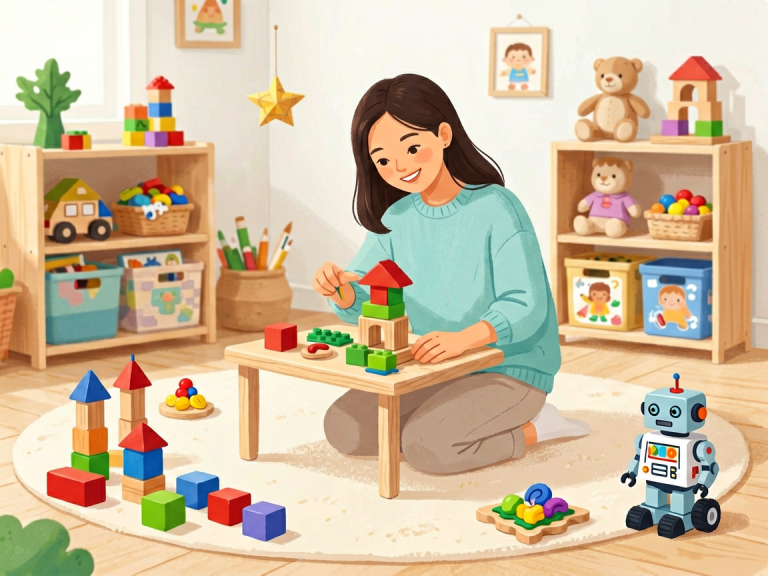
Wooden blocks are the timeless foundation of building play. They are simple, durable, and safe for even the youngest children. Typically made from beech, maple, or pine, these blocks come in various shapes—squares, rectangles, cylinders, triangles, and arches. Some sets include painted letters or numbers, adding a literacy or numeracy component. Wooden blocks are ideal for children aged 1 to 5 because they offer unrestricted, tactile exploration. Their weight and texture provide sensory feedback that plastic pieces cannot replicate. Parents should look for blocks with non-toxic, water-based finishes and smooth edges to prevent splinters. The main drawback is limited connectivity—blocks rely purely on friction and gravity, so tall structures can be unstable.
Interlocking Plastic Bricks (e.g., LEGO, Mega Bloks)
The king of modern building toys, interlocking bricks, need little introduction. LEGO remains the most famous brand, but there are many compatible alternatives. These systems use stud-and-tube connections that allow sturdy, repeatable constructions. They come in themed sets (such as city, space, or fantasy) as well as classic box sets with mixed pieces. For toddlers, larger bricks like DUPLO are safer and easier to grasp. For older children, smaller bricks offer greater detail and precision. The key advantage is that sets can be disassembled and reused infinitely, and they often integrate with motors, gears, or app-controlled elements for advanced play. However, they can be expensive, and small pieces pose choking hazards for children under three.
Magnetic Building Sets (e.g., Magna-Tiles, Magformers)
Magnetic tiles and rods have surged in popularity over the past decade. These sets consist of transparent or opaque plastic shapes containing magnets along the edges. Children snap them together to create 2D patterns or 3D geometric structures. The magnetic connection is satisfying and forgiving—structures can be easily adjusted without frustration. These toys excel at teaching symmetry, geometry, and color recognition. They are generally safe for ages 3 and up, as the magnets are sealed inside the plastic. Premium brands use stronger magnets that hold heavier constructions, but cheap knockoffs may have weak magnets or leaky seals. Magnetic sets are excellent for group play because they assemble quickly and can be combined with other building systems.
Construction-Themed Kits (e.g., Tinker Toys, K’NEX, Erector Sets)
These kits use rods, connectors, wheels, and sometimes screws and nuts to build structures that move or function. K’NEX and Erector sets often include instructions for building working machines like cranes, cars, or roller coasters. They are more complex and better suited for children aged 6 and up. These toys teach mechanical principles—levers, pulleys, gears—and require patience and following step-by-step directions. They are excellent for children who enjoy a challenge and want tangible results. However, they have many small parts, so supervision is necessary. Parents should check the recommended age range carefully and consider the child’s fine motor skills.
Eco-Friendly and Alternative Materials
In recent years, building toys made from recycled plastics, bamboo, or plant-based bioplastics have entered the market. Brands like Plus-Plus (a Danish company) offer small interlocking pieces made from biodegradable materials. Some wooden block sets use sustainably sourced timber. If environmental impact is a priority, look for certifications such as FSC (Forest Stewardship Council) for wood or BPA-free labels for plastics. These toys tend to be pricier, but they align with a family’s sustainability values and often feature minimalist, neutral designs that appeal to parents.
Age-by-Age Buying Guide: Matching the Toy to the Child
The most critical factor in any building toy purchase is age appropriateness. A toy that frustrates a toddler or bores a preteen will be quickly abandoned.
Ages 1–3: Sensory Exploration and Grasping
For infants and toddlers, safety is paramount. Choose large blocks that cannot be swallowed—at least 1.5 inches in diameter. Wooden blocks with rounded corners are ideal. Soft building blocks made of foam or fabric are also popular for this age group. Magnetic tiles with extra-large pieces (like Magna-Tiles Clear Colors) are safe if the magnets are secure. Avoid any toys with small parts, sharp edges, or strings. At this stage, the goal is not complex construction but simple stacking, knocking down, and feeling different textures.
Ages 3–5: Introduction to Structure and Pre-Engineering
Preschoolers have improved dexterity and can manage interlocking bricks like DUPLO. They can follow simple instructions but still benefit from open-ended play. Magnetic tiles are fantastic at this age because they allow quick success—a child can build a house in five minutes without frustration. Look for sets with basic shapes and bright colors. Avoid themes that are too advanced; instead, choose general sets that encourage imaginative scenarios.
Ages 5–8: Growing Complexity and Themed Play
Children in this age range can handle smaller bricks (standard LEGO size) and more intricate connectors. They enjoy themed sets like city vehicles, castles, or animals. They can also follow multi-step instructions. Consider combining a base set (e.g., a box of 500 bricks) with a themed expansion. K’NEX and similar kits become viable at the upper end of this range. Safety concerns diminish, but parents should still check for small parts if there are younger siblings.
Ages 8 and Up: Advanced Engineering and Creativity
Tweens and teenagers can tackle complicated sets with hundreds or thousands of pieces. Erector sets, advanced LEGO Technic, or robotic building kits (like LEGO Mindstorms or Snap Circuits) are excellent choices. These toys teach programming, physics, and systematic thinking. They also appeal to kids who love challenges and may even lead to STEM career interests. At this stage, the toy’s value comes from the process of building and the sense of accomplishment.
Material Safety and Durability: What Every Buyer Must Check
Safety should never be compromised. When purchasing building toys, especially online, scrutinize the materials and construction.
- Plastics: Look for BPA-free, phthalate-free, and non-toxic labels. Cheap plastic may contain harmful chemicals or break into sharp shards. Reputable brands like LEGO, Mega Bloks, and Magna-Tiles undergo rigorous safety testing. Avoid off-brand magnetic sets with unknown manufacturing standards.
- Wood: Ensure the wood is smooth and sealed with a non-toxic finish. Check for splinters or loose paint. Some lower-quality wooden blocks may have paint that chips easily, posing a choking hazard.
- Magnets: For magnetic toys, the magnets must be completely enclosed within the plastic. Loose magnets are extremely dangerous if swallowed—they can attract each other through intestinal walls and cause life-threatening injuries. Only buy from trusted brands.
- Age Labels: Always follow the manufacturer’s age recommendation. The age label is not arbitrary; it is based on choking hazards and small parts testing. A toy marked “3+” is safe for a three-year-old, not a two-year-old.
Educational Value: Building More Than Structures
Consider what you want the toy to teach. Some building toys emphasize creativity, while others focus on logic and engineering.
- STEM Learning: K’NEX, Erector sets, and Technic kits explicitly teach mechanics and physics. Magnetic sets teach geometry and symmetry. If your child is interested in how things work, invest in these types.
- Imaginative Play: Classic wooden blocks and LEGO classic sets allow for storytelling. A child might build a zoo, then pretend to be a zookeeper. This type of play develops language and social skills.
- Fine Motor Skills: Interlocking bricks require precise finger movements. For children with developmental delays, occupational therapists often recommend building toys to improve hand strength.
- Patience and Persistence: Complex sets with instructions teach goal-setting and the value of following steps. Failures (a collapsing tower) become learning opportunities.
Budget Considerations: Spending Wisely
Building toys range from a few dollars to several hundred. You do not need to spend a fortune to get a great toy.
- Under $20: A set of 50 wooden blocks, a small bucket of Mega Bloks, or a basic magnetic tile set (10–20 pieces). These are excellent for toddlers or as starter kits.
- $20–$50: Mid-range LEGO sets (300–500 pieces), larger magnetic tile sets (30–50 pieces), or a K’NEX educational kit. This is the sweet spot for most families.
- $50–$100: High-end LEGO sets (like the Creator series), large wooden block sets (100+ pieces), or an Erector set with a motor. These make memorable gifts.
- $100+: LEGO Technic with motors, robotics kits, or premium magnetic sets with hundreds of pieces. These are investments that can last for years.
Pro tip: Consider buying second-hand or clearance sets. Building toys are durable, and you can often find huge lots on resale sites. Just ensure all pieces are clean and intact.
Final Recommendations: How to Make Your Choice
To conclude, here is a quick decision framework:
- For a 1-year-old: Large wooden blocks or soft foam blocks.
- For a 3-year-old: DUPLO or large magnetic tiles.
- For a 5-year-old: Standard LEGO Classic set or a small K’NEX set.
- For a 10-year-old: LEGO Technic or an Erector set with motor.
- For a group of children: A large bucket of assorted bricks or magnetic tiles.
Always read customer reviews focusing on durability and ease of cleaning. Finally, remember that the best building toy is the one that the child actually plays with—so observe their interests. If they love dinosaurs, get a dinosaur-themed building set. If they love construction vehicles, opt for a truck-themed kit. The perfect building toy will not only occupy their hands but also ignite a lifelong love for creating, problem-solving, and imagining.
Happy building!