Building Minds, One Block at a Time: The Transformative Power of Educational Building Toys for Kids
Introduction
In an era dominated by screens and passive digital entertainment, the humble building block has quietly maintained its status as one of the most powerful educational tools ever invented. From the interlocking plastic bricks of LEGO to the magnetic tiles of Magna-Tiles, from wooden unit blocks to sophisticated engineering kits, educational building toys for kids have evolved into a multi-billion-dollar industry that promises not just fun, but genuine cognitive, social, and emotional development. These toys are far more than simple playthings; they are three-dimensional laboratories where children experiment with physics, architecture, logic, and creativity. As parents and educators increasingly seek purposeful play experiences, understanding the science behind building toys and their profound impact on child development becomes essential. This article explores the multifaceted benefits of educational building toys, examining how they nurture critical thinking, foster STEM literacy, develop fine motor skills, and even cultivate emotional resilience. By delving into the research and practical applications, we will see why these toys remain an indispensable component of any child’s developmental toolkit.
The Cognitive Architecture of Play: How Building Toys Shape Young Brains
Spatial Reasoning and Mathematical Thinking
One of the most well-documented advantages of building toys is their ability to enhance spatial reasoning—the capacity to visualize and manipulate objects in two and three dimensions. When a child stacks blocks to create a tower, fits a triangular piece into a triangular hole, or constructs a bridge that must support weight, they are engaging in complex spatial problem-solving. Research from the University of Colorado Boulder has shown that children who play with construction toys score significantly higher on spatial visualization tests, which are strong predictors of future success in STEM fields. For instance, a child learning to balance a structure must intuitively grasp concepts of symmetry, weight distribution, and center of gravity long before they encounter these terms in a physics classroom. Building toys transform abstract mathematical ideas—such as fractions (a half-block compared to a whole), geometry (angles and shapes), and measurement (how many units tall is the tower?)—into tangible, manipulable experiences. This hands-on engagement creates neural pathways that make later formal learning more intuitive and less intimidating.
Problem-Solving and Executive Function
Beyond spatial skills, building toys are exceptional training grounds for executive functions—the higher-order cognitive processes that include working memory, inhibitory control, and cognitive flexibility. Consider a child attempting to replicate a model from a set of instructions. They must hold multiple steps in their working memory, inhibit the impulse to rush ahead, and flexibly adjust their approach when a piece doesn’t fit. When building freely without instructions, the cognitive demands are even greater: the child must generate a goal, plan a sequence of actions, monitor progress, and troubleshoot failures. This iterative process of “build, test, revise” mirrors the scientific method and teaches resilience. A 2018 study published in *Child Development* found that preschoolers who engaged in guided block play showed marked improvements in executive function compared to a control group. The open-ended nature of building toys allows children to experience productive failure—a crucial component of learning. When a tower collapses, the child learns that failure is not an endpoint but a data point, prompting analysis and redesign.
Fostering Creativity and Divergent Thinking
Open-Ended Play as a Canvas for Imagination
Educational building toys are unique in that they offer a perfect balance between structure and freedom. While some sets come with pre-designed models, the true magic lies in their open-ended potential. A set of wooden unit blocks can become a castle, a spaceship, a farm, or a city skyline, depending entirely on the child’s imagination. This flexibility nurtures divergent thinking—the ability to generate multiple solutions to a problem. In a world that increasingly rewards convergent thinking (finding the single correct answer), building toys provide a sanctuary for creative exploration. Psychologists note that when children engage in pretend play with their constructions—inventing stories, assigning roles, and creating narratives—they are simultaneously developing language skills, social understanding, and emotional regulation. The building itself becomes a prop for dramatic play, transforming a simple structure into a setting for complex social scenarios.
The Role of Constraints in Creative Problem-Solving
Paradoxically, constraints often fuel creativity. Building toys come with inherent limitations: a certain number of pieces, specific shapes, weight-bearing capacities. Children must work within these boundaries to achieve their vision. This mirrors real-world design challenges where engineers must balance aesthetics, function, budget, and materials. A child trying to build a tall tower using only a limited set of blocks must decide whether to create a wide base (sacrificing height for stability) or a narrower, taller structure (risking collapse). These trade-offs teach strategic thinking and resource management. Moreover, the act of combining pieces in novel ways—using a wheel piece as a decorative element, or stacking two half-blocks to create a stepped profile—encourages lateral thinking. Studies on creativity have shown that individuals who engage in such constructive play as children demonstrate higher levels of creative achievement in adulthood, from artistic endeavors to scientific breakthroughs.
STEM Education Through Hands-On Construction
Engineering Principles in Disguise
Building toys are arguably the most effective introduction to engineering concepts for young children. Without being explicitly taught, children learn about structural integrity: they discover that a triangle is stronger than a square, that a broader base prevents tipping, that interlocking pieces distribute load. More sophisticated sets, such as those featuring gears, pulleys, motors, or hydraulic systems, introduce principles of mechanical advantage, force, and motion. For example, a child constructing a simple crane with a pulley system grasps the relationship between the direction of force and the lifting of a load—a lesson that would otherwise require abstract diagrams in a physics textbook. These experiences build intuitive knowledge that later formal instruction can build upon. The Next Generation Science Standards explicitly advocate for engineering design as a key practice from kindergarten onward, and building toys provide the perfect medium for this practice to occur naturally.
Coding and Computational Thinking Without Screens
In recent years, building toys have expanded into the realm of computational thinking. Sets like LEGO Boost, K’Nex, or magnetic tile coding kits allow children to create machines that can be programmed to move, sense, or react. Even without electronic components, the logical sequence of assembling parts—first the base, then the walls, then the roof—mirrors the sequential logic of coding. Some building toys incorporate color-coded blocks or arrows that represent commands, teaching concepts like loops, conditionals, and debugging. A child who builds a marble run and discovers that their marble gets stuck at a certain junction has encountered a real-world bug; they must trace the path, identify the error, and modify the design. This process is identical to debugging code. By integrating computational thinking into physical play, these toys demystify technology and make abstract concepts concrete. They also offer a screen-free alternative, addressing parental concerns about excessive device time while still preparing children for a digital future.
Social and Emotional Development Through Collaborative Building
Teamwork, Communication, and Negotiation
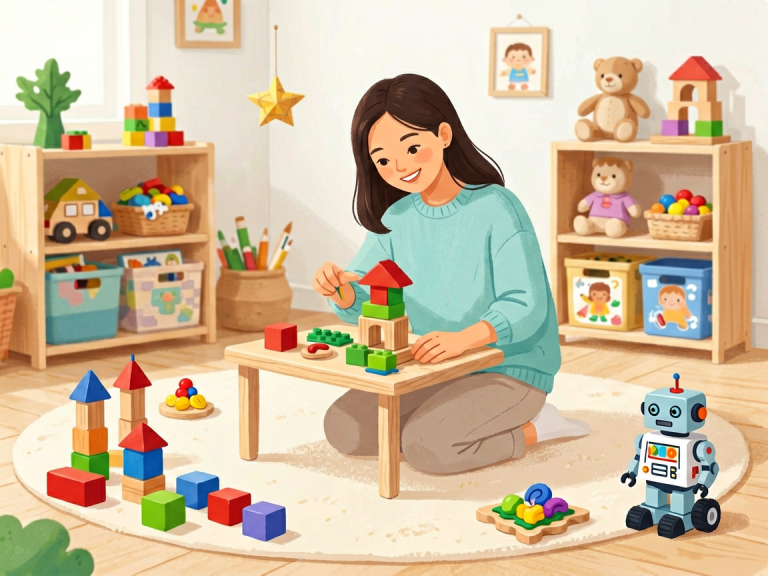
Building toys are rarely played with in isolation. When children build together—whether with siblings, friends, or classmates—they enter a microcosm of social interaction that demands cooperation, negotiation, and conflict resolution. A group of children attempting to construct a shared city must decide who builds what, how to share limited resources (the coveted blue blocks), and how to resolve disagreements when one child’s vision conflicts with another’s. These interactions teach vital social skills: active listening, compromise, perspective-taking, and leadership. Research on cooperative play has shown that children who frequently engage in group building activities demonstrate higher levels of prosocial behavior and lower levels of aggression. The building project becomes a shared goal that transcends individual preferences, fostering a sense of collective achievement. Moreover, the non-verbal nature of building allows children who are less verbally articulate to participate on an equal footing, boosting their confidence and inclusion.
Emotional Regulation and Resilience
Building is inherently unpredictable. A carefully constructed tower may teeter and fall; a complex mechanism may fail to function as intended. These moments of “failure” are emotionally charged, especially for young children who are still developing frustration tolerance. Building toys provide a safe, low-stakes environment for practicing emotional regulation. A child who cries when their castle collapses and then, with adult guidance, rebuilds it stronger, has learned a powerful lesson about perseverance. The iterative nature of construction—where failure is not only expected but integral to the process—teaches children that emotions are temporary and that challenges can be overcome. In therapeutic settings, building toys are used to help children with anxiety or trauma regain a sense of control. By creating and destroying and recreating, children process feelings of mastery and vulnerability. The tactile, grounding nature of manipulating physical objects also has a calming effect, making building toys an excellent tool for mindfulness and self-regulation.
Choosing the Right Building Toys: A Guide for Parents and Educators
Age-Appropriate Considerations
Not all building toys are created equal, and selecting the right set for a child’s developmental stage is crucial. For toddlers and preschoolers (ages 1–3), large, lightweight blocks that are easy to grasp and stack are ideal. Soft foam blocks or large Duplo bricks promote fine motor development and cause-and-effect understanding without posing a choking hazard. For ages 4–6, interlocking bricks like standard LEGO or magnetic tiles introduce more complex assembly and pattern recognition. Children at this stage begin to create symbolic representations (a block becomes a car, a person, a tree). For ages 7–10, more specialized sets such as K’Nex, Meccano, or construction kits with gears and pulleys challenge children to follow multi-step instructions and understand mechanical systems. Tweens and teens (11+) can engage with robotics kits, programmable building sets, or architectural model kits that require advanced planning and precision. It is important to follow age recommendations not only for safety but also to ensure that the level of difficulty is matched to the child’s abilities—too easy leads to boredom, too difficult to frustration.
Open-Ended vs. Structured Sets
One ongoing debate in the world of building toys is whether open-ended sets (e.g., plain wooden blocks, LEGO Classic bricks) or structured sets (e.g., themed LEGO sets with specific models) are more educational. The answer is both, and the best approach is a mix. Structured sets teach following directions, attention to detail, and systematic thinking. They also provide a clear sense of accomplishment when a model is completed. However, over-reliance on pre-designed models can stifle creativity. Open-ended sets, on the other hand, require the child to generate their own goals—a skill that is increasingly valuable in a world of ambiguity. The ideal scenario is for children to first master a structured set to gain confidence and skills, then repurpose the pieces for original creations. Many educators advocate for “loose parts” play, where a variety of building materials (blocks, tiles, natural objects, recycled items) are made available for unlimited exploration. This approach fosters creativity, flexibility, and resourcefulness.
Materials and Durability
Educational building toys come in various materials: plastic, wood, magnetic, foam, metal. Each has its advantages. Wooden blocks are durable, sustainable, and have a satisfying weight and texture. They are also quieter than plastic and promote a sense of natural aesthetics. Plastic bricks like LEGO are incredibly versatile, compatible across generations, and allow for precise interlocking. Magnetic tiles (e.g., Magna-Tiles, PicassoTiles) are excellent for teaching geometry and structural concepts because they allow for quick assembly and disassembly, reducing frustration. Metal construction sets (like Erector Sets) are more demanding but teach authentic engineering techniques. When choosing, consider the environmental impact (plastic vs. wood), the noise level (important in classroom or apartment settings), and the longevity of the toy. High-quality building toys often become family heirlooms, passed down through siblings and even generations, making them a worthwhile investment.
Conclusion: Building a Foundation for Lifelong Learning
Educational building toys for kids are not merely a passing trend or a nostalgic nod to childhood innocence. They are scientifically validated tools that foster cognitive growth, creative thinking, STEM literacy, and socio-emotional competence. In a world that increasingly demands innovative problem-solvers, adaptable thinkers, and emotionally intelligent collaborators, the simple act of stacking, connecting, and constructing may be one of the most profound educational experiences a child can have. These toys respect the child’s innate drive to explore, to create, and to understand their environment. They offer a hands-on counterbalance to the abstract, passive nature of many modern educational technologies. As we consider the future of education—one that must prepare children for jobs that do not yet exist and challenges we cannot yet imagine—the humble building block stands as a timeless reminder that the best learning often happens when we are building something, piece by piece, block by block, idea by idea. So the next time you see a child deep in concentration, surrounded by scattered bricks or tiles, know that you are witnessing not just play, but the construction of a mind.