Nurturing Minds: The Ultimate Guide to Educational First Birthday Gifts for Newborns
A child’s first birthday is a remarkable milestone—a celebration of survival, growth, and the beginning of a lifelong journey of discovery. While many guests default to cuddly teddy bears or noisy plastic cars, thoughtful parents and friends increasingly seek gifts that do more than entertain: they want presents that educate. But what does an “educational” gift mean for a one-year-old, who is technically no longer a newborn yet still in the rapid developmental stage of infancy? In this guide, we explore the philosophy behind educational first birthday gifts for newborns (defined here as babies in their first year of life, with gifts ideally introduced around or just after their first birthday), and offer a curated list of meaningful, science-backed options that stimulate cognitive, motor, sensory, and emotional growth. Each gift is chosen not only for its fun factor but for its ability to lay the groundwork for a lifetime of learning.
The Science of Early Learning: Why the First Birthday Matters
Before diving into specific gift ideas, it is essential to understand why the period surrounding a baby’s first birthday is a golden window for educational intervention. At twelve months, a typical infant’s brain has already reached about 60 percent of its adult size, and neural connections are being formed at an astonishing rate—nearly 1 million new synapses per second. This rapid brain development is heavily influenced by environmental stimuli. Everyday interactions, the objects a baby touches, the sounds they hear, and the challenges they encounter all shape the architecture of their developing brain. Educational gifts, therefore, are not about forcing academic concepts onto a toddler; rather, they are tools that naturally encourage exploration, problem-solving, cause-and-effect understanding, and language acquisition. A well-chosen gift can transform playtime into a rich learning experience, fostering curiosity and confidence that will serve the child for years to come.
Sensory Play Gifts: Engaging the Five Senses
One of the most effective categories of educational gifts for a one-year-old is sensory play materials. At this age, babies learn primarily through their senses—touching, tasting, seeing, hearing, and smelling. Sensory toys help integrate these experiences, promoting neural development and fine motor skills.
Textured balls and rattles are classic but powerful. Look for balls with raised bumps, soft ridges, and contrasting colors. When a baby grasps, squeezes, and shakes these objects, they are not just playing; they are refining their grip strength, hand-eye coordination, and tactile discrimination. Similarly, sensory mats or play blankets with different fabric patches—velvet, corduroy, satin, and mesh—invite crawling and reaching, encouraging gross motor movement while providing varied tactile feedback.
Another excellent sensory gift is a water or sand play table (suitable for supervised use). Even a simple set of floating duck toys or a small bucket with scoops can teach basic physics concepts like volume, sinking, and floating. Of course, always ensure that any water play is closely monitored. For mess-free alternatives, consider sensory bottles—clear plastic containers filled with water, glitter, beads, or colored oil. Babies can shake, roll, and watch the swirling motion, which calms them and develops visual tracking skills.
Language-Building Gifts: The Power of Words
Language development explodes during the second year of life. A baby may only say a few words around their first birthday, but they understand far more than they can express. Gifts that introduce words, sounds, and narratives are invaluable.
Board books with high-contrast images, flaps, and textures top this list. Books like *Dear Zoo* or *Brown Bear, Brown Bear, What Do You See?* are not just stories; they are interactive tools. Lifting flaps strengthens fine motor skills, and hearing the rhythmic, repetitive language builds phonemic awareness—the foundation for later reading. Opt for books made of thick cardboard with rounded corners, as babies will chew and tug them. A personalized storybook that includes the baby’s name and photo can also spark early recognition of self-identity.
Beyond books, consider talking plush toys or simple audio players. Devices like the Yoto Player (designed for young children) allow parents to insert cards that play songs, nursery rhymes, or short stories. Pressing a button to hear sound teaches cause and effect, while exposure to diverse vocabulary and melodies enriches the auditory environment. However, always choose volume-limited, baby-safe electronics that cannot be damaged by drool or rough handling.
Cognitive Development Gifts: Puzzles, Stackers, and Sorters
Cognitive skills—including memory, attention, and logical reasoning—can be nurtured through simple, age-appropriate challenges. For a one-year-old, the best cognitive toys are those that require matching, stacking, or sorting.
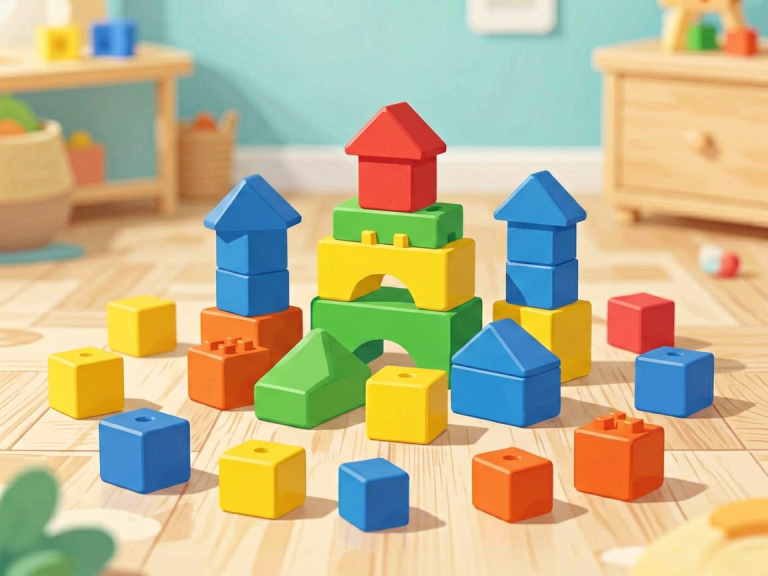
Stacking cups or rings are timeless for good reason. A set of brightly colored cups that nest inside one another or can be stacked into a tower teaches concepts of size, order, and gravity. When the tower inevitably topples, the baby learns about balance and the joy of rebuilding. Shape sorters (with large, easy-to-grasp blocks and a corresponding box with cutouts) are slightly more advanced. They encourage spatial reasoning and problem-solving: the baby must rotate the block to match the hole. It may take many attempts, but each failure builds persistence and cognitive flexibility.
Another fantastic option is a simple wooden peg puzzle with just three or four large pieces. Choose puzzles featuring animals, vehicles, or familiar objects. As the baby lifts and replaces each piece, they develop hand-eye coordination and begin to recognize specific shapes and images. For a higher-tech but still educational choice, consider a light-up learning toy that responds to pressing buttons with numbers, colors, or animal sounds. Many such toys have multiple modes (music, learning, games) that grow with the child. Just be mindful of overstimulation—choose toys with adjustable volume and a simple interface.
Gross Motor Skill Toys: Moving and Learning
Physical development is deeply intertwined with cognitive growth. When babies crawl, cruise, or take their first independent steps, they are not only building muscle strength but also stimulating the vestibular system, which influences balance and spatial awareness. Educational gifts that encourage movement are therefore doubly beneficial.
Push toys and walkers (specifically the non-seated, push-behind type) are ideal. A wooden cart with blocks, a toy lawn mower, or a sturdy animal-shaped walker gives the baby something to hold while practicing walking. The added weight provides stability, and the satisfying clicking or rattling sounds reward each step. Activity tables that stand on four legs are another great investment. They allow the baby to pull up, stand, and explore various buttons, sliders, and spinners. These tables often incorporate multiple learning elements—letters, numbers, colors, sounds—and can keep a curious toddler engaged for months.
For more active play, consider a soft climbing cube or foam blocks. These are safe for tumbling and encourage the baby to crawl over and around obstacles, developing coordination and confidence. Some sets include ramps for rolling balls, adding a cause-and-effect component. Always ensure that climbing toys are low to the ground and made of non-toxic, compressible foam.
Musical Instruments: Rhythm and Brain Development
Music is a universal language that activates multiple brain regions simultaneously. For a one-year-old, exposure to rhythm and melody enhances auditory processing, memory, and even early math skills. Musical gifts do not need to be expensive or complex.
Baby-safe percussion instruments like maracas, a small drum, a xylophone, or a set of jingle bells are perfect. They allow the baby to produce sounds independently, which fosters a sense of agency. Encourage the baby to shake, bang, and tap—this is not noise, but a lesson in tempo and cause-and-effect. Musical scarves or ribbons are also wonderful; waving a colorful scarf to a song teaches rhythm and visual tracking. For a more guided experience, a musical activity book that plays a tune when a button is pressed combines literacy with sound.
Parents and caregivers can join in by singing along, turning the gift into a social bonding experience. The more interactive the play, the greater the educational payoff.
How to Choose: Safety, Durability, and Developmental Fit
Selecting the right educational gift for a newborn’s first birthday requires careful consideration. First and foremost, safety is paramount. All toys should be free of small parts that could become choking hazards (use a choke tube tester, or simply ensure every component is larger than a toilet paper roll). Avoid toxic paints, BPA-free plastics, and sharp edges. Second, consider durability. A one-year-old will drop, throw, and chew on toys; they need to withstand vigorous use. Wooden toys are often more durable than plastic, but high-quality plastic is acceptable if it’s thick and well-made. Third, think about developmental appropriateness. A toy that is too advanced may frustrate the baby, while one that is too simple will bore them. Look for toys labeled for 12+ months, and observe whether the toy offers multiple ways to play—stacking, sorting, rolling, etc.—so it can grow with the child.
Finally, remember that the best educational gift is time and interaction. A fancy toy will gather dust if a parent never sits down to play. The educational value of any gift multiplies when an adult models how to use it, narrates actions (“Let’s put the red circle in the round hole!”), and celebrates the baby’s successes. Therefore, when selecting a gift, consider also adding a suggestion for a related activity or a simple “play guide” card that explains the learning opportunities embedded in the toy.
Conclusion: Play Is the Highest Form of Research
Albert Einstein once said, “Play is the highest form of research.” For a one-year-old, every moment of play is an experiment—testing gravity, texture, sound, and social connection. Educational first birthday gifts for newborns are not about accelerating academic achievement; they are about providing rich, safe, and stimulating environments that honor the child’s natural curiosity. Whether it is a set of stacking cups, a soft board book, or a simple wooden xylophone, the best gift you can give is one that invites exploration, encourages problem-solving, and, above all, makes the baby smile. In the end, a gift that sparks joy and learning together is truly priceless—and it will create memories that last far beyond the first birthday candle. So choose thoughtfully, play together, and watch the miracle of early development unfold.