Screen-Free First Birthday Gifts for Newborns: Celebrating Milestones Without Technology
A first birthday is a momentous occasion—a celebration of survival, growth, and the first tiny steps toward independence. For the newborn who has just turned one, this milestone marks the transition from infancy to toddlerhood, a period of explosive sensory, motor, and cognitive development. In an era where digital devices are omnipresent, many parents and caregivers are deliberately choosing screen-free gifts for their little ones. These presents not only honor the child’s natural curiosity but also nurture foundational skills without the interference of flashing lights or synthetic sounds. This article explores why screen-free first birthday gifts matter, offers a curated selection of age-appropriate ideas, and provides guidance on how to choose gifts that will spark genuine, hands-on learning.
Why Choose Screen-Free Gifts for a One-Year-Old?
The first year of life is a critical window for brain development. During this period, a child’s brain forms more than one million new neural connections every second—a process that relies heavily on real-world interactions. Screen-based toys, even those marketed as “educational,” often provide passive stimulation that can overstimulate a developing nervous system while offering little opportunity for active exploration. The American Academy of Pediatrics recommends no screen time for children under 18 months, except for video chatting, and emphasizes that the best learning happens through touch, movement, and face-to-face interaction.
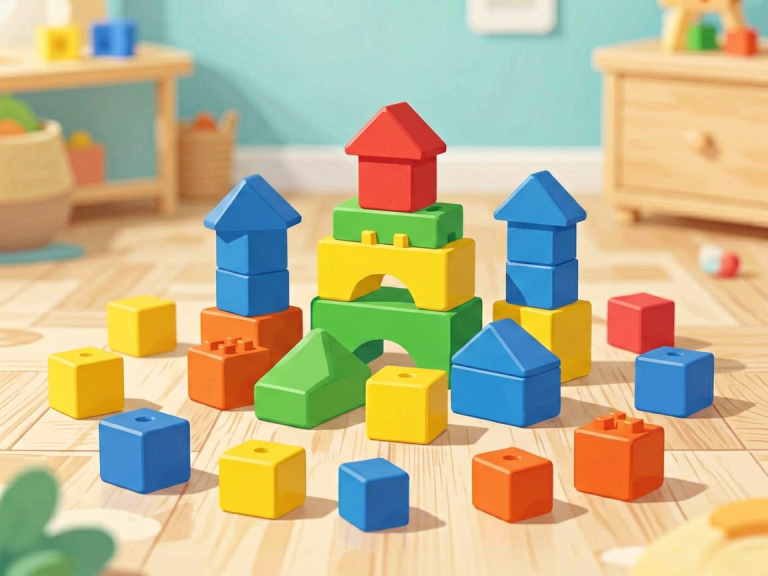
When you give a one-year-old a screen-free gift, you are offering them the chance to engage with the physical world in a meaningful way. A simple wooden block, for example, teaches cause and effect when it topples, spatial awareness when stacked, and fine motor control when grasped. These experiences cannot be replicated by a tablet app. Moreover, screen-free gifts encourage caregivers to be present—turning a gift into a shared activity rather than a babysitter. For a first birthday, the goal is not to teach the child to swipe or tap, but to foster wonder, independence, and the joy of discovery.
Building Sensory and Motor Skills: Toys That Engage the Whole Body
At age one, children are sensory explorers. They learn by putting objects in their mouths, banging them together, dropping them from high chairs, and rolling them across the floor. The best screen-free gifts for this stage are those that invite repeated, varied interactions.
Texture and Sound Exploration
Gifts that offer a variety of textures, weights, and sounds are perfect for developing tactile discrimination and auditory processing. Consider a set of silicone teething toys with different surface patterns, like ridges, bumps, and smooth areas. These can be chilled for gum relief and are safe for mouthing—a primary mode of exploration at this age. Another excellent option is a sensory ball set, including balls with nubs, ridges, and soft spikes. These balls are not only fun to chase but also stimulate the palms and fingertips, laying the groundwork for future writing and handling skills.
For sound, rattles and shakers made from natural materials—such as bamboo, wood, or cloth—provide a gentler auditory experience compared to battery-operated toys. A wooden egg shaker or a rainstick made from recycled materials offers intriguing sounds that change with angle and speed, teaching the baby about cause and effect in a calm, non-intrusive way. These toys meet the child’s need for noise without overwhelming them with electronic beeps and songs.
Gross Motor Development
A one-year-old is typically on the move—crawling, cruising along furniture, or perhaps taking first steps. Screen-free gifts that encourage gross motor skills are invaluable. A push toy, such as a wooden cart or a sturdy animal-on-wheels, provides support for new walkers. Unlike a battery-powered car that zooms with a button, a push toy requires the child to coordinate their legs, balance, and posture while moving. This real-time feedback is crucial for developing spatial awareness and muscle strength.
Ride-on toys without batteries are also wonderful. A low, stable wooden vehicle that the child can sit on and propel with their feet builds leg muscles and confidence. For a less mobile baby, a simple shape-sorter set that requires reaching, grasping, and placing can be done while sitting or kneeling, promoting trunk stability and cross-body coordination. All these activities rely on the child’s own body and effort, not on a screen’s automated responses.
Cognitive Growth Through Open-Ended Play
Screen-free gifts often shine because they are open-ended—they can be used in countless ways, growing with the child. At one, a baby may mouth a block; at eighteen months, they might stack it; at two, they might use it as a pretend phone. This flexibility is key to nurturing creativity and problem-solving.
Stacking, Nesting, and Sorting Toys
Stacking rings, nesting cups, and simple puzzles are classics for good reason. A set of rainbow-colored stacking cups, for instance, can be used for building towers, scooping sand, pouring water during bath time, and hiding small objects. The act of aligning rings on a peg requires hand-eye coordination and an understanding of size relationships. Wooden puzzles with large, chunky knobs help a one-year-old practice grasping and matching shapes. These toys teach foundational math concepts—size, order, and categorization—without any instructions or screens.
Cause-and-Effect Play
While electronic toys often flash lights when a button is pressed, they remove the mystery of the mechanism. In contrast, screen-free cause-and-effect toys reveal their workings. A simple “ball drop” has a child place a ball on a wooden ramp and watch it roll down, learning that gravity and angle determine speed. A hammering bench or pounding toy lets them hit pegs with a mallet, seeing the pegs disappear and pop up on the other side. These experiences are far more instructive than a digital animation, because the child can see, hear, and feel the physical forces at work.
Fostering Social and Emotional Bonds
First birthday parties are often filled with family members eager to connect with the new toddler. Screen-free gifts can strengthen those bonds by encouraging interactive play rather than isolated screen viewing.
Books for Sharing
A collection of durable board books with high-contrast illustrations, flaps to lift, and mirrors is a gift that keeps giving. When a parent or grandparent sits with the baby and points to pictures, makes animal sounds, or turns the pages, they are engaging in one of the most powerful forms of early literacy development. Books like *Dear Zoo*, *Brown Bear, Brown Bear, What Do You See?*, or *Goodnight Moon* are timeless because they invite conversation and repetition. The physical act of holding a book, turning pages, and seeing a familiar face interact with the story creates a positive emotional association that screens cannot replicate.
Musical Instruments for Two
Simple percussion instruments designed for little hands—like a toddler-sized drum with a mallet, a xylophone with large keys, or a pair of maracas—encourage shared music-making. A caregiver can play a rhythm while the baby shakes the maracas, or they can sing along while the baby bangs the drum. This turn-taking and imitation is a foundation for social communication. Unlike a pre-recorded song from a phone, live music responds to the child’s actions, fostering a sense of agency and connection.
Role-Play and Comfort Objects
At around one year, children begin to show attachment to soft toys or dolls. A screen-free gift like a simple cloth doll without batteries, or a stuffed animal with distinguishable features, can become a comfort object that the child carries, hugs, and talks to. This type of play is a early form of empathy and emotional regulation. A doll can be “fed,” “put to sleep,” or “danced with,” allowing the child to imitate the nurturing they receive. No screen can offer the warmth of a fuzzy friend that smells like home.
Practical Considerations for Choosing the Perfect Gift
When selecting a screen-free first birthday gift, keep safety and longevity in mind. Look for products made from non-toxic materials (like natural wood with water-based finishes, organic cotton, or food-grade silicone). Avoid small parts that could be a choking hazard—remember that a one-year-old still mouths things. Check for sturdy construction, especially on items that will be dropped or thrown.
Consider the child’s current developmental stage, not just their age. Some one-year-olds are already walking confidently; others are still perfecting their crawl. A gift that matches their skill level will be more engaging. Also think about the family’s space and lifestyle. A large play mat for rolling and tumbling might be perfect for a home with a playroom, while a compact set of stacking cups is ideal for a smaller apartment.
Finally, think about the gift’s potential to grow with the child. A simple wooden train set with no tracks may seem underwhelming, but it can be pushed along the floor now, used for sorting later, and eventually become part of complex track-building. The best screen-free gifts are those that invite multiple layers of play as the child matures.
Conclusion: A Gift of Presence, Not Pixels
In a world saturated with screens, choosing a screen-free first birthday gift for a newborn is a loving act of resistance. It says: *I value your real experience over digital distraction.* Whether it’s a set of textured teethers, a push toy for first steps, a stack of board books, or a simple wooden drum, these gifts honor the way a one-year-old learns best—through touch, movement, sound, and human connection. They provide the raw material for imagination, the foundation for motor skills, and the opportunity for shared joy. So at that first birthday party, set aside the glowing devices. Wrap something that can be felt, held, heard, and loved. That is the true gift—one without an off switch, and one that will never need a software update.