The Best STEM Toys for 2-Year-Olds: Sparking Curiosity Through Play
Introduction
The toddler years are a whirlwind of discovery. At age two, children are naturally driven to explore, manipulate, and experiment with everything within reach. This is the perfect window to introduce STEM (Science, Technology, Engineering, and Mathematics) concepts—not through formal lessons, but through thoughtful, engaging toys that tap into their innate curiosity. The best STEM toys for 2-year-olds are designed to be safe, durable, and developmentally appropriate, emphasizing sensory exploration, cause-and-effect, fine motor skills, and early problem-solving. They don’t need to be high-tech or flashy; in fact, the simplest toys often provide the richest learning opportunities. From stacking blocks to sorting shapes, each play experience lays a foundation for future understanding of physics, geometry, logic, and creativity. In this article, we’ll explore nine categories of exceptional STEM toys that help two-year-olds build cognitive, physical, and social skills while having a blast.
<h2>Building Blocks: The Engineering of Stacking and Balance</h2>
Classic wooden blocks remain one of the most powerful STEM toys for toddlers. A set of sturdy, brightly colored blocks encourages a child to experiment with balance, weight distribution, and spatial relationships. When a two-year-old stacks a block on top of another and watches it tumble, they are learning about gravity and stability. They begin to understand that a wider base supports a taller tower, and that blocks of different sizes fit together in unique ways. Look for sets that include a variety of shapes—rectangles, cylinders, arches, and triangles—to introduce basic geometry. Some block sets also feature numbers, letters, or patterns, adding an early literacy and numeracy layer. Importantly, building with blocks fosters perseverance and fine motor control as tiny fingers learn to align edges and steady wobbly structures. The open-ended nature of block play means there is no “right” way to build, allowing for endless creativity while subtly embedding engineering principles.
<h2>Shape Sorters and Puzzles: Early Geometry and Logical Thinking</h2>
Shape sorters are a staple of toddler STEM education, and for good reason. A classic shape sorter—whether a cube with cutout holes or a pegboard with corresponding pieces—teaches a child to recognize differences in form, size, and orientation. To successfully insert a triangle into a triangular hole, the child must visually discriminate the shape, rotate it mentally, and then physically align it. This process develops spatial visualization and hand-eye coordination. More advanced versions include multiple sorting criteria, such as color, number of sides, or texture. Puzzles with large wooden or foam pieces that fit into matching recesses serve a similar purpose. Two-year-olds especially benefit from puzzles with only three to six pieces, as they build confidence and a sense of accomplishment. These toys also introduce the concept of trial and error: when a square piece doesn’t fit into a round hole, the child learns to adjust their strategy—a fundamental scientific method. Over time, these experiences strengthen pattern recognition and early problem-solving skills that are essential for mathematics and engineering.
<h2>Magnetic Tiles: Discovering Magnetism and Architecture</h2>
Magnetic building tiles have become a modern classic for early STEM play, and they are safe for two-year-olds when chosen with large pieces and strong, enclosed magnets. These translucent, colorful tiles snap together with satisfying clicks, allowing toddlers to construct flat shapes, towers, houses, and even simple 3D structures. The magnetic force provides a tangible lesson in physics: like poles repel, opposite poles attract. A child quickly learns that two tiles will stick together if turned the right way, but slide apart if not. This cause-and-effect exploration is pure science. Moreover, magnetic tiles encourage geometric thinking. A square tile can be combined with two triangles to form a larger square, or with four squares to build a cube. As toddlers stack tiles vertically, they experiment with balance and weight distribution again, but now the magnetic connection adds a new variable. These toys also promote cooperative play when siblings or parents join in, introducing early teamwork and communication. Because of their versatility, magnetic tiles grow with the child, offering increasingly complex challenges as their cognitive abilities expand.
<h2>Stacking and Nesting Toys: Understanding Size, Order, and Volume</h2>
Stacking rings, nesting cups, and graduated barrels are timeless toys that teach relational concepts like “bigger,” “smaller,” “taller,” “shorter,” and “inside.” A typical stacking ring toy consists of a central pole and rings of varying diameters and colors. The child must figure out which ring goes on first (usually the largest) to create a stable tower. This requires sequencing skills and an understanding of seriation—a precursor to mathematical ordering. Nesting cups take this further: each cup fits precisely inside the next larger one, and when turned upside down, they can be stacked into a tower. The child learns that a cup that is too large will not fit inside another, or that a tower built from the largest cup at the bottom is more stable. Some nesting sets also have holes in the bottoms, allowing for water or sand play, which introduces concepts of volume and capacity. As toddlers pour water from cup to cup, they observe that the same amount of water looks different in a tall, narrow cup versus a short, wide one—a foundational experience for understanding liquid measurement and conservation. These toys are simple but rich in STEM content, and they keep little hands busy for long periods.
<h2>Cause-and-Effect Toys: Simple Machines and Basic Physics</h2>
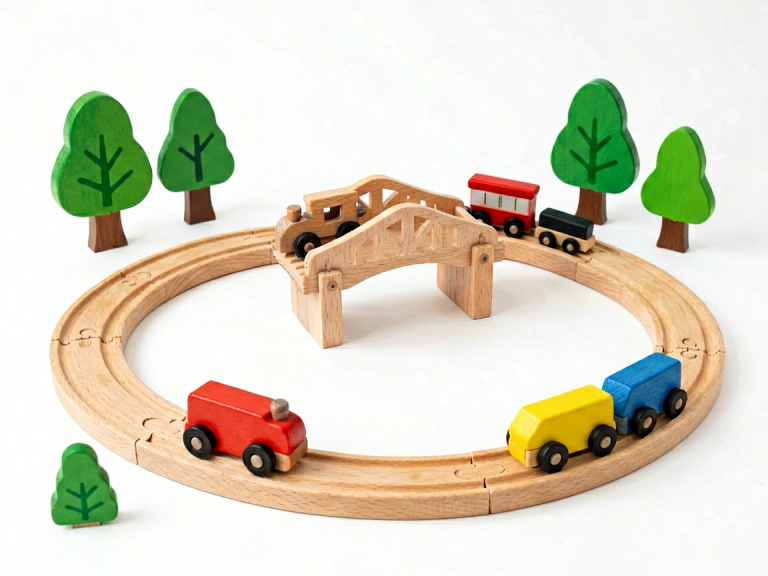
Two-year-olds are fascinated by actions that produce predictable (or surprising) results, making cause-and-effect toys ideal for STEM learning. Ball tracks, ramps, and marble runs (with oversized, safe balls) allow a toddler to place a ball at the top of a chute and watch it roll down, gaining speed, making noise, or triggering a bell at the bottom. This is a direct lesson in gravity and momentum. Similarly, pounding toys with a wooden mallet—where a peg is struck and pops out the other side—teaches about levers and force. Some toys incorporate simple gears that turn when a crank is rotated, showing how rotational motion transfers energy. Musical instruments like xylophones or drums also fall into this category: hitting a key produces a sound of a certain pitch, and the child learns through repetition that different keys make different sounds. These toys encourage experimentation: “What happens if I roll the ball faster?” or “What if I hit the peg harder?” Such questions are the essence of scientific inquiry. Parents can enhance the learning by narrating the cause-effect relationship with simple language, building vocabulary and reasoning skills simultaneously.
<h2>Water and Sand Play: Exploring Buoyancy, Flow, and Measurement</h2>
Water tables and sandboxes might not look like “toys” in the traditional sense, but they are among the most powerful STEM tools for toddlers. Pouring, scooping, straining, and stirring water or sand allows children to observe fundamental scientific principles through sensory play. A plastic boat that floats on water demonstrates buoyancy; adding pebbles to the boat makes it sink lower, teaching about weight and displacement. A funnel lets toddlers see how liquid flows from a wide opening into a narrow one, and a sieve separates sand from pebbles based on size. Simple measuring cups and spoons introduce concepts of volume and comparison: “This cup holds more water than that cup.” For two-year-olds, the mess is part of the learning, so look for waterproof smocks and easy-to-clean mat sets. Many modern water tables come with attachments like water wheels, channels, and pumps that show how moving water can do work. These toys also support social-emotional development as children share tools and negotiate space. The open-ended nature means play can last an hour or more, with new discoveries emerging each time.
<h2>Matching and Color Recognition Toys: Preparing for Data Analysis</h2>
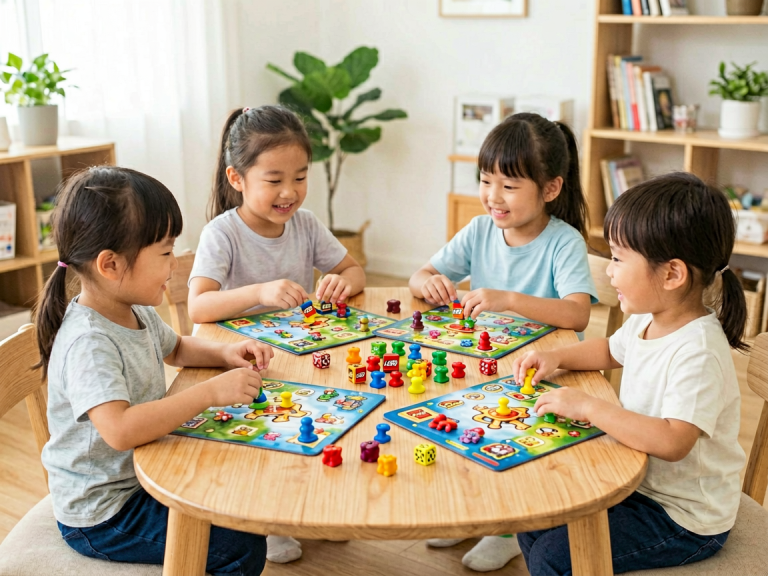
At two years old, children are beginning to sort objects by attributes like color, size, or type. Toys that encourage matching—such as egg cartons with colored eggs that fit into corresponding colored cups, or pegboards where pegs must match the color of the hole—introduce classification skills, a cornerstone of mathematics and data science. Simple lotto games with large, sturdy cards require the child to find a picture that matches another, building observation and memory. Some toys incorporate multiple attributes at once: for instance, a set of bears that come in three sizes and three colors, with corresponding sorting bowls. The child must decide how to sort them—by color first, or by size? This flexible thinking is vital for scientific reasoning. While these toys might seem basic, they lay the groundwork for more complex activities like graphing or pattern recognition. Parents can extend the learning by asking questions such as “Can you find another red one?” or “Which group has more bears?” This develops comparative language and early counting skills.
<h2>Pegboards and Lacing Toys: Fine Motor Skills with Math and Pattern Foundations</h2>
Fine motor development is closely tied to cognitive growth in toddlerhood. Pegboards—where a child inserts pegs into holes arranged in a grid or a pattern—require concentration, hand strength, and precise movements. Some pegboards come with pattern cards that show a sequence of colors, challenging the child to replicate the pattern. This activity introduces the concept of following a sequence, which is essential for coding and mathematics. Similarly, lacing toys—a large wooden shape with holes and a blunt-tipped lace—teach threading and bilateral coordination, while also exposing children to geometric outlines. Lacing a star or a circle reinforces shape recognition and the idea of boundaries. These activities also require patience and problem-solving: if the lace goes in the wrong hole, the child must backtrack. Over time, pegboard and lacing play help build the neural pathways needed for writing, drawing, and higher-level mathematical reasoning. Because they are repetitive and self-correcting, they offer a calm, focused play experience that many two-year-olds enjoy.
<h2>Conclusion: Choosing the Right STEM Toys for Your Two-Year-Old</h2>
When selecting STEM toys for a two-year-old, remember that the best options are those that encourage hands-on exploration, allow for open-ended play, and are safe for mouthing and rough handling. Avoid toys with many tiny pieces, sharp edges, or batteries that might contain small magnets or other hazards. Instead, look for natural materials like wood, soft silicone, or thick plastic, and prioritize toys that grow with the child—such as building sets that can be used in more complex ways later. The goal is not to teach specific facts but to nurture a sense of wonder and a love for figuring things out. By providing a few well-chosen items from the categories above—perhaps a set of magnetic tiles, a shape sorter, a water table, and some simple stacking cups—you can create a rich environment where science, technology, engineering, and math become part of everyday play. Watch your toddler experiment, fail, try again, and succeed, and you’ll see the very essence of STEM learning in action.