Building Bright Futures: The Essential Guide to Safe STEM Toys for Kids
Introduction: The Power of Play in a Digital Age
In an era where technology evolves at breakneck speed, parents and educators alike are increasingly turning to STEM (Science, Technology, Engineering, and Mathematics) toys as tools to spark curiosity, foster critical thinking, and prepare children for a future dominated by innovation. Yet, amid the excitement of watching a child build a robot or conduct a kitchen chemistry experiment, one question looms large: *Are these toys safe?* The answer is not always straightforward. While the market is flooded with products claiming to be “educational” and “child-friendly,” the reality is that safety in STEM toys goes far beyond the absence of sharp edges or small parts. It encompasses material toxicity, age appropriateness, electronic hazards, and even psychological impacts. This comprehensive guide explores what makes a STEM toy genuinely safe for kids, how to identify reliable products, and why safety should never be sacrificed for novelty.
What Are STEM Toys and Why Do They Matter?
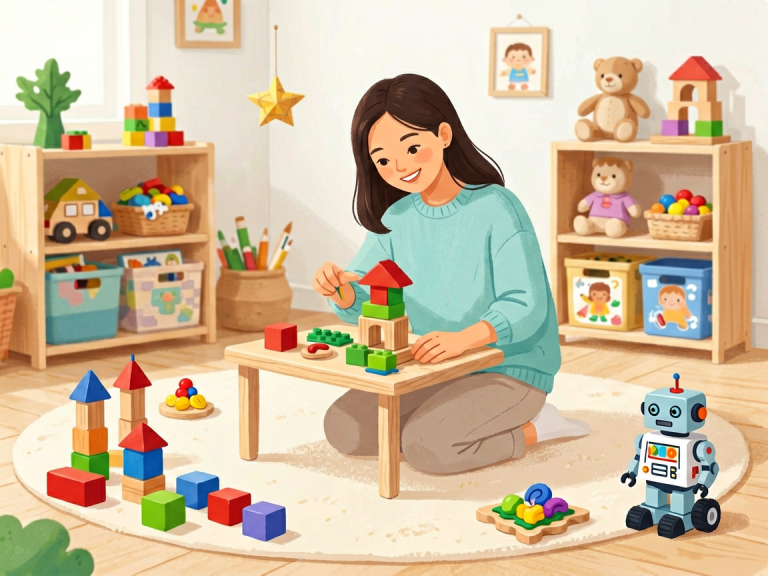
STEM toys are designed to engage children in hands-on activities that teach concepts in science, technology, engineering, and mathematics. Examples include coding robots, building blocks, circuit kits, microscopes, and math puzzles. Unlike traditional toys that may simply entertain, STEM toys encourage problem-solving, creativity, and resilience. Studies have shown that early exposure to STEM play can boost cognitive development, improve spatial reasoning, and even close the gender gap in technical fields. However, the very features that make these toys effective—such as small components, batteries, chemical materials, or internet connectivity—also introduce potential risks. Therefore, understanding safety is not just a precaution; it is an integral part of maximizing the educational benefits.
The Four Pillars of Safe STEM Toys
1. Material and Chemical Safety
The first and most fundamental layer of safety revolves around what the toy is made of. Children, especially those under six, often put toys in their mouths, chew on them, or handle them with unwashed hands. Therefore, any STEM toy must be free from toxic substances. Look for certifications such as ASTM F963 (in the United States) or CE marking (in Europe), which indicate that the product has been tested for lead, phthalates, BPA, and other harmful chemicals. For example, building sets made from high-quality ABS plastic are generally safe, while cheaper knockoffs may contain heavy metals. Similarly, science kits that include chemicals (like baking soda, vinegar, or non-toxic dyes) should clearly list ingredients and washability guidelines. The CPSC (Consumer Product Safety Commission) also recommends avoiding toys with lithium-ion batteries that are not securely enclosed, as leaking batteries can cause burns or poisoning.
2. Physical and Mechanical Hazards
STEM toys often involve moving parts, magnets, small screws, or wires. These can pose choking, strangulation, or pinching risks. The small parts rule is critical: any toy intended for children under three must not contain pieces that can fit completely inside a choke tube (roughly the size of a toilet paper roll). However, even for older children, loose magnets are particularly dangerous. If a child swallows two or more magnets, they can attract each other through intestinal walls, causing perforations or infections. Therefore, reputable STEM kits use fully encased magnets or secure closures. Additionally, electronic toys with exposed wires or sharp metal edges should be avoided. Always check for smooth edges, sturdy construction, and the absence of fragile parts that could break into sharp shards.
3. Electrical and Battery Safety
Many modern STEM toys are powered by batteries, which create unique risks. Low-voltage toys (using AAA or AA batteries) are generally safe, but rechargeable lithium-ion batteries have been known to overheat, swell, or even catch fire if mishandled. The U.S. Consumer Product Safety Commission has issued multiple recalls for kids’ toys with faulty battery compartments. To ensure safety, look for toys that use screw-locked battery compartments (preventing easy access), low-voltage DC power (instead of AC adapters that could cause shocks), and thermal protection circuits. Avoid toys that require direct connection to a wall outlet unless they are specifically designed for supervised use and certified by a recognized testing laboratory (e.g., UL, ETL). Furthermore, any toy that connects to Wi-Fi or Bluetooth should have robust data privacy protections—surprisingly, some “smart” STEM toys have been found to collect children’s voice data and transmit it unencrypted.
4. Age Appropriateness and Developmental Safety
Safety is not only about physical harm but also about psychological and developmental well-being. A coding robot designed for ages 8+ might contain complex interfaces that frustrate a 5-year-old, leading to discouragement rather than engagement. Conversely, a toy that is too simple can bore an older child and miss the learning objective. Clear age labeling is a must, but parents should also consider their child’s individual maturity. For example, a chemistry set with real glass beakers is appropriate for a careful 12-year-old but dangerous for a rambunctious 8-year-old. Additionally, avoid toys that promote stereotypes or unrealistic scientific expectations. A “STEM” toy that only comes in pink with princess themes may inadvertently discourage boys from engaging, or reinforce gender norms that limit curiosity. Truly safe STEM toys are inclusive, gender-neutral, and designed to foster a growth mindset.
How to Choose Safe STEM Toys: A Practical Checklist
Navigating the toy aisle can be overwhelming, but a systematic approach helps. Here is a checklist to guide your purchase:
- Read labels thoroughly. Look for age ranges, safety certifications, and warnings. If the description is vague, avoid it.
- Check for third-party reviews. Websites like Good Housekeeping, The Toy Association, and even Amazon customer reviews often mention safety issues such as broken parts or battery overheating.
- Prefer reputable brands. Known companies like LEGO, Magna-Tiles, Osmo, Snap Circuits, and Thames & Kosmos invest heavily in safety testing. Smaller, unbranded toys from online marketplaces might not meet standards.
- Examine the packaging. Is the toy sealed? Are instructions clear? Packaging itself can be a hazard (e.g., sharp plastic edges or choke-worthy styrofoam).
- Consider the play environment. Will the toy be used alone or with siblings? Some STEM kits require constant adult supervision—this is safe only if you are willing and able to supervise.
- Think about long-term durability. A toy that breaks after a few uses may reveal sharp internal edges or leak chemicals. Choose toys made with impact-resistant materials.
Top Safe STEM Toy Categories and Examples
To give you a head start, here are several categories of STEM toys that typically score high on both safety and educational value:
1. Building and Engineering Sets (e.g., LEGO Classic, Magnetic Tiles)
These are among the safest because they use large pieces (if designed for young children) and standard, non-toxic plastics. Avoid building sets with tiny magnets or LED lights unless they are securely enclosed.
2. Basic Circuit Kits (e.g., Snap Circuits, littleBits)
Snap-together circuit boards eliminate the need for soldering or exposed wires. They use low-voltage electricity and have color-coded components. Ensure that the kit includes a battery holder with a switch and that all parts are large enough to not be swallowed.
3. Coding and Robot Kits (e.g., Botley, Sphero Mini)
These are often app-controlled or remote-controlled. Look for robots made from soft, flexible silicone or hard plastic without sharp edges. Verify that the app has no advertisements or in-app purchases, and that it does not request personal data.
4. Chemistry and Science Experiment Kits (e.g., National Geographic, Be Amazing! Kits)
The safest kits use only household materials (baking soda, vinegar, citric acid) and include plastic safety goggles and gloves. Avoid kits with any real chemicals like boric acid, potassium nitrate, or strong acids unless your child is over 14 and supervised by an adult.
5. Math and Logic Puzzles (e.g., wooden block puzzles, Sudoku boards, tangrams)
These often involve no electricity or small parts, making them inherently safe. However, check for splinter-free wood and non-toxic paint.
The Role of Parental Supervision
No toy, no matter how well-designed, can replace active supervision. Even the safest STEM toy becomes a hazard if a child decides to chew on a wire or dismantle a battery compartment. Parents should set clear rules: e.g., “We only use the chemistry set at the table,” or “Press ‘off’ before taking the robot apart.” Additionally, regularly inspect toys for wear and tear. A cracked casing or loose screw can turn a favorite toy into a danger overnight. Finally, remember that safety is dynamic—a toy that was fine last year may now be too advanced (or too babyish) for your child’s current skills.
Conclusion: Safe STEM Toys Pave the Way for Lifelong Learning
The world of STEM toys is vast and exciting, offering children a chance to build, invent, and discover in ways that rote education cannot match. But the true magic happens only when safety is prioritized. By understanding material hazards, mechanical risks, electrical dangers, and developmental appropriateness, parents can confidently choose toys that not only educate but also protect. In doing so, they give their children the greatest gift of all: the freedom to explore, make mistakes, and learn—without getting hurt. So the next time you see a gleaming robot kit or a chemistry set on the shelf, remember that the safest choice is also the smartest one. After all, a child’s curiosity should never be boxed in by fear; it should be set free by thoughtful design and loving guidance.