Building Tomorrow’s Innovators: The Transformative Power of Educational STEM Toys for Kids
Introduction: Why STEM Toys Matter More Than Ever
In an era where technology reshapes every facet of our lives, the demand for critical thinking, creativity, and problem-solving skills has never been higher. Parents and educators alike are searching for tools that not only entertain children but also prepare them for a rapidly evolving future. Enter educational STEM toys—playthings designed to integrate Science, Technology, Engineering, and Mathematics into hands-on, engaging experiences. Unlike traditional toys that often prioritize passive entertainment, STEM toys actively involve children in constructing, experimenting, and discovering. They spark curiosity, build resilience, and lay the foundation for a lifelong love of learning. This article explores the multifaceted benefits of STEM toys, categorizes the most impactful types, offers guidance on selection, and peers into the future of this booming educational sector.
The Cognitive and Developmental Benefits of STEM Toys
1. Building Critical Thinking and Problem-Solving Skills
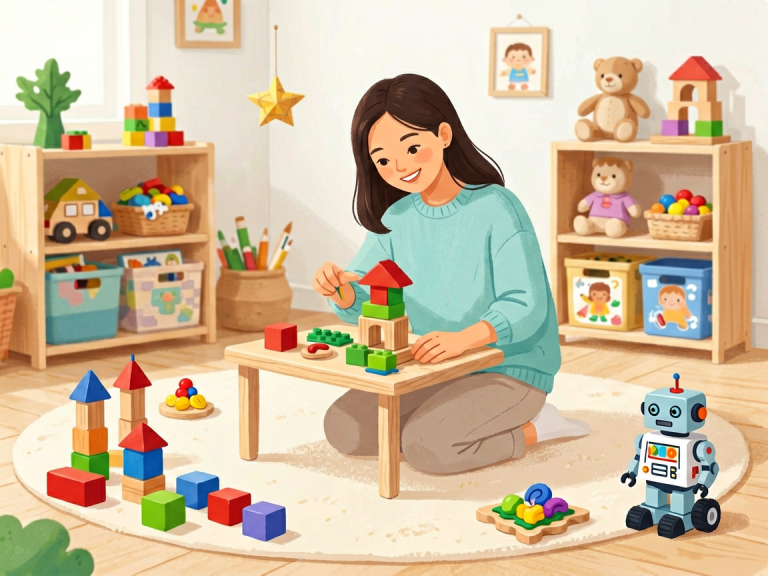
At their core, STEM toys challenge children to ask questions, test hypotheses, and iterate on failures. A simple building set, for instance, requires a child to plan a structure, balance forces, and adjust when a tower collapses. This trial-and-error process mirrors the scientific method and teaches children that mistakes are stepping stones to success. Research from the American Psychological Association shows that early exposure to structured problem-solving enhances executive function—the mental skills that help with planning, focus, and self-control.
2. Fostering Creativity and Innovation
Contrary to the myth that STEM is purely analytical, these toys often demand creative thinking. A robotics kit, for example, might ask a child to design a robot that can navigate a maze. There is no single correct answer; the child must imagine multiple solutions, combine components in novel ways, and refine their design. This blend of logic and imagination is exactly what drives innovation in fields like engineering, architecture, and software development.
3. Developing Fine Motor Skills and Spatial Awareness
Many STEM toys involve assembly, manipulation of small parts, and precise movements. Building with magnetic tiles, connecting circuit boards, or threading gears all require hand-eye coordination and dexterity. Additionally, activities like constructing 3D models or solving puzzles enhance spatial reasoning—a skill strongly correlated with success in STEM careers, particularly in engineering and computer graphics.
4. Encouraging Collaboration and Communication
While some STEM toys are designed for solo play, many are best enjoyed in groups. A family building a marble run or a group of friends programming a shared robot must discuss roles, negotiate ideas, and explain their reasoning. This social dimension helps children practice communication, teamwork, and compromise—skills that are equally vital in both academic and professional settings.
5. Cultivating a Growth Mindset and Resilience
STEM toys are inherently challenging. A child who fails to make a circuit light up or cannot get a solar-powered car to move must persevere. Unlike video games that often offer instant rewards, many STEM toys demand patience and sustained effort. Over time, children learn to embrace difficulty, view obstacles as opportunities, and develop a “growth mindset”—the belief that intelligence can be developed through dedication and hard work.
Key Categories of Educational STEM Toys
1. Construction and Engineering Kits
These toys are the workhorses of the STEM world. From classic wooden blocks and LEGO sets to advanced kits like K’NEX, Meccano, or Magnetiles, construction toys teach fundamental engineering principles such as load distribution, stability, and structural integrity. More sophisticated options like the Engino STEM Mechanics series allow children to build functional models of cranes, bridges, and gear systems, introducing concepts like levers, pulleys, and torque.
2. Robotics and Coding Toys
As digital literacy becomes as essential as reading and writing, coding toys have exploded in popularity. Products like Sphero BOLT, LEGO Boost, or Wonder Workshop’s Dash allow children as young as five to program simple commands via drag-and-drop interfaces. For older kids, Arduino starter kits and Raspberry Pi boards offer real-world coding experience. These toys demystify technology, showing children that behind every app and robot lies a language of logic.
3. Science Experiment Kits
Nothing captures a child’s imagination like a volcano that erupts or crystals that grow. Thames & Kosmos and National Geographic produce comprehensive science kits covering chemistry, physics, biology, and earth science. They include safe chemicals, laboratory tools, and detailed instructions. Beyond the “wow” factor, these kits teach the scientific method: hypothesis, experiment, observation, and conclusion. They also instill a respect for safety and precision.
4. Math and Logic Games
While not always recognized as “toys,” puzzles and strategy games like Rush Hour, Qwirkle, or Tangram are powerful STEM tools. They develop pattern recognition, logical deduction, and numerical reasoning. Digital math apps like Prodigy or DragonBox gamify algebra and geometry, making abstract concepts tangible. Even simple dice games can teach probability and statistics.
5. Environmental and Renewable Energy Toys
With climate change at the forefront of global concerns, toys that teach sustainability are gaining traction. Snap Circuits Green Energy allows children to build wind turbines, solar panels, and water wheels. 4M Clean Water Science kits demonstrate filtration and purification. These toys not only teach engineering and physics but also instill an early understanding of ecological responsibility.
6. Cross-Curricular and Integrated Kits
The best STEM toys blur the lines between disciplines. Osmo combines physical pieces with digital screens, teaching visual thinking, math, and coding simultaneously. KiwiCo crates deliver monthly projects that integrate science with art (STEAM), such as constructing a mechanical dinosaur or a hydraulic claw. This integration mirrors real-world problem-solving, where knowledge from multiple fields must be combined.
How to Choose the Right STEM Toy for Your Child
1. Age Appropriateness
A toy that is too advanced can frustrate a child, while one that is too simple bores them. Manufacturers typically label age ranges, but consider your child’s developmental stage. For preschoolers, large magnetic tiles and simple shape sorters are ideal. Elementary-aged children can handle circuit kits and basic coding robots. Tweens and teens thrive with programmable drones, Arduino projects, and complex engineering sets.
2. Interest-Driven Selection
A child passionate about space exploration may lose interest in a geology kit. Pay attention to their natural curiosities. If they love building, choose an engineering set. If they ask “why” constantly, a science experiment kit will feed their inquisitiveness. Many companies offer sample videos or online demonstrations to help gauge appeal.
3. Open-Ended vs. Structured Play
Both types have value. Open-ended toys (like wooden blocks or a basic robotics kit) allow for endless creativity but require self-direction. Structured kits (such as a specific model to assemble) teach following instructions and achieving a concrete goal. A balanced toy chest should include both. For reluctant learners, a highly structured kit with a clear, satisfying outcome can build confidence.
4. Screen Time Balance
Some STEM toys rely on tablets or smartphones (e.g., coding apps). While digital integration can be powerful, experts recommend limiting screen time. Opt for toys that offer a hands-on, physical component alongside digital interaction. For example, littleBits modules snap together physically but can be controlled via a phone app. Pure screen-based games should be used sparingly.
5. Safety and Quality
Check for non-toxic materials, especially for younger children who may mouth toys. Avoid small parts for toddlers. Look for certification marks like ASTM or CE. High-quality toys often cost more but last longer and provide better learning value. Read reviews from other parents and educators for real-world feedback.
The Role of Parents and Educators in Maximizing Learning
A STEM toy is only as effective as the support surrounding it. Parents can enhance learning by asking open-ended questions: “What do you think will happen if we add another gear?” or “How could you make that tower stronger?” Rather than giving answers, guide children to discover solutions themselves. Educators can integrate these toys into lesson plans, using them for group projects or science fair entries.
It’s also important to model a curious mindset. When a child sees a parent tinkering with a broken appliance or researching a scientific question, they learn that learning is a lifelong pursuit. Join your child in playing with their STEM toys—not to direct them, but to share the joy of discovery.
Future Trends in Educational STEM Toys
1. Artificial Intelligence and Personalization
Emergent toys are beginning to use AI to adapt to a child’s skill level. For example, a coding robot might present more complex challenges as the child masters basics. This personalized learning path keeps children in the “zone of proximal development”—challenged but not overwhelmed.
2. Augmented Reality (AR) and Virtual Reality (VR)
AR toys that overlay digital information onto physical objects are on the rise. Merge Cube allows children to hold a virtual volcano in their hands, while PlayShifu blends physical figurines with interactive storytelling. VR kits, though still expensive, offer immersive science simulations like exploring the human body or the solar system.
3. Sustainability and Eco-Friendly Materials
Manufacturers are shifting toward recycled plastics, biodegradable components, and solar-powered toys. This trend not only reduces environmental impact but also teaches children about sustainability through the very materials they handle.
4. Integration with School Curricula
An increasing number of STEM toys align with national education standards (e.g., Next Generation Science Standards in the US). Schools are purchasing class sets of robotics kits and science labs. This formal recognition underscores that play-based learning is not just fun but academically rigorous.
5. Gender Inclusivity and Diversified Themes
Historically, STEM toys were marketed predominantly to boys. Today, companies like GoldieBlox and Roominate design engineering toys specifically to appeal to girls, featuring narrative-driven challenges and diverse characters. The industry is also expanding to represent different cultures and abilities, ensuring every child sees themselves as a potential scientist or engineer.
Conclusion: Play That Shapes the Future
Educational STEM toys are far more than a trend—they are a necessary evolution in how we prepare children for a world that demands adaptability, technical literacy, and innovative thinking. By turning abstract concepts into tangible, enjoyable experiences, these toys unlock a child’s natural curiosity and show them that learning can be an adventure. Whether a child dreams of building bridges, programming autonomous vehicles, or curing diseases, the foundation is laid through the toys they play with today.
Investing in a high-quality STEM toy is not just buying a product; it is investing in a mindset. It tells a child: “Your ideas matter. Your mistakes are valuable. And you have the power to create, to solve, to invent.” As parents, educators, and community members, we owe it to the next generation to provide them with the tools that will turn their playful experiments into tomorrow’s breakthroughs. So next time you see a child patiently adjusting the angle of a solar panel or debugging a line of code, remember—they are not just playing. They are building the future.