The Power of Play: Selecting the Best Learning Toys for 2-Year-Olds
Introduction: The Critical Window of Toddlerhood
The age of two is a remarkable turning point in human development. Toddlers at this stage are no longer passive infants; they are curious explorers, budding communicators, and relentless movers. Their brains are forming neural connections at an astonishing rate, and every experience—especially play—shapes their cognitive, social, emotional, and physical growth. Choosing the right learning toys for a 2-year-old is not merely about keeping them occupied; it is about providing the tools that scaffold their emerging skills. A well-chosen toy can foster problem-solving, language acquisition, fine and gross motor coordination, and even the beginnings of empathy and cooperation. However, with the overwhelming array of products on the market—from flashing electronic gadgets to wooden blocks—parents and caregivers often feel lost. This article offers a comprehensive guide to understanding what makes a toy truly educational for a two-year-old, how to match toys to developmental milestones, and why simplicity and safety should always come first.
Understanding the 2-Year-Old Developmental Landscape
Before diving into specific toy categories, it is essential to grasp the key developmental domains that toys should support. At age two, children typically exhibit the following abilities and needs:
- Cognitive Development: They engage in symbolic play (pretending a block is a phone), begin to sort objects by shape or color, and show curiosity about cause and effect. Their attention span is still short (about 3–6 minutes per activity), but they can follow simple two-step instructions.
- Language and Communication: Vocabulary explodes from about 50–100 words to over 300 words by age three. They start combining two words (“more juice”) and enjoy naming objects, animals, and body parts. They also respond to simple questions and love repetitive songs and rhymes.
- Motor Skills: Gross motor skills include running, climbing, jumping, and kicking a ball. Fine motor skills advance to stacking blocks, turning pages of a board book, using a spoon with some success, and scribbling with a crayon. Hand preference may emerge but is not yet fixed.
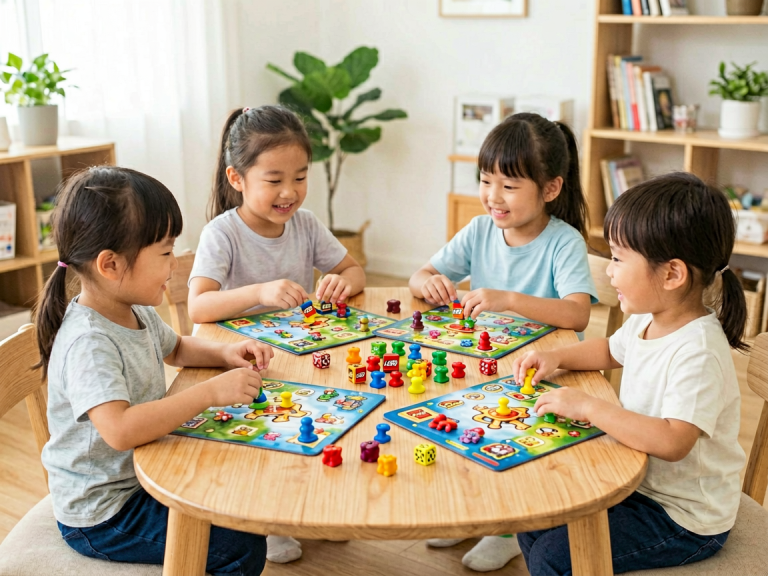
- Social and Emotional Development: They are intensely egocentric but begin to show empathy. Parallel play (playing alongside other children) is more common than cooperative play. They experience strong emotions and may have tantrums when frustrated. Toys that encourage imitation, role-playing, and gentle interaction help build social understanding.
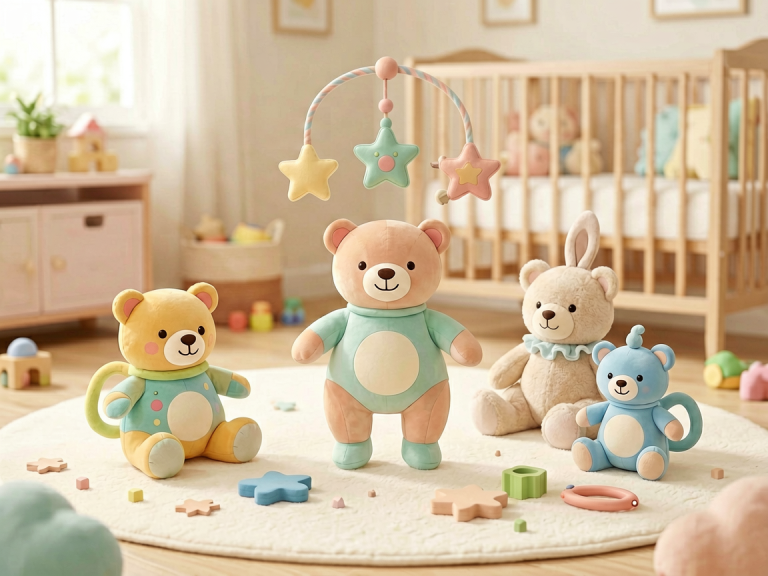
- Sensory Exploration: Two-year-olds are sensory learners. They love to touch, taste, smell, shake, and bang objects. Sensory-rich toys that engage multiple senses are highly beneficial for neural development.
Key Criteria for Selecting Learning Toys for 2-Year-Olds
Not all toys marketed as “educational” are truly appropriate for this age. The following criteria help separate valuable learning tools from mere distractions:
- Open-Endedness: The best toys for two-year-olds are those that can be used in multiple ways. A set of wooden blocks, for example, can be stacked, sorted, knocked down, used as pretend food, or even lined up as a train. Open-ended toys encourage creativity and problem-solving, whereas single-purpose toys (like a battery-operated toy that only plays one song) limit exploration.
- Safety First: Children at this age still explore by putting objects in their mouths. Toys must be free of small parts that could pose a choking hazard (rule of thumb: avoid anything that fits inside a toilet paper tube). They should be made of non-toxic materials, have no sharp edges, and be sturdy enough to withstand rough handling. Look for labels like ASTM or CE certification.
- Engaging Multiple Senses: Toys that combine visual, auditory, tactile, and sometimes olfactory stimuli are particularly effective. A toy that lights up, makes a sound, and has different textures offers richer learning than a flat, silent object.
- Matching the Child’s Current Skill Level: A toy that is too simple leads to boredom; one that is too complex leads to frustration. The sweet spot is a toy that is *just challenging enough* to require effort but not so hard that it overwhelms. For example, a simple three-piece shape sorter is appropriate, while a 12-piece puzzle is not.
- Encouraging Active Participation: Passive toys—those that do the work for the child—are less beneficial. A toy that requires the child to push, pull, twist, turn, or manipulate engages fine motor and cognitive skills. Electronic toys that entertain with flashing lights and sounds might captivate attention, but they often reduce the child’s active role in learning.
- Promoting Interaction with Caregivers: The most powerful learning happens when a toy becomes a bridge for conversation and shared play. A set of animal figurines, for instance, invites a parent to name the animals, make animal sounds, and create simple stories. This back-and-forth interaction builds vocabulary and social bonds.
Top Categories of Learning Toys for 2-Year-Olds
Now, let us explore specific types of toys that excel in supporting the developmental needs of two-year-olds. Each category comes with recommended examples and the skills they target.
Building and Construction Sets
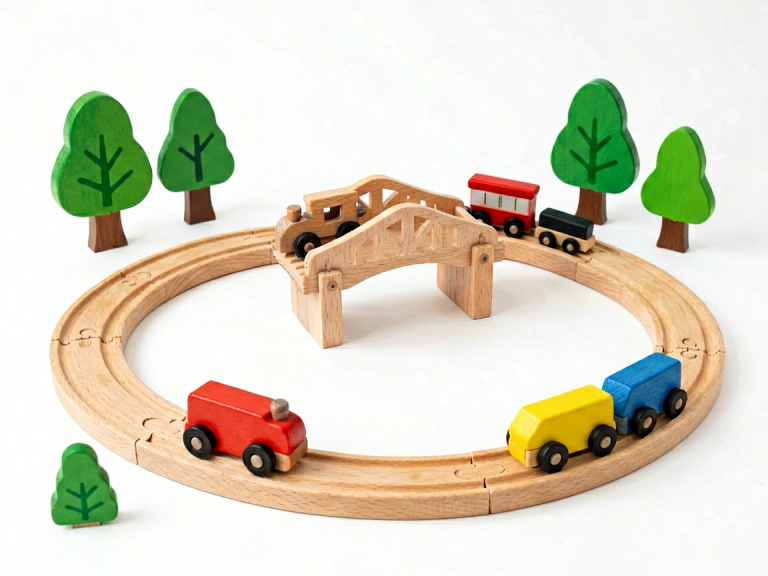
Wooden blocks remain the gold standard for early learning. They are simple, durable, and infinitely versatile. A basic set of 30–50 unit blocks in various shapes (cubes, rectangles, triangles, arches) allows a toddler to practice stacking, balancing, and creating structures. As they build, they learn about gravity, spatial relationships, and cause and effect (“If I put this block on top, will it fall?”). They also develop hand-eye coordination and problem-solving skills when a tower wobbles. Choose blocks that are large enough (about 1.5 inches or more) to avoid choking hazards and that have smooth, rounded edges.
Shape Sorters and Puzzles
A classic shape sorter with a cube and a few chunky geometric shapes (circle, square, triangle) is ideal for 18-month to 2-year-olds. It teaches shape recognition, spatial reasoning, and early problem-solving. Many shape sorters also have color-coded pieces, which introduces color identification. For puzzles, start with large wooden peg puzzles—those with a single piece per shape, such as a simple animal or vehicle puzzle. The child learns to match the piece to the outline, developing visual discrimination and fine motor control. Avoid puzzles with more than 4–6 pieces; interlocking puzzles are generally too advanced until age three.
Musical Instruments
Music is a powerful tool for early learning. Simple, durable instruments like a small xylophone, a tambourine, maracas, a wooden drum, or a set of jingle bells allow a two-year-old to experiment with rhythm, volume, and cause and effect. Shaking a maraca produces a sound; hitting the drum harder makes a louder noise. This cause-and-effect learning is fundamental. Moreover, musical play supports auditory discrimination—the ability to distinguish different sounds—which is a precursor to reading. Singing along with instruments also boosts language development. Look for instruments made from natural materials (wood, metal) rather than plastic that may break easily.
Pretend Play Sets
At age two, imaginative play begins to blossom. Simple pretend play toys—toy telephones, plastic kitchen sets with a few pots and pans, doll strollers, wooden food items, or a doctor’s kit with a stethoscope—invite children to imitate adult behaviors. Through role-playing, they practice social scripts, develop language (e.g., “I’m making soup”), and learn about emotions (e.g., “The baby is sad”). The best pretend play toys are those that are open-ended: a plain wooden spoon can become a cooking utensil, a drumstick, or a magic wand. Avoid overly realistic sets with many tiny accessories that can be lost or swallowed.
Sensory Play Toys
Sensory play is not just about fun; it literally builds neural pathways. Toys that engage the senses include water tables (for outdoor use), sandboxes, play dough (homemade or store-bought, non-toxic), textured balls, and sensory bags (sealed bags filled with gel, beads, or hair gel). For indoor sensory play, consider a set of large, colorful stacking cups that can be used for pouring water or sand, or a set of textured wooden puzzle pieces. Sensory bins filled with dried rice, lentils, or beans (supervised always) with scoops, cups, and small toys provide endless exploration. Such play develops fine motor skills, hand strength, and language as the child describes what they feel and see.
Books and Interactive Learning Toys
While not a toy in the traditional sense, board books are among the most important learning tools for a two-year-old. Look for books with thick pages, bright pictures, simple text, and interactive elements such as flaps, textures (touch-and-feel books), or mirrors. Reading together builds vocabulary, comprehension, and a love of stories. Additionally, electronic learning toys such as talking activity books (e.g., a simple touch-pad that names animals or colors when pressed) can be useful in moderation. However, they should supplement, not replace, hands-on and human interaction. Always check that electronic toys have volume control and automatic shut-off to conserve batteries and limit screen time.
Ride-On Toys and Gross Motor Equipment
Gross motor development is crucial at age two. Ride-on toys that the child propels using their feet (no pedals yet) strengthen leg muscles and improve balance. Examples include small tricycles without pedals, scooters designed for toddlers, or push cars. Other gross motor toys include soft play balls (6–8 inches in diameter) for rolling, kicking, and tossing; a small slide or climbing structure for indoor or outdoor use; and tunnels for crawling. These toys encourage physical activity, spatial awareness, and confidence. When choosing ride-on toys, ensure they are stable, low to the ground, and have no sharp edges.
Art and Craft Supplies
Two-year-olds are ready to create. Washable, non-toxic crayons (larger, egg-shaped or triangular for easy grip), finger paints, and large sheets of paper provide a venue for self-expression. Art activities develop fine motor control (grasping a crayon, making marks), hand-eye coordination, and creativity. They also introduce concepts like color mixing and shape. Always supervise art time, as some children may try to taste the materials. For safety, choose plant-based paints and crayons that are labeled non-toxic. Another option is a magnetic drawing board, which eliminates mess and allows repeated use.
The Importance of Rotation and Simplicity
It is a common mistake to overwhelm a two-year-old with too many toys. Research in developmental psychology suggests that having fewer toys actually promotes deeper, more focused play. When a child has access to a limited selection—say, five to eight toys at a time—they engage more creatively with each one. Parents can practice toy rotation: store most toys out of sight and rotate a new set every few weeks. This keeps the child’s interest fresh without overstimulation. Additionally, always observe the child’s play. If they ignore a toy entirely, remove it and try again later. If they are obsessed with a particular item, that’s a signal that it is meeting a developmental need.
Safety Checklist for Parents and Caregivers
Before purchasing or giving a toy, run through this quick checklist:
- Are there any small parts that could break off? Test by pulling and shaking.
- Is the material non-toxic? Look for “ASTM D4236” for art supplies or “EN71” for European standards.
- Are there any strings, cords, or ribbons longer than 12 inches? These pose a strangulation risk.
- Does the toy make loud noises? Some electronic toys exceed safe decibel levels for a toddler’s sensitive ears—test volume and avoid toys that are painfully loud.
- Is the toy easy to clean? Toddlers drool, spill, and drop toys frequently. Wooden toys can be wiped with a damp cloth; plastic toys should be dishwasher-safe top rack.
- Are batteries secured with a screw-down compartment? Two-year-olds can access battery compartments with simple pressure, and ingesting batteries is life-threatening.
Conclusion: Play is the Curriculum
For a two-year-old, learning does not happen through formal lessons or worksheets. It happens through active, joyful, and often messy play. The toys we choose are the tools that shape that play. By selecting open-ended, safe, developmentally appropriate learning toys—from wooden blocks to musical instruments to sensory bins—we provide a rich environment that nurtures a toddler’s natural curiosity. We honor their pace, respect their autonomy, and join them in the wonder of discovery. Ultimately, the best learning toy is one that invites a child to ask, “What happens if I…?” and that leaves room for a thousand answers. In the hands of a two-year-old, a simple cardboard box can become a spaceship, a castle, or a telephone. That is the magic of learning through play.