The Ultimate Guide to the Best Science Gifts for 2-Year-Olds: Sparking Curiosity Through Play
Introduction: Why Science Gifts Matter at Age Two
The second year of life is a whirlwind of discovery. A 2-year-old is no longer a passive infant; they are a tiny explorer, constantly touching, tasting, shaking, and dropping everything within reach. Their brains are forming neural connections at a staggering rate—roughly one million per second—and every sensory experience lays the foundation for future learning. This is precisely why selecting the right science gifts for this age group is so powerful. A well-chosen science toy does not need to involve test tubes or lab coats. Instead, it leverages the toddler’s innate drive to understand cause and effect, gravity, texture, and motion. The best science gifts for 2-year-olds are those that turn everyday play into a rich, hands-on experiment. They encourage open-ended exploration, build vocabulary, and—most importantly—feel like pure fun. In this guide, we will explore seven categories of science-inspired gifts that are safe, developmentally appropriate, and guaranteed to nurture a lifelong love of learning.
Sensory Exploration Kits: The Foundation of Scientific Observation
Before a child can understand concepts like density or magnetism, they must first learn to observe with all their senses. Sensory exploration kits are arguably the most essential science gifts for 2-year-olds because they target the very tools toddlers use to investigate the world: their hands, eyes, ears, and mouths (though mouthing should be supervised). Look for kits that include non-toxic, textured materials like squishy gel beads, soft kinetic sand, smooth river stones, and fabrics with different weaves. A simple "sensory bin" filled with uncooked rice, small scoops, and plastic animals teaches volume, weight, and fine motor control. More advanced options, such as water bead sets that expand in water, introduce the concept of absorption and change of state. What makes these kits scientific? The toddler is constantly forming hypotheses: "What happens if I squeeze this?" "Does this feel the same when it is wet?" Parents can scaffold this learning by using descriptive language—"This is gritty," "This is slippery," "It is dissolving"—which builds a rich scientific vocabulary. Always choose products labeled BPA-free and with large pieces to avoid choking hazards.
Simple Physics Toys: Gravity, Motion, and Momentum
Physics may sound too advanced for a toddler, but they are already experts in the basics. Every time a child drops a block from their high chair, they are conducting a gravity experiment. The best physics gifts for this age capitalize on this natural curiosity. A classic example is a wooden ramp and ball set. The toddler places a ball at the top, watches it roll down, and learns that the ball always goes downward—not upward. Introducing ramps with different inclines (or even making your own with cardboard) allows them to experiment with speed: does the ball go faster on a steeper ramp? Another fantastic option is a marble run with large, chunky pieces that snap together. While a 2-year-old may not be able to build complex structures alone, they can place marbles at the top and watch the mesmerizing cause-and-effect chain. This teaches prediction: "If I put it here, where will it come out?" Additionally, simple pulleys that attach to a play gym or a doorway let a toddler lift a small bucket of toys, experiencing mechanical advantage in a concrete way. These gifts build an intuitive understanding of force, motion, and trajectory long before the child encounters formal equations.
Nature Discovery Tools: Connecting Indoor Play with the Outdoors
Two-year-olds are fascinated by the natural world—bugs, leaves, rain, and mud. Science gifts that bring the outdoors in (or make outdoor exploration more focused) are invaluable. A child-safe magnifying glass with a large, shatterproof lens is a must. Whether examining a dandelion seed, a ladybug, or a blade of grass, the magnifying glass transforms the ordinary into the extraordinary. Pair it with a bug catcher with air holes and a soft grip; even if the child just watches a caterpillar crawl for a few minutes, they are practicing sustained attention and observation, which are core scientific skills. Another wonderful gift is a simple terrarium kit designed for small hands. Pre-packaged kits often include a clear container, pebbles, soil, and seeds. The toddler can help pour layers, sprinkle seeds, and water the soil. Over days and weeks, they watch the seeds sprout and grow. This introduces biology, plant life cycles, and the concept of time. For rainy days, consider a set of plastic insects or animal figures that are anatomically accurate (but friendly). Use them to talk about colors, patterns, and habitats. The goal is not to teach taxonomy but to foster a sense of wonder and the habit of careful looking.
Cause-and-Effect Experiment Stations: Early Chemistry and Reactions
At two, children are obsessed with the phrase "what happens if…?" They love pressing buttons, turning knobs, and mixing things together. Science gifts that provide predictable, safe cause-and-effect reactions are both thrilling and educational. One of the simplest yet most effective options is a set of color-mixing goggles and droppers. Using cups of water dyed with food coloring (red, yellow, blue), the toddler can use a dropper to combine colors and watch them transform into green, orange, or purple. This is a gateway to understanding chemistry—that two different substances can combine to create something new. Another excellent choice is a magnetic wand with a set of bingo chips or small magnetic balls inside a sealed container. The child moves the wand across the top, and the chips follow. They quickly learn that the magnetic force works through plastic and that some objects are "attracted" while others are not. This is physics and material science in action. For a more active experience, a simple "sink or float" kit with a water tub and various objects (cork, stone, plastic toy, wooden block) teaches density hypotheses. Pose questions: "Do you think this will sink?" Let the child test it. The thrill of being right—or the surprise of being wrong—is a powerful learning moment. Always supervise water play and ensure the kit’s components are too large to swallow.
Building and Engineering Sets: Spatial Reasoning and Structural Thinking
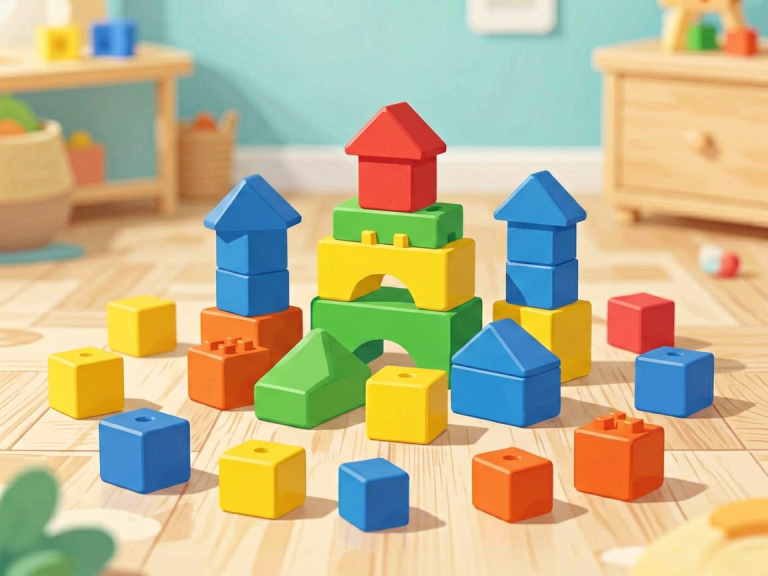
Construction toys are often categorized as "general play," but they are deeply rooted in engineering and mathematics. For a 2-year-old, the best building sets are those with very large, lightweight pieces that interlock easily. Foam building blocks that are brick-sized allow toddlers to stack tall towers and then knock them down—a classic experiment in stability. When the tower falls, the child learns about load balance and the effect of imbalance. Magnetic tiles (with magnets securely enclosed) are another favorite. The tiles connect on all sides, enabling the child to build cubes, pyramids, and houses. As they experiment, they learn about geometry, symmetry, and the fact that some shapes roll while others stack. Unlike traditional blocks, magnetic tiles also introduce polarity: "Why won't these two sides stick together?" While the child won't understand magnetic poles, they begin to notice patterns. A slightly more guided option is a gear set with large, interlocking plastic gears and a crank. When the child turns one gear, all connected gears turn. This is a direct lesson in mechanical transmission and simple machines. The key is to avoid overly complicated sets with small pieces. Simplicity fosters creativity. The child might not build what the box shows, but they will build what their mind imagines, which is the essence of engineering design.
Water and Sand Play Science: Understanding States and Flow
Water and sand are two of the most powerful scientific materials for toddlers. They are messy, yes, but the learning that happens during water and sand play is immense. The best science gifts in this category include a water table with accessories like funnels, cups, water wheels, and tubes. As the child pours water from one container to another, they explore concepts of volume, conservation, and displacement. They notice that a wide short cup holds the same amount of water as a tall thin cup, even though it looks different. This is a precursor to Piaget’s conservation experiments. Water wheels demonstrate how flowing water can create motion, introducing the idea of kinetic energy. Sand tables (or even a large bin of kinetic sand) allow the child to mold, shape, and dig. Kinetic sand, which holds its shape when squeezed, teaches about cohesive forces and texture change. Adding scoops, sieves, and small figurines turns sand play into archeology, geology, and creativity. For a more structured experiment, provide a container of ice cubes and a bowl of warm water. The child sees the ice melt, feels the temperature difference, and observes the change from solid to liquid. Talk about "melting" and "freezing" using simple words. This is early chemistry and physics. Note: Always supervise water play to prevent drowning risks, and use only a few inches of water.
Light and Color Exploration: Optics for Tiny Eyes
Light is a fascinating and invisible force for toddlers—until they get tools to manipulate it. Science gifts that involve light and color can captivate a 2-year-old’s attention and teach them about vision, shadows, and spectrums. A simple flashlight with interchangeable colored gels or lenses is a great start. The child shines the light on a white wall and sees a red, blue, or yellow circle. Then they can overlap two colors to see a new one. This is a hands-on way to repeat the color-mixing experiment, but with light instead of paint. A more advanced option is a light table. These are flat, durable surfaces with LED lights. Place translucent blocks, shapes, or even leaves on top, and the child sees the colors glow, mix, and cast shadows. Light tables also work well for tracing and observing transparency versus opacity. For a budget-friendly alternative, string up white Christmas lights inside a large cardboard box with cut-out shapes. The child crawls inside and sees the colored lights filtering through the shapes—a homemade shadow puppet theater. Another wonderful gift is a set of prisms and crystals. A small acrylic prism placed in sunlight creates rainbows on the wall. The toddler will be mesmerized and will likely try to "catch" the rainbow. This teaches that sunlight is made of many colors, a foundational concept in optics. As with all gifts, ensure that any light sources are cool to the touch and that children cannot access any small or breakable glass parts.
Conclusion: Choosing the Right Science Gift for Your Toddler
Selecting the best science gifts for 2-year-olds is not about finding the most advanced or expensive toy. It is about finding tools that align with the child’s natural developmental stage—curious, hands-on, and eager to understand "why." The gifts described in this article focus on sensory exploration, physics, nature, chemistry, engineering, fluid dynamics, and optics. Each one is designed to be safe, durable, and open-ended. When you give a 2-year-old a science toy, you are not just giving a plaything. You are giving a lens through which they can see the world as a place of wonder and discovery. They will learn that asking questions is fun, that mistakes are part of the process, and that the world is full of patterns waiting to be found. As a parent, caregiver, or gift-giver, your role is to provide these opportunities and to join in the exploration. Ask questions, narrate observations, and let the child lead. Remember, the best science gift ultimately is your attention and enthusiasm. With the right toy and a supportive adult, every 2-year-old can feel like a little scientist, ready to explore the universe.