The Ultimate Guide to the Best Toys for 3-Year-Olds: Sparking Imagination, Skills, and Joy
Introduction
The age of three is a magical milestone in a child’s development. At this stage, toddlers are transforming into curious, talkative, and increasingly independent preschoolers. They are bursting with energy, eager to explore their environment, and beginning to engage in more complex forms of play. Choosing the best toys for 3-year-olds is not just about keeping them entertained—it is about supporting their cognitive growth, fine and gross motor development, language acquisition, social skills, and emotional regulation. The right toys can turn ordinary playtime into rich learning experiences. However, with an overwhelming array of options on the market, parents and caregivers often struggle to identify which toys are truly beneficial, safe, and developmentally appropriate. This comprehensive guide will walk you through the most effective categories of toys for three-year-olds, explain the reasoning behind each recommendation, and offer practical advice for making wise purchasing decisions. By the end, you will have a clear picture of what makes a toy “best” for this age group and how to foster your child’s growth through purposeful, joyful play.
Understanding the 3-Year-Old Developmental Landscape
Before diving into specific toy recommendations, it is essential to understand what is happening in a three-year-old’s brain and body. At this age, children are rapidly developing language skills—they typically know several hundred words, can form simple sentences, and ask endless “why” questions. They are also refining their fine motor control, which allows them to manipulate objects with greater precision, such as turning pages, holding crayons, and snapping buttons. Gross motor skills are advancing too: most three-year-olds can run, jump, climb, pedal a tricycle, and throw a ball with some accuracy. Socially, they are beginning to enjoy parallel play and some cooperative play with peers, though sharing and turn-taking remain challenging. They have vivid imaginations and often engage in pretend play, imitating adults and creating simple storylines. Cognitively, they are learning to sort objects by shape, color, and size, solve simple puzzles, and follow two- or three-step instructions. Their attention spans are still short—typically 6 to 12 minutes per activity—so toys that offer variety and open-ended possibilities work best.
Given these developmental benchmarks, the best toys for 3-year-olds should:
- Encourage creativity and imaginative play
- Support language development through storytelling and conversation
- Challenge fine and gross motor skills in a safe way
- Introduce basic concepts like numbers, letters, shapes, and colors
- Promote social interaction and emotional expression
- Be durable, non-toxic, and free from small parts that pose choking hazards
Top Toy Categories for 3-Year-Olds
Building and Construction Toys
Building toys are arguably the most versatile and valuable investment for a three-year-old. They encourage problem-solving, spatial awareness, hand-eye coordination, and patience. Classic wooden blocks remain a timeless choice. A set of colorful, smooth wooden blocks in various shapes allows a child to stack, balance, and create towers, castles, and imaginary structures. Blocks also teach early physics concepts—why a tall tower falls or how to make a stable base. Another excellent option is large interlocking plastic bricks, such as Duplo or Mega Bloks. These are designed specifically for small hands and are too large to be swallowed. Children can follow simple picture instructions to build a house, a car, or an animal, or they can free-build their own creations. This type of play fosters perseverance and pride in accomplishment. For a twist, consider magnetic building tiles like Magna-Tiles. These translucent, magnetic squares and triangles snap together easily, allowing children to build 2D and 3D shapes, explore symmetry, and even create simple structures that glow when placed on a light table. The tactile satisfaction of clicking magnets together is enormously appealing to three-year-olds, and the geometric exploration lays a foundation for later math learning.
Pretend Play and Role-Playing Toys
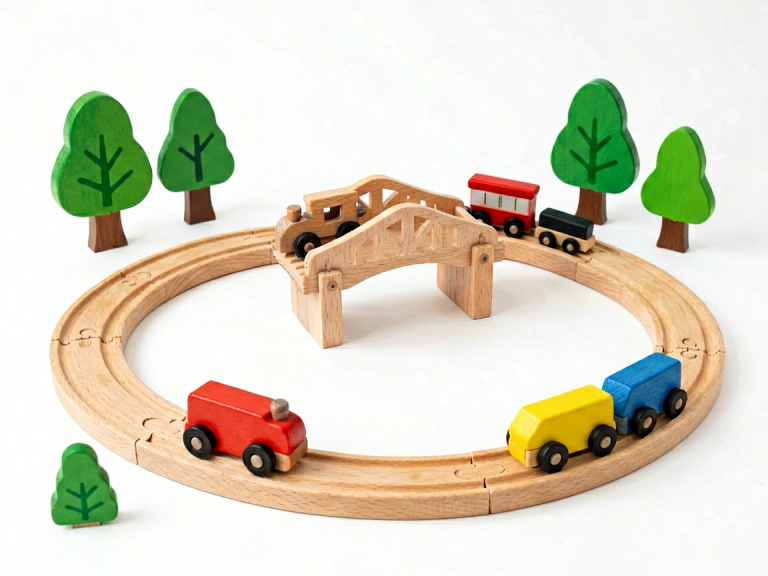
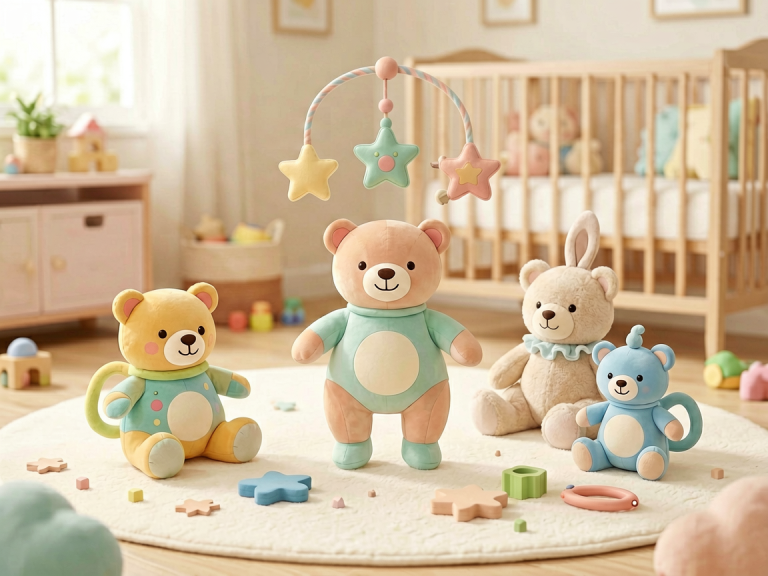
Imagination soars at age three, and pretend play is a critical vehicle for social-emotional development. Role-playing toys let children imitate the adults they see—cooking, caring for babies, fixing things, or going shopping. A simple play kitchen with pots, pans, plastic foods, and utensils provides endless opportunities for storytelling and vocabulary building. Children can “cook” a meal, serve it to a stuffed animal, and practice manners and conversation. Similarly, a doctor’s kit with a stethoscope, thermometer, bandages, and a toy syringe helps children process their own experiences with medical visits and develop empathy as they “treat” their dolls or friends. Dolls and stuffed animals are essential too; they become companions for tea parties, bedtime routines, and adventures. Look for dolls that are soft, washable, and have simple features—avoid those with small accessories that could be choking hazards. Another wonderful pretend play category is transportation toys: a wooden train set with tracks, a fire truck with a ladder, or a set of small cars and a garage. These toys encourage storytelling about journeys, rescue missions, and daily routines. For a more open-ended option, a costume trunk filled with hats, scarves, vests, and simple dress-up clothes (like a firefighter jacket or a princess skirt) lets children transform into any character they imagine, boosting creativity and self-expression.
Art and Creativity Supplies
Three-year-olds are natural artists—they love to scribble, paint, mold, and glue. Art supplies not only develop fine motor skills but also allow children to express emotions, make choices, and build confidence. The key is to choose age-appropriate materials that are non-toxic and easy to clean. Crayons are a staple; choose thick, triangular ones that are easy to grip and hard to break. Washable markers and finger paints are wonderful for colorful exploration, though supervision is needed to avoid walls and furniture being decorated. Play-Doh or modeling clay is fantastic for squeezing, rolling, cutting, and shaping. A simple set of plastic tools (rolling pin, cookie cutters, plastic knife) adds to the fun. Another excellent option is a set of large, easy-to-hold paint brushes and a pad of thick paper. Children can experiment with mixing colors and making different strokes, which is calming and satisfying. Stickers, glue sticks, and collage materials (like colored paper scraps, feathers, and googly eyes) provide a low-mess way to create pictures and cards. Art activities also support language development—when a child describes their drawing, they are building narrative skills. Keep in mind that the process, not the product, matters most at this age. Avoid overly prescriptive craft kits that require adult help; instead, let the child explore freely.
Outdoor and Gross Motor Toys
Physical activity is crucial for three-year-olds, who are refining their ability to run, jump, balance, and coordinate their movements. Outdoor toys that encourage large muscle use can help children burn off energy, build strength, and develop confidence. A classic tricycle or balance bike is an excellent choice. Tricycles provide pedaling practice and steering control, while balance bikes (without pedals) teach balancing skills that later transfer to a regular bicycle. Both promote leg strength and cardiovascular health. A small slide or a climbing structure designed for toddlers offers opportunities for climbing, sliding, and hanging—all of which strengthen the core and arms. For less expensive options, a sturdy push wagon or a wheelbarrow can be loaded with toys, leaves, or sand, providing both fun and a sense of purpose. Balls of various sizes are essential: a soft, lightweight ball for kicking and throwing, a larger beach ball for catching, and a textured ball for tactile exploration. Jumping is another favorite; a small trampoline with a safety handle (and always used under adult supervision) can be a big hit. Don’t forget simple tools like bubbles, sidewalk chalk, and a sandbox with sand toys (shovels, buckets, sieves). These encourage imaginative play outdoors and provide sensory stimulation. Any outdoor toy should be used with appropriate safety gear (helmets for bikes) and in a safe, enclosed area.
Puzzles and Educational Games
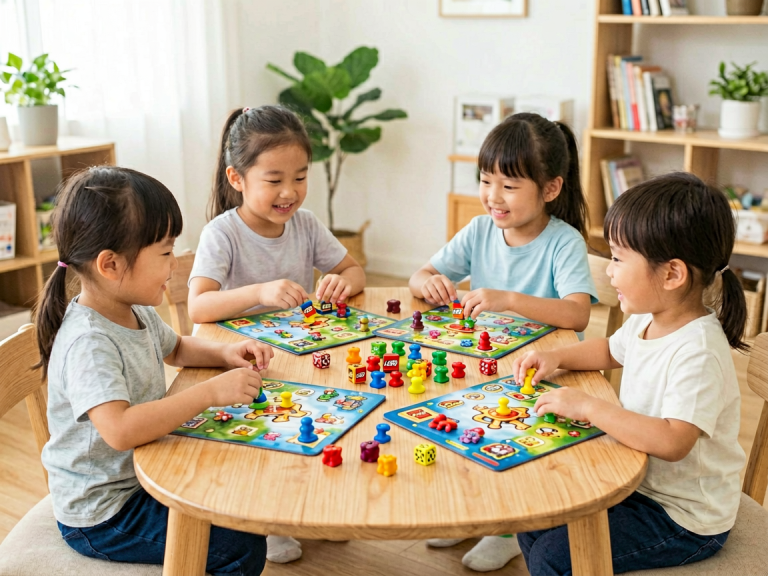
Cognitive challenges in the form of puzzles and simple games help three-year-olds develop problem-solving skills, memory, and patience. Jigsaw puzzles with large, chunky pieces (typically 4 to 12 pieces) are ideal. Choose puzzles that feature familiar objects, animals, or characters—these engage the child’s interest while teaching shape recognition and spatial reasoning. Floor puzzles with even larger pieces encourage cooperative play with a sibling or parent. Another fantastic category is matching and sorting games. Simple memory games with cards that have pictures of fruits, animals, or shapes can be played with just a few pairs. Children can also practice sorting objects by color, size, or type using sorting trays or colorful counters. Lacing beads and threading toys are excellent for fine motor practice; children string large wooden beads onto a shoelace, learning patterns and sequencing. Number and letter puzzles that have removable pieces with pictures underneath (e.g., “A” for apple) introduce early literacy and numeracy in a playful way. Board games designed for ages three and up, such as “The Sneaky, Snacky Squirrel Game” or “Hoot Owl Hoot!” teach turn-taking, following rules, and simple strategy. These games often use a spinner or dice, which adds an element of chance and excitement. The key is to keep game sessions short and positive—winning and losing are abstract concepts at this age, so focus on participation and fun.
Safety Considerations When Choosing Toys
Even the most educational toy is worthless if it poses a safety risk. For three-year-olds, the primary hazards are choking, sharp edges, toxic materials, and strangulation. Always check the manufacturer’s age recommendation—toys labeled for 3+ have been tested for small parts that could be swallowed. Avoid toys with small detachable pieces, such as beads, buttons, or eyes on stuffed animals. Look for toys made from non-toxic, BPA-free plastic or sustainably sourced wood with non-lead paint. Electrical toys (e.g., battery-operated ones) should have secure battery compartments that require a screwdriver to open. For outdoor toys, ensure stability: a climbing structure should have a wide base, and a tricycle should have a low center of gravity. Also consider noise levels—some electronic toys produce sounds over 85 decibels, which can damage hearing. Always supervise play, especially with toys that involve cords, ropes, or strings longer than 12 inches, to prevent strangulation. Finally, regularly inspect toys for wear and tear—cracks, splinters, or loose parts should lead to immediate disposal. By following these guidelines, you can create a safe play environment that allows your child to explore freely.
Conclusion
Selecting the best toys for 3-year-olds is a wonderful opportunity to support the rapid growth happening in your child’s life. From building blocks that teach engineering basics to art supplies that unleash creativity, from pretend play sets that foster empathy to outdoor equipment that builds physical strength—each category offers unique benefits. The most important principle is to choose toys that are open-ended, allowing the child to lead the play and use their imagination, rather than toys that dictate a single outcome. Quality over quantity matters: a few well-chosen, durable, and developmentally appropriate toys will engage a three-year-old far more than a pile of noisy, battery-operated gadgets. Remember that the best toy is often accompanied by a caring adult who plays alongside, asks questions, and celebrates discoveries. Play is the work of childhood, and with the right tools, you can make that work joyful, meaningful, and full of wonder. So go ahead—fill your home with toys that spark curiosity, laughter, and learning, and watch your three-year-old thrive.