Navigating the Toy Aisle: A Comprehensive Guide to Safe Toys for 3-Year-Olds
Introduction
Selecting toys for a three-year-old is far more than a matter of fun and entertainment. At this pivotal developmental stage, children are curious, energetic, and increasingly independent—but they still lack the judgment to recognize danger. A seemingly harmless toy can become a choking hazard, a source of toxic exposure, or a trip-and-fall risk. According to the U.S. Consumer Product Safety Commission (CPSC), approximately 200,000 toy-related injuries are treated in hospital emergency rooms each year among children under 15, with a significant portion occurring in the toddler age group. For parents, caregivers, and educators, understanding what makes a toy safe for a three-year-old is both a responsibility and an opportunity to foster healthy growth. This article delves into the essential dimensions of toy safety, offering detailed guidance on standards, hazards, categories of recommended toys, and practical selection tips.
—
Why Toy Safety Matters for Three-Year-Olds
The age of three marks a critical transition. Toddlers are no longer infants who put everything in their mouths indiscriminately, but they still explore the world through their senses—tasting, touching, and testing. Their motor skills are developing rapidly, allowing them to grasp, pull, and throw, yet their coordination remains imperfect. A toy that is safe for a five-year-old may be dangerous for a three-year-old simply because the younger child lacks the physical control or cognitive ability to use it correctly. Moreover, three-year-olds are often in group settings such as daycare or preschool, where toys are shared and supervision may be less intensive. The consequences of an unsafe toy can range from minor bruises to life-threatening incidents like strangulation or poisoning. Therefore, prioritizing safety does not mean sacrificing fun; rather, it means choosing toys that are designed with the specific vulnerabilities and abilities of this age group in mind.
—
Understanding Toy Safety Standards and Regulations
To ensure consistency and protection, multiple international and national standards exist. In the United States, the CPSC enforces the Toy Safety Standard (ASTM F963), which is mandatory for all toys sold domestically. This standard covers mechanical and physical hazards (sharp edges, small parts, pinch points), flammability, and chemical composition (lead content, phthalates, and other toxic substances). The Consumer Product Safety Improvement Act (CPSIA) of 2008 further tightened regulations, requiring third-party testing for many children’s products and lowering the allowable limit of lead to 90 parts per million in paint and surface coatings. In the European Union, the CE marking and EN 71 series of standards serve a similar purpose, with rigorous requirements for small-part testing using a specially designed cylinder that simulates a child’s throat. For three-year-olds, the most critical regulation is the ban on small parts in toys intended for children under three. A small part is defined as any piece that fits entirely into a testing cylinder with dimensions of 2.25 inches long by 1.25 inches wide—essentially the size of a child’s windpipe. Any toy labeled for ages 3+ may contain small parts, so parents must double-check whether their child still mouths objects frequently. Beyond legal standards, voluntary certifications like the GREENGUARD Gold label indicate low chemical emissions, and the ASTM International symbol shows compliance with mechanical safety tests.
—
Common Hazards to Avoid
Even when a toy meets regulatory standards, specific hazards can arise from misuse or design flaws. The following are the most prevalent risks for three-year-olds:
Choking and Aspiration
Small parts remain the number-one cause of toy-related fatalities. Common offenders include detachable eyes on stuffed animals, button batteries, marbles, and small building blocks. The CPSC recommends using a choke test tube to evaluate any toy that could fit into a child’s mouth. Button batteries are especially insidious: if swallowed, they can cause severe internal burns within two hours. Toys that include battery compartments secured by screws are preferable to those with snap-on covers.
Strangulation and Entanglement
Long cords, ribbons, or strings on pull toys, costumes, or crib mobiles can become nooses. For a three-year-old active in climbing, any cord longer than 12 inches is considered a strangulation risk. Avoid toys with loops or elastic bands that can tighten around the neck. Drawstrings on clothing are a separate but related concern, so toys with attached capes or harnesses should have breakaway features.
Sharp Edges and Pinch Points
Poorly finished plastic toys may have burrs or sharp edges. Metal toys can develop rust that creates jagged surfaces. Toys with hinges, folding mechanisms, or gears may pinch small fingers. Look for rounded edges and smooth surfaces. Avoid toys with exposed springs or mechanisms that could catch a finger.
Toxic Materials
Lead-based paint, phthalates (used to soften plastics), bisphenol A (BPA), and other chemicals can leach from toys when children chew on them. Wooden toys should be finished with non-toxic, water-based paints or sealants. Plastic toys made from polyethylene (PE) or polypropylene (PP) are generally safer than those made from polyvinyl chloride (PVC), which often contains phthalates. Art supplies like crayons, markers, and play dough should bear the AP (Approved Product) seal from the Art & Creative Materials Institute (ACMI), confirming they are non-toxic.
Magnets
High-powered rare-earth magnets, often found in building sets or novelty items, are extremely dangerous if ingested. They can attract each other through intestinal walls, causing perforations or blockages. For three-year-olds, any toy containing magnets should have the magnets securely encased in a way that prevents removal, and the toy should be labeled with age warnings.
Noise
Toys that produce loud sounds—such as toy phones, musical instruments, or battery-operated cars—can damage a toddler’s sensitive hearing if the volume exceeds 85 decibels. The American Academy of Pediatrics recommends testing the sound by holding the toy near your own ear; if it is uncomfortably loud for you, it is too loud for a child.
—
Top Safe Toy Categories for Three-Year-Olds
Despite the many hazards, there is a wealth of beautifully designed, developmentally appropriate, and rigorously tested toys. The following categories are particularly well-suited for three-year-olds when chosen with safety in mind:
1. Large Building Blocks and Construction Sets
Classic wooden blocks (at least 2 inches in each dimension) or large interlocking plastic bricks (e.g., Duplo, Mega Bloks First Builders) support fine motor skills, spatial reasoning, and creativity. Ensure that blocks are free of splinters, non-toxic paint, and have no small detachable parts. Avoid blocks with sharp corners; rounded edges are safer.
2. Simple Puzzles with Chunky Pieces
Puzzles with 4–12 large, sturdy pieces (often made of wood or thick cardboard) teach problem-solving and hand-eye coordination. Look for pieces that are at least 2 inches in width and have large knobs or pegs for easy grasping. The puzzle board itself should be smooth and splinter-free. Avoid puzzles with small magnets or thin, flimsy pieces that could break into smaller fragments.
3. Push, Pull, and Ride-On Toys
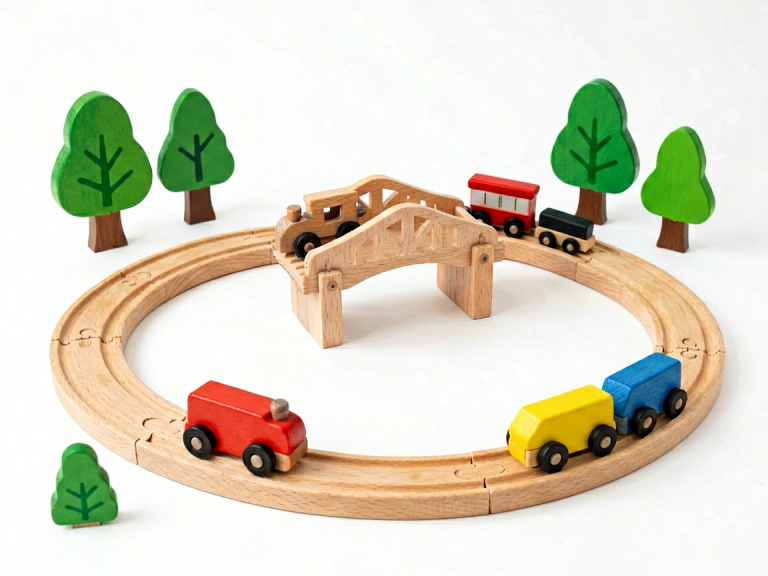
Three-year-olds love movement. A sturdy wooden or plastic push cart, a pull-along animal on a short (less than 12-inch) cord, or a low-to-the-ground ride-on toy (e.g., a scooter with three wide wheels or a balance bike) provides gross motor exercise. Check for stable bases that do not tip easily. Ride-on toys should have a low center of gravity and no protruding bolts. Wheels should be secured so they cannot be detached.
4. Pretend Play Kits
Dress-up costumes (without long capes or drawstrings), play kitchen sets, tool benches, and doctor kits encourage imaginative play. Safe versions use wooden or fabric foods with no small plastic fruits, blunt plastic knives, and battery-free stethoscopes. Costumes should be flame-resistant and have Velcro or breakaway closures instead of ties.
5. Art and Craft Supplies
Non-toxic washable finger paints, Crayola crayons (labeled as non-toxic), thick markers, and modeling dough (like Play-Doh) offer sensory exploration. Ensure that paint brushes have securely attached ferrules and that scissors are child-safe with rounded tips. Avoid glitter or tiny beads that can scatter and become choking hazards.
6. Musical Instruments
Age-appropriate instruments include sturdy hand drums, maracas (sealed so beads cannot escape), xylophones with mallets attached by a short cord, and shakers. Avoid instruments with small parts that can be removed or swallowed. Electronic keyboards should have volume limiters.
7. Sensory Play Items
Water tables, sand boxes, and play mats with textured surfaces are excellent—provided the materials are phthalate-free and mold-resistant. For water tables, use only a few inches of water and supervise constantly. Sensory bins with dry rice or beans should be large-grain to prevent inhalation.
—
Tips for Selecting Age-Appropriate and Safe Toys
Beyond relying on labels, parents and caregivers can adopt a systematic approach to evaluate any toy before purchase.
- Read the Label Thoroughly: The age recommendation is not a suggestion; it reflects safety testing. A toy labeled “3+” may still have small parts, so it is appropriate only if your child no longer mouth objects. Conversely, “36 months+” is a CPSC requirement meaning the toy passed small-part testing for children under three.
- Check for Recalls: The CPSC maintains an online database of recalled toys. Before buying used toys, search for recall notices. Thrift stores and hand-me-downs are common sources of older, unsafe toys (e.g., those with lead paint or broken components).
- Inspect Construction: Run your fingers over the toy to feel for sharp edges, splinters, or burrs. Shake it to see if anything rattles loose. If a battery compartment is present, ensure it is secured with a screw; a taped or snap-on cover is not safe.
- Consider the Child’s Individual Habits: Some three-year-olds still explore with their mouths, while others have outgrown this phase. If your child is a frequent mouther, avoid any toy with small parts, even if the packaging says 3+. Similarly, if the child is prone to throwing toys, avoid heavy wooden shapes that could cause injury.
- Avoid Hype Over Safety: Novelty toys with flashing lights, loud sounds, or messy features can be tempting, but often prioritize excitement over safety. For example, “slime” kits may contain borax or other irritants; electric toys with exposed wires are problematic.
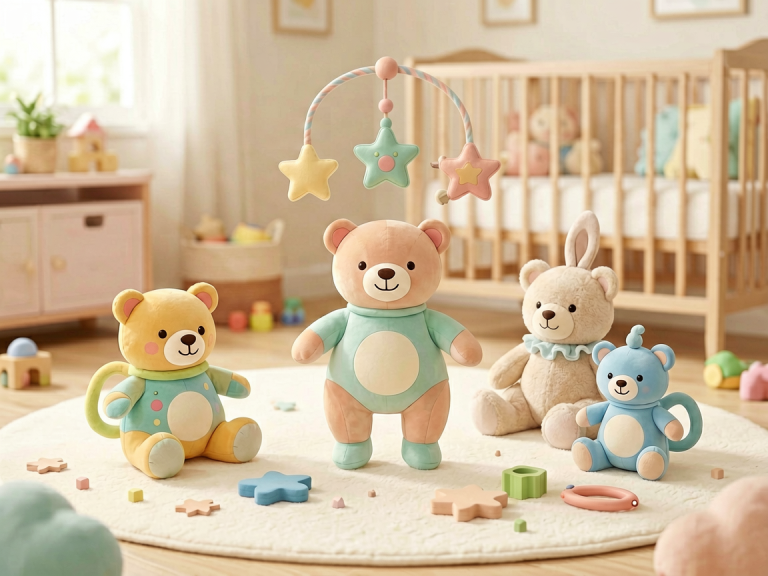
- Prefer Natural Materials: Untreated hardwoods (maple, birch, beech) are durable and non-toxic. Organic cotton or wool stuffies with embroidered features (rather than plastic eyes) eliminate choking and ingestion hazards. Silicone teethers and bath toys are BPA-, phthalate-, and latex-free.
—
The Role of Supervision and Play Environment
No toy is 100% safe in isolation. Even the safest toy can become hazardous if the play environment is neglected. Three-year-olds require active supervision during play, especially with new toys. A caregiver should observe how the child interacts with the toy: Do they bite it? Try to detach parts? Use it in unintended ways (e.g., standing on a ride-on toy that is not designed for that)? Additionally, the play area should be free of clutter, with toys stored at accessible heights to prevent falls when reaching. Keep a first-aid kit nearby and have the Poison Control number (1-800-222-1222 in the U.S.) saved. Teach the child basic rules: “No putting toys in your mouth,” “No running with toys,” and “Always tell a grown-up if a toy breaks.” While such rules may not be fully grasped at three, repetition builds awareness.
—
Conclusion
Choosing safe toys for three-year-olds is a nuanced process that blends knowledge of regulations, awareness of developmental risks, and a keen eye for quality. The goal is not to eliminate all risk—after all, safe risk-taking (like climbing a small wooden play structure under supervision) is essential for growth—but to eliminate preventable hazards such as choking, strangulation, and chemical exposure. By adhering to standards like ASTM F963, avoiding common pitfalls, and selecting toys that match a child’s specific stage of development, parents and caregivers can create a play environment that is both joyful and secure. Remember, the best toy is one that engages a child’s curiosity, nurtures their skills, and—above all—keeps them safe so they can explore the world with confidence.
*(Word count: ~1,580)*