Building Blocks of Wonder: A Comprehensive Guide to Building Toys for Three-Year-Olds
Introduction
The world of a three-year-old is a whirlwind of discovery, where every crayon stroke, every muddy puddle, and every tumbling block holds the potential for profound learning. Among the myriad playthings that fill nurseries and living rooms, building toys occupy a special place—not merely as sources of entertainment, but as catalysts for cognitive, physical, and emotional growth. At this tender age, children are transitioning from the sensorimotor stage into the preoperational stage of development, according to Jean Piaget’s theory. They begin to engage in symbolic play, develop rudimentary problem-solving skills, and refine their fine motor coordination. Building toys—whether simple wooden blocks, interlocking plastic bricks, or magnetic tiles—offer an ideal medium for these developmental leaps. Yet, choosing the right building toys for a three-year-old is no trivial task. Parents and educators must balance safety, complexity, and educational value while respecting the child’s unique pace of growth. This article delves into why building toys are essential for three-year-olds, explores their multifaceted benefits, and provides practical guidance for selecting the best options. Through a structured examination of cognitive, motor, social, and safety considerations, we will uncover how these humble toys lay the foundation for lifelong skills.
—
The Cognitive Benefits of Building Toys
At age three, a child’s brain is a sponge, forming neural connections at a staggering rate—estimated at over one million per second. Building toys engage this neural plasticity in ways that passive entertainment cannot. When a toddler stacks a block on top of another, they are not merely performing a physical action; they are engaging in early mathematical reasoning. They intuitively explore concepts of balance, gravity, symmetry, and spatial relationships. For instance, when a block tower collapses, the child learns cause and effect: “If I place this block off-center, the tower falls.” This trial-and-error process is the bedrock of scientific thinking.
Moreover, building toys encourage problem-solving and planning. A three-year-old who wants to construct a “castle” must hold a mental image of the final structure and sequence the steps to achieve it. This requires working memory, attention control, and cognitive flexibility—executive functions that predict later academic success. Research published in the journal *Early Childhood Education* found that children who regularly engage in construction play demonstrate superior performance on tasks measuring divergent thinking (creativity) and convergent thinking (logical deduction). For example, when given a set of wooden blocks, a child might build a “house” today and a “spaceship” tomorrow, each time adapting their strategy to new goals. This flexibility nurtures adaptability, a skill that will serve them well in school and beyond.
Additionally, building toys foster early literacy and language development. As children build, they often narrate their actions or describe their creations. A parent might ask, “What are you making?” and the child responds, “A big tower for my dinosaur.” This verbal exchange expands vocabulary, teaches sentence structure, and introduces concepts like “bigger,” “taller,” “on top,” and “underneath.” In groups, children negotiate roles and share ideas, further honing communication skills. Thus, a simple set of blocks becomes a rich linguistic environment.
—
Motor Skills and Spatial Awareness
The physical act of building is a workout for a three-year-old’s developing body. Fine motor skills—the precise use of small muscles in the hands and fingers—are refined when a child grasps, rotates, and connects pieces. Picking up a small plastic brick and pressing it into place requires hand-eye coordination, grip strength, and bilateral coordination (using both hands together). Magnetic tiles, for instance, demand careful alignment of magnets, which challenges a child’s precision. Over time, these movements strengthen the intrinsic hand muscles, paving the way for later skills like writing, buttoning a shirt, or using scissors.
Gross motor skills are also engaged, albeit less obviously. A child might sit on the floor, lean over to retrieve a block, or stand to add height to a tower, engaging core stability and balance. Some building toys, like large foam blocks or interlocking plastic panels, encourage whole-body movement as children carry, lift, and stack them. This physical activity combats the sedentary tendencies that can emerge with screen-based play, promoting healthy growth.
Perhaps most critically, building toys cultivate spatial awareness—the ability to understand and remember the location of objects in relation to oneself and to each other. A three-year-old who attempts to fit a triangular block into a square hole is learning about shapes, angles, and orientation. They discover that turning a piece 90 degrees changes its fit. These experiences build the foundation for geometry, map reading, and even sports performance. Studies in developmental psychology have shown that early spatial skills are strong predictors of later achievement in STEM fields (science, technology, engineering, and mathematics). By playing with building toys, children essentially practice a form of “mental rotation” and “visualization” that textbooks cannot teach until much later.
—
Social and Emotional Growth Through Play
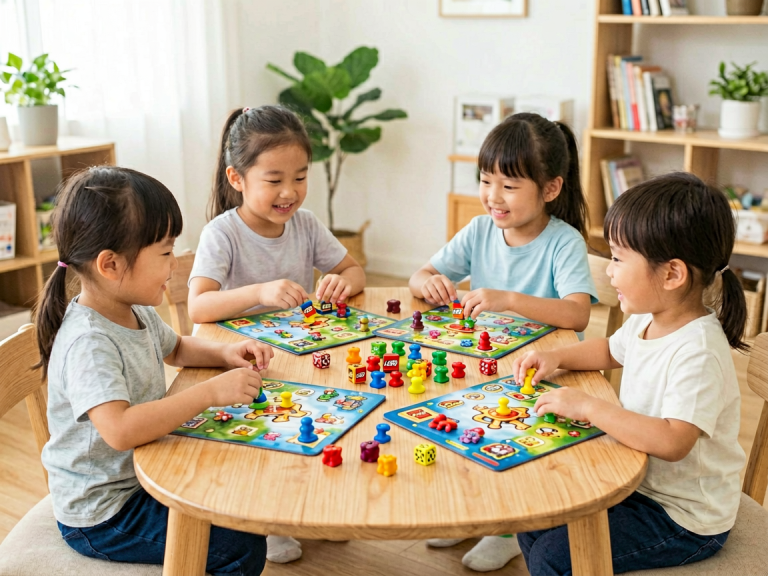
While building toys are often associated with solitary activity, they are equally powerful tools for social interaction. At age three, children are learning to navigate the complex world of peers—sharing, taking turns, and managing conflicts. When two or three children build together, they must negotiate: “I want the red block.” “No, I need it for the roof.” These moments, though challenging, teach invaluable lessons in empathy, compromise, and collaboration. A child who knocks down a friend’s tower learns about consequences and may begin to understand remorse. An attentive adult can guide these interactions, helping children use words instead of hands and celebrate joint achievements.
Building toys also bolster emotional regulation. A three-year-old’s frustration tolerance is notoriously low; a tower that keeps falling can trigger tears or anger. Yet, with gentle support, the child learns that failure is not catastrophic. They can try again, modify their approach, or ask for help. This resilience—the ability to persevere through setbacks—is a cornerstone of emotional intelligence. Moreover, completing a structure provides a powerful sense of mastery and pride. The child’s self-esteem blooms as they point to their creation and announce, “I did it!” This intrinsic motivation fuels further exploration.
Furthermore, building toys allow for symbolic play, where a block becomes a phone, a car, or a piece of cake. This imaginative transformation is crucial for emotional development—it enables children to process experiences, express feelings, and experiment with different roles. A child who builds a “hospital” for stuffed animals might be working through a recent doctor’s visit, thereby reducing anxiety. In this way, building toys are not just about construction; they are about constructing meaning.
—
Safety and Age-Appropriate Considerations
No discussion of building toys for three-year-olds is complete without addressing safety and developmental appropriateness. The American Academy of Pediatrics emphasizes that toys for this age group should be free of small parts that pose a choking hazard. A classic rule is that any toy that can fit inside a toilet paper tube (about 1.25 inches in diameter) is too small for a child under three. Many commercial building sets explicitly label themselves as “ages 3+” and include pieces large enough to be gripped but not swallowed. Parents should also check for sharp edges, toxic paints or plastics, and loose magnets that could be ingested (magnetic ingestion is a serious medical emergency).
Durability is another concern. Three-year-olds are not gentle—they throw, drop, and sometimes mouth their toys. Building blocks made of untreated wood, high-density plastic, or silicone are preferable to flimsy materials that splinter or crack. Additionally, the weight of pieces matters: overly heavy blocks can cause injury if dropped on a foot or thrown. Conversely, too-light pieces (like thin cardboard) may not provide satisfying tactile feedback.
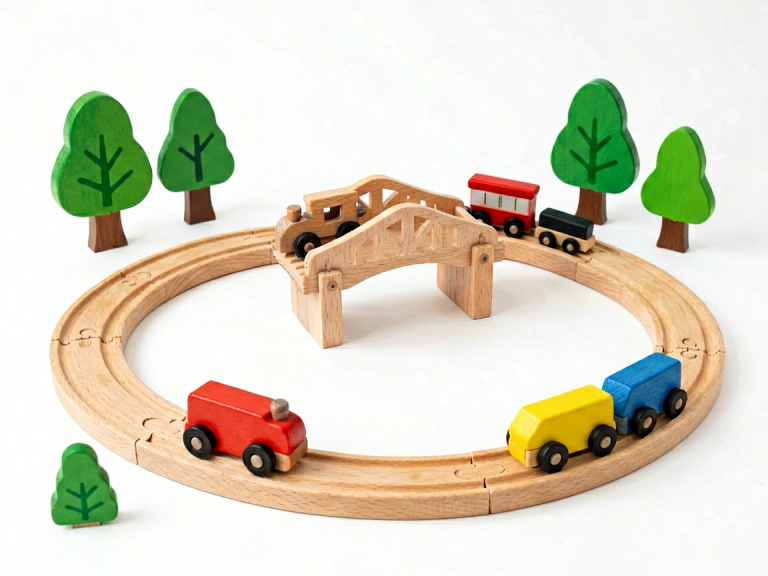
Age-appropriate complexity is equally important. A set with hundreds of tiny interlocking bricks (like standard LEGO) is overwhelming for a three-year-old and may lead to frustration. Instead, look for larger bricks such as DUPLO, which are specifically designed for small hands. Magnetic tiles (e.g., Magna-Tiles) are also excellent because they connect easily with minimal force and allow for open-ended creativity. Wooden unit blocks remain a timeless choice because they offer a natural texture and simple geometry, encouraging stacking and balancing without prescribed instructions. Avoid sets with complex instructions or specific end-products; three-year-olds thrive on open-ended play where they can build whatever their imagination conjures.
Finally, consider the play environment. A clutter-free area with a soft rug or mat can cushion falling blocks and reduce noise. Supervision is essential, especially when children are just learning to build. An adult can model problem-solving—for instance, saying, “I wonder what happens if we put a big block on top of a small one?”—without taking over the play. The goal is to guide, not direct.
—
Choosing the Right Building Toys: A Practical Guide
With safety and benefits in mind, how does one select the ideal building toys for a three-year-old? Here is a practical checklist to navigate the overwhelming toy market:
- Prioritize open-endedness: The best building toys have no predetermined outcome. Blocks, magnetic tiles, and large interlocking bricks allow children to create anything from a simple tower to an elaborate city. Avoid sets that only build one specific model (e.g., a fixed dinosaur) unless they also allow free-form construction.
- Check material quality: Wooden blocks (preferably from sustainably sourced, non-toxic wood) offer durability and a pleasant sensory experience. Plastic blocks should be BPA-free and phthalate-free. Silicone building sets are increasingly popular for their softness and chew-resistance.
- Size matters: Ensure pieces are large enough to be safely handled. For reference, DUPLO bricks are about twice the size of standard LEGO. Magnetic tiles should have edges that are thick enough to prevent cracking but not sharp.
- Encourage variety: A single set of blocks is fine, but offering different types—one set of magnetic tiles, one set of wooden blocks, one set of large plastic interlocking bricks—stimulates different skills. The child learns that connecting magnets requires a different approach than stacking blocks.
- Consider storage and portability: Three-year-olds often play in short bursts. A storage bin that is easy to open and close helps the child participate in clean-up, fostering responsibility. Some building sets come with a carrying case or bag, which is great for travel.
- Read reviews and seek recommendations: Online reviews from other parents and educators can reveal hidden flaws—like blocks that arrive with splinters or tiles that lose magnetism quickly. Websites like Good Housekeeping or the Toy Association often test toys for safety and developmental value.
- Involve the child: If possible, let the child handle a sample piece in the store or look at pictures online. Their interest and enthusiasm are the best indicators of future engagement.
Examples of highly recommended building toys for three-year-olds include: Melissa & Doug Standard Unit Blocks, LEGO DUPLO Classic sets, Magna-Tiles (clear or solid colors, 100-piece sets are popular), and Brio wooden block sets. For a more sensory experience, consider “Tegu” magnetic wooden blocks, which combine magnetism with natural wood. Avoid cheap knock-offs that may have weak magnets or toxic paint.
—
Conclusion
Building toys for three-year-olds are far from trivial playthings. They are sophisticated instruments of development, shaping the brain’s architecture, refining motor control, fostering social bonds, and building emotional resilience. From the first wobbling tower to an elaborate multi-story castle, each block placed is a small victory in a child’s journey toward competence and confidence. Parents and caregivers who thoughtfully select and engage with these toys—remaining patient, asking questions, and celebrating failures as learning opportunities—provide their children with a gift that extends far beyond the playroom. As the child stacks, connects, and creates, they are learning the most fundamental lesson of all: that they have the power to build their own world, one block at a time. In an age of screens and passive entertainment, returning to the simplicity of building toys is an investment in active, hands-on, and joyful learning. So clear a floor, dump out a bin of blocks, and watch a three-year-old’s imagination take flight. The blueprints of their future are being drawn in wood, plastic, and magnetic tiles.