Why Screen-Free Gifts Matter at Age Five
Title: The Ultimate Guide to the Best Screen-Free Gifts for 5-Year-Olds: Nurturing Imagination, Creativity, and Real-World Play
In an age where digital devices seem to be the default pacifier for children, the quest for screen-free gifts has never been more meaningful. A five-year-old stands at a magical crossroads: old enough to build complex stories and structures, yet young enough to be utterly captivated by a cardboard box, a handful of wooden blocks, or a set of washable markers. The best gifts for this age do not glow, do not ping, and do not require a charging cable. Instead, they invite children into a world of tactile exploration, social play, problem-solving, and physical movement. This guide explores the philosophy behind screen-free gifting and presents a carefully curated selection of presents that will keep a five-year-old engaged, curious, and happily disconnected from the digital glow.
The developmental landscape of a five-year-old is rich with growth. At this age, children refine their fine motor skills, develop the ability to take turns and negotiate with peers, and begin to grasp abstract concepts like rules and cause-and-effect. Screen time, especially passive consumption of videos or apps, often short-circuits these natural processes. A screen presents pre-packaged stimuli; a screen-free gift, by contrast, offers open-ended possibilities. A set of magnetic tiles can become a castle, a spaceship, or a geometric lesson. A simple board game teaches patience and emotional regulation when a roll of the dice goes wrong. Moreover, screen-free gifts encourage children to create their own narratives rather than absorb someone else’s. They foster deep focus, reduce sensory overload, and give children the gift of unfinished play—the kind that continues in the mind long after the game is put away.
This is not to say all screen time is evil, but for a five-year-old, the tangible world is still the primary classroom. Gifts that require hands, legs, and voices are investments in a child’s long-term cognitive and social health. The following categories offer a comprehensive spectrum of choices, from solitary quiet play to active group adventures.
Category One: Construction and Building Toys That Defy Gravity
Magnetic Tiles and Connectors
Among the most versatile screen-free gifts for a five-year-old are magnetic construction sets. Brands like Magformers, Magna-Tiles, or Picasso Tiles have become modern classics for good reason. These translucent geometric shapes snap together effortlessly, allowing young builders to create 2D patterns and 3D structures without frustration. A five-year-old can build a simple house or a complex castle with arches and towers. The magnetic connection provides satisfying feedback—a gentle *click* that reassures the child that the piece is secure. These toys teach spatial reasoning, symmetry, and basic physics. They are also wonderfully collaborative: two or three children can work together on a single creation, negotiating whose block goes where. Unlike many digital building games, these tiles have weight, texture, and color that changes when held up to the light. They are a sensory feast that no screen can replicate.
Wooden Blocks and Ramps
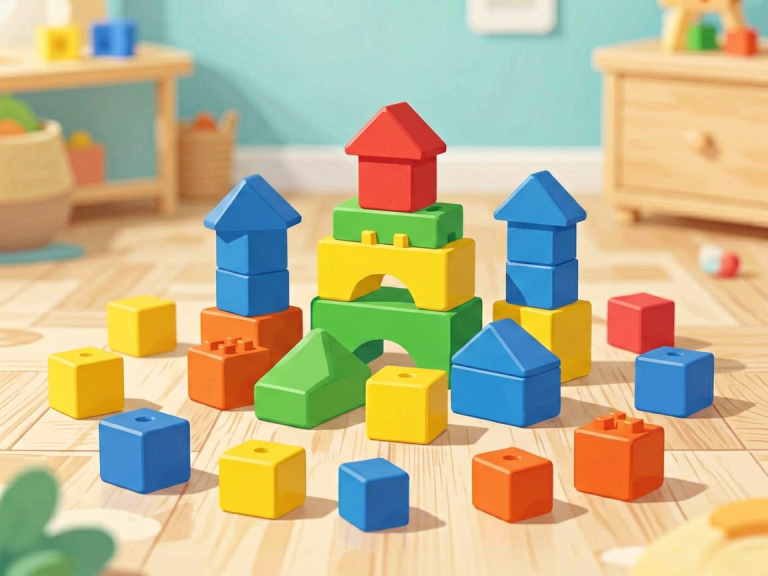
Do not underestimate the power of classic wooden unit blocks. A five-year-old who has access to a generous set of unpainted or lightly colored blocks will invent worlds. Add a set of wooden cars and a ramp set, and the play deepens. The child becomes a traffic engineer, testing how steep a ramp can be before the car flies off, or a city planner, deciding where the hospital block goes relative to the fire station. Blocks teach balance, gravity, and cause-and-effect in a way that feels like pure fun. They also provide a canvas for storytelling: the block tower is a princess’s tower; the fallen blocks are an earthquake; the rebuilding is a rescue mission. For the best experience, choose blocks that are precisely cut and smooth, avoiding any that might splinter. Brands like Melissa & Doug, Guidecraft, and Uncle Goose offer excellent options.
Category Two: Creative Arts That Unleash the Inner Picasso
High-Quality Art Supplies
At five, a child’s artistic ability explodes. Scribbles become deliberate shapes; random blobs become recognizable dogs or spaceships. The right art supplies can fuel this explosion. A generous set of washable markers (with multiple shades of each color), a pack of thick crayons that don’t break easily, a watercolor set with a brush that actually holds water, and a ream of large, heavy paper are foundational. But consider going beyond the basics. A set of chalk pastels—messy but glorious—allows for blending and smudging techniques that feel almost magical. Modeling clay or Play-Doh in a variety of colors encourages three-dimensional creation. A simple plastic tray or a silicone mat contains the mess. These gifts give the child permission to experiment without fear of failure. There is no wrong way to draw a tree, and that freedom is precious in a world where screens often enforce right answers.
Sticker Books and Reusable Sticker Sets
Stickers are a perennial favorite for five-year-olds because they combine fine motor precision with imaginative scene-setting. Reusable puffy stickers that can be repositioned on glossed backgrounds are especially valuable: children can create the same farm scene over and over, moving the cow from the barn to the field and back again. Brands like Melissa & Doug produce extensive sticker activity books with themes ranging from fairy tales to dinosaurs. These books often include scenes to fill, which encourages storytelling and narrative sequencing. The act of peeling a small sticker off a sheet and placing it precisely exercises the pincer grip that is essential for handwriting. And because the sheets are screen-free and portable, they are perfect for car rides or quiet time away from glowing screens.
Category Three: Games That Teach Cooperation and Strategy
Classic Board Games for Young Minds
Board games for five-year-olds should emphasize fun and fairness over competition. Look for games that involve matching, memory, and basic pattern recognition rather than those that require reading or complex instructions. *Hoot Owl Hoot!* by Peaceable Kingdom is a cooperative game where players work together to get the owls home before the sun rises—no winners and losers, just shared effort. *The Sneaky, Snacky Squirrel Game* (Educational Insights) involves using a squirrel-shaped tweezer to pick up acorns, building fine motor skills while practicing color matching. Another gem is *My First Carcassonne*, a simplified tile-laying game that teaches spatial thinking. These games do more than pass time: they teach turn-taking, emotional regulation (that sinking feeling when you draw a bad card), and language skills as children describe their moves. And they do it all without a glowing screen or a battery.
Card Games and Dice Games
Don’t overlook the power of a simple deck of cards or a set of jumbo dice. Games like *Go Fish* or *Old Maid* (with age-appropriate, non-scary images) teach memory and categorization. A set of dice with different colors or numbers can be used for homemade games: roll the dice, count the dots, and move that many spaces on a made-up track. Dice also pair beautifully with counting bears or other manipulative toys for math play. These gifts are small, cheap, and infinitely reusable. They also teach children that the best games don’t require electricity—just a willing partner and a little imagination.
Category Four: Outdoor and Active Play for Wiggly Bodies
Balance Bikes and Scooters
A five-year-old’s body craves movement. A balance bike—a bicycle without pedals—is one of the best gifts for developing coordination and confidence. Children propel themselves with their feet, learning the essential skill of balancing before they ever need to worry about pedaling. After a few weeks, most children can glide for yards at a time, and when they eventually transition to a pedal bike, the learning curve is gentle. Similarly, a quality three-wheeled scooter (or a two-wheeled one for more advanced riders) provides a sense of speed and control. These gifts encourage outdoor time, strengthen leg muscles, and improve proprioception—the brain’s awareness of where the body is in space. All of this happens without a single pixel.
Play Tunnels, Tents, and Fort-Building Kits
Indoor forts never go out of style. A pop-up play tunnel of six feet or longer can become a secret passage, a dragon’s lair, or a spaceship airlock. Children will crawl through it again and again, laughing and pretending. Add a simple nylon play tent (or just use blankets draped over chairs) and you have a cozy hideaway where stories are whispered and imaginary tea parties are held. Pair the tent with a battery-operated tea-light candle (for safety) and a small basket of books, and you’ve created a sanctuary for quiet play. Fort-building kits with flexible rods and connectors allow children to design their own structures, adding a thrilling engineering component. These gifts encourage independent play, social interaction if siblings join, and the deep satisfaction of creating one’s own environment.
Nature Exploration Kits
Send a five-year-old outside with a child-sized magnifying glass, a bug-catching jar with a ventilated lid, and a simple field guide to local insects or birds. Add a pair of kid-safe binoculars and a small notebook for drawing observations. This kind of gift transforms an ordinary walk into an expedition. Children learn to slow down, to notice the veins on a leaf, the pattern on a ladybug’s shell, the sound of a bird they cannot see. They develop scientific habits of mind—questioning, observing, recording—without ever touching a tablet. Outdoor exploration also provides sensory input that screens cannot: the smell of damp earth, the texture of rough tree bark, the warmth of sunlight. For a five-year-old, the world is a laboratory, and a simple kit is the key.
Category Five: Imaginative Play and Dress-Up
Costumes and Fabric Sets
At five, dramatic play peaks. A child can transform into a firefighter, a doctor, a princess, a dinosaur, or a space explorer with the help of a single hat or cape. A trunk of dress-up clothes—including hats, scarves, vests, masks, and fabric scraps—unlocks endless narratives. Look for items that are easy to put on and take off independently: elastic waistbands, Velcro closures, and loose tunics. Fabric sets that include plain pieces of cloth in various colors also spark creativity—a blue scarf becomes a river, a red one a cloak of fire. Add a few plastic crowns, toy swords (made of foam), or a kid-friendly doctor’s kit, and you have the makings of a theater. This type of play develops empathy (as children try on different roles), language skills (as they create dialogue), and problem-solving (how to act out a scene with limited props). No screen can replace the feeling of a silky cape swirling around the shoulders.
Puppets and a Simple Stage
Puppets offer a unique window into a child’s inner world. A set of hand puppets (animals, people, or fantasy creatures) allows a five-year-old to externalize feelings, tell stories, and even work through anxieties. The puppets become the mouthpiece for the child: a lion can roar about being scared, a rabbit can whisper about a dream. A simple puppet stage—a curtain hung over a doorway or a store-bought wooden frame—elevates the play. Children learn to modulate their voices, to think about sequence and plot, and to perform for an audience (even if the audience is just stuffed animals). This gift requires nothing but imagination and a willing listener.
Category Six: Musical Instruments That Make Joyful Noise
Simple Percussion and Melody Instruments
Five-year-olds are natural music makers. They bang, shake, and hum without self-consciousness. Give them the tools to channel that energy. A high-quality xylophone (with a solid, tuned base) teaches cause-and-effect—each bar produces a different note—and allows for simple melodies. A set of egg shakers, a small hand drum, a triangle, and a set of jingle bells create a portable percussion band. For a more structured experience, a ukulele tuned to standard pitch (with a soft, durable nylon string) can be held by small hands and strummed joyfully. These instruments encourage rhythm, listening, and turn-taking when played with others. They also produce the most delightful sound: a child’s spontaneous song. Screens may offer music apps, but nothing compares to the real vibration of a drumhead against a palm.
Noise-Making Kits and DIY Instruments
Consider a kit that allows a child to create their own instruments: rubber bands stretched across a shoebox make a guitar; rice inside a paper plate shaker makes a maraca. These activities combine art, science, and music. Making an instrument from scratch teaches engineering (how does sound travel?), patience, and pride. And the resulting instrument, however wonky, is loved more than any store-bought one. There are many books and kits available (e.g., *The Kids’ Book of Simple Things to Make* or KiwiCo crates with instrument themes) that guide children through these projects. The best part? The noise is proof of active, engaged, screen-free learning.
The Lasting Value of a Screen-Free Present
Choosing a screen-free gift for a five-year-old is not about deprivation; it is about liberation. It frees the child from the passive consumption of flashing images and hands them the tools to build, create, move, and connect. A magnetic tile set will be used in a hundred different ways before it is passed on to a younger sibling. A wooden ramp set will teach physics lessons that no YouTube video can convey. A costume trunk will hold the seeds of future friendships, as children negotiate who gets to be the superhero and who the sidekick.
The best screen-free gifts are those that grow with the child. They do not become obsolete when the next update arrives. They invite repetition, variation, and mastery. They foster the deep concentration that is so rare in our multitasking world. And they remind both parent and child that the most enchanting play happens not on a glowing rectangle, but in the space between two hands, the sound of a block clicking into place, the feel of a smooth pebble, the laughter of a shared game.
As you shop for the five-year-old in your life, ask yourself: *Does this gift spark a story, a question, a dance, or a hug? If yes, then it is worthy.* Because at five, the most magical toys are not the ones that talk—they are the ones that wait quietly for the child to give them a voice.