The Ultimate Guide to Building Toys for Beginners: Unlock Creativity and Fun
—
1. Introduction
Building toys have been a staple of childhood play for generations, and for good reason. They offer more than just entertainment—they are powerful tools for learning, creativity, and skill development. For beginners, whether they are young children just starting to explore the physical world or older hobbyists seeking a new hands‑on challenge, selecting the right building toy can be a gateway to hours of rewarding engagement. This guide explores the best types of building toys for novices, explains how to choose them wisely, and highlights the remarkable benefits they bring. By the end of this article, you will understand why building toys are an essential investment for anyone beginning their journey into constructive play.
—
2. Why Building Toys Matter for Beginners
At its core, a building toy transforms abstract ideas into tangible structures. For a beginner, this translation process is deeply educational. Unlike passive entertainment, building toys require active participation: the hands must align with the mind, and the mind must plan and adapt. This combination fosters patience, concentration, and a sense of accomplishment. Moreover, building toys are inherently forgiving. A tower that collapses can be rebuilt; a bridge that wobbles can be reinforced. This trial‑and‑error environment teaches resilience—a skill that extends far beyond toy time. For beginners, especially children, the open‑ended nature of these toys means there is no single “right” answer, encouraging creative thinking and multiple approaches to a problem. In a world of screens, building toys offer a tactile, screen‑free alternative that engages all the senses.
—
3. Top Types of Building Toys for Beginners
There is a rich variety of building toys designed specifically with beginners in mind. Each type offers a unique balance of simplicity, safety, and creative potential.
3.1 Classic Wooden Blocks
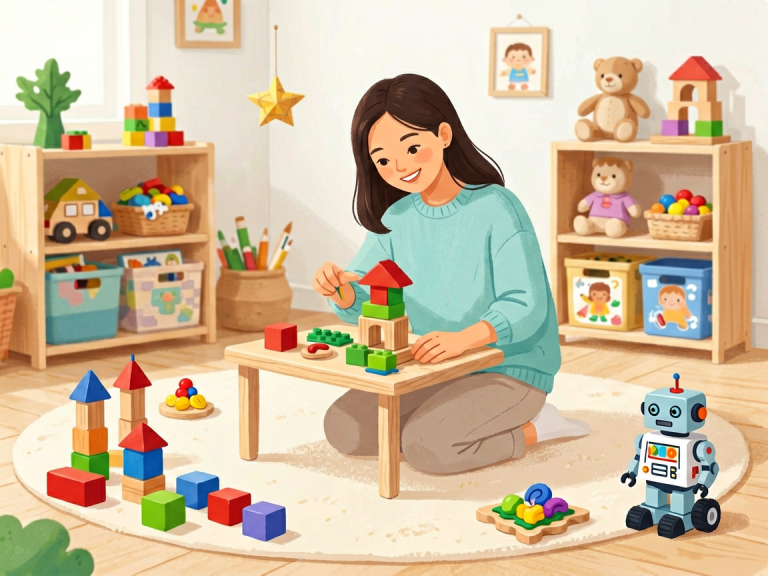
Wooden blocks are the quintessential beginner building toy. Typically made from solid, non‑toxic wood, they come in simple shapes—cubes, rectangles, cylinders, and arches—with no connectors or magnets. This simplicity forces the builder to rely purely on gravity and balance. For very young beginners (ages 1–4), wooden blocks are perfect because they are large, easy to grasp, and virtually indestructible. The learning curve is gentle: stacking a few blocks is immediate success, while more complex structures challenge spatial reasoning. Brands like Melissa & Doug and Tegu (with magnetic wooden blocks) offer high‑quality options, but even a basic set from a local store can provide endless possibilities.
3.2 LEGO Duplo and Junior Sets
LEGO needs no introduction, but for beginners, the Duplo line (ages 1½–5) and the LEGO Junior (ages 4–7) are the ideal entry points. Duplo bricks are twice the size of standard LEGO, making them safe for small hands and preventing choking hazards. They snap together with enough friction to hold structures but can be pulled apart easily. Junior sets include simple step‑by‑step instructions for building a fire truck, a castle, or a farm, yet they also include extra pieces for free‑form creativity. For an older beginner—say a 6‑year‑old or an adult trying LEGO for the first time—standard LEGO Classic boxes (numbered 110xx) provide a mix of bricks without a specific build, encouraging open‑ended exploration. The key for beginners is to start with a set that is not overwhelming; a box with 100–300 pieces is often ideal.
3.3 Magnetic Tiles
Magnetic tiles have surged in popularity because they offer a nearly effortless connection. Pieces are flat geometric shapes—squares, triangles, rectangles—with magnets embedded along the edges. They snap together with a satisfying click, allowing even a toddler to build a 3‑D cube or a house without struggling to align studs. Because magnetism provides instant stability, beginners can focus on design and symmetry rather than fumbling with connectors. Brands like Magna‑Tiles and PicassoTiles are widely recommended. Magnetic tiles are excellent for teaching geometric concepts, symmetry, and early engineering principles like load‑bearing walls. They are also one of the most visually rewarding toys: light can pass through the transparent tiles, creating beautiful effects when placed near a window or on a light table.
3.4 Snap Circuits
For beginners interested in electronics and STEM, Snap Circuits offer a safe, frustration‑free introduction to building electrical circuits. Components snap onto a plastic grid: you can create a working light, a fan, a buzzer, or even a radio. The pieces are color‑coded and marked clearly, and the instruction manuals start with very simple projects (e.g., a single LED with a switch) and gradually increase complexity. Snap Circuits are recommended for ages 8 and up, but younger beginners can work with adult supervision. They build logical thinking, understanding of cause and effect, and basic electrical literacy—all while being completely safe since no soldering or exposed wires are involved.
3.5 Erector Sets and Construction Kits
Traditional erector sets (like those from Meccano or Metal Earth) use metal strips, bolts, and nuts to build more realistic models—cars, cranes, bridges. For beginners, these kits often come with plastic tools that are easy to handle. A good starter set might have 100–200 parts and one or two model plans. The mechanical nature of these sets (screws, gears, pulleys) introduces practical mechanics. However, they require more fine motor control and patience than magnetic tiles or LEGO, so they are best suited for beginners aged 7 and up. Some modern variants, like Engino or K’NEX, use plastic snap‑fit pieces that mimic the complexity of erector sets but are easier to assemble. These toys teach three‑dimensional assembly, symmetry, and the importance of fastening and torque.
—
4. How to Choose the Right Building Toy for a Beginner
With so many options, choosing can be daunting. Here are key criteria to consider.
4.1 Age Appropriateness
Every toy has a recommended age range, but beginners may be younger or older than that range depending on their experience. For a two‑year‑old, Duplo or large wooden blocks are ideal; for a five‑year‑old, magnetic tiles or LEGO Junior; for a ten‑year‑old, Snap Circuits or a metal erector kit. Always prioritise safety: small parts are a choking hazard for children under three. If the beginner is an adult, complexity can be higher, but the same principle applies—start with a set that has clear, step‑by‑step instructions.
4.2 Complexity and Open‑Endedness
Some beginners thrive with structured kits that have a specific final model; others prefer open‑ended sets where the only limit is imagination. Ideally, a beginner’s first building toy should have a low entry barrier. That means pieces that connect easily (magnets, large interlocking bricks) and a simple manual with visual steps. As the builder gains confidence, they can graduate to more open‑ended sets. A hybrid approach—like buying a LEGO Classic box alongside a themed set—works well.
4.3 Safety and Durability
Building toys for beginners must withstand drops, gnawing (for toddlers), and repeated assembly and disassembly. Look for BPA‑free plastics, rounded edges, and non‑toxic paint. Wooden blocks should be splinter‑free; magnetic tiles should have sealed magnets to prevent swallowing. High‑quality brands often offer lifetime guarantees or replaceable parts, which is a good sign of durability.
—
5. The Educational and Developmental Benefits
Building toys are far from mere amusement. They actively develop multiple cognitive and physical skills.
5.1 Fine Motor Skills
Manipulating small pieces—snapping LEGO bricks, aligning magnetic tiles, threading nuts onto bolts—requires precise finger movements. For young children, this strengthens the small muscles of the hand and improves hand‑eye coordination. Over time, these skills translate to better handwriting, buttoning clothes, and using tools.
5.2 Spatial Awareness and Engineering Thinking
Every structure demands an understanding of space: how blocks fit together, how weight is distributed, what shapes support more load. Beginners learn to think in three dimensions, visualising a finished product from flat pieces. This spatial reasoning is a foundational skill for mathematics, geometry, and later STEM fields like architecture or robotics.
5.3 Problem‑Solving and Persistence
When a tower falls or a circuit doesn’t light, the beginner must diagnose the problem and try again. This iterative process teaches logical reasoning and persistence. Unlike many digital games, building toys do not offer instant reset; the builder must physically re‑build, which builds patience and a growth mindset.
5.4 Creativity and Imagination
Open‑ended building toys are blank canvases. A set of magnetic tiles can become a castle, a spaceship, or a dinosaur—depending on the builder’s mood. This imaginative play nurtures creativity, storytelling, and the ability to invent new worlds. Furthermore, when beginners create something unique, they gain a powerful sense of ownership and pride, boosting self‑esteem.
—
6. Tips for Getting Started: A Beginner’s Roadmap
Starting with building toys can feel overwhelming, but these simple strategies ensure a positive experience.
6.1 Start Simple
Resist the temptation to buy the biggest set available. A 100‑piece set of magnetic tiles or a small LEGO Classic box (such as the 11005 “Creative Fun” with 200 pieces) provides enough variety without drowning the builder in choices. Master the basics first: stacking, connecting, and balancing.
6.2 Follow Instructions Then Go Free
Many beginners learn best by following a manual initially. Build the suggested model (e.g., a car, a house) to understand how the pieces work. Then, once that is achieved, encourage modifying it or building something entirely new. This structured‑to‑unstructured progression builds confidence and technique.
6.3 Encourage Experimentation
Let the beginner make “mistakes.” If a structure collapses, ask questions like “Why do you think it fell?” and “What could we change?” This turns failure into a learning moment. Avoid the urge to fix things for them; instead, guide with gentle prompts.
6.4 Join Communities or Clubs
Many cities have LEGO user groups, maker spaces, or library building‑toy clubs. Online platforms like Reddit (r/buildingtoys, r/lego) and YouTube offer endless inspiration. Sharing creations with others—even via photos—motivates beginners and exposes them to new ideas. For children, playdates centered around building toys can turn solitary play into collaborative problem‑solving.
—
7. Conclusion
Building toys for beginners are not just toys—they are tools for growth. From classic wooden blocks to sophisticated snap circuits, each type offers a unique pathway to learning, creativity, and joy. By choosing age‑appropriate, safe, and engaging sets, and by guiding beginners with patience and encouragement, we unlock a world where hands and minds work together. The tower may fall, but the builder learns to rise again. Whether you are a parent selecting a gift for a child, or an adult discovering the pleasure of constructing with your own hands, there is a perfect building toy waiting for you. Embrace the process, celebrate small victories, and watch as simple pieces become extraordinary creations.