Beyond the Glow: Why Screen-Free Toys Are Essential for 4-Year-Olds and How to Choose Them
Introduction
In an era where toddlers swipe before they speak and tablets double as babysitters, the phrase “screen-free toys” has become a rallying cry for parents seeking to reclaim childhood’s tactile, imaginative essence. Yet for many families, the allure of digital entertainment is hard to resist—especially for a four-year-old, whose boundless energy and curiosity can exhaust even the most patient caregiver. But mounting research in early childhood development paints a clear picture: the best toys for a four-year-old are not those that light up, talk back, or offer endless video loops, but those that engage the hands, spark the mind, and invite open-ended play. This article explores why screen-free toys matter, what types deliver the richest developmental benefits, and how to pick the right ones for your child.
The Hidden Costs of Screen Time in Early Childhood
Before we celebrate the virtues of wooden blocks and crayons, it is worth understanding what screens do—and do not—offer a four-year-old brain. The American Academy of Pediatrics recommends no more than one hour of high-quality screen time per day for children aged 2 to 5, yet many children far exceed this limit. Passive screen consumption, even when “educational,” often undermines the very skills preschoolers need most: sustained attention, frustration tolerance, and social reciprocity.
A four-year-old’s neural architecture is rapidly pruning unused connections and strengthening those that are frequently activated. When a child watches a fast-paced cartoon or plays a tap-and-swipe game, the brain is trained to expect instant gratification. The result? A reduced ability to engage in slow, messy, repetitive play—the kind that builds fine motor control, problem-solving resilience, and emotional regulation. Screen-based toys, by design, do all the work: they provide the story, the sound effects, and the reward. The child becomes a passive consumer rather than an active creator.
Conversely, screen-free toys demand agency. A child must decide where to place a block, how to balance a tower, what character to invent, or how to resolve a conflict in a pretend scenario. These small decisions build executive function—the cognitive toolkit that predicts later academic and life success far better than early reading or math drills.
Types of Screen-Free Toys That Deliver Maximum Developmental Value
Not all screen-free toys are created equal. A plastic, battery-operated toy that merely repeats phrases is little better than a screen. The most powerful toys for a four-year-old share three characteristics: open-endedness, sensory richness, and potential for social interaction. Below are four categories that excel in these areas.
Building and Construction Sets: The Foundation of Spatial Thinking
Classic wooden blocks, magnetic tiles, LEGO Duplo, and interlocking bricks are indispensable. At age four, children begin to understand concepts like balance, symmetry, and cause-and-effect in a concrete way. When they build a tower that keeps falling, they learn to adjust their strategy—a lesson in iterative thinking. When they create a zoo out of blocks, they practice storytelling and symbolic representation. Unlike digital building apps, physical blocks engage proprioception (the sense of body position) and hand-eye coordination. Moreover, construction play often leads to collaboration: siblings or friends negotiate who holds the base, who adds the roof, and what happens when the structure collapses. These negotiations are mini-laboratories for language development and emotional intelligence.
Pretend Play Kits: The Theater of the Mind
Costumes, play kitchens, doctor kits, dollhouses, and themed props (farm animals, dinosaurs, pirates) fuel what psychologists call “sociodramatic play.” A four-year-old can transform into a veterinarian, a chef, or a superhero for hours on end. This type of play is not mere entertainment; it is a sophisticated cognitive exercise. The child must hold a role in mind, remember a sequence of actions, and adapt to unexpected “plots” invented by peers. For example, while playing “restaurant,” one child may decide the food is poisoned and the other must rush to the hospital—a narrative that requires flexible thinking and empathy. Screen-free pretend play also allows children to process real-life experiences, such as a visit to the doctor or a new sibling, in a safe, controllable environment.
Art and Sensory Materials: Creativity Without Limits
Crayons, washable markers, play dough, clay, finger paint, child-safe scissors, glue, and collage materials are arguably the most underrated screen-free toys. At four, children are moving from random scribbles to intentional drawing. They may draw a person with a head and legs (a “tadpole” figure) or a house with a sun. These creations are not just cute; they are windows into the child’s cognitive and emotional world. Art materials also build fine motor strength necessary for writing. Sensory bins—filled with rice, beans, sand, or water—offer therapeutic, calming engagement that screens cannot replicate. The open-ended nature of art means there is no “right” answer, which reduces performance anxiety and encourages experimentation.
Simple Board Games and Puzzles: Structured Fun
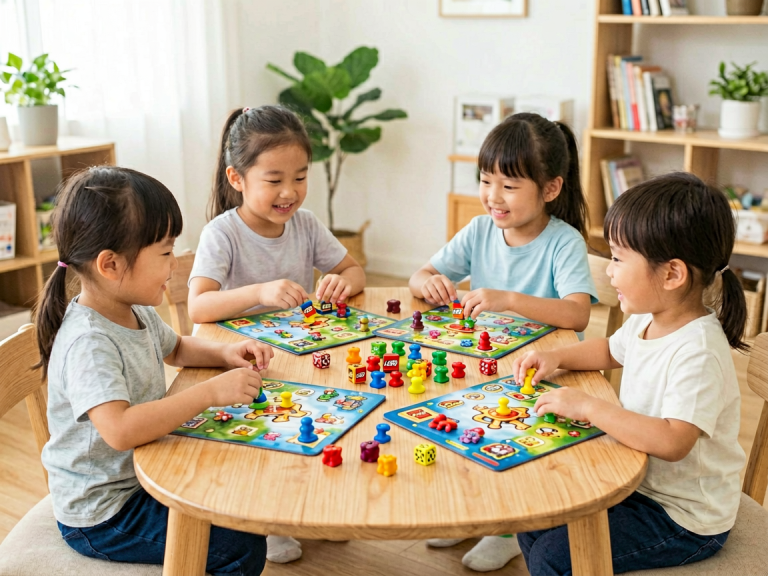
Age-appropriate board games (e.g., *Hoot Owl Hoot!* or *Candy Land*) and jigsaw puzzles (10–50 pieces) introduce turn-taking, patience, and logical reasoning. A four-year-old who completes a puzzle experiences a genuine sense of mastery—a dopamine reward earned through effort, not a flashing screen. Board games, in particular, teach children to follow rules, manage disappointment (when they lose), and celebrate others’ success. These are foundational social skills that no app can teach because digital games lack the face-to-face presence of a parent or peer whose expression and tone convey real emotion.
How to Choose Screen-Free Toys That Your 4-Year-Old Will Actually Use
Even the most developmentally appropriate toy will collect dust if it does not capture a child’s interest. The key is to match the toy to the child’s current passions, developmental level, and temperament. Here are practical guidelines:
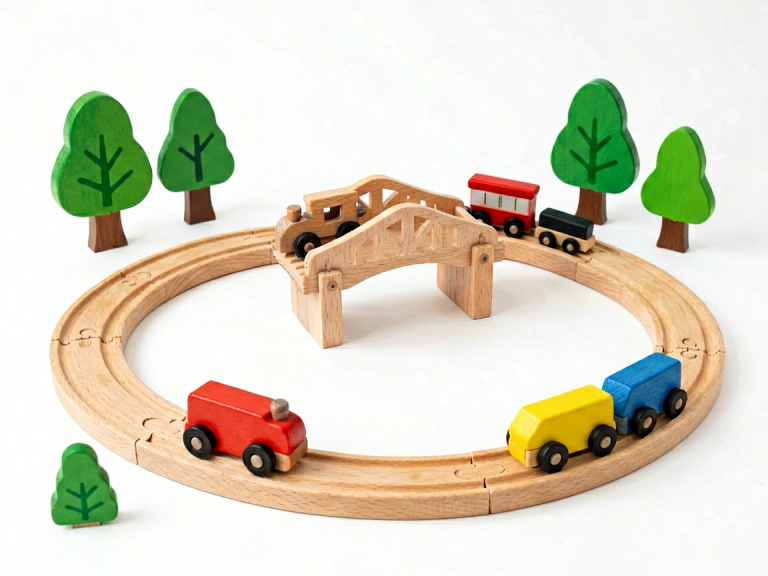
First, observe your child’s play patterns. Does she love sorting objects by color or size? Then a set of nesting blocks or a simple shape sorter may still be engaging. Does he endlessly line up cars? Then a wooden train set or ramps for rolling balls could extend that interest. Second, resist the urge to buy toys with a single function. Electronic toys that sing the alphabet or count to ten are soon discarded; instead, look for toys that can be used in multiple ways over months or years. A set of wooden animals can be used for counting, storytelling, and even as characters in a block-built zoo. Third, consider durability and safety. Four-year-olds are rough—toys should be solid, without small parts that pose choking hazards, and free of toxic paints. Finally, rotate toys. Having too many options overwhelms a four-year-old. Keep a small selection accessible, and store others away. Every few weeks, swap them. This “new” rotation reignites interest without spending money.
The Role of Parents in Screen-Free Play
A screen-free toy is only as valuable as the context in which it is used. A child left alone with a basket of blocks may play for ten minutes; a child whose parent sits beside her, asking questions (“What happens if you put the big block on the bottom?” or “Who lives in this castle?”), will play for an hour. Parental presence does not mean directing the play; it means being a responsive, supportive co-player. This type of interaction builds vocabulary, attachment security, and the child’s willingness to persist through frustration. In a world full of screens, the most powerful “toy” a parent can offer is their own undivided attention.
Conclusion
Screen-free toys for four-year-olds are not a nostalgic retreat into the past. They are a scientifically grounded investment in the cognitive, social, and emotional foundations that will serve a child for life. By choosing open-ended building sets, rich pretend play props, sensory art materials, and simple games, parents can give their child the gift of deep, self-directed play—the kind that builds brains and bonds. The next time you are tempted to hand over a tablet, remember: a cardboard box, a handful of crayons, and a curious parent can unleash a universe of learning that no glowing screen can ever match.