Building the Future: Why Building Toys Are Essential for 4‑Year‑Olds
Introduction
The preschool years are a whirlwind of discovery, and for a 4‑year‑old, every day is an opportunity to test limits, ask “why,” and transform the ordinary into the extraordinary. Among the many playthings that populate a child’s world, building toys hold a uniquely powerful place. From classic wooden blocks to magnetic tiles and large interlocking bricks, these seemingly simple objects are actually sophisticated tools for growth. At age four, children are at a critical juncture: their fine motor skills are sharpening, their imagination is exploding, and their social awareness is blossoming. Building toys provide the perfect medium to channel all of this energy into productive, joyful learning. This article explores why building toys are indispensable for 4‑year‑olds, how they support development across multiple domains, and what parents and educators should look for when choosing the right sets.
The Cognitive and Motor Skill Benefits
Building toys are often described as “open‑ended,” meaning they have no single correct outcome. For a 4‑year‑old, this freedom is both liberating and demanding. When a child stacks blocks to create a tower, she is engaging in a complex cognitive process: she must visualize the structure, plan the sequence, and constantly adjust as gravity intervenes. This is spatial reasoning in action. Research in early childhood education consistently shows that block play strengthens a child’s ability to mentally rotate and manipulate objects, a skill that later correlates with success in mathematics, engineering, and even reading.
Beyond spatial awareness, building toys are a gym for the hands. At age four, children are refining their pincer grasp and hand‑eye coordination. Picking up a small plastic brick, aligning its studs with those of another brick, and pressing them together requires precision and controlled force. Repeated practice builds the intrinsic muscles of the hand, which directly supports later handwriting and scissor use. Moreover, many building sets include pieces that twist, snap, or slide, offering varied tactile experiences that stimulate neural pathways.
Problem‑solving is another cognitive gem hidden inside every building session. A 4‑year‑old who attempts to build a bridge that keeps collapsing learns—without a lecture—that the base needs to be wider or the supports need to be placed differently. Each failure becomes a data point, and each success a small triumph of logic. These moments teach persistence, flexibility, and the understanding that mistakes are stepping stones, not dead ends.
Social and Emotional Growth Through Cooperative Play
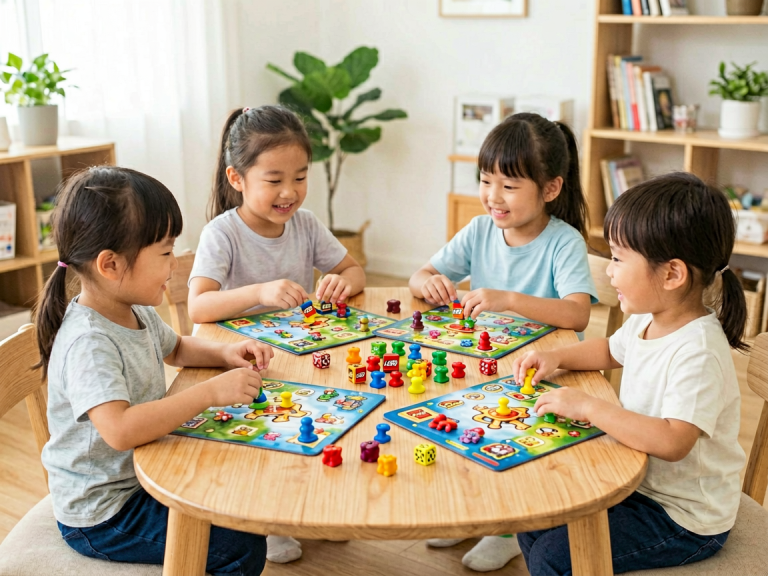
While building alone can be meditative, 4‑year‑olds are increasingly drawn to parallel and cooperative play. A pile of blocks in a preschool classroom quickly becomes a social hub. Two children might decide to build a castle together, and immediately they must negotiate: who places the next block? What color should the roof be? Whose turn is it to add the tower? Such interactions are rich with language development and emotional regulation. Children learn to express their ideas clearly, to listen to another’s perspective, and to compromise when their visions clash.
Conflict is inevitable, and building toys provide a safe arena for it. When a child accidentally knocks over a friend’s creation, the resulting feelings of frustration and guilt must be managed. With adult guidance, these moments become lessons in empathy and repair. The act of helping to rebuild a fallen structure can be a profound gesture of reconciliation. Through repeated social play with building toys, 4‑year‑olds develop the foundational skills of collaboration, turn‑taking, and patience that will serve them throughout life.
Emotionally, building toys offer a unique sense of agency. A 4‑year‑old’s world is largely controlled by adults—what to eat, when to sleep, where to go. But with a set of blocks, the child is the architect, the engineer, and the ruler. He decides if the tower stands or falls. This autonomy builds self‑confidence and a sense of mastery. When a child announces, “Look what I made!” the pride is genuine and deeply felt. Such moments contribute to a positive self‑image and a willingness to tackle new challenges.
Safety Considerations for 4‑Year‑Old Builders
Choosing safe building toys for 4‑year‑olds goes beyond checking the age label. At this age, children are past the stage of putting everything in their mouths, but they are still impulsive and may not always think before they act. Small pieces that can be swallowed or lodged in nostrils remain a hazard. The general rule of thumb is that any component should be larger than 1.25 inches (3.2 cm) in diameter to avoid choking risks. Many reputable brands, such as LEGO Duplo, Megabloks First Builders, and Magna‑Tiles, adhere to this standard.
Materials matter too. Look for toys made from non‑toxic, BPA‑free plastics or sustainably sourced, splinter‑free wood. Paints and finishes should be lead‑free and non‑peeling. Avoid sets with sharp edges, hinges that can pinch small fingers, or magnets that are loose and could be swallowed—although magnetic building tiles (like Magna‑Tiles) are generally safe when the magnets are securely encased in thick plastic. Also consider the weight: oversized blocks that are too heavy could cause injury if dropped on a foot or used as a projectile during excited play.
Finally, think about noise and durability. Some building toys include electronic components or sound effects that may be overstimulating for a 4‑year‑old. Simple, quiet materials often encourage deeper concentration. Check that pieces fit together snugly but not so tightly that a child cannot separate them without frustration. The goal is a toy that empowers, not one that frustrates or poses hidden risks.
Top Recommended Building Toys for This Age Group
With countless options on the market, it helps to categorize the best building toys for 4‑year‑olds based on their unique benefits.
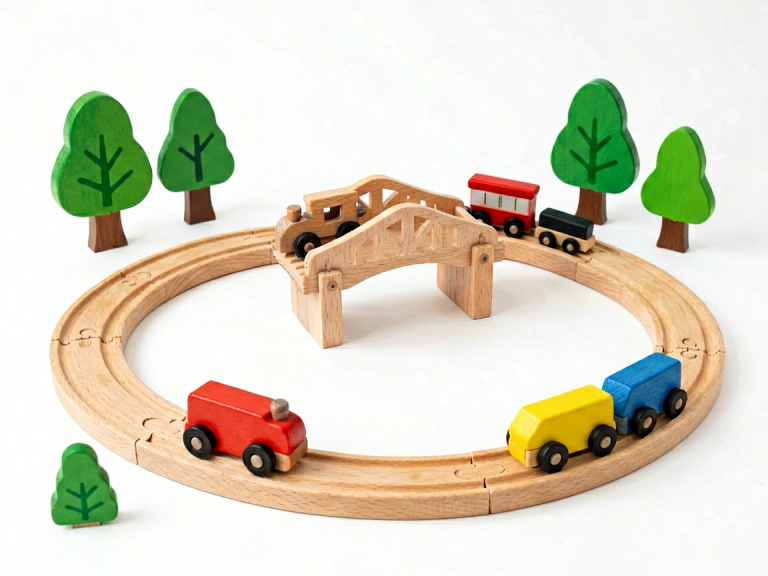
*Classic Wooden Blocks* remain a timeless choice. Sets of 50–100 blocks in various sizes, shapes, and colors allow for open‑ended construction. Wooden blocks are durable, stack well, and produce a satisfying solid sound. They encourage balance and symmetry and are easy for small hands to grasp. Brands like Melissa & Doug and Hape offer excellent sets.
*Large Interlocking Bricks* such as LEGO Duplo or Mega Bloks are designed specifically for toddlers and preschoolers. Their larger size prevents choking, and the stud‑and‑tube connection is forgiving. Themed sets (e.g., farm, fire station, zoo) can spark narrative play, while basic buckets of assorted bricks let creativity run free. Duplo’s compatibility with standard LEGO means the toys can grow with the child.
*Magnetic Building Tiles* (e.g., Magna‑Tiles, PicassoTiles) have become hugely popular, and for good reason. The strong magnets allow children to build 3D structures—cubes, pyramids, castles—that would be impossible with blocks alone. The translucent, colorful tile shapes also teach about geometry and light. Building with magnets is especially satisfying because pieces click together easily, reducing frustration.
*Plastic Linking Toys* like Plus‑Plus, K’Nex for kids (large pieces), or Stickle Bricks offer a different tactile experience. These toys connect through pressure or interlocking notches rather than stacking. They are excellent for developing grip strength and for creating flexible structures such as animals, wheels, and figures.
*Cardboard Brick Alternatives* such as the popular Cardboard Construction Kit or simple jumbo cardboard blocks provide a lightweight, inexpensive option. They are especially good for large‑scale building and dramatic play, like constructing a “house” big enough to crawl inside.
How Parents Can Facilitate Meaningful Play
Owning building toys is only half the equation; what happens during play matters just as much. Parents and caregivers can enhance the experience by adopting a few simple strategies. First, resist the urge to direct the play. Instead of saying, “Let’s build a castle,” try saying, “I wonder what you could make with these blocks today.” Let the child lead. When a child invites you to join, follow their plan rather than imposing yours. This preserves their sense of ownership and creative freedom.
Second, ask open‑ended questions that stretch thinking. “What would happen if you put a bigger block on top?” or “How can we make this bridge stronger?” or “Why do you think your tower fell down?” These prompts encourage reflection and problem‑solving without giving away the answer. They also model language that the child can internalize.
Third, create a dedicated building space—a low table, a floor mat, or a corner of the room—where constructions can be left standing for days. 4‑year‑olds often return to a building project over multiple sessions, adding details or modifying the design. Allowing a structure to stay up validates their effort and invites ongoing exploration.
Finally, rotate the building toys periodically. Children can lose interest when the same set is available every day. Every few weeks, pack away one type of building toy and bring out another. The novelty re‑engages their curiosity and pushes them to adapt to different physical properties—wood versus plastic versus magnetic.
Conclusion
Building toys for 4‑year‑olds are far more than mere distractions. They are laboratories for the mind, rehearsal spaces for social skills, and canvases for the imagination. Through stacking, connecting, and constructing, a child develops spatial reasoning, fine motor control, problem‑solving, and emotional resilience. With careful selection and thoughtful adult involvement, these deceptively simple toys can lay a foundation for lifelong learning and creativity. So the next time you see a 4‑year‑old deeply absorbed in building a wobbly tower or a sprawling city, remember: you are witnessing architecture of the most important kind—the architecture of a growing mind. Provide the blocks, step back, and watch the future take shape.