The Ultimate Guide to the Best Toys for 5-Year-Olds: Fostering Growth, Creativity, and Joy
Introduction
At the age of five, children stand at a remarkable crossroads of development. They have outgrown the simple cause-and-effect toys of toddlerhood, yet they are not quite ready for the complex rules and abstract thinking required by older children’s games. This is a golden age of imagination, language explosion, social awareness, and fine-motor refinement. The best toys for 5-year-olds are not merely distractions; they are tools that scaffold cognitive growth, emotional regulation, physical coordination, and social skills. Choosing the right toy can mean the difference between passive entertainment and active, meaningful play. This article explores the top categories of toys for this age group, backed by developmental psychology and practical parenting insights, to help you make informed decisions that will delight your child while supporting their journey toward school readiness and lifelong learning.
## 1. Building and Construction Sets: The Foundations of Cognitive Flexibility
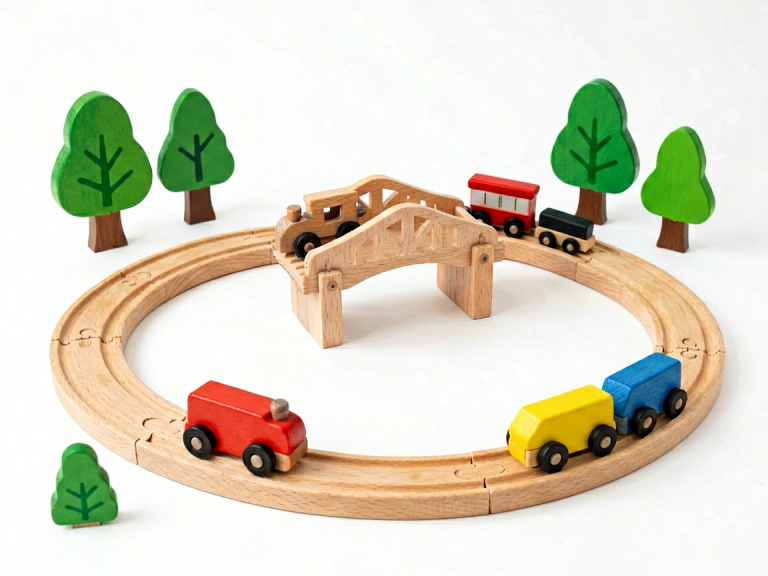
Construction toys remain a cornerstone of play at age five, but the complexity should now increase. Basic Duplo blocks may give way to more intricate systems like LEGO Classic sets or magnetic tiles such as Magna-Tiles. These toys encourage spatial reasoning, planning, and problem-solving. A five-year-old can follow simple step-by-step instructions to build a house or a vehicle, but they also derive immense satisfaction from free-form creation. The open-ended nature of building sets fosters creativity and resilience: when a tower collapses, the child learns to troubleshoot and try again. Moreover, construction play is inherently mathematical. Counting bricks, sorting by color or shape, and understanding symmetry and balance lay the groundwork for later STEM learning. I recommend sets that include wheels, hinges, and connectors to allow moving parts, as this adds an extra layer of cause-and-effect exploration. For example, the LEGO Classic Creative Bricks set (11005) or the Magnetic Tiles 100-piece set are excellent choices that will grow with the child.
## 2. Art and Craft Supplies: Unleashing Self-Expression and Fine Motor Skills
Five-year-olds are natural artists. Their drawings become more recognizable, their color choices more deliberate, and their desire to “make something real” intensifies. The best toys in this category go beyond crayons and coloring books. Consider washable markers, watercolor sets, safety scissors, glue sticks, and a variety of papers, stickers, and found objects like googly eyes and pom-poms. Craft kits that involve threading beads, making friendship bracelets, or creating simple mosaics help refine the pincer grasp needed for handwriting. More importantly, art allows children to express emotions they may not yet have the vocabulary for. A child who draws a thunderstorm after a frustrating day is processing feelings in a healthy way. Parents should look for non-toxic, easily washable materials, and resist the urge to correct or direct the child’s artwork. The process, not the product, is what matters. For a structured yet open-ended option, the “Crayola Inspiration Art Case” or “Melissa & Doug Reusable Sticker Pads” offer hours of creative engagement.
## 3. Role-Play and Pretend Play Sets: Nurturing Social and Emotional Intelligence
Imaginative play reaches its peak around age five. Children love to imitate the adult world—cooking in a play kitchen, caring for dolls, or pretending to be doctors, firefighters, or astronauts. These activities are not just fun; they are essential for developing empathy, language skills, and social negotiation. When two children play “house,” they must agree on who is the parent, who is the child, what the scenario is, and how to resolve conflicts when they arise. The best toys for this kind of play are open-ended and realistic enough to spark the imagination but not so detailed that they dictate a single story. A simple dollhouse, a set of plastic food and dishes, a doctor’s kit with a stethoscope and bandages, or a tool bench with safe wooden tools all work wonderfully. Dress-up clothes are another superb investment—think capes, hats, scrubs, and simple costumes. These props allow children to explore different identities and practice social scripts, which builds confidence for real-world interactions such as starting school or making new friends.
## 4. Board Games and Cooperative Games: Teaching Rules, Patience, and Teamwork
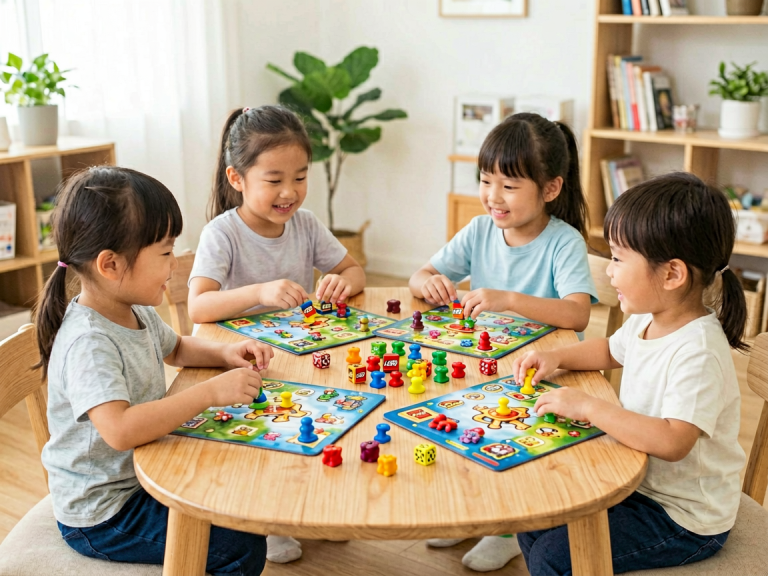
By age five, many children can grasp simple game mechanics: taking turns, following rules, and accepting wins and losses gracefully—though the last skill often requires patient coaching. Board games are fantastic for family bonding and cognitive development. Games like “The Sneaky, Snacky Squirrel Game” (which involves fine-motor skills and color matching), “Hoot Owl Hoot!” (a cooperative game where everyone wins together), or “Memory” matching games strengthen working memory, concentration, and strategic thinking. Cooperative games are especially valuable for this age because they eliminate the pressure of competition and emphasize teamwork. When children work together to help the owls fly back to their nest before the sun rises, they learn that collaboration is rewarding. Games also teach early math concepts—counting spaces on a board, recognizing numbers on dice, and adding simple sums. Look for games with large, sturdy pieces and bright, engaging artwork. Avoid games with overly complex rules or long playtimes; 15–20 minutes is ideal for a five-year-old’s attention span.
## 5. Outdoor and Active Play Toys: Supporting Gross Motor Development
Physical activity is crucial at age five, as children refine their gross motor skills through running, jumping, climbing, and balancing. The best outdoor toys encourage movement while also fostering imagination. A sturdy tricycle or balance bike (if they are not yet ready for a pedal bike with training wheels) builds leg strength and coordination. A simple playground ball for games like catch or kickball develops hand-eye coordination and spatial awareness. Kites, bubbles, and sidewalk chalk offer low-tech but high-engagement options. For backyard fun, a small plastic slide, a tunnel, or a set of stepping stones can turn ordinary play into an obstacle course. Sandboxes or water tables provide sensory-rich experiences that combine motor skills with scientific exploration—digging, pouring, measuring, and building. Importantly, outdoor play also promotes risk-taking in a safe environment, teaching children to assess their own physical limits. Parents should ensure that toys are age-appropriate and that play areas are free of hazards. A simple jump rope or a set of beanbags for tossing games can also be excellent for indoor active play on rainy days.
## 6. Educational and STEM Toys: Making Learning Irresistible
Five-year-olds are naturally curious about how the world works. They ask endless “why” questions and love to experiment. STEM (Science, Technology, Engineering, and Math) toys designed for this age harness that curiosity in a playful way. Consider simple science kits—like a bug viewer or a magnet set—that allow children to observe and classify. Coding toys for preschoolers, such as the “Learning Resources Botley the Coding Robot” or “Code-a-Pillar,” teach basic logic and sequencing without requiring screen time. Puzzles with 48 to 100 pieces also belong in this category; they develop pattern recognition and patience. Another excellent choice is a simple microscope that can examine leaves, coins, or fabric. The key is to choose toys that are hands-on and discovery-based rather than passive. Avoid toys that claim to “teach” but rely on flashy lights and sounds without requiring active engagement. A set of counting bears with sorting cups, for instance, is far more effective than a tablet app with the same concept because it involves tactile manipulation and real-world problem-solving.
## 7. Musical Instruments and Sound Toys: Cultivating Rhythm and Auditory Skills
Music is a powerful tool for brain development, and five-year-olds love to make noise—purposefully. Simple instruments like a tambourine, maracas, a xylophone, or a small drum kit allow children to experiment with rhythm, volume, and pitch. Playing music together helps with coordination (keeping a beat while moving) and auditory discrimination (differentiating high and low notes). For a more structured approach, consider a child-friendly ukulele or a recorder, though these require some adult guidance. There are also excellent electronic keyboards designed for young children that have light-up keys and built-in songs. The social aspect is important too: a family sing-along with simple instruments builds bonding and confidence. Even a set of shaker eggs or a rainstick can provide soothing sensory input. Look for instruments that are durable and have a pleasant sound—cheap plastic ones that are out of tune can be discouraging. Brands like Hape and PlanToys make high-quality wooden instruments that last.
## 8. Considerations for Safety and Longevity
While choosing the best toys for a five-year-old, safety remains paramount. At this age, children still put small objects in their mouths occasionally, so avoid toys with small parts that could be choking hazards unless you are certain your child is beyond that stage. Check for sharp edges, toxic paints, and loose magnets that could be swallowed. Look for labels like ASTM (American Society for Testing and Materials) or CE (Conformité Européenne) certification. Batteries should be secured with screws. Also consider the toy’s longevity. A toy that can be used in multiple ways—like building blocks or art supplies—will hold a child’s interest longer than a single-purpose novelty item. Think about whether the toy encourages solo play, cooperative play, or both, and try to maintain a balance across categories. Finally, involve your child in the selection process when appropriate. A five-year-old who picks out a toy is more likely to engage deeply with it.
Conclusion
The best toys for 5-year-olds are those that respect the child’s growing abilities and innate desire to learn through play. From construction sets that build spatial intelligence to art supplies that unlock creativity, from role-play kits that nurture empathy to board games that teach patience, each category serves a unique developmental purpose. Outdoor toys keep bodies active, STEM toys ignite scientific curiosity, and musical instruments enrich the soul. But perhaps the most important quality of any great toy is that it invites the child to lead the play. The toy is a partner, not a teacher. When you watch a five-year-old lost in a world of their own making—whether balancing a tower of blocks, painting a purple dinosaur, or negotiating who gets to be the captain of the pretend spaceship—you are witnessing the purest form of growth. Choose wisely, play along, and let the adventure unfold.
*(Word count: approximately 1,450 words)*