Essential Tips for Choosing Open-Ended Toys That Foster Creativity
In a world saturated with flashing lights, pre-programmed sounds, and single-purpose playthings, the quiet power of open-ended toys is often overlooked. Yet parents, educators, and child development experts increasingly agree that the best toys are not those that do the most, but those that allow children to do the most. Open-ended toys—like wooden blocks, art supplies, loose parts, and simple dolls—have no fixed outcome or prescribed way of playing. A cardboard box can become a spaceship, a castle, or a time machine depending on the child's imagination. Choosing such toys wisely, however, requires more than just picking up any plain-looking item off the shelf. The following tips will help you curate a play environment that encourages creativity, problem-solving, and deep engagement for years to come.
1. Prioritize Simplicity and Versatility
The most powerful open-ended toys are often the simplest. A set of plain wooden blocks, for example, can be stacked, sorted, counted, balanced, or used as pretend food, furniture, or building materials. Unlike a battery-operated toy that performs one function (say, a talking robot that repeats three phrases), blocks invite endless variation. When selecting toys, ask yourself: “How many different ways can my child use this?” If the answer is only one or two, it is likely too restrictive. Look for toys that can be combined with other items—a set of scarves, for instance, can serve as capes, rivers, roofs, or wrapping paper. Versatility extends to scale: a small collection of open-ended toys can often replace a mountain of single-purpose gadgets, saving money and reducing clutter.
2. Look for Natural Materials and Timeless Design
Plastic is durable, but it often lacks the tactile richness that invites exploration. Wood, cotton, wool, metal, stone, and other natural materials offer varied textures, weights, and temperatures that engage a child’s senses. A smooth wooden block feels different from a rough stone; a silk scarf drapes differently than a plastic cape. These sensory differences are not merely aesthetic—they support brain development by providing nuanced input. Moreover, toys made from natural materials tend to have a timeless, understated design that doesn’t lock a child into a specific theme. A plastic dump truck from a popular cartoon franchise screams “I am a dump truck; play with me only as a dump truck.” A simple wooden wagon, on the other hand, can be a dump truck, a grocery cart, a pet carrier, or a treasure chest. When shopping, pass over toys that are heavily branded or designed to mimic adult electronics. Instead, choose pieces that feel like they could have come from any era—objects that hold a quiet, open-ended invitation.
3. Consider Age-Appropriate Challenges
Open-ended does not mean “anything goes at any age.” The developmental stage of your child should guide your choices. For infants and toddlers, look for toys that are safe, large enough to prevent choking, and focused on sensory exploration: chunky wooden rings, fabric balls, rattles without loud noises. These early toys need to be simple—a baby can shake, mouth, and drop them. As children enter the preschool years, introduce toys that encourage building, sorting, and pretend play: unit blocks, simple animal figurines, play silks, and wooden food sets. School-age children benefit from more complex open-ended materials, such as marble runs, construction sets with loose pieces (like planks or magnetic tiles), craft supplies, and scientific exploration kits that emphasize experimentation rather than following a script. The key is to match the toy’s inherent challenge level to the child’s current abilities—too easy, and they lose interest; too hard, and they become frustrated. A well-chosen open-ended toy will grow with the child, offering new challenges as their skills expand.
4. Encourage Multi-Sensory Exploration
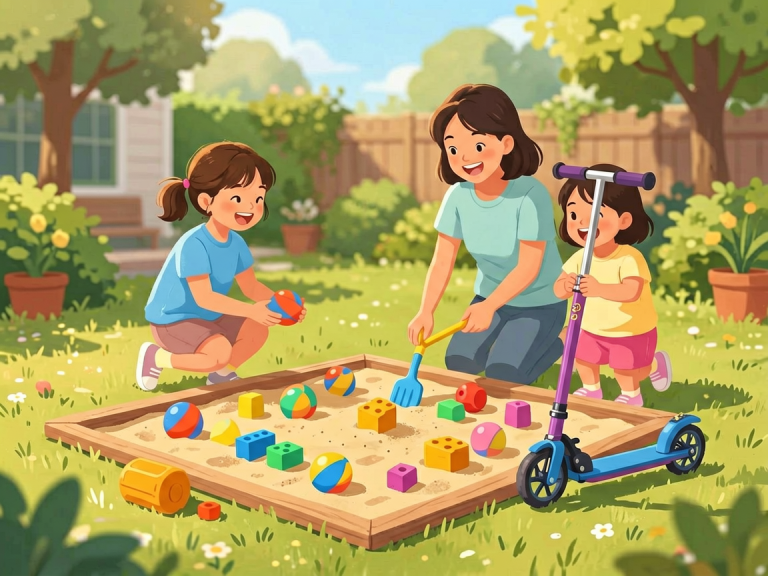
Children learn through their senses, and open-ended toys are uniquely positioned to stimulate multiple senses simultaneously. When choosing toys, think beyond sight and sound. Does the toy invite touch? Smell? Movement? A set of scoops, funnels, and bowls for water or sand play engages tactile, visual, and even auditory senses. Playdough or modeling clay provides strong olfactory and tactile feedback. Musical instruments like drums, shakers, and xylophones (especially those made from wood or metal) allow children to create their own sounds rather than pressing a button. Even a collection of fabric scraps—velvet, burlap, fleece, satin—can become a sensory treasure box. The more senses a toy involves, the deeper the neural connections formed during play. Avoid toys that are primarily visual (many electronic toys flash lights but offer little else); instead, choose those that beg to be manipulated, heard, smelled, and felt. Remember that open-ended play often combines items: blocks and scarves together can transform a sensory experience into a full narrative scene.
5. Focus on Process Over Product
One of the biggest mistakes parents make when buying toys is seeking a “finished product.” A puzzle that reveals a picture when completed, a kit that makes a specific model, or a toy that says “good job!” after a certain action—these all emphasize an end result. Open-ended toys, by contrast, celebrate the process. A set of magnetic tiles has no predetermined final shape; the joy comes from experimenting, failing, rearranging, and trying again. When shopping, ask yourself whether the toy’s primary value is in the journey or the destination. Avoid toys that “teach” a single skill in a repetitive way (like a shape sorter that only works one way) and gravitate toward those that allow for multiple processes: combining, separating, stacking, sorting, pouring, draping, connecting, and disconnecting. Even art supplies should be chosen with process in mind—watercolors, clay, and collage materials allow for endless reworking, whereas coloring books with pre-drawn lines restrict creativity. The best open-ended toys generate more questions than answers: “What if I put this block here? What happens if I pour water slowly? How can I make this scarf into a tent?”
6. Observe Your Child’s Interests and Play Patterns
No list of tips can replace the wisdom that comes from watching your own child. Before buying any new toy, spend time observing how your child plays with what they already have. Do they love building towers? Then a set of simple wooden blocks or interlocking planks is a better choice than a complicated construction set with many specialized pieces. Are they drawn to dramatic play with living creatures? Consider animal figurines, felt play mats, or miniature barns—but avoid sets that come with a fixed storybook or scenario. Do they enjoy organizing or sorting? Loose parts like buttons, shells, beads, or pebbles (supervised for safety) can provide endless categorization possibilities. Notice whether your child tends to play alone or with others; open-ended toys that are highly individual might not work well for a social child who loves shared narratives. By aligning your purchases with your child's natural inclinations, you avoid the trap of buying “educational” toys that sit untouched. A well-chosen open-ended toy should feel like a natural extension of your child’s existing play world.
7. Quality Over Quantity
Finally, remember that open-ended toys work best when there are not too many of them. Overwhelming a playroom with dozens of toys—even if all are open-ended—can lead to scattered attention and shallow play. Instead, curate a small, high-quality collection. Look for pieces that are durable enough to withstand years of use, easy to clean, and safe. Join pieces that can be added to over time (such as unit blocks that are compatible with standard sets, or magnetic tiles that are universally sized). Avoid trendy open-ended toys that are poorly made or made from flimsy plastic—they will break quickly and frustrate the child. When possible, purchase from reputable brands that use sustainable materials, or explore thrift stores and yard sales for vintage wooden toys that have stood the test of time. A smaller, well-chosen collection encourages deeper engagement: children revisit the same blocks, scarves, and figures, inventing new uses each time rather than flitting from one novelty to the next. Quality also means considering the toy’s potential for open-endedness across contexts—a set of plain wooden people can become a family, a classroom, an army, or a crowd, whereas character-specific dolls are locked into their roles.
Conclusion
Choosing open-ended toys is not about following a trend or purchasing the most expensive items in a boutique catalog. It is a mindful practice that honors a child’s innate drive to explore, create, and make meaning. By prioritizing simplicity, natural materials, sensory richness, and process-oriented play, you provide your child with tools that spark endless imagination. By observing their unique interests and limiting the sheer number of toys, you create an environment where deep, sustained play can flourish. The next time you reach for a toy, ask yourself not “Will my child like this?” but “How many ways will my child find to love this?” In that question lies the heart of open-ended play—and the key to raising a creative, confident, and curious child. The best toys are not the ones that entertain; they are the ones that empower. And with these tips in hand, you are well on your way to making choices that will nourish your child’s imagination for years to come.