The Ultimate Guide to Choosing Open-Ended Toys: Unlocking Your Child’s Creative Potential
In a world overflowing with flashing lights, pre-recorded sounds, and single‑function gadgets, it’s easy to fall into the trap of buying toys that do everything *for* your child. Yet child development experts consistently sing the praises of a very different kind of plaything: the open‑ended toy. These simple, versatile objects—a set of wooden blocks, a pile of colorful scarves, a tub of modeling clay—hold no rigid instructions. They invite children to imagine, experiment, and create their own rules. Choosing the right open‑ended toys, however, requires more than just picking the first “educational” label off the shelf. This guide will walk you through the what, why, and how of selecting open‑ended toys that will truly spark your child’s creativity and support their development for years to come.
—
What Exactly Are Open‑Ended Toys?
At its core, an open‑ended toy is one that has no predetermined outcome. Unlike a battery‑operated robot that only beeps when you press a specific button, or a puzzle that has exactly one correct solution, an open‑ended toy can be used in countless ways. A set of unit blocks, for example, can become a castle one day, a spaceship the next, and a simple balance scale the day after that. There is no “wrong” way to play.
Key characteristics of open‑ended toys include:
- Simplicity – They are typically low‑tech, relying on the child’s imagination rather than on batteries or screens.
- Versatility – The same toy can be used for different types of play (constructive, pretend, sensory, etc.).
- Longevity – They grow with the child. A one‑year‑old might stack blocks; a five‑year‑old might build intricate structures; an eight‑year‑old might incorporate them into complex storylines.
- Process‑oriented – The value lies in the act of playing, not in achieving a specific finished product.
Think of open‑ended toys as the “blank canvas” of the toy world. They provide the raw materials; the child provides the creativity.
—
Why Choose Open‑Ended Toys? The Brain‑Building Benefits
The appeal of open‑ended toys goes far beyond nostalgia. Decades of research in child development and neuroscience reveal that these types of playsets offer profound benefits that single‑purpose toys simply cannot match.
1. Unlocking Creativity and Imagination
When a toy has no fixed instructions, children are forced to invent their own narratives. This process strengthens the prefrontal cortex—the part of the brain responsible for executive functions like planning, problem‑solving, and flexible thinking. A child who turns a cardboard box into a pirate ship is learning to think divergently, a skill that predicts later success in fields from art to engineering.
2. Developing Problem‑Solving Skills
Open‑ended play is inherently experimental. A child trying to build a tower that won’t topple over learns about balance, gravity, and cause and effect through trial and error. Because there is no single “right answer,” children become comfortable with ambiguity and persistent effort—key ingredients for resilience.
3. Fostering Language and Social Skills
When children play together with open‑ended toys, they must negotiate roles, share materials, and co‑create stories. “You be the dragon, and I’ll be the knight, and this block is our magic shield.” This kind of dialogue builds vocabulary, turn‑taking, and emotional regulation. Even solo play encourages self‑talk, which is critical for internalizing language.
4. Supporting Sensory and Motor Development
Many open‑ended toys involve rich sensory experiences: the texture of playdough, the weight of wooden blocks, the sound of sand pouring through a funnel. Manipulating these materials strengthens fine motor skills, hand‑eye coordination, and body awareness. For younger children, these sensory inputs are the foundation of cognitive development.
5. Encouraging Independence and Focus
Because open‑ended play is self‑directed, children learn to engage deeply without external rewards or adult intervention. They practice sustained attention and intrinsic motivation—qualities that are increasingly rare in our fast‑paced, screen‑filled world.
—
How to Choose the Best Open‑Ended Toys: A Practical Guide
Not all “open‑ended” toys are created equal, and choosing wisely can save you money, clutter, and frustration. Here are the key factors to consider when building an open‑ended toy collection for your child.
Consider Your Child’s Age and Developmental Stage
Open‑ended toys should challenge without overwhelming. The best choice depends on where your child is developmentally.
- Infants (0–12 months): Look for safe, mouthable objects that offer sensory exploration. Examples: silicone teething rings, crinkle fabric squares, wooden grasping toys, soft cloth balls. Avoid small parts that pose choking hazards.
- Toddlers (1–3 years): Children at this age love dumping, filling, and stacking. Good choices: large wooden blocks, nesting cups, simple shape sorters (where the shape can go into any hole, not just the correct one), play scarves, and sensory bins with rice or water.
- Preschoolers (3–5 years): Imagination soars. This is the golden age for pretend play. Consider: unit blocks, magnetic tiles, dollhouse furnishings (plain wooden figures that don’t have fixed expressions), play silks, modeling clay, and loose parts like buttons, corks, and shells (with supervision).
- School‑age (6+ years): Children can handle more complexity and abstraction. Open‑ended supplies like LEGO Classic boxes (not themed sets), marble runs, K’NEX, origami paper, sewing kits, and high‑quality art materials (watercolors, clay, pastels) foster advanced problem‑solving and creative expression.
Prioritize Quality and Safety
Open‑ended toys are often used for years, so invest in durable materials. Look for:
- Solid wood (not particleboard) with a smooth finish and non‑toxic paint.
- Food‑grade silicone, organic cotton, or natural rubber for infant toys.
- BPA‑free, phthalate‑free plastics if you choose plastic.
- Certifications like ASTM (American Society for Testing and Materials) or CE marking for European safety standards.
Avoid toys with sharp edges, small parts that could detach, or strong chemical smells. Cheap plastic toys may break easily, creating hazards and frustration.
Focus on Versatility, Not Novelty
A toy that can be used in multiple ways offers more play value. For example:
- A set of plain wooden figures (without painted faces or costumes) can be people, animals, or monsters in any story. A pre‑painted superhero figure, on the other hand, encourages only one type of play.
- Magnetic tiles can be used for 2‑D patterning, 3‑D building, light experiments, and even as a counting tool.
- Play silks (large squares of lightweight fabric) can be capes, water, roofs, wrapping paper, or picnic blankets.
Match the Toy to Your Child’s Interests (But Leave Room for Surprise)
If your child loves dinosaurs, a set of open‑ended dinosaur figures (without pre‑programmed sounds) is a better investment than a specific board game. However, don’t be afraid to offer something completely new, like a set of rainbow‑colored translucent blocks or a tray of kinetic sand. Children often surprise us with what captures their attention.
Consider Storage and Space
Open‑ended toys often come with many loose parts. Before buying, think about where you will store them. Clear, low‑level bins with labels (or pictures for non‑readers) help children access and clean up independently. Avoid buying too many sets at once; rotation is key. Keeping only 4–5 types of open‑ended materials available at a time prevents overwhelm and encourages deeper engagement.
Beware of the “Open‑Ended” Marketing Trap
Many toys claim to be open‑ended but are actually designed to be used in a limited way. For example, a “building set” that only allows you to construct one specific model (like the Eiffel Tower) is not truly open‑ended. Read reviews and look at product photos carefully. The true test: can a child use this toy in a way the manufacturer didn’t imagine? If not, it’s probably a closed‑ended toy in disguise.
—
Top Open‑Ended Toy Recommendations That Stand the Test of Time
While every family’s needs are different, the following classics have earned their place in homes and classrooms around the world. Consider starting with two or three from this list, then adding slowly based on your child’s evolving interests.
1. Unit Blocks (Wooden or Magnetic)
The gold standard of open‑ended construction. A basic set of unpainted wooden blocks (in various shapes and sizes) can support countless architectural, geometric, and storytelling projects. Magnetic tiles (like Magna‑Tiles or PicassoTiles) offer a modern twist, allowing 3‑D structures that stay upright more easily.
2. Loose Parts Play Kit
Loose parts are any collection of small, open‑ended materials that children can sort, stack, line up, and combine. Think: wooden rings, glass gems, corks, bottle caps, short lengths of ribbon, pinecones, seashells, or large buttons. For safety, avoid anything small enough to fit in a child’s mouth until the child is past the mouthing stage (usually after age 3).
3. Play Silks and Scarves
Impossibly light and vibrant, play silks are a staple of Waldorf education. They can be used for dress‑up, building enclosures, representing water or sky, or simply waving in the air to explore movement. A set of six to eight scarves in different colors offers endless possibilities.
4. Modeling Clay or Playdough
Squishing, rolling, cutting, and shaping clay engages fine motor skills and creativity. Choose non‑toxic, unscented clay that doesn’t crumble easily. Add simple tools like wooden rolling pins, plastic knives, and cookie cutters (but avoid themed shape cutters that dictate a specific outcome—plain circles and squares are better).
5. Simple Art Supplies
A set of high‑quality watercolors, thick drawing paper, oil pastels, and child‑safe scissors encourages process art. Unlike coloring books, which have outlines to stay inside, process art supplies give children total freedom. A glue stick and a tray of paper scraps (torn from old magazines) can become collage masterpieces.
6. Dollhouse with Minimal Furniture
A plain wooden dollhouse (or even a simple set of shelves) is an invitation for story creation. Avoid houses filled with tiny plastic accessories. Instead, provide a few simple wooden chairs, a bed, and a family of plain peg dolls. Children will invent their own furniture from blocks or fabric.
7. Water Play and Sand Play Tools
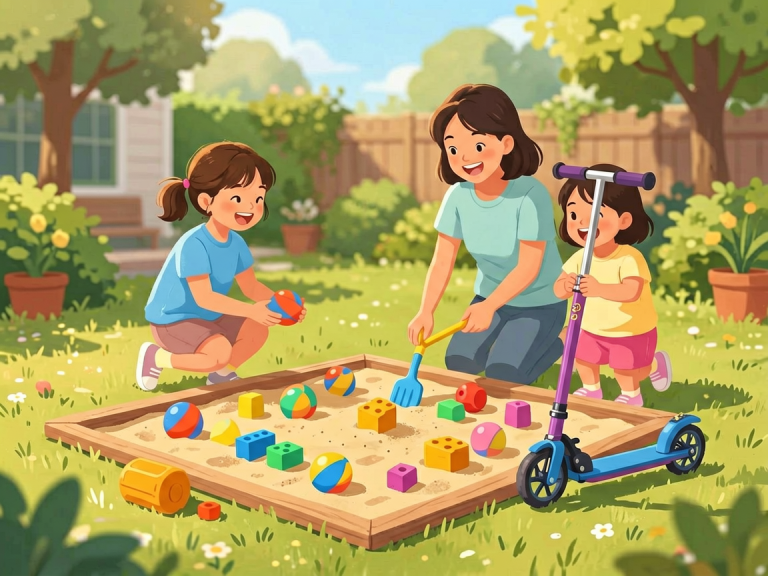
A basin of water with cups, scoops, funnels, and tubes is a science lab in disguise. Similarly, a sandbox or a tray of kinetic sand combined with small shovels, sieves, and rakes offers hours of sensory exploration. These toys teach volume, gravity, and cause‑and‑effect naturally.
—
Tips for Encouraging Open‑Ended Play at Home
Even the best open‑ended toys won’t come alive if the environment doesn’t support playful exploration. Here’s how to foster a culture of open‑ended play in your home.
1. Let Your Child Lead
Resist the urge to show them the “right” way to use a toy. If your child is stacking blocks sideways or using a scarf to mop the floor, let them. Your job is to observe, not instruct. Asking open‑ended questions like “What does your structure do?” or “Tell me about your story” can deepen their engagement.
2. Create a Play‑Inviting Space
Designate a low shelf or a basket where open‑ended toys are always accessible. Keep the area tidy but not sterile—a few items carefully arranged invites play, while a chaotic pile can overwhelm. Rotate toys every few weeks to maintain novelty.
3. Limit Screen Time and Passive Entertainment
When children are used to being entertained by screens, they may initially struggle to engage with open‑ended toys. Be patient. Provide a dedicated “unplugged” time each day, and model unstructured play yourself. Sit on the floor and build alongside them without directing.
4. Embrace Mess and Imperfection
Open‑ended play is often messy—playdough crumbs, block towers that fall, scarves strewn everywhere. Accept this as part of the process. Keep a small broom and dustpan nearby, and involve your child in cleaning up as part of the play routine. The mess is a sign of active learning.
5. Pair Open‑Ended Toys with Open‑Ended Books
Books without words, or those that invite imagination (like *The Adventures of Harold and the Purple Crayon* or *Where the Wild Things Are*), complement open‑ended play. After reading, children often recreate scenes using their toys. This cross‑pollination between stories and play deepens comprehension and creativity.
—
Common Pitfalls to Avoid
Choosing open‑ended toys is a journey, and even experienced parents make mistakes. Here are a few pitfalls to sidestep.
- Over‑buying – Having too many toys, even open‑ended ones, can lead to a scattered mind. Less is truly more. Start with three to five different types and add only when your child shows sustained interest in a new area.
- Ignoring the child’s current passion – If your child is obsessed with trains, buying a set of magnetic tiles might not capture their interest right away. Better to offer a few wooden train tracks (which are fairly open‑ended) alongside a few loose parts that can become cargo or passengers.
- Treating open‑ended toys as “educational” in a rigid way – The moment you say, “Let’s learn math with these blocks,” you risk turning play into a chore. Trust that learning happens naturally. Your child will discover counting, symmetry, and fractions simply by building and sorting.
- Forgetting about the adult’s role – Open‑ended play doesn’t mean the adult is absent. You can be a co‑player who follows the child’s lead, or a “stage manager” who quietly adds a new element (a basket of ribbons, a mirror) to spark new ideas. Your presence and attention are the most important “toys” of all.
—
Conclusion: Invest in the Toy That Grows with Your Child
Choosing open‑ended toys is not about following a trend or buying the most expensive brand. It’s a philosophy of respect for childhood—a belief that children are competent, creative beings who thrive when given the freedom to explore without a script. The simple wooden blocks on your shelf today might be the foundation of an engineer’s first building, a writer’s first story, or a painter’s first palette of colors tomorrow.
As you build your collection, remember that the best open‑ended toy often isn’t a toy at all: a cardboard box, a pile of leaves, a set of kitchen spoons. By opening your home to the power of open‑ended play, you are giving your child the greatest gift—a trust in their own imagination. And that trust will serve them far longer than any toy ever could.