Introduction
Title: The Transformative Power of Educational Science Toys for Kids: Building Future Innovators One Experiment at a Time
In an era where digital screens dominate children’s attention, the humble educational science toy has emerged as a quiet but powerful antidote. These are not mere playthings; they are meticulously designed tools that ignite curiosity, nurture problem-solving skills, and lay the foundation for lifelong learning. From a simple magnifying glass that reveals the hidden veins of a leaf to a sophisticated robotics kit that teaches coding logic, educational science toys bridge the gap between abstract concepts and tangible experience. This article explores the multifaceted benefits of these toys, examining how they stimulate cognitive development, foster a passion for STEM (Science, Technology, Engineering, and Mathematics), encourage hands-on experimentation, support social‑emotional growth, and guide parents in making informed choices. By the end, it will be clear that investing in educational science toys is not just about keeping children busy—it is about equipping them with the tools to understand, shape, and improve the world around them.
—
Cognitive Development: How Science Toys Stimulate Critical Thinking
At the heart of every educational science toy lies an invitation to think. Unlike passive entertainment, these toys demand active engagement. When a child assembles a simple circuit to light a bulb, they are not following rote instructions; they are hypothesizing, testing, and revising. This process mirrors the scientific method itself: observe a phenomenon, form a hypothesis, run an experiment, analyze results, and draw conclusions. Such iterative thinking strengthens neural pathways associated with logical reasoning and causal inference.
Take, for example, a classic chemistry set for elementary‑school children. Mixing baking soda and vinegar to create a volcanic eruption may seem like simple fun, but it introduces the concept of chemical reactions, the importance of precise measurements, and the idea that variables (such as temperature or concentration) can affect outcomes. As children repeat the experiment with different ratios, they inadvertently learn about the control of variables—a cornerstone of experimental design. Similarly, magnetic building sets teach spatial reasoning and the principles of attraction and repulsion. By manipulating magnetic forces, children develop an intuitive understanding of physics long before they encounter formal equations.
Moreover, educational science toys often incorporate open‑ended challenges. A kit that asks a child to build a bridge that can support a certain weight, with limited materials, forces them to consider structural integrity, weight distribution, and material properties. They must plan, fail, iterate, and eventually succeed. This resilience in the face of failure is a critical cognitive skill that transfers to academic and real‑world problem‑solving. Research in developmental psychology consistently shows that children who engage in exploratory play with structured yet flexible toys demonstrate higher levels of executive function—including working memory, inhibitory control, and cognitive flexibility—than those who rely on more passive forms of entertainment.
—
Fostering a Love for STEM from an Early Age
The seeds of a child’s future career in science, technology, engineering, or mathematics are often planted during formative years through playful exposure. Educational science toys demystify these fields, making them accessible, exciting, and, above all, fun. When a child builds a working model of a solar system, they are not memorizing planetary names; they are internalizing orbital mechanics, the scale of distances, and the role of gravity. Such experiences create positive associations with scientific concepts, counteracting the stereotype that STEM subjects are dry or intimidating.
Statistics from educational studies underscore this point. A longitudinal study published in the *Journal of Educational Psychology* found that children who played with science‑oriented toys at ages 4–6 were 40% more likely to express interest in science‑related careers by age 10. Furthermore, early exposure to engineering principles through toys like gears, pulleys, and levers has been linked to improved performance in mathematics and problem‑solving assessments later in school. Importantly, these toys are not gender‑specific; modern manufacturers actively design products that appeal to all children, helping to close the persistent gender gap in STEM fields.
Consider the rise of coding toys for preschoolers. Simple programmable robots that respond to color‑coded cards teach the logic of sequences, loops, and conditional commands without requiring reading skills. Children learn that instructions must be precise and in order—a foundational concept of computer science. As they grow, they can transition to block‑based programming environments and eventually to text‑based languages. By making coding tangible and immediately rewarding, these toys transform abstract computational thinking into a playground of possibility.
—
Hands‑On Learning: The Bridge Between Theory and Reality
One of the most profound advantages of educational science toys is that they anchor abstract concepts in concrete, physical experience. A textbook diagram of photosynthesis can be forgotten, but a child who grows a bean in a sealed plastic bag and watches roots and leaves emerge will retain a visceral understanding of plant biology. This hands‑on, kinesthetic learning style is particularly effective for children who struggle with traditional lecture‑based instruction. Educational psychologist Jean Piaget famously argued that children construct knowledge through interaction with their environment; science toys are the perfect medium for this constructivist process.
Take, for instance, a microscope designed for young learners. Examining a drop of pond water and discovering wriggling microorganisms transforms a textbook definition of “single‑celled organisms” into a mesmerizing reality. The child becomes a mini‑researcher, asking questions like “What are those tiny dots? Are they alive? Do they need food?” Such curiosity‑driven exploration is self‑motivating and far more memorable than passive learning. Similarly, weather stations that allow children to measure temperature, humidity, and wind speed turn meteorology into a daily experiment. They can compare their data to official forecasts and begin to understand patterns and anomalies.
Moreover, the tactile nature of assembling components—snapping together modules, mixing solutions, adjusting levers—activates multiple sensory pathways, reinforcing learning. Studies in neuroscience suggest that when children manipulate physical objects while learning, they develop richer mental models than when they merely watch a demonstration. This is why educational science toys are especially valuable in an age of screen‑based education: they provide a much‑needed counterbalance, grounding digital knowledge in physical reality. The act of turning a crank to see a mechanical bird flap its wings, or holding a prism to split sunlight into a rainbow, creates memories that are encoded both visually and kinesthetically, making the science permanent.
—
Social and Emotional Growth Through Collaborative Play
While the cognitive and academic benefits of educational science toys are often emphasized, their contributions to social and emotional development are equally significant. Many of these toys are designed for group or family play, encouraging cooperation, communication, and shared problem‑solving. When two children build a marble run together, they must negotiate design decisions, share materials, and celebrate or troubleshoot failures as a team. This collaborative dynamic nurtures essential socio‑emotional skills: empathy (understanding a peer’s perspective), patience (waiting for a turn), and resilience (bouncing back when the marble crashes).
Furthermore, the iterative nature of scientific play teaches children to manage disappointment productively. A rocket that fails to launch, a volcano that doesn’t erupt, or a robot that won’t move as programmed are not just setbacks—they are opportunities to practice emotional regulation. A child who learns to say, “Okay, that didn’t work. Let me check the instructions again,” is developing a growth mindset. This mindset, popularized by psychologist Carol Dweck, is the belief that abilities can be developed through dedication and hard work. Educational science toys, with their inherent trial‑and‑error structure, are natural incubators for such a mindset.
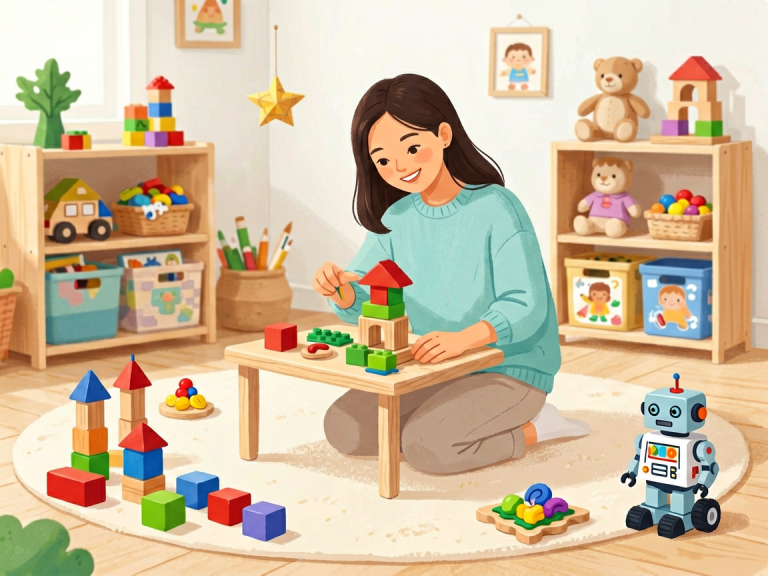
Additionally, science toys can serve as conversation starters between children and adults. A parent who sits down with a child to build a simple catapult is not just teaching physics; they are building a relationship based on shared curiosity and mutual respect. The questions a child asks during such play—"Why does the rubber band stretch? How can I make the ball go farther?"—allow adults to guide without lecturing, fostering an environment where inquiry is valued. Over time, this builds a child’s confidence in their own ability to explore complex topics, reducing anxiety about academic challenges.
—
Choosing the Right Educational Science Toys: A Guide for Parents and Educators
With a seemingly endless array of science toys on the market—from crystal‑growing kits to soldering‑free electronics—parents and educators may feel overwhelmed. However, selecting effective educational science toys does not require a degree in pedagogy; it requires a thoughtful framework. First and foremost, consider the child’s age and developmental stage. A toddler will benefit most from sensory toys that explore cause and effect, such as water tables or simple color‑mixing sets. For elementary‑aged children, kits that allow for experimentation with clear, repeatable outcomes—like a potato‑powered clock or a basic microscope—are ideal. For pre‑teens and teenagers, more complex kits involving chemistry, robotics, or astronomy can challenge and inspire.
Second, prioritize open‑endedness. Toys that offer only one “correct” result may be satisfying once, but they quickly lose their educational value. Instead, look for kits that encourage multiple approaches, modifications, or extensions. A building set with gears and axles, for example, can be used to create vehicles, windmills, or even simple automata; each project reinforces engineering principles in a new context. Similarly, coding robots that allow children to design their own mazes or challenges foster creativity far more than those with a fixed set of pre‑programmed paths.
Third, consider the balance between digital and physical elements. While some high‑tech science toys use augmented reality or app integration to enhance learning, be wary of toys that rely heavily on screen time. The best educational science toys keep the physical experimentation central, using digital elements only as a supplement—for example, an app that displays a live simulation of a circuit while the child builds it physically. Finally, involve the child in the selection process. Allowing them to choose a kit that aligns with their current interests—whether dinosaurs, space, or electricity—increases intrinsic motivation. A child who is genuinely excited about their toy will engage with it more deeply, extracting far more educational value than from a toy chosen solely by an adult.
—
Conclusion
Educational science toys for kids are far more than passing entertainment. They are protagonists in a child’s intellectual and emotional development, offering a unique blend of cognitive challenge, hands‑on discovery, and collaborative joy. By stimulating critical thinking, nurturing a lifelong passion for STEM, bridging theory and reality, and fostering social‑emotional resilience, these toys prepare children not only for academic success but for a future that demands adaptability, curiosity, and creativity. In a world that increasingly values innovation, the child who learns to ask “why” and “what if” through playful experimentation will be richly equipped to contribute. Parents and educators who invest in high‑quality, open‑ended science toys are not just buying products; they are planting seeds that will grow into confident, capable, and inspired individuals. The next great scientist, engineer, or inventor might just be the child who, today, is mesmerized by a simple chemical reaction or a spinning gear—and that is the true magic of educational science toys.