Smart Play: Essential Tips for Choosing Educational Toys That Truly Teach
Introduction
Walking into a toy store today can feel overwhelming. Shelves are packed with flashing lights, electronic sounds, and boxes claiming to “boost brain development” or “make your child a genius.” But not every toy labeled “educational” actually delivers on that promise. As a parent, educator, or caregiver, you want playtime to be both fun and meaningful—a time when children develop critical thinking, creativity, and social skills without even realizing they are learning. The key lies in knowing how to choose educational toys wisely. This guide offers practical, research-backed tips to help you select toys that truly engage young minds, support age-appropriate growth, and foster a lifelong love of learning.
—
1. Match the Toy to the Child’s Developmental Stage
The most effective educational toys are those that align with a child’s current abilities while offering just enough challenge to encourage growth. A toy that is too simple will bore the child; one that is too complex will frustrate them.
For infants (0–12 months), focus on sensory exploration. High-contrast black-and-white cards, soft rattles, and textured teething rings stimulate vision, hearing, and touch.
For toddlers (1–3 years), choose toys that promote cause-and-effect understanding and fine motor skills. Stacking blocks, shape sorters, and simple wooden puzzles are excellent. At this stage, children also benefit from toys that encourage imitation of daily activities, such as play kitchens or toy telephones.
For preschoolers (3–5 years), look for toys that nurture language, imagination, and early math concepts. Building sets, magnetic tiles, dress-up costumes, and simple board games that involve counting or matching are ideal.
For school-age children (6+), consider more complex science kits, strategy board games, coding toys, and art supplies that allow for extended projects. The goal is to keep them challenged without pushing them beyond their patience.
—
2. Focus on Skills, Not Just Entertainment
An educational toy should target one or more specific developmental areas. Before buying, ask yourself: *What will my child practice while playing?*
- Cognitive skills: Puzzles, memory games, and logic-based toys (e.g., Sudoku for kids, pattern blocks) sharpen problem-solving and critical thinking.
- Motor skills: Building bricks, lacing beads, and clay strengthen hand-eye coordination and dexterity.
- Language and literacy: Storytelling puppets, letter magnets, and rhyming card games expand vocabulary and comprehension.
- Social and emotional skills: Cooperative board games, role-playing sets, and toys that require turn-taking teach empathy, sharing, and communication.
Avoid toys that merely entertain with passive screen time or repetitive sounds. A toy that sings the alphabet once is less effective than one that encourages the child to say the letters aloud.
—
3. Prioritize Open‑Ended Play
Open-ended toys are those that can be used in multiple ways, sparking creativity rather than dictating a single outcome. Unlike a toy that only lights up when a specific button is pressed, open-ended materials allow children to invent their own rules and narratives.
Classic examples include wooden blocks, LEGO bricks, play dough, magnetic tiles, and art supplies (paper, crayons, scissors). A set of simple wooden blocks can become a castle, a spaceship, a bridge, or a farm—limited only by imagination. Research shows that open-ended play promotes flexible thinking, problem-solving, and self-expression.
While some structured toys (like puzzles) have a definite end goal, they still offer value when balanced with plenty of free-form play. The rule of thumb: choose toys that allow for different levels of complexity as the child grows.
—
4. Engage Multiple Senses
Children learn best when multiple senses are activated simultaneously. Toys that combine sight, sound, touch, and even smell or movement create richer neural connections.
Look for toys that:
- Have varied textures (smooth, rough, bumpy, soft)
- Produce different sounds (clinking, rattling, crinkling)
- Offer bright, contrasting colors or patterns
- Allow for physical manipulation (pushing, pulling, stacking, twisting)
For instance, a sensory bin filled with rice, scoops, and small plastic animals engages touch, sight, and fine motor skills. A musical xylophone combines auditory stimulation with visual patterns and motor coordination. Avoid toys that rely solely on one sense—especially passive visual stimulation from screens.
—
5. Emphasize Quality and Durability
Educational toys are often used repeatedly, sometimes for years, so construction matters. Cheap plastic toys that break easily can frustrate children and pose safety hazards (sharp edges, small parts).
Choose toys made from non-toxic, sturdy materials like solid wood, BPA-free silicone, or high-quality fabric. Check for certifications such as ASTM (American Society for Testing and Materials) or CE marking, which indicate safety standards have been met.
Durable toys also offer a better return on investment. A well-made wooden puzzle can be passed down to siblings or donated, whereas a flimsy electronic toy may stop working after a month. Additionally, consider the toy’s longevity: can it adapt as the child grows? For example, a basic set of building blocks remains useful from age 1 to 10, while a specific character-themed playset may be outgrown quickly.
—
6. Avoid Overstimulation and Complexity
In the rush to make toys “educational,” many manufacturers overload them with lights, sounds, and moving parts. This can overwhelm a child’s developing nervous system, leading to short attention spans and passive consumption rather than active exploration.
A well-designed educational toy should be simple enough that the child understands how to start playing without adult help, yet rich enough to invite deeper exploration. For instance, a set of nesting cups might look plain, but a toddler can spend twenty minutes sorting them by size, stacking them, hiding objects under them, and banging them together. Compare that to a talking robot that requires pressing the correct sequence of buttons—often a source of frustration.
When evaluating a toy, ask: *Does this toy do the thinking for the child, or does it encourage the child to do the thinking?* The best toys serve as tools, not teachers.
—
7. Involve Your Child in the Selection Process
A toy that a child chooses for themselves is more likely to hold their interest. While you should veto unsafe or entirely inappropriate options, give your child some autonomy.
Take them to a store or browse online together, and ask open-ended questions: “What do you like about this toy? What could you build with it? How would you play with your friend?” This not only builds decision-making skills but also helps you understand their current passions. A child fascinated by dinosaurs will learn more from a dinosaur excavation kit than from a generic robot.
However, beware of toys that are purely based on a popular movie or cartoon. These often offer limited replay value because the play is scripted by the media story. Instead, seek toys that tie into broader interests—space, animals, building, art—so that play remains open-ended.
—
8. Read Reviews and Research Before Buying
Marketing claims can be misleading. A toy labeled “STEM” may simply be a plastic truck with a few gears attached. To make an informed choice, consult independent sources.
- Look for awards from reputable organizations like the National Parenting Product Awards, the Oppenheim Toy Portfolio, or the Parents’ Choice Awards.
- Read customer reviews on retail sites, focusing on comments about durability, ease of use, and whether children actually played with it long-term.
- Search for articles from child development experts or occupational therapists who often recommend specific toys for sensory processing or fine motor skills.
Online parenting forums and educational blogs can also provide real-world feedback. But remember: every child is unique. A highly rated toy may not suit your child’s personality or interests.
—
9. Consider the Social Aspect of Play
Educational toys are not just for solitary learning. Many of the most valuable skills—negotiation, cooperation, language—develop through interaction with others.
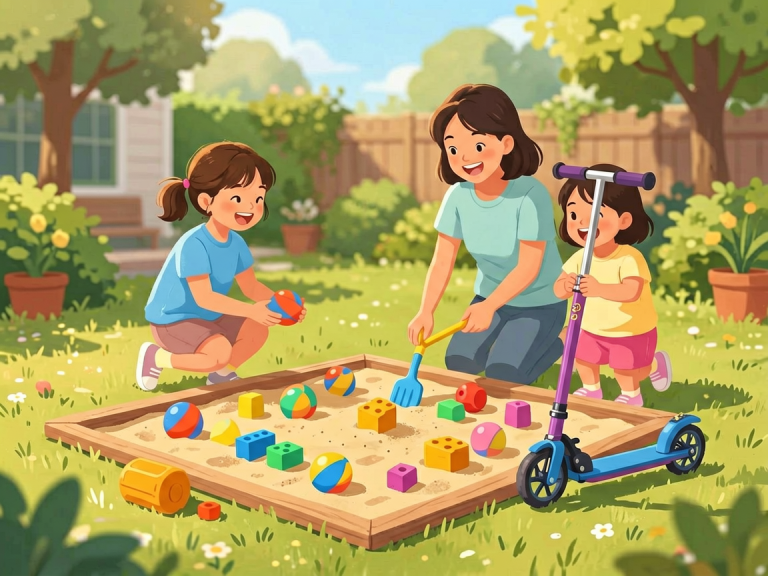
Choose toys that can be used by two or more children at once. Board games, building sets, and playsets with multiple characters encourage turn-taking, sharing ideas, and resolving conflicts. Even simple toys like a ball or a parachute promote teamwork.
If you have only one child, look for toys that lend themselves to parent-child play. A set of magnetic blocks is more educational when a parent builds alongside the child, narrating actions and asking questions: “What happens if we put this triangle on top? Can you find a red piece for me?”
Avoid toys that isolate the child, such as tablets or single-player electronic games that offer no opportunity for conversation. Learning is inherently social; the best toys create bridges between people.
—
Conclusion
Choosing educational toys does not have to be a guessing game. By understanding developmental needs, prioritizing open-ended and multi-sensory play, emphasizing quality, and involving your child, you can build a toy collection that supports growth across cognitive, motor, social, and emotional domains. Remember: the most powerful educational tool is not the toy itself—it is the caring adult who plays alongside the child, asking questions, celebrating discoveries, and turning every moment into a learning opportunity. So next time you shop, slow down, observe, and choose toys that invite curiosity, creativity, and connection. Your child’s playroom will become a laboratory for wonder, and every block, puzzle, or crayon will be a stepping stone toward a lifelong love of learning.