Building Beyond Pixels: The Enduring Power of Screen-Free Engineering Toys
Introduction
In an era where toddlers swipe before they stack and preschoolers navigate tablets more fluently than they tie shoelaces, the concept of a “screen-free” toy can feel almost revolutionary. Yet amid the glittering allure of interactive apps and virtual worlds, a quiet but powerful counter-movement is gaining momentum: screen-free engineering toys. These are not mere nostalgic relics from a pre-digital past; they are meticulously designed tools that harness the innate human desire to build, dismantle, experiment, and create with real materials. Engineering toys that require no battery, no Wi‑Fi, and no touchscreen offer something increasingly precious in our hyperconnected world: a tangible, unfiltered encounter with the laws of physics, geometry, and mechanics. They invite children to become architects of their own understanding, constructing knowledge with their hands as much as their minds. This article explores why these analog marvels matter more than ever, what forms they take, and how they nurture the engineers, problem‑solvers, and innovators of tomorrow.
The Why: Reclaiming Tactile Learning
Digital screens, for all their educational potential, often short‑circuit a crucial stage of cognitive development: hands‑on trial and error. When a child taps a button on a screen to “build” a bridge, the result is predetermined by lines of code. But when that same child stacks wooden blocks, connects magnetic rods, or gears plastic cogs, every action has an immediate, physical consequence. Gravity pulls the tower down. The gear teeth jam if mismatched. The bridge sways and collapses. These moments of failure are not glitches to be bypassed by restarting a game; they are the very essence of engineering thinking.
Screen-free engineering toys demand patience, spatial reasoning, and manual dexterity. They require children to hold, rotate, align, and apply force—activities that strengthen fine motor skills and neural pathways in ways that swiping cannot replicate. Moreover, the open‑ended nature of these toys respects the child’s pace. There is no built‑in timer, no score, no reward animation. The reward is intrinsic: the feeling of a structure that stands, a wheel that turns, a lever that lifts. This tactile feedback loop fosters a deep, intuitive understanding of cause and effect. It teaches that complexity emerges from simple components, and that mistakes are not dead ends but invitations to iterate. In a world where instant gratification is the norm, screen-free engineering toys reintroduce the slow, messy, and deeply satisfying process of learning through doing.
The What: A Spectrum of Ingenious Toys
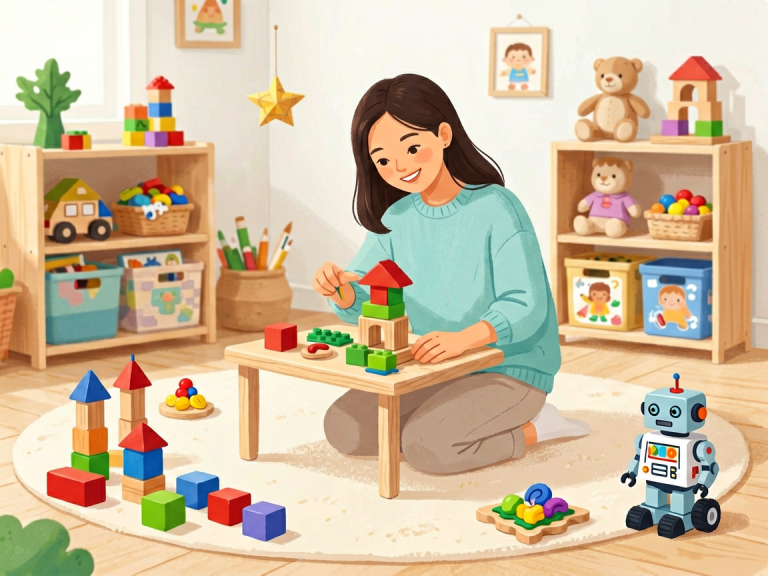
The category of screen-free engineering toys is remarkably diverse, spanning age groups and complexity levels. At the simplest end are classic wooden blocks and interlocking plastic bricks. These foundational tools allow toddlers to experiment with balance, weight distribution, and symmetry. Slightly more advanced are magnetic construction sets, such as magnetic tiles or rods with steel balls, which introduce polarity, stability, and three‑dimensional thinking. Children quickly learn that like poles repel and opposite poles attract—a lesson in physics that no app can quite match for immediacy.
Then come the gear‑based kits. Toys like Gears! Gears! Gears! or compatible gear boards allow children to explore rotational motion, speed ratios, and transmission of power. By manually turning a crank and watching a cascade of interlocked gears spin, they internalize mechanical principles that are foundational for understanding everything from bicycles to car engines. For older children, there are structural engineering sets—bridge‑building kits, dome construction systems, and truss models—that challenge them to design load‑bearing structures. Many of these toys come with illustrated challenges but no single correct answer, encouraging creative problem‑solving.
Move further up the age scale, and you find modular robotics kits that are screen-free by design. Some use manual switches, cranks, and rubber bands to create simple automata. Others, like marble runs and chain reaction machines (the delightful Rube Goldberg contraptions), require careful planning of sequences, angles, and momentum. Even more sophisticated are mechanical coding toys that use physical blocks or pegs to represent instructions—a precursor to programming logic without any screen. For example, a toy that lets a child place colored blocks on a grid to guide a wooden robot through a maze. The child learns sequencing, loops, and conditional thinking, all by moving physical objects instead of pixels.
What unites these toys is their reliance on the child’s own mental and physical effort. There is no hidden algorithm solving the puzzle for them. Every step is deliberate, every connection tangible. The toy is a platform, not a tutor.
The How: Fostering Skills for the Future
The impact of screen-free engineering toys extends far beyond the playroom. Research in developmental psychology and education consistently points to the benefits of construction play for STEM learning. When children engage with these toys, they are unwittingly practicing core engineering habits of mind: defining a problem, imagining solutions, building a prototype, testing it, analyzing failures, and revising. This iterative process is the engine of innovation.
Spatial visualization—the ability to mentally rotate and manipulate objects—is one of the strongest predictors of success in STEM fields, and it is precisely this skill that building toys hone. A child who must figure out how to fit a triangular block into a triangular hole, or how to connect a series of beams to form a stable cube, is strengthening her mental map of three‑dimensional space. Additionally, these toys naturally cultivate persistence. Unlike a video game where a new life appears instantly, a collapsed block tower must be rebuilt by hand. That experience of frustration followed by renewed effort builds what psychologists call a “growth mindset”—the belief that ability can be developed through dedication and hard work.
Collaboration is another hidden gem. Many screen-free construction toys are designed for multiple players. Building a complex marble run or a large‑scale bridge often requires teamwork, negotiation, and communication. Children learn to share ideas, delegate tasks, and merge their visions—a microcosm of real‑world engineering projects. In an age where much of children’s social interaction is mediated by screens, these toys offer a rare opportunity for face‑to‑face, hands‑on collaboration.
Furthermore, screen-free toys level the playing field across different learning styles. A child who struggles with abstract math on a worksheet may excel when the same concepts are embodied in physical gears or levers. The concrete nature of the materials makes abstract principles accessible. For instance, understanding fractions becomes intuitive when you realize that two quarter‑size wooden arcs fit exactly into a half‑circle. This embodiment of knowledge is a powerful pedagogical tool that screens struggle to replicate.
The Balance: Screen-Free in a Digital World
It is important to acknowledge that this article is not arguing for a total ban on screens. Digital tools have their place—for information access, coding simulations, and collaborative global projects. But the pendulum has swung so far toward digital that screen-free experiences are now undervalued. The recommendation is not a retreat into Luddism, but a conscious balancing act. Parents and educators can deliberately create “engineering play zones” at home or in classrooms, stocked with high‑quality construction toys, without any electronic devices. These zones become sanctuaries of focused, tactile problem‑solving.
One concern is that screen-free toys are sometimes perceived as outdated or less “educational” than their digital counterparts. This is a misconception. The most profound learning often happens when a child is fully present, using both hands and mind, without the distraction of notifications or the passivity of watching. Screen-free engineering toys demand active participation; they turn the child into the creator rather than the consumer. In a society that increasingly rewards passive consumption, this active role is a gift.
Moreover, these toys are remarkably durable and sustainable. A quality set of wooden blocks or magnetic tiles can last for decades and be passed between siblings, while digital toys become obsolete with each new operating system update. Choosing screen-free also reduces screen time, which is linked to better sleep, improved attention, and more physical activity. It is a holistic choice that benefits development on multiple fronts.
Conclusion
Screen-free engineering toys are far more than relics of a bygone age; they are essential tools for cultivating the engineers, scientists, and creative thinkers that the future desperately needs. They teach through failure, patience, and hands‑on discovery. They build spatial intelligence, persistence, and collaborative skills. They offer a respite from the constant pings and pixels of modern life, allowing children to immerse themselves in the timeless joy of making something real.
As we strive to prepare the next generation for a world shaped by technology, we must remember that the best technology is often the one that empowers the human mind—not the one that replaces it. By choosing screen-free engineering toys, we give children not just blocks and gears, but the unshakable confidence that they can build, break, rebuild, and ultimately create. And that is a lesson no screen can teach.