Beyond the Glowing Screen: Why Screen-Free Toys Are Essential for 7-Year-Olds
In an age where digital devices dominate nearly every aspect of childhood, the simple, tangible joy of screen-free toys has become almost revolutionary. For 7-year-olds—children who are old enough to navigate complex tablet apps but still young enough to believe in the magic of imaginative play—the choice of playthings can shape their cognitive, social, and emotional development in profound ways. This article explores why stepping away from screens and embracing hands-on, physical toys is not just a nostalgic preference but a critical investment in a child’s future. We will delve into the benefits, categories, and practical considerations for selecting the best screen-free toys for 7-year-olds, offering parents and educators a comprehensive guide to nurturing creativity, focus, and resilience in a generation increasingly glued to pixels.
Why Screen-Free Toys Matter for 7-Year-Olds
At the age of seven, children are in a unique developmental sweet spot. Their fine motor skills are refining, their attention spans are lengthening, and their capacity for abstract thinking is blossoming. Yet, the pervasive allure of screens—from educational apps to video games—often short-circuits these natural processes. Research from the American Academy of Pediatrics consistently warns that excessive screen time in early childhood is linked to delays in language development, reduced empathy, and difficulty with self-regulation. Screen-free toys, by contrast, demand active engagement rather than passive consumption. A child building a wooden marble run or constructing a LEGO castle is not merely receiving information; they are problem-solving, experimenting with cause and effect, and exercising patience. These activities build neural pathways that screens simply cannot replicate because they require physical manipulation, spatial reasoning, and the tolerance of trial-and-error—skills that are foundational for academic success and emotional well-being. Moreover, without the instant gratification of a screen, 7-year-olds learn to manage frustration, delay reward, and experience the deep satisfaction of completing a tangible project. In a world designed to capture their attention every second, screen-free toys teach them how to *hold* attention—a superpower increasingly rare in the digital age.
Types of Screen-Free Toys That Spark Creativity
The market for screen-free toys is vast, but not all playthings are created equal for 7-year-olds. The best options ignite curiosity and allow for open-ended exploration. Building and construction sets top the list. Beyond the ubiquitous LEGO bricks, consider magnetic tiles, wooden blocks (such as the classic unit blocks from Melissa & Doug), or more advanced systems like K’NEX or Tegu magnetic wooden blocks. These toys encourage three-dimensional thinking and can be repurposed daily into new creations—a spaceship one day, a castle the next. Art and craft supplies are equally vital. A simple set of watercolor paints, modeling clay, or a weaving loom offers infinite possibilities for self-expression. For 7-year-olds, the process matters more than the product; the act of mixing colors or sculpting a lump of clay into an animal hones fine motor control and emotional regulation. Don’t forget board games and puzzles. Games like “Sleeping Queens,” “Catan Junior,” or “Sequence for Kids” teach turn-taking, strategy, and sportsmanship in a face-to-face setting. Puzzles, especially those with 100 to 200 pieces featuring intricate patterns or maps, train visual discrimination and persistence. Finally, consider science and nature kits—not the flashy electronic ones, but simple chemistry sets (with safe chemicals), magnifying glasses for bug exploration, or a basic birdhouse-building kit. These toys connect children to the real world, fostering a sense of wonder that no screen can replicate.
Building Cognitive Skills Through Hands-On Play
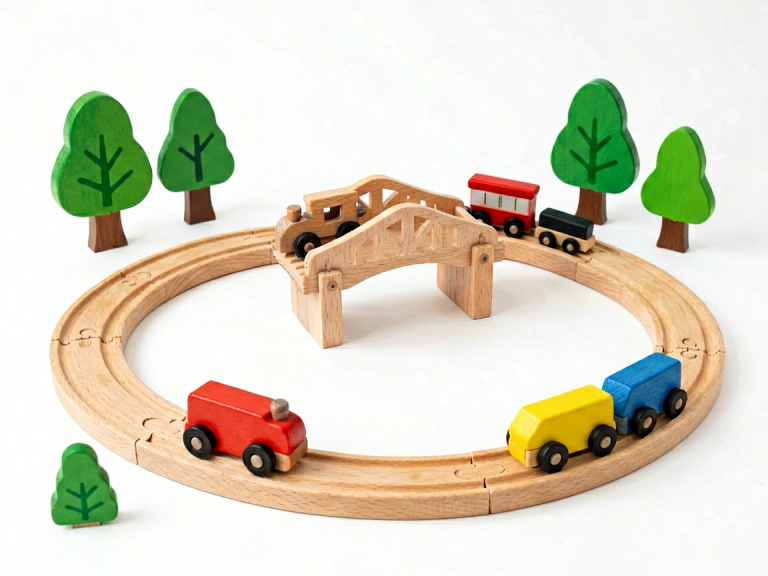
One of the most compelling arguments for screen-free toys is their power to enhance cognitive development in ways that digital media cannot. Take, for example, a classic wooden train set. A 7-year-old must plan the track layout, consider elevation changes (will the bridge be high enough?), and troubleshoot when the train derails. This process activates the prefrontal cortex, the brain region responsible for executive functions like planning, working memory, and cognitive flexibility. Similarly, a marble run requires children to predict the trajectory of the marble and adjust the path accordingly—a lesson in physics and iterative design. Research published in the journal *Frontiers in Psychology* found that children who engaged with construction toys showed significantly improved spatial visualization skills, which are strong predictors of future success in STEM fields. Additionally, screen-free toys often involve storytelling. A child who arranges a set of wooden animals into a safari scene is not merely playing; they are constructing narratives, assigning roles, and practicing language skills. Unlike a screen-based story where the plot is predetermined, open-ended toys allow children to author their own worlds, which fosters divergent thinking—the ability to generate multiple solutions to a problem. This kind of play is a direct antidote to the convergent, answer-driven thinking encouraged by many educational apps.
Social and Emotional Development Through Collaborative Play
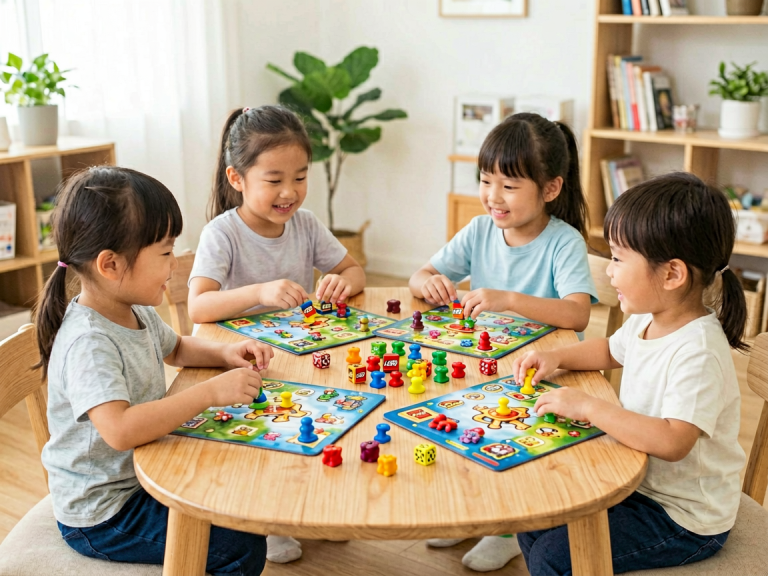
While many assume that screen-free toys are solitary, the best ones actually thrive in social settings. 7-year-olds are at an age where cooperative play becomes more complex. Board games, for instance, require children to negotiate rules, handle both victory and defeat gracefully, and communicate their strategies. A child losing a game of checkers must manage disappointment without rage-quitting—a crucial emotional skill that screens rarely teach because digital games often allow instant restarts. Dramatic play sets, such as a doctor’s kit or a cash register with play money, encourage role-playing and empathy. When a child pretends to be a patient, they practice caring for others; when they act as a shopkeeper, they learn about numbers and social exchanges. Even construction projects benefit from collaboration. Two children building a large fort from cardboard boxes must negotiate who holds the tape, whose design idea to use, and how to share materials. These micro-interactions are the building blocks of emotional intelligence. Moreover, screen-free play reduces the isolation often associated with solitary screen use. A child absorbed in a tablet may be physically present but mentally elsewhere, whereas a child engaged in a puzzle with a friend is fully present, reading facial expressions and responding to tone of voice. In a time when childhood anxiety and depression are rising, fostering real-world social bonds through play is more important than ever.
Choosing the Right Toys for Your 7-Year-Old: Practical Tips
Selecting screen-free toys for a 7-year-old requires balancing developmental needs with individual interests. First, prioritize open-endedness. A toy that can be used in many ways—like a set of wooden blocks or a box of art supplies—will outlast a single-use gadget. Avoid toys that dictate a single outcome, as they stifle creativity. Second, consider the child’s current passions. A child obsessed with dinosaurs will cherish a fossil excavation kit or a set of dinosaur figurines, while a budding engineer might prefer a gear-building set. Matching toys to interests increases engagement and deepens learning. Third, think about the sensory experience. Toys that involve texture (sand, clay), sound (a xylophone, a rain stick), or movement (a spinning top, a yo-yo) engage multiple senses and are especially grounding for children who are overstimulated by screens. Fourth, look for durability. 7-year-olds are not always gentle; wooden toys, metal mechanical kits, and high-quality plastic can withstand years of use and be passed down. Finally, resist the urge to buy too many toys at once. A cluttered play area can overwhelm a child’s ability to focus. A small, carefully curated selection of screen-free toys that rotate in and out of storage often produces deeper, more imaginative play than a cornucopia of options.
Conclusion: Reclaiming the Gift of Uninterrupted Play
The world of a 7-year-old is already saturated with screens—in classrooms, at home, and even in the backseat of the car. While digital tools have their place, they cannot replace the irreplaceable: the feel of cool clay between fingers, the triumphant click of the last puzzle piece, the laughter shared over a board game with family. Screen-free toys are not a rejection of technology but a reclamation of childhood’s fundamental birthright—the right to play without limits, without timers, without notifications. By deliberately choosing toys that require hands, hearts, and minds, we give our 7-year-olds the gift of concentration, creativity, and connection. In doing so, we prepare them not just for the next grade level, but for a lifetime of learning that is active, joyful, and deeply human. So put down the tablet, pick up a set of blocks, and watch as your child builds worlds far more wondrous than any app could ever contain.