Unlocking Young Minds: The Best Math Toys for Kids That Make Learning Fun
Introduction: Why Math Toys Matter More Than You Think
Mathematics is often perceived as a daunting subject—a world of abstract numbers, complex formulas, and endless drills. But for children, math doesn’t have to be a chore. In fact, when introduced through play, it becomes an exciting adventure of discovery, pattern recognition, and problem-solving. The best math toys for kids do more than just entertain; they lay a solid foundation for logical thinking, spatial reasoning, and numerical fluency. They transform concepts like addition, subtraction, geometry, and fractions into tangible, hands-on experiences that resonate with young learners.
In an age dominated by screens, high-quality math toys offer a tactile, engaging alternative that promotes focus, creativity, and perseverance. Whether your child is a budding engineer, a curious preschooler, or a reluctant math student, the right toy can spark a lifelong love for numbers. This article explores a curated selection of the best math toys for kids, categorized by age group and skill focus. Each recommendation is backed by educational principles and real-world usability, ensuring that playtime is both joyful and intellectually enriching.
—
1. Building Blocks and Construction Sets: The Foundation of Spatial Math
Why They Work
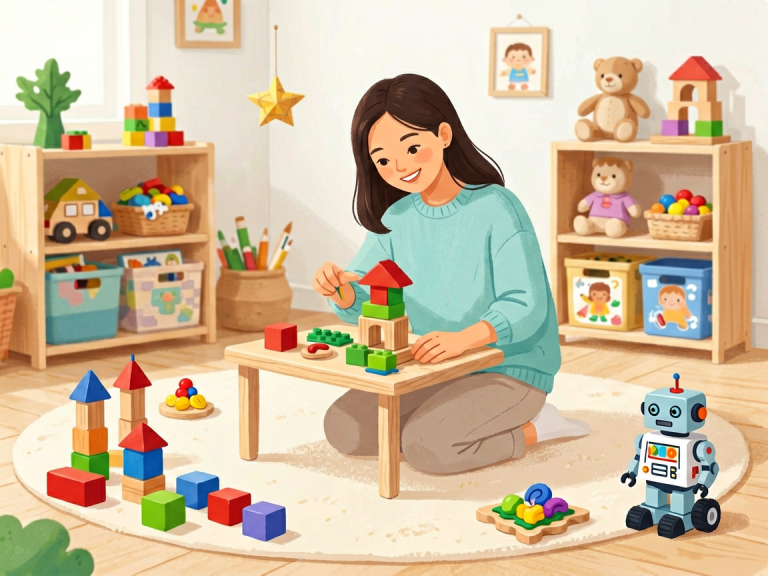
Building blocks are perhaps the oldest math toy in existence, yet their educational value remains unmatched. Toys like LEGO bricks, wooden unit blocks, or magnetic tiles (e.g., Magna-Tiles) directly teach geometry, symmetry, balance, and even early algebra. When children stack, align, and connect pieces, they are instinctively exploring concepts of volume, area, and proportion.
Top Picks
- *Magna-Tiles*: These translucent, magnetic geometric shapes allow kids to construct 2D and 3D structures. They are perfect for understanding polygons, angles, and symmetry. A child building a cube learns that six squares form a 3D shape—a lesson in spatial visualization that textbooks can’t replicate.
- *LEGO Classic Bricks*: Beyond simple stacking, LEGO sets encourage counting (how many 2×2 bricks to make a tower of 10 cm?), pattern repetition, and even basic multiplication (if you have 4 rows of 3 bricks, how many total?). The open-ended nature of LEGO fosters creativity while reinforcing arithmetic thinking.
- *Wooden Unit Blocks*: These non-interlocking blocks (like those from Melissa & Doug) teach balance, weight distribution, and fractions. For instance, a half-block is exactly half the length of a full block—a visual and tactile fraction lesson.
Age Suitability
Ages 2–8. Younger children benefit from simple counting and sorting, while older kids can tackle complex architectural challenges that involve measurement and estimation.
—
2. Board Games and Card Games: Strategy Meets Arithmetic
Why They Work
Board games turn math into a social, competitive, and highly motivational activity. They naturally require players to count spaces, calculate scores, manage resources, and predict outcomes. Unlike worksheets, board games provide immediate feedback and a sense of accomplishment.
Top Picks
- *Sum Swamp* (ages 5+): A classic addition and subtraction game. Players roll dice and move their frog through a swamp, adding or subtracting numbers based on the spaces they land on. It’s fast-paced and helps children memorize basic facts without pressure.
- *Math Dice Jr.* (ages 6+): Produced by ThinkFun, this game uses two dice and a target number. Players roll the dice and combine them using any operation (+, -, x, /) to reach the target. It’s portable, highly replayable, and builds mental math agility.
- *Prime Climb* (ages 8+): A more advanced board game where players use multiplication and division to move their pawns around a colorful, prime-number-based board. It’s particularly effective for learning factors, multiples, and prime numbers in a strategic context.
- *Uno* (ages 7+): Believe it or not, Uno is a math toy in disguise. Players must match numbers and colors, practice skip counting, and strategically calculate point values at the end of each round. It’s accessible and fun for the whole family.
Educational Benefits
These games improve number sense, working memory, and the ability to perform rapid mental calculations. They also teach resilience—losing a round becomes a motivation to try a different strategy next time.
—
3. Puzzles and Logic Toys: Sharpening Problem-Solving Skills
Why They Work
Logic puzzles and brain teasers are the gym for mathematical thinking. They train children to recognize patterns, break down problems, and persist through challenges. Many puzzles incorporate geometric shapes, sequencing, and deductive reasoning—all core math competencies.
Top Picks
- *Tangrams* (ages 4+): A set of seven geometric pieces that can form countless shapes and silhouettes. Tangrams teach spatial rotation, congruence, and the concept of area (the pieces always cover the same total area). Kids learn that the same set of shapes can create a cat, a house, or a boat—a beautiful lesson in conservation of area.
- *Rubik’s Cube* (ages 8+): The ultimate logic toy. Solving a Rubik’s Cube involves algorithms, pattern recognition, and sequential thinking. It’s a fantastic introduction to group theory and combinatorial mathematics.
- *Logical Road Builder* (ages 5+): A puzzle game where children arrange roads, bridges, and switches to guide a marble from start to finish. It teaches cause-and-effect, planning, and basic physics—all underpinned by mathematical logic.
- *Sudoku for Kids* (ages 6+): Simple 4×4 or 6×6 Sudoku puzzles (with pictures instead of numbers for younger kids) develop logical deduction and the ability to hold multiple constraints in mind.
Why They’re Essential
Logic toys are particularly good for children who struggle with rote memorization. They provide a low-stress environment where the focus is on “how to think” rather than “what to remember.”
—
4. Digital and Interactive Math Toys: Technology as a Learning Ally
Why They Work
When used wisely, digital math toys can adapt to a child’s skill level, provide instant feedback, and present math in engaging, gamified formats. The key is to choose apps and devices that require active participation rather than passive consumption.
Top Picks
- *Osmo Math Wizard* (ages 6–10): This hybrid system combines physical pieces with an iPad app. Kids manipulate real tiles, coins, and measuring tools while the app responds in real time. It covers addition, subtraction, multiplication, and even early coding concepts.
- *DragonBox Numbers* (ages 4–8): An award-winning app that turns numbers into playful characters called Nooms. Kids feed, stack, and slice Nooms to learn counting, addition, and subtraction through cartoon-like interactions. The app is designed by cognitive scientists and emphasizes number sense.
- *Osmo Coding Starter Kit* (ages 5–10): While coding isn’t strictly math, it relies heavily on logical sequencing and algorithmic thinking. Osmo’s coding blocks teach cause-and-effect, loops, and conditionals—all of which transfer to mathematical problem-solving.
- *Mathseeds* (ages 3–9): A comprehensive online math program that uses songs, animations, and interactive lessons. It covers everything from number recognition to fractions and time, with built-in progress tracking.
Screen Time Balance
Set limits—20–30 minutes per session is ideal. The best digital toys are those that require physical movement or manipulation (like Osmo) rather than passive watching. They should supplement, not replace, hands-on play.
—
5. Measurement and Fraction Toys: Making Abstract Concepts Tangible
Why They Work
Fractions, decimals, and measurement are among the trickiest topics for young learners because they are inherently abstract. Specialized toys make these concepts visible and graspable.
Top Picks
- *Learning Resources Rainbow Fraction Tiles* (ages 6+): These color-coded, magnetic tiles represent fractions from 1 whole down to 1/12. Children can physically compare that 1/4 is the same as two 1/8 pieces—a concrete demonstration of equivalent fractions.
- *MathLink Cubes* (ages 5+): A set of interlocking cubes in ten colors. They can be used for counting, measuring length, and exploring place value. For example, building a tower of 10 cubes then adding 3 more teaches base-10 concepts.
- *Tape Measure and Play Scale* (ages 4+): A simple retractable tape measure and a balance scale are powerful math toys. Kids can measure their own height, compare weights, and even get a feel for metric versus imperial units. The scale can be used for early algebra (“How many toy cars balance one apple?”).
- *Montessori Spindle Box* (ages 3–6): This classic material helps children associate numerals with quantities. It consists of numbered compartments and a set of wooden spindles. The child places the correct number of spindles into each slot, reinforcing the concept that zero means “nothing.”
Why Hands-On Wins
Research consistently shows that children who use manipulatives develop deeper understanding than those who only see pictures. Fraction tiles, in particular, can prevent the common misconception that 1/3 is smaller than 1/4 because 3<4—a visual of the actual sizes clears this up instantly.
—
6. Creative and Open-Ended Math Toys: Encouraging Independent Exploration
Why They Work
Sometimes the best math toy is one that wasn’t designed for math at all. Open-ended materials like pattern blocks, geoboards, and art supplies invite children to create their own mathematical investigations.
Top Picks
- *Pattern Blocks* (ages 4+): A set of six colored shapes (triangles, squares, hexagons, etc.) that fit together. They are perfect for exploring tessellations, fractions, and symmetry. A child might discover that two triangles make one rhombus, or that six triangles form a hexagon—an intuitive introduction to fractions and geometry.
- *Geoboard* (ages 5+): A board with pegs and rubber bands. By stretching bands around pegs, children create shapes and discover properties like area, perimeter, and angles. “How can you make a square with an area of 4?” is a rich, open-ended question.
- *Dominoes* (ages 3+): Dominoes teach subitizing (recognizing quantities without counting), matching, and basic addition. For older kids, games like “Domino War” (adding both ends) build speed in mental math.
- *Counting Bears* (ages 2–6): A set of small plastic bears in various colors and sizes. They can be sorted, counted, and used for simple pattern-making (red, blue, red, blue…). While simple, they lay the groundwork for classification and one-to-one correspondence.
The Power of Play
When children are free to explore without a specific goal, they often stumble upon mathematical relationships on their own. This kind of discovery learning is more durable than direct instruction.
—
Conclusion: Choosing the Right Math Toy for Your Child
No single math toy works for every child. The best approach is to consider your child’s age, interests, and current math skills. A preschooler may thrive with counting bears and shape sorters, while a third-grader might be ready for Prime Climb or a Rubik’s Cube. Rotate toys regularly to maintain novelty, and don’t underestimate the value of simple, non-digital options. The most important factor is your involvement: sit down and play with your child. Ask open-ended questions like, “What happens if we add one more?” or “Can you find another way to make six?” When math becomes a shared, joyful activity, it ceases to be a subject and becomes a superpower.
In a world that increasingly demands analytical thinking, the investment in quality math toys is an investment in your child’s future. Whether it’s the satisfying click of magnetic tiles snapping together or the triumphant shout of “I solved it!” after a tough puzzle, these toys build confidence, curiosity, and competence. So go ahead—fill your playroom with numbers, shapes, and logic. The results will be anything but ordinary.