Unlocking Mathematical Minds: The Power and Purpose of Math Toys for Kids
Introduction
Mathematics is often perceived as a dry, intimidating subject—a collection of abstract symbols and rules that seem disconnected from the tangible world. Yet for young children, the foundations of mathematical thinking are built not through worksheets or drills, but through play. Enter math toys for kids: carefully designed objects that transform concepts like counting, geometry, pattern recognition, and logical reasoning into hands-on, joyful experiences. Far from being mere entertainment, these toys serve as powerful cognitive tools that nurture curiosity, resilience, and a genuine love for numbers. In an era where STEM education is increasingly emphasized, understanding the role of math toys is essential for parents, educators, and anyone invested in a child’s intellectual development.
This article explores the multifaceted world of math toys for kids—why they matter, what forms they take, how to select the right ones, and how they can be integrated into everyday learning. By the end, you’ll see that a well-chosen math toy is not a substitute for formal instruction but a vibrant invitation to think mathematically.
The Educational Value of Math Toys
Math toys are not simply about teaching arithmetic; they cultivate a broader set of cognitive and emotional skills that underpin mathematical competence.
Concrete Manipulation of Abstract Ideas
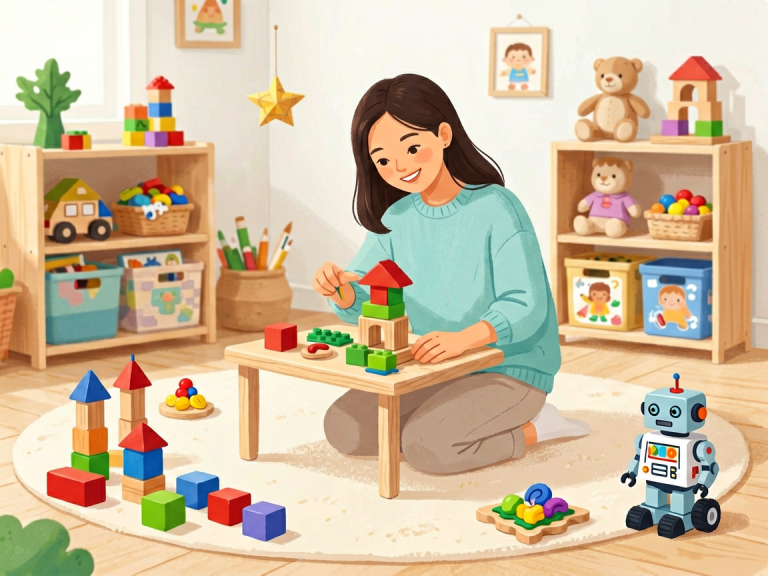
Young children are concrete learners. They understand the world by touching, seeing, and moving objects. Math toys allow them to physically interact with quantities (e.g., counting beads), shapes (e.g., tangrams), and patterns (e.g., stacking rings). This hands-on engagement helps bridge the gap between concrete experience and abstract symbolism. When a child arranges ten wooden blocks in a line and then removes three, she is not just “doing subtraction”—she is internalizing the concept of “taking away” in a way that no flashcard can replicate.
Development of Spatial Reasoning
Spatial skills—the ability to visualize and manipulate objects in space—are a strong predictor of later success in math and science. Toys like building blocks, magnetic tiles, and geoboards challenge children to think about rotation, symmetry, proportion, and perspective. As they experiment with fitting a triangle into a hexagon or balancing a tower, they are building neural pathways that support geometry, measurement, and even algebra.
Fostering a Growth Mindset
Good math toys are inherently forgiving. There is no “wrong” way to play with counting bears or pattern blocks—only different configurations. This low-stakes environment encourages trial and error. Children learn that making mistakes is part of the process, and that persistence pays off. Over time, this cultivates a growth mindset: the belief that mathematical ability is not fixed but can be developed through effort and strategy.
Building Executive Function
Many math toys require planning, memory, and self-control. A simple board game that involves counting spaces and following rules trains working memory and inhibitory control. Puzzles that require matching shapes or completing sequences challenge a child’s ability to focus and shift attention. These executive functions are foundational not only for math but for all academic and life success.
Types of Math Toys for Kids
Math toys span a wide range of materials, complexity levels, and price points. Understanding the categories can help parents and educators choose toys that align with a child’s developmental stage and interests.
Counting and Number Sense Toys
These are often a child’s first introduction to numerical concepts. Examples include:
- Counting bears, frogs, or farm animals in various colors and sizes.
- Abacuses (both traditional and modernized versions).
- Number puzzles where each piece corresponds to a numeral and a set of objects.
- Dice and dominoes that encourage subitizing (immediate recognition of small quantities).
These toys help children understand one-to-one correspondence, cardinality, and the relationship between numbers and quantities.
Geometry and Spatial Toys
Toys that focus on shape, space, and structure include:
- Building blocks (wooden, plastic, magnetic).
- Tangrams and pattern blocks for composing and decomposing shapes.
- Geoboards with rubber bands to create polygons.
- 3D construction sets like Magna-Tiles or LEGO.
These toys promote visual-spatial thinking, symmetry, and an intuitive grasp of area, perimeter, and volume.
Pattern, Sorting, and Logic Toys
Pattern recognition is a core mathematical skill. Toys in this category include:
- Lacing beads with different colors and shapes.
- Sorting trays with compartments for categorizing objects by attribute (color, size, shape).
- Logic puzzles such as Sudoku for kids, Rush Hour, or logic grid games.
- Sequence cards or pattern strips.
Engaging with these toys develops classification skills, sequential thinking, and early algebraic reasoning.
Measurement and Comparison Toys
Concepts like length, weight, volume, and time come alive with toys such as:
- Balance scales with weighted pieces.
- Measuring cups and sand/water tables.
- Rulers, tape measures, and clocks with movable hands.
- Size-sorting nesting dolls or stackable cups.
These toys give children a physical sense of “more than,” “less than,” and “equal to,” which are fundamental comparative relationships.
Games with Mathematical Elements
Board games and card games that incorporate counting, strategy, and probability are also excellent math toys. Examples include Chutes and Ladders (counting), Uno (number and color matching), Qwirkle (pattern and spatial logic), and The Game of Life (money management). Such games teach turn-taking, sportsmanship, and real-world math applications in a social context.
How to Choose the Right Math Toys for Kids
Not every math toy is suitable for every child. Selection should be guided by developmental appropriateness, open-endedness, and the child’s interests.
Age and Developmental Stage
- For toddlers (1–3 years): Choose large, safe toys that focus on simple sorting, stacking, and basic counting (e.g., stacking rings, shape sorters).
- For preschoolers (3–5 years): Introduce counting sets, pattern blocks, and simple board games that require turn-taking and number recognition.
- For early elementary (5–7 years): Offer more complex construction sets, dice games, and introductory number puzzles.
- For older children (7+): Logic puzzles, strategy board games, and coding toys (e.g., robot kits that use mathematical commands) are appropriate.
Open-Ended vs. Structured Play
Open-ended toys allow multiple uses and interpretations. A set of wooden blocks can become a city, a rocket, or a balance scale. Structured toys (e.g., a puzzle with a single solution) are valuable for specific skill practice. The best math toy collection includes a mix of both: some toys that invite free exploration and others that challenge a child to solve a defined problem.
Quality and Safety
Look for non-toxic materials, smooth edges, and durable construction. Avoid toys with small parts for very young children. Consider whether the toy encourages independent play or requires adult facilitation—both are important, but a child should also be able to engage with the toy on their own terms.
Interest Alignment
If a child loves dinosaurs, choose counting dinosaurs instead of generic bears. If they enjoy building, invest in high-quality magnetic tiles. Connecting mathematical play to a child’s passions makes the learning feel effortless and meaningful.
Integrating Math Toys into Daily Play
A math toy sitting on a shelf is just a toy. Its true value emerges when it is woven into a child’s daily routine and conversations.
Create a “Math Corner”
Designate a small shelf or basket for math toys, just as you might have a reading nook. Rotate toys periodically to maintain novelty. Include a few open-ended building sets, a counting game, and a logic puzzle. This signals that math play is a natural, valued part of the home environment.
Ask Open-Ended Questions
While a child plays, ask questions that encourage mathematical thinking: “How many blocks do you think you need to make a tower as tall as the table?” “Can you sort these bears in a different way?” “What pattern do you see?” Avoid giving answers; instead, guide the child to discover. This kind of “math talk” has been shown to significantly boost early numeracy.
Combine Math Toys with Everyday Activities
Use math toys during snack time (count crackers), bath time (measuring cups), or while cooking (counting eggs). A game of “I Spy” with shapes in the living room extends the math toy experience. The goal is to show that mathematics is everywhere—not confined to a special set of objects.
Encourage Peer Play
When children play with math toys together, they naturally explain their thinking, negotiate rules, and solve conflicts. This social context deepens their understanding and builds communication skills. Consider hosting a “math toy playdate” where children can share and explore different toys.
Conclusion
Math toys for kids are far more than colorful diversions. They are carefully engineered gateways to mathematical thinking—offering concrete experiences that build number sense, spatial reasoning, logic, and confidence. By choosing developmentally appropriate, open-ended toys and integrating them into daily life with thoughtful conversation, parents and educators can lay a strong foundation for future academic success. More importantly, they can help children see mathematics not as a fearful subject but as a world of patterns, puzzles, and possibilities waiting to be explored. In the hands of a curious child, a simple set of counting bears or a pile of magnetic tiles becomes a laboratory for the mind. And that is the greatest gift a math toy can give.