Math Toys Buying Guide: Unlocking Your Child’s Numerical Potential Through Play
—
Introduction
In a world increasingly driven by data, logic, and quantitative thinking, mathematical literacy is no longer optional—it is essential. Yet for many children, math can feel abstract, intimidating, or simply boring. Enter math toys: purpose-designed playthings that transform number sense, geometry, logic, and problem-solving into hands-on, joyful experiences. Whether you are a parent, a grandparent, a teacher, or a caregiver, selecting the right math toys can be overwhelming given the hundreds of options flooding the market. This comprehensive buying guide will walk you through everything you need to know—from developmental stages and educational theories to budget tips and safety checks—so you can make an informed, effective choice that sparks a lifelong love of mathematics.
—
Why Math Toys Matter: The Science Behind Playful Learning
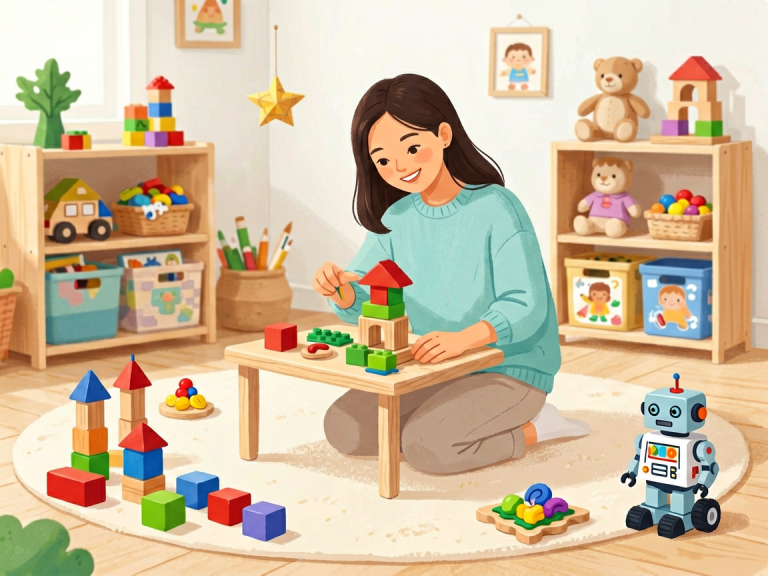
Before diving into specific products, it is crucial to understand *why* math toys are more than just gadgets. Research in cognitive development and educational psychology consistently shows that children learn best through active, hands-on engagement. Manipulatives—physical objects that represent mathematical concepts—allow children to touch, move, and experiment with abstract ideas. For example, stacking blocks teaches spatial reasoning and early counting. Pattern blocks introduce symmetry and fractions. Even simple dice games build probability intuition.
Math toys also foster a growth mindset. When children play with puzzles or building sets, they encounter failures and try again—a process that builds resilience and a positive attitude toward challenges. Moreover, these toys often encourage social interaction: board games that require counting or strategy teach turn-taking, communication, and cooperative problem-solving. Finally, math toys can bridge the gap between school and home, making math an everyday, natural part of family life rather than a dreaded subject.
—
Age-by-Age Guide: Matching Toys to Developmental Stages
One of the biggest mistakes parents make is buying a toy that is either too simple (boring) or too advanced (frustrating). A well-chosen math toy should sit in the child’s “zone of proximal development”—just challenging enough to encourage growth without causing discouragement. Below is a detailed breakdown by age group.
Ages 0–2: Sensory Foundations
At this stage, babies and toddlers are exploring the world through their senses. Number sense begins with recognizing patterns, sizes, and quantities. Look for toys that emphasize cause and effect, simple counting, and spatial relationships.
- Stacking rings and nesting cups – These introduce concepts like big/small, order, and one-to-one correspondence as a child places rings on a peg.
- Shape sorters – Children learn to match shapes to holes, building early geometry and categorization skills.
- Textured number blocks – Soft, colorful blocks with numbers and dots help babies see and feel quantities.
- Activity gyms with dangling toys – Reaching for objects develops visual-spatial awareness.
Buying tip: Safety is paramount. Ensure no small parts that could be choking hazards, and choose BPA-free, non-toxic materials.
Ages 3–5: Preschool Explorers
Preschoolers are ready for more structured play. They begin to count to 10 or 20, recognize basic shapes, and understand comparisons (more, less, equal). Toys should encourage counting, sorting, patterning, and simple addition/subtraction through concrete objects.
- Counting bears or farm animals – These small manipulatives can be used for counting, grouping, and simple arithmetic. Many sets include activity cards that guide parents.
- Magnetic number boards – Children place magnets with numbers and pictures onto a board, reinforcing numeral recognition.
- Pattern blocks and tangrams – Creating designs with geometric pieces teaches symmetry, fractions, and spatial rotation.
- Math board games (e.g., Hi Ho! Cherry-O) – Spinning a wheel and counting cherries builds one-to-one correspondence and early addition/subtraction in a fun, social context.
- Balance scales – Simple bucket scales let children weigh objects, exploring the concept of balance versus imbalance and developing estimation skills.
Buying tip: Look for open-ended toys that can be used in multiple ways. Avoid electronic toys that “do the thinking” for the child—the child should be the active problem-solver.
Ages 6–8: Primary Problem Solvers
Children in early elementary school are building fluency with addition, subtraction, multiplication, and division. They also begin exploring time, money, and geometry. Toys should reinforce these operations through games and challenges.
- Math dice games (e.g., Math Dice Junior, Sum Swamp) – Rolling dice and performing operations to reach a target number strengthens mental math speed.
- Multiplication flashcards with interactive elements – While traditional flashcards work, newer versions incorporate puzzles, QR codes, or spinner wheels to add an element of fun.
- Geoboards – Rubber bands stretched over pegs create shapes and angles, teaching perimeter, area, and coordinate geometry.
- Money and time learning sets – Play money, clocks with movable hands, and cash registers let children practice real-world math skills.
- Fraction cubes or pizza fraction sets – Visual representations of fractions (e.g., dividing a pizza into slices) make abstract concepts concrete.
Buying tip: Choose toys that align with your child’s school curriculum but don’t feel like “homework.” The best math toys feel like games.
Ages 9–12: Advanced Thinkers
Tweens can handle more complex logic, algebra, and strategic thinking. At this age, math toys should challenge reasoning, spatial visualization, and multi-step problem-solving.
- Rubik’s Cube and its variants – Solving a cube involves algorithmic thinking, pattern recognition, and perseverance.
- Math puzzles like KenKen or Sudoku – These logic puzzles require deduction and numerical reasoning.
- Construction sets with gears or mechanisms (e.g., LEGO Technic) – Building moving models introduces engineering concepts and applied math such as ratios and torque.
- Board games like Prime Climb or Blokus – These award-winning games mix arithmetic with strategy, requiring players to calculate risks and plan moves.
- Math-themed escape room kits – Solving clues using math operations to “escape” a fictional scenario makes learning collaborative and thrilling.
Buying tip: Consider digital math toys as supplements—apps like DragonBox or Prodigy gamify algebra and geometry—but prioritize hands-on physical play for deeper understanding.
Ages 13+: Teens and Beyond
Older teens may roll their eyes at “toys,” but there are sophisticated tools that engage their growing analytical skills.
- Logic and puzzle board games (e.g., Azul, Splendor) – These games involve resource management, pattern matching, and strategic planning, all under a mathematical veneer.
- Geometric construction sets (e.g., Zometool) – Building complex 3D models helps visualize calculus concepts like volume and surface area.
- Mathematical art kits (e.g., spirographs, hyperbolic crochet) – Creating patterns using mathematical principles blends creativity with STEM.
- Coding kits like micro:bit or Arduino – Programming involves logic, variables, and algorithms—essentially advanced math.
Buying tip: Gauge interest—if your teen loves video games, a coding kit that lets them design their own game will feel more relevant than a traditional puzzle.
—
Key Features to Look For in Math Toys
Regardless of age, every excellent math toy shares certain characteristics. Keep these criteria in mind as you browse.
- Educational Value – Does the toy directly teach or reinforce a mathematical concept? Or is the math tangential? For example, a simple counting book is highly focused; a generic building block set may require an adult to guide math conversations. Look for toys that come with activity guides or are designed by educators.
- Open-Endedness – The best math toys allow for multiple play paths. A set of pattern blocks can be used for free exploration, pattern making, or following challenge cards. Open-ended toys grow with your child and encourage creativity.
- Durability and Safety – Math toys are often handled repeatedly. Choose materials that are sturdy (wood, thick plastic, non-toxic paint) and free of sharp edges. Check for safety certifications (ASTM, CE, or CPSIA). For younger children, avoid small parts.
- Engagement Factor – Does the toy capture your child’s attention? A beautiful, colorful design with moving parts or a game element can motivate reluctant learners. Remember: if it’s not fun, it won’t be used.
- Social Potential – Many math skills develop best in a group. Toys that can be played with siblings, parents, or friends (e.g., board games, cooperative puzzles) offer added social-emotional benefits.
- Adaptability – Can the toy be used across different skill levels? Some products come with multiple difficulty levels or expansion packs. Others allow you to create your own challenges.
—
Types of Math Toys: A Quick Overview
Understanding the categories helps narrow your search. Here are the major types, each with distinct strengths.
- Counting and Sorting Sets – Ideal for ages 2–6. Examples: learning links, bear counters, number pegs. Focus: one-to-one correspondence, cardinality, categorization.
- Geometry and Spatial Sets – For ages 3–12. Examples: tangrams, geoboards, 3D construction kits. Focus: shape recognition, symmetry, area, volume, spatial reasoning.
- Arithmetic and Operation Games – For ages 4+. Examples: dice games, board games with math challenges, math bingo. Focus: mental computation, fact fluency, strategic use of operations.
- Logic and Puzzle Toys – For ages 5+. Examples: Sudoku, logic mazes, brain teasers. Focus: deductive reasoning, pattern recognition, systematic thinking.
- Measurement and Data Toys – For ages 5+. Examples: balance scales, measuring tapes, thermometers, stopwatches. Focus: estimation, units, data collection, graphing.
- Digital Math Toys (apps and electronic devices) – For ages 4+. Examples: interactive math tablets, coding robots. Focus: adaptive learning, immediate feedback, interest-based engagement.
—
Budget Considerations: How Much Should You Spend?
Math toys range from under $10 to over $100. A larger price tag does not always mean better educational value. Here is a practical budget guide:
- Under $20: Excellent choices include dice sets, flashcard games, small counting animals, or a simple set of pattern blocks. These are low-risk and can be paired with free online activity ideas.
- $20–$50: This sweet spot covers high-quality board games (e.g., Sum Swamp, Prime Climb), a geoboard set, or a fraction puzzle kit. You are paying for durable materials and thoughtful game design.
- $50–$100: Here you find comprehensive construction kits (LEGO Technic sets, Zometool starter sets) and advanced logic puzzles. Also, some subscription boxes for monthly math activities fall in this range.
- Over $100: Typically reserved for robotics kits, programmable tools, or large sets intended for classroom use. For individual home use, you can often find equally effective options at lower prices.
Money-saving tip: Check thrift stores, yard sales, and online marketplaces for gently used math toys. Many families outgrow toys quickly. Also, look for free or low-cost resources like printable math games from educational websites.
—
Safety and Quality: What to Inspect
Before finalizing a purchase, especially for children under three, conduct a quick safety audit:
- Choking hazards: Small parts should be larger than 1.25 inches in diameter. Test with a toilet paper tube—if an object fits inside, it is a hazard.
- Toxic materials: Look for labels like “non-toxic,” “BPA-free,” “phthalate-free.” Wooden toys should have non-toxic, water-based paint.
- Electrical safety: Electronic math toys should have battery compartments secured with a screw to prevent access by children.
- Sharp edges and points: Run a finger along corners. Avoid toys with protruding wires or rough seams.
- Magnetic hazards: Strong magnets in some construction sets can be dangerous if swallowed. For young children, choose toys with encased magnets.
Quality indicators: Solid wood construction (versus particle board), tight-fitting parts, smooth finishes, and positive reviews from other parents. Reputable brands include Melissa & Doug, Learning Resources, Lakeshore Learning, ThinkFun, and SmartGames.
—
Top Recommendations to Get You Started
While every child is unique, these tried-and-true math toys consistently receive high praise from educators and parents:
- Ages 2–4: *Melissa & Doug Shape Sorting Cube* – classic, durable, teaches shape and size. *Learning Resources Count & Color Choo Choo* – combines train play with counting.
- Ages 4–6: *ThinkFun Zingo! Number Bingo* – fast-paced, social counting game. *Educational Insights MathShark* – electronic quiz game (use sparingly).
- Ages 6–8: *ThinkFun Math Dice Junior* – portable, scalable difficulty. *Sum Swamp Board Game* – reinforces addition/subtraction in a swamp adventure.
- Ages 8–10: *Prime Climb* – a beautiful, colorful board game that teaches prime numbers, multiplication, and division. *Rubik’s Cube* – timeless logic challenge.
- Ages 10+: *Zometool Creator 1 Kit* – build intricate 3D geometric models. *Spirograph Deluxe Set* – explore curves and symmetry through art.
- All Ages (with adult help): *Osmo Genius Starter Kit* – combines physical tiles with an iPad app for interactive math puzzles (ages 5+).
—
Conclusion: From Play to Proficiency
Math toys are not a magic bullet—they work best when combined with a supportive environment where curiosity is encouraged and mistakes are part of learning. The right math toy can ignite a spark: a child who once dreaded numbers may suddenly spend an hour building a fraction pizza or solving logic puzzles. By considering your child’s age, interests, and developmental needs, and by prioritizing open-ended, safe, and engaging designs, you can make a purchase that pays dividends for years to come. Remember: the goal is not to create a prodigy, but to nurture a confident, curious thinker who sees math as a world of patterns and possibilities—not as a chore. Happy shopping, and even happier playing!