The Ultimate Guide to Choosing Math Toys: Nurturing Numerical Genius Through Play
Introduction
In a world increasingly driven by data, algorithms, and quantitative reasoning, the ability to think mathematically has never been more critical. Yet for many children, mathematics evokes anxiety, boredom, or outright resistance. The secret to changing this narrative lies not in worksheets or flashcards, but in something far more natural and joyful: play. Math toys are the bridge between abstract concepts and tangible, hands-on experience. They can transform a reluctant learner into an enthusiastic explorer, a passive observer into an active problem-solver. However, the market is flooded with toys claiming to be “educational,” and not all are created equal. Choosing the right math toy requires careful consideration of your child’s developmental stage, learning style, and interests, as well as an understanding of what makes a toy genuinely effective. This guide will walk you through the essential principles and practical strategies for selecting math toys that will inspire curiosity, build foundational skills, and foster a lifelong love for numbers.
Why Math Toys Matter: The Cognitive and Emotional Benefits
Before diving into the selection process, it is important to understand why math toys are more than just a passing trend. Research in developmental psychology and neuroscience consistently shows that young children learn best through concrete, sensory-rich experiences. When a child physically manipulates blocks, sorts shapes, or measures ingredients, they are not merely “playing”—they are building neural pathways that underpin abstract mathematical reasoning. Math toys leverage this natural learning mechanism by making intangible concepts like quantity, pattern, symmetry, and logic physically visible and manipulable.
Moreover, math toys can dramatically reduce math anxiety. Traditional instruction often emphasizes speed, accuracy, and right-or-wrong answers, which can create a fear of failure. In contrast, a well-designed math toy invites experimentation: a child can try a new arrangement, see what happens, and adjust without judgment. This process fosters a growth mindset—the belief that intelligence can be developed through effort—which is a stronger predictor of long-term math success than raw IQ. By choosing toys that emphasize process over product, parents and educators can help children associate mathematics with curiosity, discovery, and fun rather than stress and performance.
Age-by-Age Guide: Matching Toys to Developmental Stages
One of the most common mistakes in selecting math toys is ignoring the child’s developmental readiness. A toy that is too advanced will frustrate; one that is too simple will bore. Here is a breakdown of appropriate math toy characteristics for different age groups.
Toddlers (Ages 1–3): Sensory Exploration and Early Number Sense
At this stage, children are developing object permanence, basic cause-and-effect understanding, and the concept of “more” and “less.” The best math toys for toddlers are those that engage multiple senses and allow for simple counting, sorting, and matching. Look for:
- Stacking and nesting toys (e.g., rings, cups) that introduce size relationships and ordinality.
- Simple shape sorters that teach categorization and spatial awareness.
- Counting books with textures or large, chunky number puzzles.
- Blocks of varying sizes and colors that encourage informal one-to-one correspondence.
Avoid toys with tiny parts that pose choking hazards, and prioritize durability. At this age, the goal is not formal math instruction but rather exposure to mathematical language (“more,” “bigger,” “same”) in a playful context.
Preschoolers (Ages 3–5): Pattern Recognition and Numerical Operations
Preschoolers are ready for more explicit mathematical exploration. Their cognitive abilities now allow them to recognize patterns, count up to 20 or more, and begin understanding simple addition and subtraction through physical grouping. Effective math toys for this age include:
- Counting bears, linking cubes, or other small manipulatives that can be grouped, rearranged, and counted.
- Pattern blocks and mosaic tiles that develop visual-spatial reasoning and symmetry.
- Simple board games with dice that teach turn-taking, counting, and the concept of chance.
- Number lines and abacuses that make addition and subtraction visible.
The key is to choose toys that allow for open-ended play—a set of counting bears can be used for sorting by color, creating patterns, playing store, or counting meals for a pretend picnic. The more versatile the toy, the richer the learning.
Early Elementary (Ages 5–8): Logical Operations and Problem Solving
As children enter formal schooling, they begin to grapple with place value, basic multiplication and division, fractions, and more complex patterns. Math toys for this stage should challenge their emerging logical reasoning while still being engaging. Top choices include:
- Base-ten blocks and place value sets that demystify the decimal system.
- Fraction circles or magnetic fraction tiles that allow hands-on comparison of parts of a whole.
- Tangrams and geometric construction sets that foster spatial reasoning and creativity.
- Logic puzzles and strategy games such as Rush Hour, Blokus, or Qwirkle, which teach pattern recognition, planning, and deduction.
- Simple building kits like LEGO Duplo or wooden planks that naturally involve measurement, symmetry, and geometric thinking.
At this stage, children also benefit from toys that introduce coding logic (e.g., simple programmable robots or board games like Robot Turtles), which is deeply mathematical in its emphasis on sequences, loops, and conditionals.
Upper Elementary and Beyond (Ages 8+): Abstract Thinking and Real-World Application
Older children are capable of abstract reasoning and can handle more complex mathematical systems. Math toys for this group should encourage deeper exploration, perseverance, and creative problem-solving. Consider:
- Advanced building sets like K’NEX, Meccano, or architectural blocks that require precise measurement and structural analysis.
- Mathematical art kits (e.g., spirographs, curve stitching, or geometric drawing tools) that connect math to aesthetics.
- Strategy board games such as Set, Prime Climb, or Equate that demand quick arithmetic, probability estimation, and strategic planning.
- Puzzle boxes and escape room kits that integrate logic, algebra, and deductive reasoning.
- Coding kits (e.g., micro:bit, Arduino beginner sets) that apply mathematical thinking to real-world programming.
It is also important to respect the child’s interests. A child who loves dinosaurs might engage with a math toy that involves counting and measuring dinosaur figures, while a child who loves art might be drawn to symmetry and tessellation tools.
Key Criteria for Selecting Effective Math Toys
Beyond age appropriateness, several universal criteria can help you evaluate any math toy’s quality and potential impact.
Open-Endedness vs. Prescriptive Design
The best math toys are open-ended: they can be used in multiple ways, encouraging creativity and repeated exploration. A set of wooden blocks or a bag of counting chips can lead to hundreds of different activities. In contrast, a toy that has only one correct way to play (e.g., a plastic cash register with pre-programmed transactions) quickly loses its educational value. When shopping, ask yourself: “Can my child use this toy in five different ways?” If the answer is no, it may not be worth the investment.
Progressive Challenge
A high-quality math toy grows with the child. Look for toys that offer multiple levels of difficulty or that can be adapted as skills improve. For example, pattern blocks can be used by a three-year-old to simply match colors and shapes, while a seven-year-old can use them to explore fractions and symmetry. Similarly, many board games include variants that adjust the complexity. Toys with a clear progression path keep children engaged over months or years rather than days.
Alignment with Educational Principles
While you do not need to be a curriculum expert, it helps to understand what mathematical concepts are age-appropriate. Look for toys that explicitly target skills such as counting, number recognition, operations, measurement, geometry, patterning, and logical reasoning. Many manufacturers now include learning guides or alignment with standards (e.g., Common Core, Montessori methods). However, be cautious of toys that overpromise “genius-level” results—genuine learning is gradual and playful.
Material and Durability
Children learn through their hands, so the tactile quality of a math toy matters. Wood, heavy-duty plastic, or fabric with interesting textures are preferable to flimsy or overly smooth materials. Magnets can be excellent for keeping pieces together, but ensure they are safely enclosed. Also consider noise level: some electronic toys produce distracting sounds that can overshadow the mathematical thinking process. In general, simpler, quieter toys tend to promote deeper concentration.
Inclusivity and Gender Neutrality
Math toys should be marketed and designed in a way that appeals to all children, regardless of gender. Avoid toys that are overtly “for boys” (e.g., blue packaging with construction themes) or “for girls” (e.g., pink with domestic themes). Instead, choose toys that feature diverse characters, neutral colors, and a variety of play scenarios. Research shows that subtle cues can influence a child’s sense of belonging in mathematics, so inclusive design matters.
Top Math Toy Categories and What to Look For
To make your shopping more concrete, here are several tried-and-true categories of math toys, along with specific features to prioritize.
Building and Construction Sets
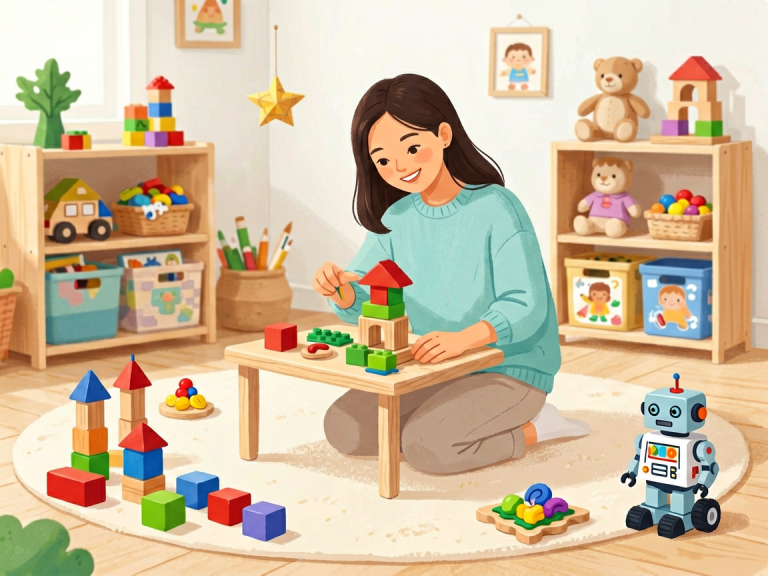
These are arguably the most versatile math toys. They teach geometry, spatial reasoning, symmetry, measurement, and even basic physics. Look for sets that include a variety of shapes—cubes, prisms, cylinders, arches—rather than only rectangular bricks. Magnetic building tiles (e.g., Magna-Tiles) are especially good because they allow for easy creation of 3D structures and introduce concepts like stability and angle measurement. For older children, consider sets with gears, pulleys, and axles that integrate mechanical logic.
Counting and Number Manipulatives
Simple counting objects (bears, dinosaurs, buttons) may seem basic, but their power lies in their flexibility. The best sets come in multiple colors and sizes, allowing for sorting, graphing, and pattern creation. Some sets include activity cards with progressive challenges. An abacus with more than one row (e.g., a 100-bead abacus) is excellent for place value and skip counting. Montessori-style number rods and sandpaper numerals also provide a multisensory approach.
Logic and Strategy Games
These toys develop executive function skills—working memory, flexible thinking, and self-control—which are essential for mathematical problem-solving. Look for single-player puzzle games (e.g., Kanoodle, IQ Fit) that require spatial manipulation, and multiplayer games that involve probability, deduction, or arithmetic (e.g., Sum Swamp, Rat-a-Tat Cat). The best games have a clear mathematical core but are disguised as fun, so children are motivated to play repeatedly.
Math Art and Pattern Kits
Toys that combine math with art can ignite creativity while reinforcing mathematical concepts. Spirographs and curve-drawing tools teach about radii, epicycles, and symmetry. Mosaic and tessellation kits (e.g., Pattern Blocks, Color Tiles) allow children to explore repetition, transformation, and tiling. Stencil sets with geometric shapes help children draw precise figures and understand properties like parallel lines and angles. These toys are particularly effective for visual-spatial learners.
Digital Math Toys and Apps
While this article focuses on physical toys, it is worth mentioning that well-designed digital tools can complement hands-on play. When choosing apps or electronic toys, prioritize those that require active thinking rather than passive watching. Look for apps that allow experimentation, offer multiple solution paths, and provide incremental feedback without punishing errors. Physical-meets-digital toys like Osmo use a camera to blend tangible pieces with on-screen activities, offering a balanced experience.
Common Pitfalls to Avoid
Even well-intentioned buyers can fall into traps that undermine the educational value of math toys. Here are several to watch out for.
Overreliance on Electronics
Electronic math toys often promise interactivity but can actually reduce the depth of learning. A flashing screen that shouts “Correct!” may provide instant gratification, but it does not require the child to reason through their answer. Moreover, electronic toys can be distracting and may short-circuit the tactile, exploratory process that is so crucial for young children. When possible, prioritize non-electronic, manipulative-based toys, or use electronics sparingly and with clear learning goals.
The “Toy” That Is Really a Worksheet
Some math toys are essentially workbooks disguised as games: they present a single problem, expect a single answer, and offer little room for variation. If a toy consists mainly of flashcards or a rigid sequence of questions, it is probably not a good choice. True math toys invite discovery; they do not drill facts. For example, a set of dominoes can be used for a dozen different games, whereas a set of addition flash cards cannot.
Ignoring Your Child’s Interests
A math toy that is aligned with your child’s passions will be far more effective than one that is technically “better” but unappealing. If your child loves cars, seek out counting games that involve toy cars, or measuring tapes designed for vehicle play. If your child loves art, look for geometry-based coloring books or symmetrical drawing tools. The goal is to embed mathematical thinking into an activity your child already enjoys.
Buying Too Many Toys
A cluttered playroom can actually hinder learning. When children have too many options, they often flit from one toy to another without deep engagement. A better approach is to invest in a few high-quality, open-ended math toys and rotate them. This allows children to master each toy’s possibilities and develop sustained concentration. A set of pattern blocks, for example, can offer countless hours of exploration if given time and space.
Conclusion: Play as the Foundation of Mathematical Thinking
Choosing the right math toy is not about finding a magic object that will automatically make your child a mathematician. Rather, it is about creating an environment where mathematical thinking feels natural, joyful, and empowering. The best math toys are those that invite questions, tolerate mistakes, and adapt to the child’s growing mind. They are tools for exploration, not for testing.
As you navigate the aisles of toy stores or browse online, remember the principles outlined here: consider developmental stage, prioritize open-ended design, look for progressive challenge, and respect your child’s unique interests. Pay attention to how your child interacts with a toy—does it spark curiosity? Does it lead to self-directed play? Does it encourage talking, counting, comparing, and questioning? If so, you have likely found a winner.
Ultimately, the goal of math toys is not to produce children who can recite multiplication tables on command, but to nurture confident, curious thinkers who see mathematics as a language for understanding the world. By choosing wisely, you are giving your child the greatest gift: the opportunity to discover that math is not a chore, but a lifelong adventure in pattern, logic, and beauty. So go ahead—build, count, sort, and play. The numbers will take care of themselves.