Common Mistakes to Avoid When Choosing Toys for Classrooms
Introduction
Toys are not merely playthings in a classroom; they are powerful educational tools that shape cognitive development, social skills, creativity, and emotional growth. When selected thoughtfully, toys can transform a classroom into an engaging, exploratory environment where students learn through discovery. However, the process of choosing toys for a group of children with diverse needs, ages, and backgrounds is fraught with pitfalls. Educators and administrators often fall into predictable traps—buying what is trendy, focusing only on entertainment value, or overlooking safety and durability. These mistakes can undermine learning outcomes, cause frustration, or even pose risks to children. This article examines the most critical mistakes to avoid when selecting toys for classrooms, offering practical guidance to ensure that every toy serves its intended purpose: to inspire, educate, and unite.
—
1. Overlooking Educational Value: The Trap of “Fun Only”
One of the most common mistakes is prioritizing entertainment over educational merit. While toys should certainly be enjoyable, a classroom is not a playground in the traditional sense. Toys that lack any learning component—such as purely decorative action figures, flashing noise-makers without purpose, or single-use novelty items—quickly lose their appeal and contribute little to developmental goals. For instance, a toy that simply spins or makes loud sounds may entertain for a few minutes but offers no chance for problem-solving, language development, or fine motor skill practice.
Instead, educators should seek toys that align with curricular objectives. A simple set of building blocks, for example, teaches spatial reasoning, physics concepts, and collaboration. Puzzle boards enhance logic and perseverance. Even seemingly simple items like play dough can strengthen hand muscles and encourage creative expression. The mistake here is failing to ask: “What will a child learn from this toy?” If the answer is vague or nonexistent, that toy likely belongs in a home toy bin, not a classroom.
—
2. Ignoring Age Appropriateness: One Size Does Not Fit All
Another frequent error is selecting toys without considering the precise developmental stage of the students. A toy designed for a 5‑year‑old may be too simplistic for a 7‑year‑old, leading to boredom, or too complex for a 3‑year‑old, causing frustration and even safety hazards. For example, small magnetic building sets intended for older children contain tiny parts that pose choking risks for toddlers. Conversely, oversized soft blocks that are perfect for preschoolers will fail to challenge a second‑grader’s fine motor skills.
The mistake is often compounded when teachers purchase “one set fits all” for mixed‑age classrooms. To avoid this, always check the manufacturer’s recommended age range, but also observe your specific group’s abilities. A toy that is slightly above a child’s current level, with adult guidance, can be beneficial; however, toys far beyond reach lead to disengagement. It is essential to have a variety of toys that span the developmental spectrum within the classroom, allowing each child to interact at their own pace.
—
3. Neglecting Safety Standards: The Hidden Dangers
Safety is non‑negotiable in any educational setting, yet many buyers overlook critical safety aspects. Common hazards include sharp edges, toxic materials (such as lead in paint or phthalates in plastic), small parts that can be swallowed, strings that can cause strangulation, and loud noises that damage hearing. The mistake is often assuming that any toy sold in a store must be safe. This is not always true—especially for inexpensive imports that may not meet rigorous safety standards.
Educators must verify that toys carry certification marks (e.g., CE, ASTM, or EN71 in Europe). They should inspect toys for loose parts, splinters, or frayed cords regularly. Also, consider the classroom environment: a toy that is safe for a quiet corner may become hazardous during active play if it is fragile or has sharp corners. For example, a wooden train set with well‑sanded edges is fine, but one with rough splinters can cause injury. Always conduct a risk assessment before introducing a new toy to the classroom.
—
4. Failing to Consider Diversity and Inclusivity
A classroom is a microcosm of society, and toys should reflect and celebrate diversity. A major mistake is choosing toys that represent only one culture, one gender norm, or one ability level. For instance, a set of puzzle pieces that only shows white, middle‑class families sends an unintentional message of exclusion. Similarly, toys that are stereotypically “for boys” (like trucks) or “for girls” (like dolls) can reinforce limiting gender roles. Children from different backgrounds, including those with disabilities, need to see themselves in the materials they use.
To avoid this, select toys that depict a wide range of ethnicities, family structures, and abilities. Dolls with wheelchairs, crayons in various skin tones, puzzles showing multi‑generational families, and books featuring characters with disabilities are excellent choices. Also, ensure that toys are accessible to children with physical or sensory challenges—for example, large‑grip markers for fine motor difficulties, or toys with contrasting colors for visually impaired learners. An inclusive toy selection fosters empathy and belonging.
—
5. Choosing Toys That Promote Solitary Play Over Collaboration
Classroom toys should encourage interaction, communication, and teamwork. A common mistake is selecting toys that are inherently solitary—such as single‑player electronic games, personal tablets with educational apps, or small individual puzzles that cannot be shared. While independent play has its place, the classroom setting is uniquely suited for cooperative learning. When each child is isolated with their own device or toy, opportunities for sharing, negotiating, and problem‑solving together diminish.
Instead, prioritize toys that naturally require multiple participants. Board games, large building sets (like Duplo or wooden blocks), dramatic play kits (kitchen sets, doctor kits), and group art projects promote turn‑taking, language use, and conflict resolution. Even simple items like a parachute for group games or a large puzzle that requires multiple hands can build community. Avoid the trap of thinking that “educational technology” is always better; a well‑designed non‑digital toy often yields richer social benefits.
—
6. Underestimating Durability and Maintenance
Classroom toys endure heavy use—often from dozens of children over several years. A serious mistake is buying cheap, flimsy toys that break within weeks. Not only does this waste budget, but broken toys can become safety hazards with sharp plastic edges or loose parts. Moreover, constantly replacing toys frustrates both teachers and students. For instance, a low‑cost plastic cash register may lose its buttons quickly, while a sturdier metal or hard‑plastic version lasts for years.
Durability also involves ease of cleaning. Classrooms are germ‑prone environments; toys that are porous, have hard‑to‑reach crevices, or cannot be machine‑washed are unsuitable. Soft toys with removable, washable covers are preferable. Avoid toys that require batteries if the battery compartment is not secured with a screw—small children can access batteries and swallow them. Invest in high‑quality, reputable brands, even if they cost more, because the cost per use over time is lower. Also, involve children in simple toy maintenance (e.g., sorting blocks, wiping surfaces) to teach responsibility.
—
7. Buying Too Many or Too Few: The Balance of Quantity and Variety
Striking the right balance is tricky. One mistake is overcrowding the classroom with too many toys, which overwhelms children and reduces focus. Research shows that when too many options are available, children play less deeply and shift from toy to toy without engaging fully. On the other extreme, having too few toys leads to boredom, conflict over resources, and limited learning opportunities.
A good rule is to have enough toys for each learning center (e.g., block area, art table, reading nook, dramatic play) but to rotate them periodically. Keep a storage system with extra toys that can be swapped every few weeks to maintain novelty. Also, ensure variety across different types of play: sensory, constructive, imaginative, language‑based, and physical. For example, if you already have three different sets of plastic animals, you might be missing fine motor tools or musical instruments. Avoid duplication; each toy should serve a distinct purpose.
—
8. Forgetting the Open‑Ended Potential: The Power of Imagination
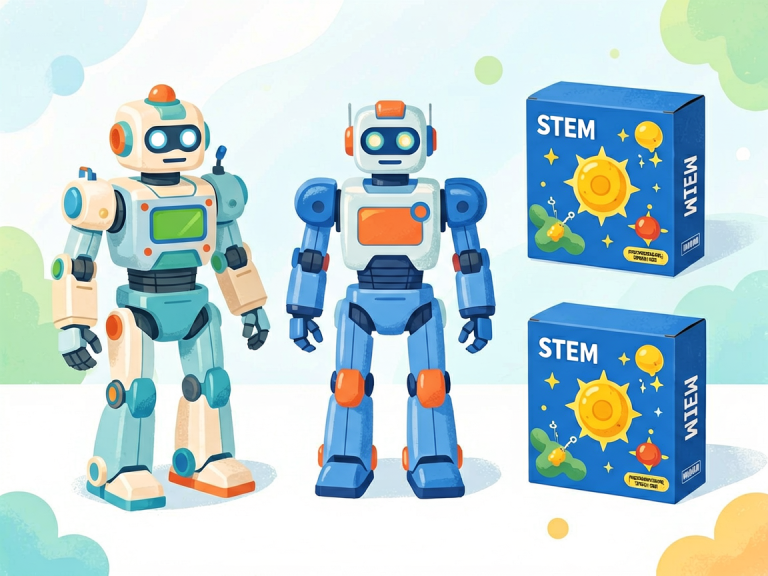
Perhaps the most profound mistake is choosing toys that dictate a single, prescribed way to play. Toys with a fixed outcome—like a pre‑programmed robot that only follows one sequence, or a puzzle that has only one correct solution—can limit creativity. In contrast, open‑ended toys allow children to imagine multiple uses. A set of simple wooden blocks can become a castle, a spaceship, a bridge, or a parking garage depending on the child’s imagination. Loose parts like fabric scraps, stones, and cardboard tubes encourage endless invention.
Classrooms should prioritize open‑ended materials because they grow with the child and adapt to different interests. Even in older elementary classrooms, items like LEGO bricks, art supplies, and construction kits outperform single‑purpose electronic toys in fostering divergent thinking. The mistake is to assume that “educational” means “structured.” In fact, unstructured play is where higher‑order thinking flourishes. Avoid toys that tell children exactly what to do; instead, choose toys that ask, “What else can this be?”
—
Conclusion
Selecting toys for a classroom is a responsibility that extends far beyond filling a cart with colorful packages. Each decision influences how children interact, learn, and feel about themselves and others. By avoiding the eight common mistakes outlined above—neglecting educational value, ignoring age appropriateness, compromising safety, overlooking diversity, promoting solitary play, underestimating durability, mismanaging quantity, and forgetting open‑ended potential—educators can create an environment where play truly becomes a vehicle for growth. Remember that the best toys are not the loudest or most expensive; they are the ones that spark curiosity, invite collaboration, and respect the unique journey of every child. Thoughtful selection today lays the foundation for lifelong learners tomorrow.