science toys vs engineering toys
Constructing Curiosity vs. Solving Problems: The Distinct Worlds of Science Toys and Engineering Toys
—
Introduction
In the landscape of modern childhood, toys are no longer mere sources of amusement. They have become powerful vehicles for learning, especially in the fields of science, technology, engineering, and mathematics (STEM). Among the most popular categories are science toys and engineering toys, often used interchangeably by parents and educators. Yet, despite their shared connection to STEM, these two types of playthings cultivate fundamentally different cognitive habits, skill sets, and attitudes toward the world. Science toys encourage children to ask “why,” to observe, hypothesize, and uncover the hidden patterns of nature. Engineering toys, on the other hand, invite children to ask “how,” to design, build, test, and refine structures and systems. Understanding this distinction is crucial for anyone who wishes to nurture a well-rounded, resilient, and inquisitive young mind. This article explores the unique characteristics of science toys and engineering toys, compares their developmental benefits, and argues that a balanced diet of both is the key to unlocking a child’s full potential.
—
Defining Science Toys: The Quest for Understanding
Science toys are designed to simulate the process of scientific inquiry. They often involve observation, experimentation, and the exploration of natural phenomena. Classic examples include chemistry sets, microscopes, telescopes, crystal-growing kits, ant farms, and even simple prism or magnet sets. What makes a toy truly “scientific” is not the label on the box but the underlying invitation to ask questions and test ideas. A child playing with a magnifying glass and a leaf is not just looking—they are noticing veins, textures, and tiny insects, forming hypotheses about why leaves change color or how bugs move.
The core value of science toys lies in their ability to foster curiosity and systematic thinking. When a child mixes baking soda and vinegar, they witness a chemical reaction. But the real learning happens when they vary the amounts, change the temperature, or ask, “What if I use lemon juice instead?” These toys teach that the world follows predictable rules, and that those rules can be discovered through careful observation and repetition. Science toys also nurture a tolerance for uncertainty. Not every experiment yields the expected result, and that is where real growth occurs—in analyzing failure, revising the hypothesis, and trying again. In essence, science toys cultivate the mindset of a researcher: humble before nature, eager to learn, and comfortable with not knowing.
—
Defining Engineering Toys: The Drive to Build and Solve
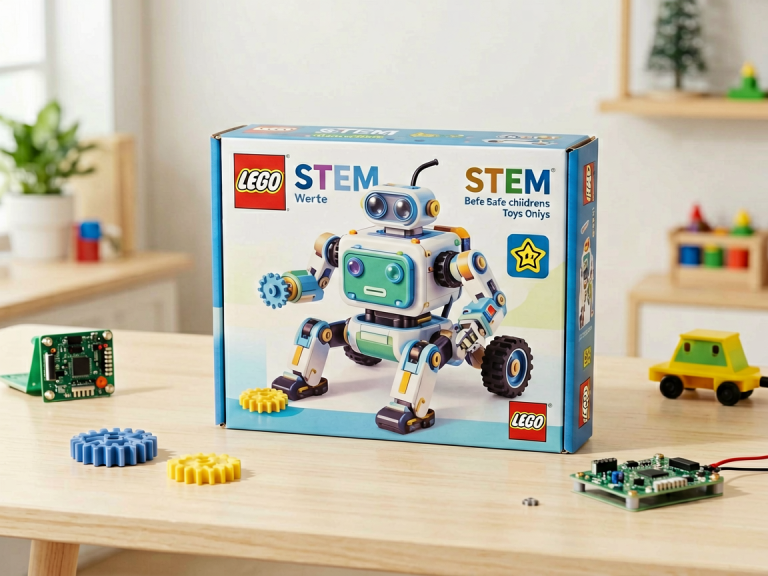
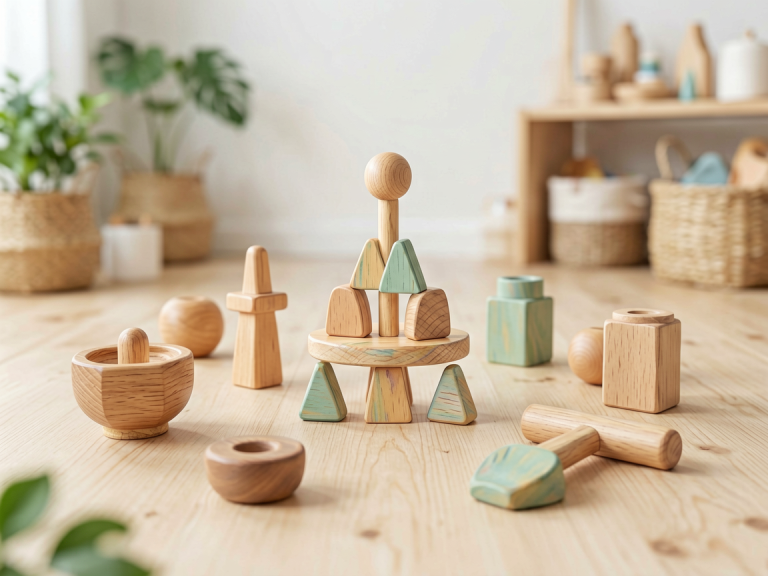
Engineering toys, by contrast, are rooted in the act of creation and problem-solving. They typically involve constructing, assembling, or configuring components to achieve a functional goal. Building blocks (such as LEGO, Mega Bloks, or wooden unit blocks), construction sets (K’Nex, Erector sets, Meccano), robotics kits (LEGO Mindstorms, VEX, littleBits), and even marble runs or simple pulley systems fall into this category. The defining characteristic of an engineering toy is that it presents a challenge—a bridge that must hold weight, a tower that must stand against wind, or a robot that must navigate a maze—and gives the child the tools to solve it.
Engineering toys excel at developing spatial reasoning, creativity, and iterative design thinking. When a child builds a bridge and watches it collapse, they do not just accept the outcome; they analyze the weak point, redesign the support, and try again. This is the engineering design process in miniature: define the problem, brainstorm solutions, prototype, test, and improve. Unlike science toys, which often emphasize discovery of existing truths, engineering toys emphasize the invention of new solutions. They reward persistence, resourcefulness, and the ability to work within constraints (limited pieces, specific shapes, or physical laws like gravity). Engineering play also naturally encourages collaboration; building a complex structure often requires teamwork, communication, and division of labor—skills that are invaluable in the modern world.
—
Key Differences in Play and Learning
While both categories overlap (a robotics kit may involve sensors and programming that touch on scientific principles), their emphases diverge in several important ways. The table below summarizes the core distinctions:
| Aspect | Science Toys | Engineering Toys |
|——–|————–|——————|
| Primary Question | “Why does this happen?” | “How can I make this work?” |
| Process | Observe, hypothesize, experiment, conclude | Define problem, design, build, test, improve |
| Typical Interaction | Watching, analyzing, recording | Manipulating, constructing, troubleshooting |
| Cognitive Skill Emphasized | Analytical thinking, pattern recognition | Spatial reasoning, creative problem-solving |
| Emotional Learning | Patience with uncertainty, humility | Persistence through failure, confidence in creation |
| Outcome | Discovery of a natural law or fact | Creation of a functional artifact or system |
For example, a child using a science toy like a weather station learns about evaporation and condensation by observing the water cycle in a closed terrarium. A child using an engineering toy like a gear-and-pulley set learns how to transfer motion and lift a heavy object by designing a mechanical advantage system. Both are valuable, but they train different parts of the brain. Science play is more reflective and open-ended; engineering play is more goal-oriented and iterative.
—
Cognitive and Developmental Benefits: A Comparative Look
Research in developmental psychology and education has shown that both types of play contribute uniquely to a child’s growth. Science toys are particularly effective at building what psychologists call “scientific literacy”—the ability to evaluate evidence, identify cause-and-effect relationships, and differentiate between correlation and causation. They also enhance language development, as children often narrate their observations and ask questions. By engaging with science toys, children learn that the world is knowable and that their own minds can unlock its secrets. This can be deeply empowering, especially for girls and underrepresented groups who may face stereotypes about their scientific abilities.
Engineering toys, meanwhile, have been linked to improved spatial visualization skills, which are strong predictors of later success in fields like geometry, architecture, and computer science. A 2019 study published in *Child Development* found that preschool children who played with construction toys showed significantly better spatial skills after just a few weeks of structured play. Engineering toys also foster a growth mindset: because failure is an expected part of the building process, children learn to view setbacks not as personal shortcomings but as opportunities to redesign. This resilience is arguably one of the most important non-cognitive skills a child can develop.
However, the benefits are not mutually exclusive. A child who only plays with science toys may struggle with practical application of knowledge; a child who only builds may lack the theoretical curiosity to understand *why* a certain design works. The most effective STEM education integrates both—for instance, a child might first study the physics of force and motion (science) and then design a catapult (engineering) that applies those principles.
—
Why Both Matter: The Case for Balanced Play
In an era where parents and educators are understandably eager to equip children with 21st-century skills, it can be tempting to focus on one type of toy. Engineering toys, with their tangible outputs and clear problem-solving goals, often feel more “productive” to adults. Science toys, by contrast, sometimes appear messy or aimless. Yet this is a false dichotomy. A child who learns to ask “why” without learning to build “how” may become a brilliant theorist but lack the practical know-how to implement ideas. A child who only builds may become an excellent technician but never ask the deeper questions that lead to innovation.
The magic happens at the intersection. Consider robotics kits that combine programming (a logical, engineering task) with sensors that detect light or temperature (a scientific inquiry). A child building a self-watering plant pot learns engineering through the plumbing and structural design, but also learns science through understanding soil moisture and plant biology. Such integrated toys are growing in popularity because they mirror real-world problem-solving, where science and engineering are inseparable.
For parents and educators, the practical recommendation is simple: provide a diverse toy box. Stock both a microscope and a set of gears. Encourage both a crystal-growing project and a marble run challenge. Ask questions that bridge the two: “Why do you think the tower fell? Can you test a different shape?” and “How would you make a stronger base?” By doing so, we help children develop both the curiosity to explore the unknown and the courage to shape the world around them. In the end, science toys and engineering toys are not rivals but partners, each nurturing a different but equally essential dimension of human intelligence.
—
Conclusion
The debate between science toys and engineering toys is not about which is better. It is about recognizing that children need both to become truly innovative thinkers. Science toys cultivate a deep appreciation for the laws of nature—the “what” and “why.” Engineering toys cultivate the ability to design solutions—the “how” and “what if.” Together, they prepare children not only for academic success in STEM fields but for a lifetime of curious, confident, and creative problem-solving. So the next time you see a child engrossed in a chemistry set or a pile of LEGOs, remember: they are not just playing. They are building the architecture of their own minds, one question and one block at a time.