The Ultimate Guide: How to Choose Outdoor Toys That Inspire Play, Growth, and Safety
Introduction
In an age where screens dominate children’s attention, outdoor toys have never been more essential. They invite kids to run, jump, climb, explore, and interact with the natural world—activities that build physical strength, social skills, creativity, and emotional resilience. But with endless options flooding store shelves and online marketplaces, choosing the right outdoor toys can feel overwhelming. Do you buy the flashy trampoline or the simple wooden swing set? The ride‑on car or the classic jump rope? The answer depends on a thoughtful balance of safety, developmental needs, space, durability, and—most importantly—your child’s genuine interests.
This guide will walk you through every critical factor, helping you make informed decisions that turn your yard, balcony, or local park into a launchpad for joyful, meaningful outdoor play.
Why the Right Outdoor Toy Matters
Outdoor play isn’t just a way to burn off energy. Research shows that unstructured outdoor activity improves motor skills, reduces stress, enhances attention spans, and fosters problem‑solving abilities. A well‑chosen toy amplifies these benefits. For instance, a climbing structure challenges balance and coordination; a sandbox encourages sensory exploration and pretend play; a team ball game teaches cooperation and fair play. Conversely, the wrong toy—one that is too advanced, too boring, or poorly made—may end up gathering dust in the garage. By carefully selecting outdoor toys, you invest in your child’s holistic development while creating lasting family memories.
1. Safety First: The Non‑Negotiable Foundation
Before considering fun or educational value, safety must be the top priority. Outdoor toys are exposed to weather, rough handling, and high‑energy play, so they require robust, child‑friendly design.
Check for sharp edges, pinch points, and small parts. Look at the toy’s construction: Are there any exposed screws, rough plastic seams, or gaps that could trap fingers? For toys intended for toddlers, ensure that no small components can be removed and swallowed. Avoid toys with strings, cords, or ropes longer than 12 inches, which pose strangulation risks.
Assess stability and fall protection. If you choose a climbing frame, swing set, or trampoline, it must be anchored securely to the ground or have a wide, heavy base that won’t tip. For trampolines, consider models with full enclosure nets and padding over springs. Always place toys on soft surfaces—grass, rubber mulch, or safety mats—rather than concrete or asphalt.
Check for harmful chemicals. Many plastic toys contain phthalates, lead, or BPA. Look for labels like “BPA‑free,” “non‑toxic,” or certifications from ASTM International or the Consumer Product Safety Commission (CPSC). For wooden toys, ensure the finish is lead‑free and splinter‑proof.
Consider age recommendations. Manufacturers list age ranges for good reason: a toy meant for an 8‑year‑old might have small parts or complex mechanisms that are dangerous for a 3‑year‑old. Conversely, a toddler toy may bore an older child, but that’s a separate issue—safety comes first.
2. Match the Toy to Your Child’s Age and Developmental Stage
Every child develops at a different pace, but general age groups can guide you toward toys that challenge without frustrating.
Ages 1–3: Sensory and Gross Motor Play. Toddlers need toys that encourage walking, pushing, pulling, and basic hand‑eye coordination. Excellent choices include: push‑and‑pull toys (e.g., a sturdy wagon or a rolling drum), small ride‑on vehicles without pedals (they scoot with feet), sand and water tables (with large, unbreakable scoops and molds), and simple balls (soft, brightly colored). Avoid anything with sharp edges or complicated assembly.
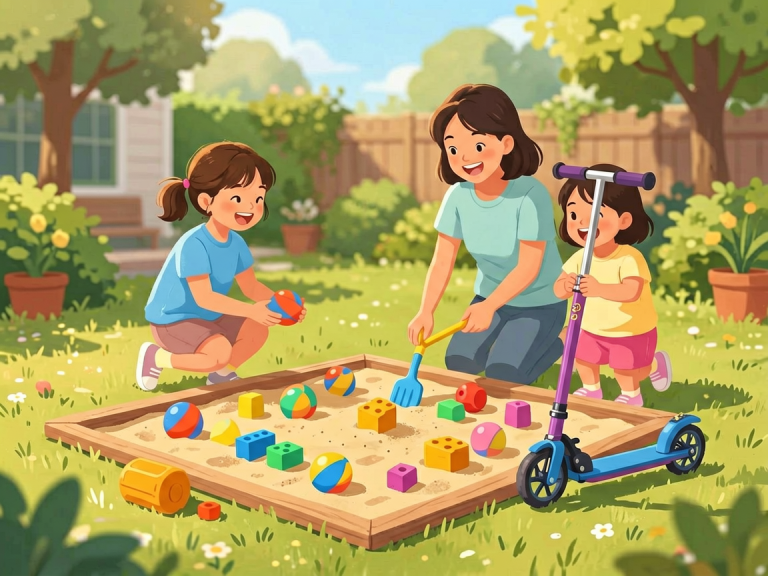
Ages 4–6: Imaginative and Social Play. Preschoolers love pretend play and are ready for more complex movement. Great options are: playhouses or tents, tricycles or balance bikes, jump ropes (short enough for their height), beginner’s frisbees, and simple gardening sets. They also enjoy sandboxes with shovels, buckets, and plastic animals. Cooperative games like basic catch or tag accessories (e.g., colorful cones or soft‑faced badminton sets) help develop sharing and turn‑taking.
Ages 7–10: Skill‑Building and Competition. School‑age children crave mastery and friendly rivalry. Consider: scooters, skateboards (with proper safety gear), basketball hoops with adjustable heights, roller skates, climbing ropes or wall holds, and complex building sets like marble runs for outdoor use. Sports equipment—soccer balls, flying discs, badminton birds—can be used in organized games. At this stage, toys that require practice (like a yo‑yo or a pogo stick) teach patience and perseverance.
Ages 11 and up: Advanced Challenges and Adult‑like Recreations. Teens want toys that feel grown‑up but still playful. Examples: glider kites, large‐scale frisbee golf sets, archery targets with suction cups, slacklines, cornhole boards, and bocce ball. Electric scooters or hoverboards (with strict supervision and safety rules) can also be considered. Encourage group activities that promote teamwork, like giant chess sets for the lawn or outdoor obstacle‑course kits.
3. Evaluate Your Outdoor Space and Climate
The same toy can be a hit in a spacious backyard and a disaster in a tiny city patio. Before purchasing, measure your available area and consider the surface.
Large yards. If you have ample grass or soft ground, you can consider permanent structures like swing sets, playhouses, trampolines, or large sports nets. Ensure there is a clear zone of at least 6 feet around swings and slides to prevent collisions. Also, plan for storage: do you have a shed or garage for items like bicycles and scooters when not in use?
Small yards, balconies, or patios. For compact spaces, choose foldable or portable toys: mini basketball hoops that attach to a door or railing, pop‑up tents, folding soccer goals, or a small sand table on wheels. Vertical space can be utilized with hanging rings or a climbing ladder mounted on a sturdy wall (with professional installation). Avoid bulky items that make the area feel cluttered.
Climate considerations. If you live in a rainy region, look for toys made of rust‑resistant metals, UV‑stable plastics, or naturally rot‑resistant woods like cedar. In sunny climates, metal slides can heat up dangerously—opt for plastic or ensure shade covers. For snowy winters, consider toys that work year‑round, such as sleds, snow shovels, or adjustable‑height basketball hoops that can be moved indoors during off‑season.
4. Prioritize Durability and Maintenance
Outdoor toys face weather, dirt, and vigorous use. A cheap toy may need replacement within a season, costing more in the long run and creating waste. Invest in quality materials.
Plastics. Look for high‑density polyethylene (HDPE) rather than thin, brittle plastic. HDPE resists cracking, fading, and warping. Avoid toys that are “beach‑ball thin”—they will puncture or degrade quickly.
Wood. Cedar, redwood, and pressure‑treated pine are popular for swing sets and playhouses. Check that wood is sanded smooth, and that joints are reinforced with galvanized bolts rather than staples. Ask about warranty—many quality wooden sets come with 5–10 year limited warranties.
Metal. For bikes, scooters, and trampolines, look for powder‑coated steel that resists rust. Aluminum frames are lightweight and won’t corrode, but may be less sturdy. Always check the weight limit to ensure it accommodates your child’s growth.
Maintenance tips. Plastic toys should be wiped down occasionally and stored in shade to prevent UV damage. Wooden sets need annual sealing with water‑proof stains. Metal parts should be lubricated if they squeak, and bolts tightened every few months. Teach your children to help clean and store toys—it builds responsibility and prolongs the toy’s life.
5. Consider the Toy’s Educational and Social Value
The best outdoor toys do more than entertain—they teach. When choosing, think about how a toy can spark learning.
Physical development. Toys that require running, jumping, balancing, and throwing improve cardiovascular health, muscle strength, and gross motor control. Look for toys that challenge multiple skills: for instance, a scooter requires balance, coordination, and leg strength all at once.
Cognitive growth. Outdoor toys that involve planning, strategy, or problem‑solving enhance executive functions. Building a fort with sheets and poles, creating a course for a marble run, or playing a game of capture the flag with flags and boundary markers all stimulate creativity and logic.
Social skills. Group toys—like a large inflatable ball, a parachute for games, or a ring toss set—encourage cooperation, communication, and empathy. Even solitary toys like a climbing frame become social when siblings or friends join in. Consider toys that can be used by multiple children simultaneously to reduce arguments and foster sharing.
Connection with nature. Toys that blend play with the outdoors can deepen a child’s appreciation of the environment. Examples: bug‑catching kits with magnifying jars, a child‑sized bird feeder, or a water pump and canal system for the sandbox. These tools transform a yard into a living laboratory.
6. Involve Your Child in the Decision
The most expensive, well‑researched toy is useless if your child isn’t excited about it. At the same time, children don’t always know what they’ll truly enjoy. Strike a balance.
Observe their natural play. Does your child love to climb trees and walls? A climbing dome or rock wall might be perfect. Do they spend hours spinning in circles? A tire swing or a spinner brings joy. Are they always building and stacking? An outdoor block set or a large construction kit will engage them.
Let them test before you buy. If possible, visit a friend’s house or a playground that has the toy you’re considering. Many stores also have demonstration models. Let your child try it—see if they are engaged for more than a few minutes or if they quickly lose interest.
Set expectations together. Explain your budget and space limitations honestly. Show them two or three options within that range and ask for their preference. When children feel ownership in the choice, they are more likely to care for the toy and play with it consistently.
7. Budget Wisely: Quality Over Quantity
Outdoor toys can range from a few dollars for a jump rope to thousands for a large play structure. It’s tempting to buy many cheap items, but they often break quickly or offer shallow play value. A better approach is to buy fewer, higher‑quality toys that grow with your child.
Set a realistic budget. For essential toys like a bicycle or a swing set, allocate more. For novelty items like a kite or a water gun, spending less is fine. Look for sales in late summer or early spring, when retailers clear inventory. Also consider second‑hand toys—swing sets and plastic playhouses often appear on marketplace apps at steep discounts. Just inspect them thoroughly for rust, rot, or missing parts.
Think about longevity. A toy that adjusts as your child grows—like a basketball hoop that raises from 6 to 10 feet, or a balance bike that converts to a pedal bike—saves money in the long run. Similarly, open‑ended toys like a simple wooden seesaw or a set of versatile cones can be used for years of different games.
Conclusion: Let the Play Begin
Choosing outdoor toys is not about finding the most expensive or the trendiest item—it’s about finding the right match between your child, your space, your values, and your budget. By prioritizing safety, matching the toy to your child’s stage, considering durability, and fostering educational play, you create an environment where outdoor time becomes a cherished daily habit. Remember: the best outdoor toy is the one that gets used repeatedly, that sparks laughter and determination, and that pulls your child away from the screen and into the fresh air. So take your time, do your research, and then step back—and watch the magic of play unfold.